

Pumpkin Baby Food: Purees, Mash, and Soft Pieces
Pumpkin baby food can be as simple as cooked pumpkin blended into a puree, pressed into a mash, or served in tender pieces. The best texture is the one your baby can manage comfortably.
You can use fresh pumpkin or plain canned pumpkin, then pair it with familiar foods for an easy meal. Start with a soft, unsalted preparation and adjust it as your baby's feeding skills grow.
Choose Pumpkin for Baby Meals
A small cooking pumpkin, often called a sugar pumpkin or pie pumpkin, works well for homemade baby food. Its flesh becomes soft when cooked and has a mild, naturally sweet flavor.
Canned pumpkin is a useful shortcut when you don't have time to cook a whole vegetable. Choose plain pumpkin with no added salt or sugar, rather than pumpkin pie filling. Pie filling often contains sweeteners and spices and isn't the same as plain pumpkin puree.
If you're using fresh pumpkin, wash the outside before cutting it. A clean, sturdy cutting board and a large knife make preparation easier. Pumpkin can be hard to cut, so take your time and keep your hands clear of the blade.
Frozen pumpkin is another option when it's available without added ingredients. Cook it until it's soft throughout, then prepare it as a puree or mash. Our guide to fresh and frozen produce for baby meals has more ideas for keeping vegetables on hand.
Cook Fresh Pumpkin Until It's Tender
Fresh pumpkin needs to be fully cooked before you serve it to your baby. The flesh should yield easily to a fork, with no firm center or dry, hard edges.
Steam pumpkin pieces
Cut the washed pumpkin open and scoop out the seeds and stringy center. Remove the skin, then cut the flesh into pieces that will cook evenly.
Place the pieces in a steamer basket over simmering water. Cover and cook until they're soft throughout. Let them cool before blending or mashing.
Steaming gives you tender pumpkin without adding oil or seasoning. You can save a little of the cooking water to adjust the texture of a puree.
Roast pumpkin for a richer flavor
Cut the pumpkin into wedges and remove the seeds and stringy flesh. Place the wedges on a baking tray and roast until the flesh is tender all the way through.
Once the pumpkin is cool enough to handle, scoop the flesh away from the skin. Make sure no tough skin or seeds remain in your baby's portion.
Roasting brings out pumpkin's natural sweetness. If you're making pumpkin for the whole family, set aside a plain portion before adding salt, sauces, or sweet toppings.
Make a Smooth Pumpkin Puree
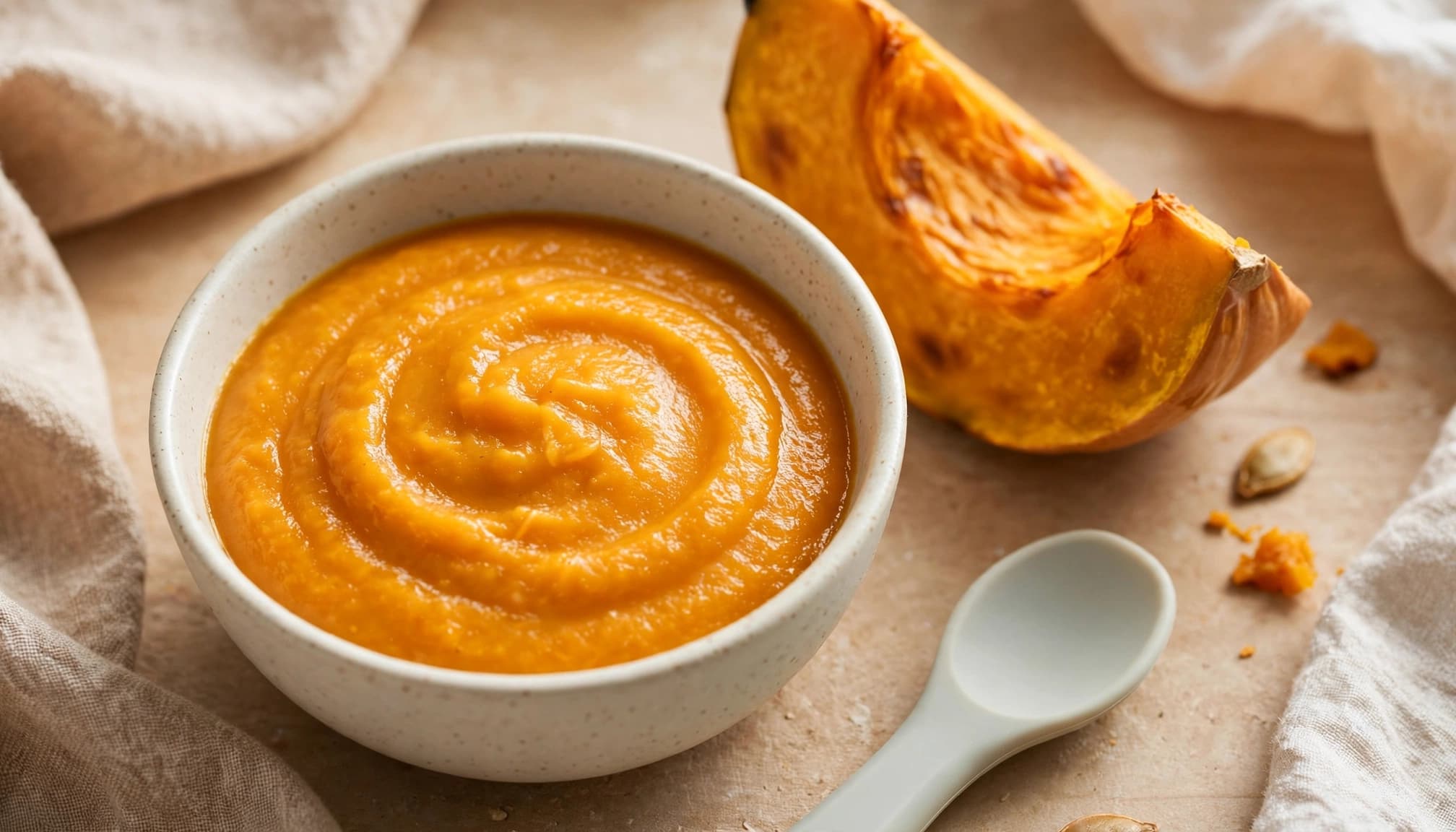
Pumpkin puree is easy to prepare with cooked fresh pumpkin or plain canned pumpkin. You can offer it on its own so your baby gets to experience the flavor.
Blend to a spoonable texture
Put the cooked pumpkin flesh in a blender or food processor and blend until smooth. Add a little water, breast milk, or prepared formula if the puree needs loosening. Stir in liquid gradually so the food stays thick enough to rest on a spoon.
Plain canned pumpkin is already smooth. Stir it well and add a little liquid only if needed. Serve it plain or mix it into a familiar food.
Offer the spoon at your baby's pace
Let warm pumpkin cool before serving. Offer a spoonful and give your baby time to move the food around their mouth and swallow. Pause when they turn away or lose interest.
You can also put a little puree on a spoon and help your baby bring it to their mouth. For more ways to share the work at mealtime, see our guide to combining purees with baby-led weaning.
Serve Pumpkin as Mash or Soft Pieces
The same cooked pumpkin can become a thicker mash or a self-feeding food. Choose the texture according to what your baby handles comfortably.
Make a soft fork mash
Place tender pumpkin flesh in a shallow bowl and press it with the back of a fork. Keep mashing until it reaches your baby's usual texture. For a baby practicing soft lumps, leave a little texture while making sure every lump squashes easily.
Add a little water if the mash feels dry or sticky. It should be moist and easy to move around the mouth, rather than a dense clump.
You can use this method with other vegetables, too. Our baby-friendly vegetable mash recipes offer more combinations for the same simple technique.
Prepare graspable pumpkin pieces
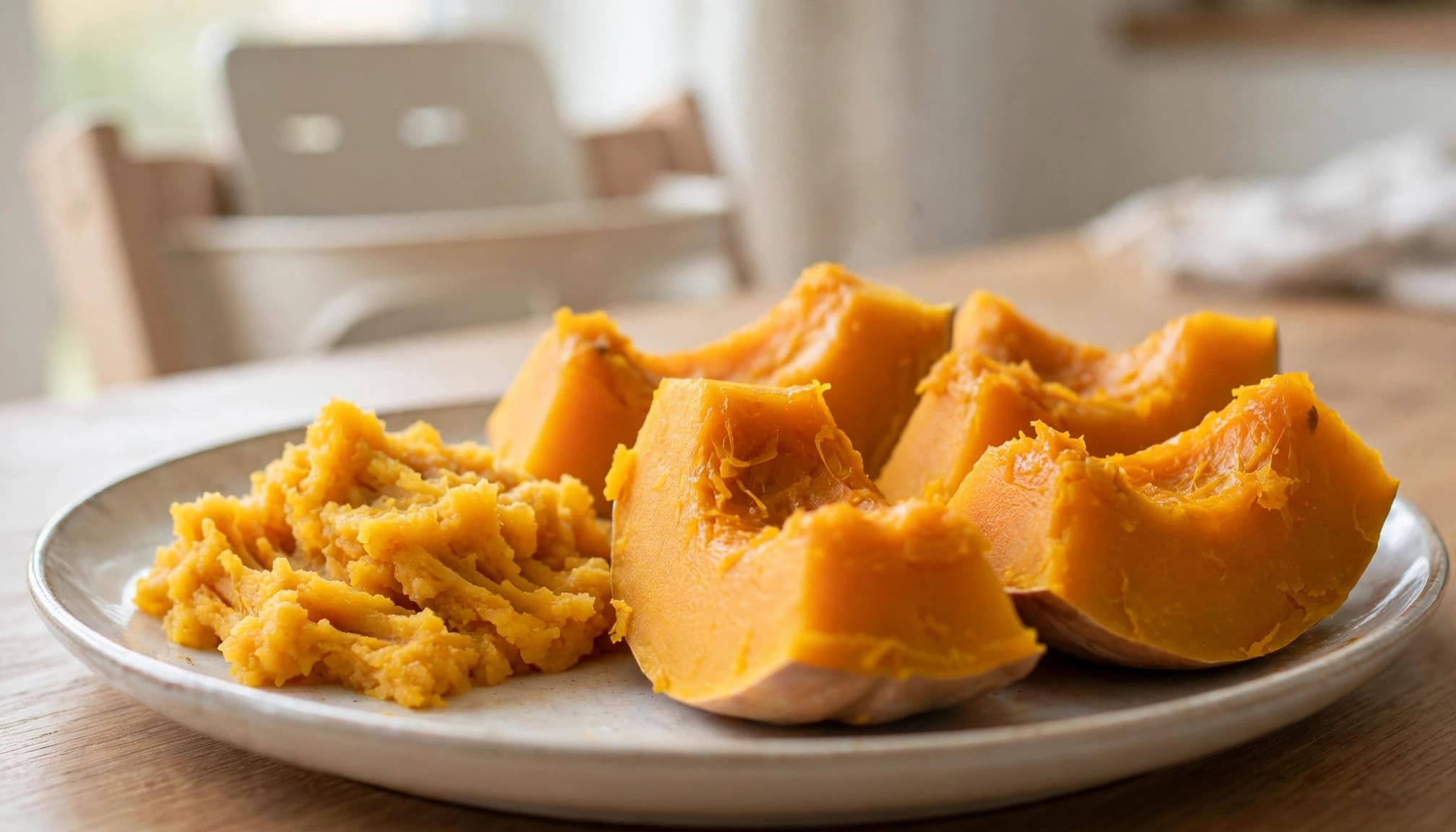
For a baby handling soft finger foods, cut cooked pumpkin into a wedge or strip that's easy to hold. Remove the skin and any seeds, then press the flesh between your thumb and finger. It should squash easily all the way through.
If a piece feels firm, cook it longer before serving. Keep your baby upright and stay close throughout the meal. Pumpkin can be slippery, so a preloaded spoon of mash is another way to encourage self-feeding.
Build Simple Meals With Pumpkin
Pumpkin's mild flavor works with breakfast foods and savory ingredients alike. After your baby has tried individual foods, combining familiar ingredients can make meals easier to prepare.
Mix pumpkin into breakfast
Stir plain pumpkin puree into cooked oatmeal for a soft, spoonable meal. If your baby already eats plain, pasteurized whole-milk yogurt, you can mix pumpkin into that instead.
Adjust each combination to your baby's usual texture. Blend the oats with the pumpkin if a smoother meal is needed, or leave them soft and textured for a baby who manages them comfortably.
Serve the mixture without added sugar or honey. Pumpkin already brings a gentle sweetness, and your baby can get used to its flavor without a sweet topping.
Pair pumpkin with iron-rich foods
Pumpkin can sit alongside an iron-rich food as part of a varied meal. Try mixing it with well-cooked, thoroughly mashed lentils or soft beans. Add a little water if the mixture needs moisture, and blend it smooth if your baby isn't managing lumps yet.
Tender, fully cooked chicken is another option. Finely shred or blend it into pumpkin so the texture suits your baby's skills. You can also stir pumpkin into soft, well-cooked pasta and cut or mash the pasta as needed.
These baby-friendly pumpkin and squash ideas offer more ways to use the vegetable beyond a plain puree.
Keep Feeding Safe and Relaxed
Seat your baby upright in a stable high chair and stay within arm's reach whenever food is offered. Avoid feeding in a moving car, stroller, or reclined seat. On a road trip, stop and find a safe place to sit before serving a meal.
Wash your hands and use clean utensils and surfaces when preparing food. Remove pumpkin skin, seeds, and any firm or fibrous pieces before serving. If a meal includes another ingredient, make sure that food is also cooked and prepared for your baby's abilities.
When introducing a new food, offering it on its own can make it easier to notice how your baby responds. If your baby has a known food allergy or needs help with feeding, talk with their pediatrician about a suitable plan.
Let your baby decide how much to eat. A few tastes may be enough on one occasion, while another meal may hold their attention longer. You can offer pumpkin again on a different day or try another suitable texture.
Store Extra Pumpkin for Later
A batch of cooked pumpkin can make another meal easier. Set aside the food you want to save before bringing your baby's serving to the table.
Save untouched portions
Cool cooked pumpkin promptly, place it in a covered container, and refrigerate it. You can also freeze untouched puree or mash in small portions using an ice-cube tray. Once frozen, transfer the portions to a labeled container.
Thaw frozen pumpkin in the refrigerator. If you warm it, stir well and make sure there are no hot spots before serving. Add liquid after thawing if the texture needs adjusting.
Food left in your baby's bowl should be discarded. A spoon that has been in your baby's mouth can introduce bacteria, so use a clean spoon to take food from the storage container.
Pack pumpkin for an outing
For a meal away from home, pack cooked pumpkin in an insulated bag with ice packs and keep it cold until serving. Bring a clean spoon and a separate bowl so you can take out only what you need.
If you can't keep cooked food cold, choose a fresh food you can prepare at mealtime instead. Our no-cook baby meal ideas include soft foods that are easy to mash when you're away from your kitchen.
Make Pumpkin Work for Your Baby
A plain pumpkin puree, a fork mash, and a soft wedge all begin with the same ingredient. Keep the pumpkin tender and choose the preparation that fits your baby's feeding skills.
When you're away from home, our compact, hand-powered Wonder Wean can help you turn suitable soft foods into a fresh mash without electricity. Pack it for a restaurant meal or family outing, then Buy Now if you'd like a practical way to prepare healthy baby food on the go.