

Easy Vegetable Mash Recipes for Babies at Home
A soft bowl of vegetables can begin with the same ingredients already sitting in your kitchen. With gentle cooking and a fork, vegetable mash recipes give your baby simple flavors without relying on added salt, sugar, or packaged sauces.
You don't need a complicated plan or a cupboard full of special ingredients. Start small, cook vegetables until tender, and adjust the texture as your baby gains experience with solids.
These easy combinations make homemade baby food feel manageable on ordinary, busy days.
Start Homemade Mashes With Simple Safety Habits
For babies who have started solids, a vegetable mash should be soft, plain, and easy to swallow. Sit with your baby during meals, keep them upright, and offer small spoonfuls at a calm pace.
Wash vegetables under running water before peeling or chopping them. Remove tough peels, thick stems, seeds, and stringy parts that can leave an unpleasant or uneven texture.
Introduce one new vegetable at a time
When a vegetable is new to your baby, offer it on its own or pair it with one food they already know. A small serving earlier in the day gives you time to notice how your baby does with it.
After your baby has tried carrot, sweet potato, peas, or broccoli separately, you can combine them more confidently. If you have questions about starting solids or a particular food, check with your baby's health professional.
Keep every early spoonful plain and soft
Babies don't need salt, sugar, stock cubes, butter, or sauces to enjoy vegetables. Their taste buds are new to these flavors, and naturally sweet vegetables such as carrot and sweet potato are often appealing by themselves.
Cook every ingredient until it squashes easily between a fork's tines. Firm raw vegetables, hard chunks, thick skins, and stringy pieces aren't suitable for an early mash. A smooth texture is a good place to begin, then you can leave tiny soft lumps when your baby handles them comfortably.
Easy Vegetable Mash Recipes Begin With a Soft Base
A good mash starts with vegetables that have enough moisture and soften well with heat. Carrots, sweet potatoes, potatoes, peas, zucchini, cauliflower, and broccoli florets all work nicely.
Steam vegetables in a covered basket or simmer them with a small amount of water. Steaming keeps the pieces out of the cooking water, while simmering gives you a little flavorful liquid to loosen the mash later.
Cook until a fork meets no resistance
Cut vegetables into similar-size pieces so they finish cooking together. Thin carrot rounds and small sweet potato cubes usually become tender in about 12 to 15 minutes when steamed. Zucchini cooks faster, often in 6 to 8 minutes.
Test a piece before you mash it. If a fork goes through it without pressure, it is ready. If it holds its shape or feels firm in the center, keep cooking.
Add moisture a teaspoon at a time
Drain excess water first, then mash the vegetables with a fork, potato masher, or hand-powered blender. Add warm cooking water a teaspoon at a time until the mash reaches the thickness your baby can manage.
Too much liquid can turn a nourishing mash into soup. On the other hand, a dry, sticky mash may be hard for a baby to move in their mouth. Small additions give you control.
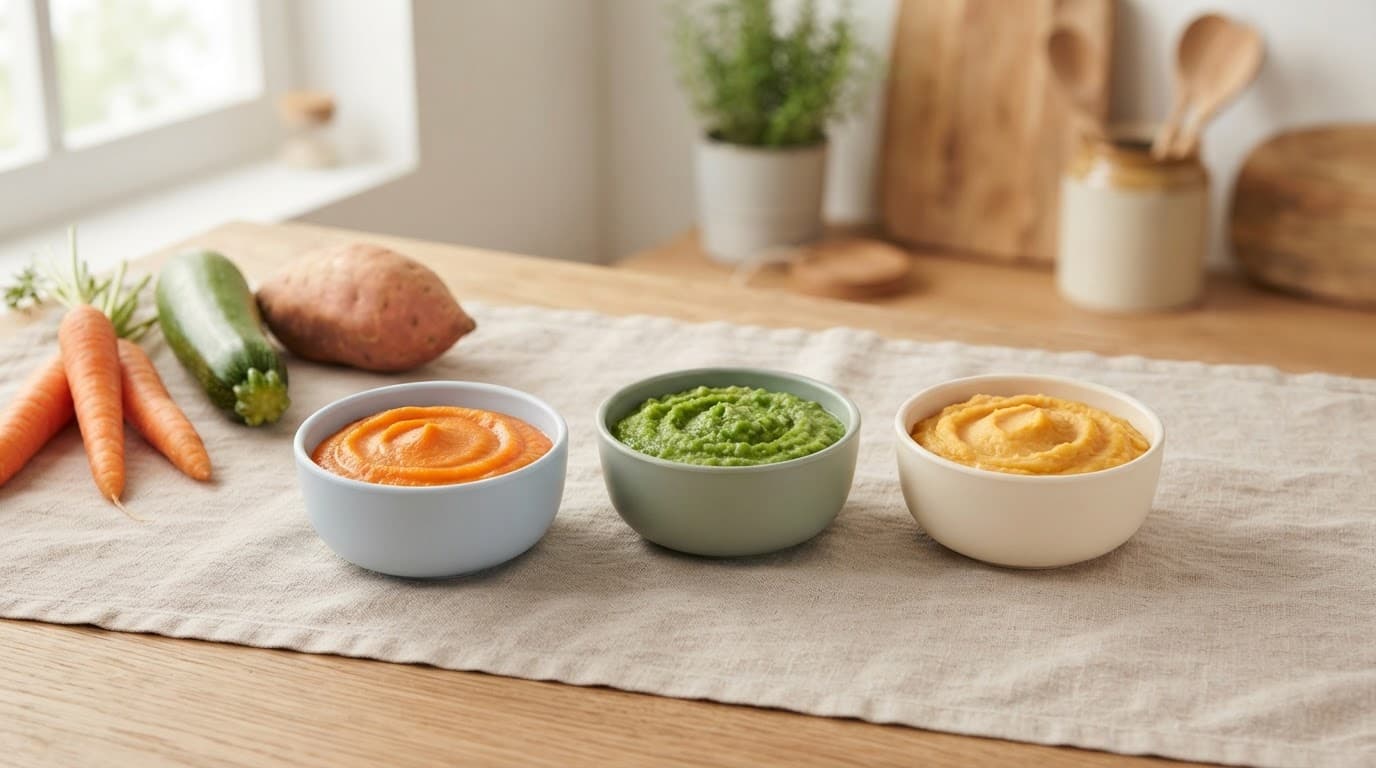
Carrot and Sweet Potato Mash for a Gentle First Flavor
This bright orange mash has a naturally mild sweetness and a velvety texture. You need 1 small carrot, about 75 grams, half a small sweet potato, about 100 grams, and 2 to 4 tablespoons of warm water or cooking water.
Peel the carrot and sweet potato, then cut both into small pieces. Use this recipe after introducing each vegetable individually if either one is new to your baby.
Steam, mash, and serve
- Steam the carrot and sweet potato for 12 to 15 minutes, until both are very soft.
- Transfer the cooked vegetables to a bowl, then mash with a fork or blend with 2 tablespoons of warm water.
- Add more water only if needed, then let the mash cool and test the temperature before serving.
For a first texture, blend until completely smooth. Once your baby manages thicker food, use a fork and leave very soft, tiny lumps. If the carrot seems fibrous, blend a little longer rather than adding lots of water.
Pea and Zucchini Mash With Fresh Green Flavor
Peas bring a sweet flavor, while zucchini makes this mash lighter and softer. Use one-half cup of frozen peas, one-half medium zucchini, and 1 to 3 tablespoons of warm water.
Frozen peas are a practical choice because they are already shelled and cook quickly. Choose plain peas with no salt or sauce. Zucchini needs only a rinse and a trim, although peeling it can create a smoother early texture.
Blend thoroughly for a smoother green mash
- Chop the zucchini into small half-moons, then steam it for 4 minutes.
- Add the frozen peas and steam for another 4 to 5 minutes, until both vegetables crush easily.
- Mash or blend with 1 tablespoon of warm water, adding more only if the mixture feels too thick.
Pea skins can leave small bits behind, even after blending. For babies who need a smoother consistency, blend longer and press the mash through a fine sieve if needed. Offer this combination after peas and zucchini have each been accepted on their own.
Broccoli and Potato Mash for a Heartier Bowl
Potato gives broccoli a soft, creamy base without dairy. For one small batch, use one small peeled potato, about 120 grams, one-half cup of broccoli florets, and 2 to 4 tablespoons of warm cooking water.
Choose the tender tops of broccoli rather than thick stalks. The florets cook into a soft mash more easily, while the stems may remain stringy unless peeled and cooked for longer.
Use florets and cook the potato first
- Cut the potato into small cubes and steam for 8 minutes.
- Add the broccoli florets, then steam everything for another 6 to 8 minutes until tender.
- Mash the potato first, add the broccoli, and blend or mash with warm water until the texture is soft and even.
A fork gives this recipe a thicker finish, while a blender makes it silkier. Keep the first servings simple, with no cheese, salt, or seasoning. Later, when both ingredients are familiar, this can become a useful vegetable mash for lunch or dinner.
Adjust the Mash Texture as Your Baby Gets More Practice
Texture changes don't need to happen on a schedule. Some babies prefer smooth food for longer, while others soon enjoy a thicker mash. Let your baby's comfort and feeding skills guide the next step.
Keep meals relaxed, and stay close while your baby eats. Softness matters more than perfection, so there is no need to force a chunky texture before your baby is ready.
Move slowly toward thicker mashes
Use the same vegetables and change only the method. This makes it easier to see which texture your baby enjoys.
| Texture | How to make it | Best use |
|---|---|---|
| Smooth puree | Blend cooked vegetables with water until silky | Early solid-food practice |
| Thick mash | Use less water and blend briefly | Babies comfortable with spoon-fed mash |
| Soft lumpy mash | Press cooked vegetables with a fork | Babies managing small, soft lumps |
A mash can look thick in the bowl but still be too sticky. Loosen it with warm water until it slides easily from the spoon.
Cool, store, and reheat carefully
Set aside the portion you plan to store before feeding your baby. Food touched by a spoon that has been in your baby's mouth should be discarded rather than refrigerated for another meal.
Cool untouched mash promptly in a covered container and keep it in the refrigerator for 1 to 2 days. Reheat only the amount you plan to serve, stir it well, and check for hot spots before offering it. You can also freeze small untouched portions in an ice-cube tray, then transfer the frozen cubes to a labeled container.
Fresh Baby Food Can Travel With You
Vegetable mash recipes work best when they fit real life, including hurried mornings, park lunches, family restaurants, and travel days. A few soft vegetables and a little warm water can become a familiar meal wherever your baby is eating.
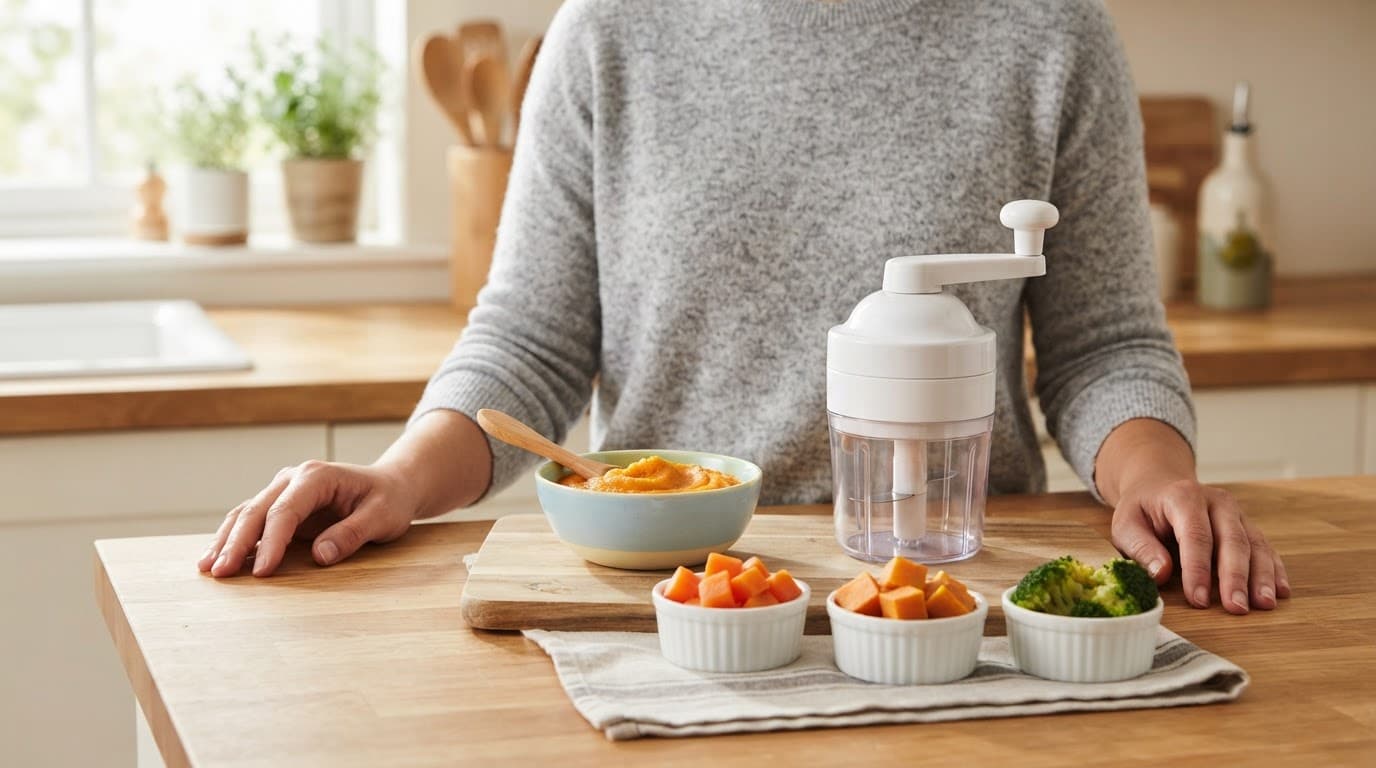
The Wonder Wean can help parents feed their baby healthy homemade foods even when they are away from the kitchen. Its compact, hand-powered design lets you mash fresh ingredients on the spot without electricity, so you can offer food you recognize and control. If that freedom fits your routine, you can Buy Now and keep homemade mashes within reach wherever the day takes you.