

Baby Led Weaning Purees: A Flexible Feeding Plan
Starting solids can feel like a choice between two camps: spoon-feeding purees or letting your baby self-feed. In practice, baby led weaning purees can work beautifully together, giving your baby safe chances to explore food while keeping meals realistic for your family.
Around 6 months, when your baby shows developmental readiness, you can offer smooth foods, mashed foods, and soft finger foods in the same meal. The goal is not to follow a perfect method. It is to help your baby learn to eat a growing range of nourishing foods.
Baby led weaning purees can share the same table
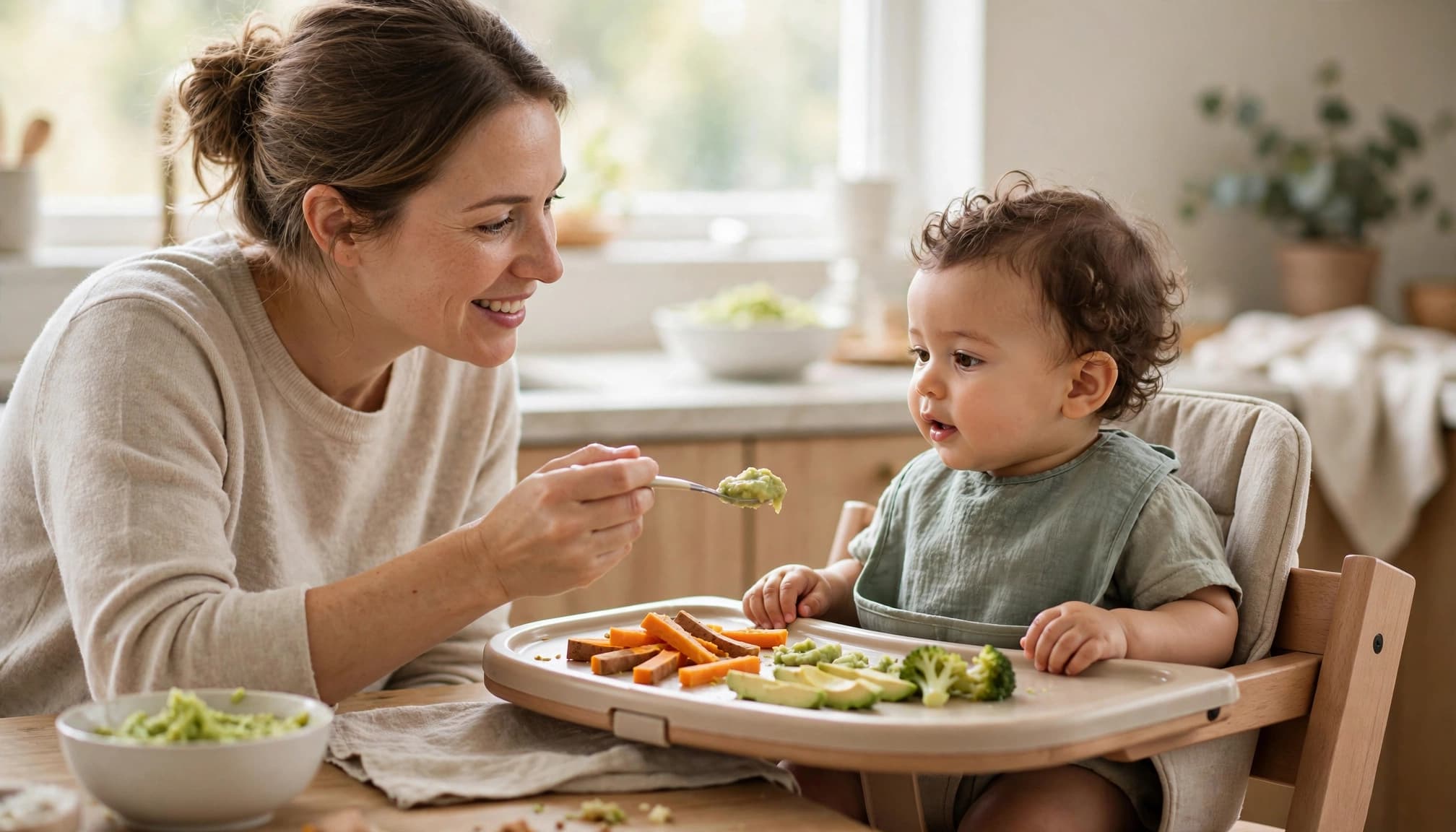
Baby-led weaning often means offering graspable, soft foods that a baby can bring to their own mouth. Purees are smooth or mashed foods offered on a spoon, often by a caregiver or on a pre-loaded spoon for baby to hold.
These approaches do not cancel each other out. A mixed approach can meet your baby where they are on a given day. Some meals may include a spoon of mashed lentils and a strip of soft roasted squash. Other days, your baby may happily self-feed yogurt from a pre-loaded spoon.
Purees still teach useful skills
Purees are not a setback when you also want your baby to explore finger foods. Thick purees and mashes introduce new flavors, provide iron-rich ingredients, and help babies practice moving food around their mouths.
Make the texture gradually more interesting. Start with smooth avocado or mashed sweet potato, then leave a few soft lumps as your baby gains experience. Yogurt mixed with finely mashed berries or beans blended into a thicker mash can add variety without creating a difficult texture.
Self-feeding builds confidence at the table
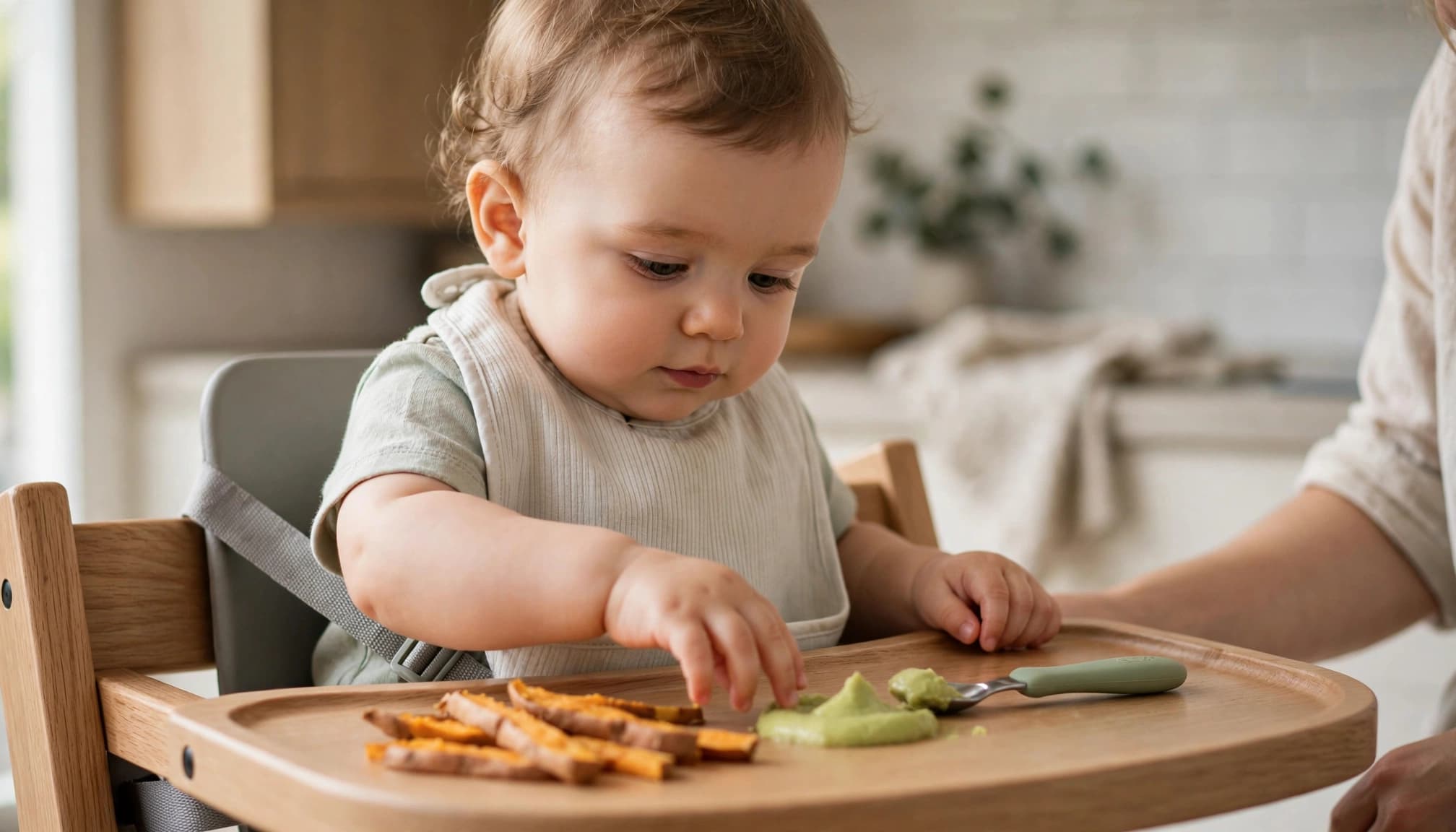
Soft finger foods let babies practice grasping, bringing food to their mouths, and deciding how much to eat. Those skills develop over many meals, often with plenty of dropped food along the way.
Offer both options without pressure. Your baby can pick up a banana spear, touch a little oatmeal, or accept a spoonful from you. Responsive feeding means watching their cues rather than trying to make them finish what is on the tray.
Start when your baby shows developmental readiness
Age matters, but readiness matters more. The CDC and the American Academy of Pediatrics recommend introducing complementary foods at around 6 months, when a baby is ready. Starting before 4 months is not recommended.
Breast milk or infant formula remains an important source of nutrition through the first year. Solid food begins as practice and gradually becomes a larger part of daily eating.
Look for the signs before serving solids
Your baby may be ready to begin when they can sit with good head and neck control in a supportive high chair. They should show interest in food and be able to bring objects to their mouth.
The tongue-thrust reflex should also be less pronounced. A baby who pushes every bite straight out with their tongue may need more time. Teething, a larger appetite, or waking overnight do not by themselves mean a baby is ready for solids.
Create a calm, upright eating space
Seat your baby upright in a secure high chair with their hips and feet supported when possible. Avoid feeding in a reclined seat, car seat, stroller, or while your baby is crawling around.
Stay within arm's reach and watch your baby throughout the meal. Eating is a skill, so allow time for touching, squishing, smelling, and tasting. A rushed meal usually feels harder for everyone.
An upright position and close supervision matter whether food arrives on a spoon or in your baby's hand.
Prepare soft textures that are safe to explore
The safest baby-led weaning purees plan starts with food preparation, not a menu trend. CDC guidance recommends preparing foods that dissolve easily with saliva and do not require chewing.
A useful home check is the thumb-and-finger test. If you cannot easily squash a food between your fingers, it is usually too firm for a new eater.
Shape finger foods for early self-feeding
Early on, offer foods in larger, stick-shaped pieces that a baby can grip in their fist. Try well-cooked broccoli florets, ripe avocado slices rolled in finely ground oats, soft omelet strips, or tender roasted zucchini spears.
As your baby's grasp becomes more precise, small soft pieces become more practical. Continue to cook vegetables until tender, remove skins and pits, and shred or finely chop meat. Thick, sticky foods like nut butter need thinning and spreading very thinly rather than serving by the spoonful.
Keep purees thick enough to stay on a spoon
Runny purees slide off easily and give your baby less control. A thicker mash clings better to a pre-loaded spoon and creates a more satisfying texture.
Try mashed black beans with sweet potato, full-fat plain yogurt with mashed pear, or blended chicken and vegetables thinned with broth only as needed. Offer a small amount at first. Babies can always have more if they show hunger.
Build balanced meals without making separate baby food
Babies need energy and nutrients, especially iron, as they begin eating more solids. CDC guidance includes vegetables, fruit, protein foods, dairy without added sugar, and whole grains among the foods to introduce.
You do not need a different recipe for every meal. Set aside an unsalted portion of family food before adding salt, honey, or spicy sauces. Then mash, shred, blend, or cut it to suit your baby's current skills.
Put iron-rich foods on the menu often
Iron is a smart place to start because a baby's stored iron declines during the second half of the first year. Serve soft, age-appropriate forms of beef, lamb, chicken, fish, lentils, beans, eggs, tofu, and iron-fortified infant cereal.
Pair plant sources with vitamin C foods when you can. For example, offer mashed lentils with tomato sauce, bean mash with kiwi, or iron-fortified cereal with mashed strawberries. These simple pairings work with spoon-feeding and self-feeding.
Let hunger and fullness guide the pace
At the beginning, one meal a day may be plenty. As your baby gets comfortable, you can add meals and snacks based on appetite and your family's rhythm.
Watch for signals rather than counting bites. Leaning forward, opening the mouth, and reaching for food can show interest. Turning away, pushing food aside, or clamping the mouth often means your baby has had enough.
Introduce allergens early and thoughtfully
Common allergens include peanut, egg, dairy, wheat, soy, sesame, fish, shellfish, and tree nuts. Current AAP evidence supports introducing allergenic foods in the first year, rather than delaying them without a medical reason. The strongest evidence for allergy prevention involves peanut and egg.
Offer an age-appropriate form when your baby is well and you can observe them afterward. Smooth peanut butter can be thinned with water, breast milk, formula, or puree. Egg can be served as a soft scrambled strip or mashed into a familiar food.
Ask for medical guidance when risk is higher
Babies with severe eczema, a known food allergy, or a past reaction to food may need a clinician's guidance before trying certain allergens. Your pediatrician or allergy clinician can give advice that fits your baby's health history.
For babies without those concerns, introduce a small amount of one allergenic food at a time. Once a food is tolerated, include it regularly as part of normal meals.
Know the difference between gagging and choking
Gagging is common while babies learn to manage new textures. It is often noisy, and you may hear coughing, sputtering, or retching. Although it can look alarming, gagging is a protective reflex.
Choking is different. A baby who is choking may be silent, unable to cry or cough effectively, or show trouble breathing. Learn infant CPR and choking first aid before starting solids, and seek emergency help immediately if choking occurs.
Keep high-risk foods off the tray or modify them carefully. Whole grapes, nuts, popcorn, raw apple, raw carrot, large chunks of cheese, hot dog rounds, and spoonfuls of nut butter are common hazards.
A flexible plan makes family meals easier
A mixed feeding style gives you room to use what is already in your kitchen. Serve a mashed vegetable with a soft finger food. Offer a pre-loaded spoon beside tender pieces of chicken or fruit. Over time, move toward lumpier mashes, chopped foods, and more shared meals.
Your baby does not need to master every texture at once. Steady exposure, safe preparation, and a relaxed table build more useful habits than a rigid feeding label.
Final thoughts on mixed feeding
Combining baby-led weaning with purees lets you respond to your baby's appetite, skills, and changing comfort with texture. Keep meals upright and supervised, prepare foods carefully, and let curiosity guide the pace.
Fresh foods are possible outside your kitchen, too. The Wonder Wean baby food processor helps parents mash healthy ingredients on the go, so a ripe avocado, soft vegetables, beans, or family meal can become baby-ready food wherever the day takes you.