

Fresh or Frozen Produce for Homemade Baby Meals
Choosing fresh or frozen produce for homemade baby meals doesn't have to become another parenting debate. Both options can support nutritious feeding when you choose plain ingredients, prepare them to match your baby's skills, and handle them safely.
Fresh food may suit meals prepared right away, while frozen produce can make healthy ingredients available when shopping or cooking time is limited. The best choice often depends on your routine, storage space, and how soon your baby will eat. Start with the differences that matter most.
Fresh or frozen produce: what changes for baby meals?
Fresh and frozen ingredients can both work well in homemade food. The important details are the ingredient itself, how it was handled, and whether the final texture suits your baby.
Fresh produce works well for quick meals
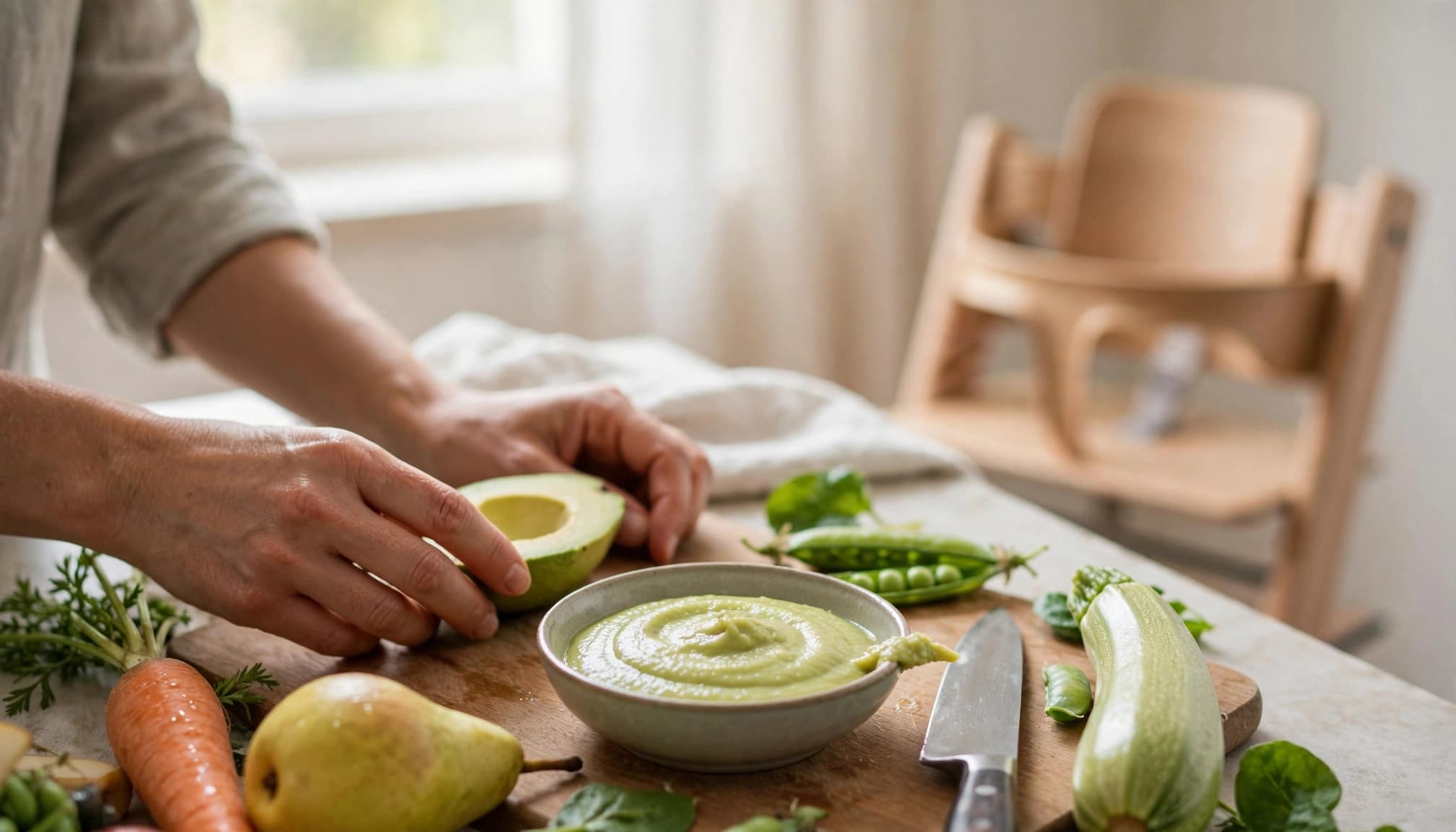
Ripe bananas, avocados, pears, and soft peaches can be mashed shortly before serving. They require little preparation and can help you make a small portion without cooking a full batch.
Fresh vegetables usually need more planning. Carrots, broccoli, sweet potatoes, and green beans need to be cooked until soft enough to mash easily. A firm piece that doesn't flatten between your fingers needs more cooking before you offer it.
Fresh produce also lets you buy only what you need. That can reduce freezer clutter and prevent you from preparing more food than your baby will eat.
Frozen produce keeps useful ingredients nearby
Frozen peas, spinach, berries, mango, and other produce can make meal preparation easier when fresh options aren't ripe or available. Choose plain frozen foods without added salt, sugar, sauces, or seasoning.
Frozen vegetables usually need to be cooked before serving. Frozen fruit may need thawing and mashing, depending on its firmness and your baby's feeding stage. Never offer frozen pieces as a hard snack to a young baby.
The main benefit is planning flexibility. You can take out a small amount instead of preparing an entire fresh item. However, frozen food still needs proper storage and clean handling after thawing.
Nutrition depends on more than the word fresh
The nutrition of a baby meal comes from the overall ingredient and preparation, not from a simple fresh-versus-frozen label. A fresh vegetable covered in salt or sauce may be a poor fit, while plain frozen vegetables can work well in a homemade meal.
Choose simple ingredients
Look for produce with no added sugar, salt, butter, sauces, or flavoring. Plain ingredients make it easier to know what your baby is eating and to introduce new foods one at a time.
A homemade meal can include fruit, vegetables, beans, lentils, oats, eggs, tender meat, or another food your baby is ready to manage. You don't need a complicated recipe. A small serving of mashed avocado, soft sweet potato, or cooked peas can be enough for one meal.
When using food from a family meal, remove salt, sauces, bones, tough skins, and hard pieces before preparing a baby portion.
Frozen doesn't mean less nutritious
Frozen produce can be a practical choice when it helps you serve vegetables more often. It may also reduce waste because you can use only the amount needed.
Fresh produce can lose quality when it sits in the refrigerator for too long. Frozen food can lose quality too if it becomes freezer-burned or stays stored for an extended period. Use your senses, follow package instructions, and discard anything with an unusual smell, appearance, or texture.
For either option, variety matters. Rotate familiar foods and introduce new tastes gradually. Follow your pediatrician's advice about allergens, feeding readiness, and foods that suit your baby's development.
Preparation and texture matter at every stage
Babies need food prepared for their current abilities. The same ingredient may be suitable when mashed smoothly, yet difficult to manage when served as a hard chunk.
Cook firm produce until it mashes easily
Steam, simmer, bake, or microwave firm vegetables until they become soft throughout. A fork, spoon, fine-mesh sieve, or manual food maker can create a texture that your baby already handles.
Start with a smooth mash if that matches your baby's experience. As your baby becomes more comfortable with food, gradually offer thicker and lumpier textures. A fork can leave small, soft pieces without turning every meal into a completely smooth puree.
Remove pits, seeds, tough skins, strings, bones, and hard pieces. Peas and green beans may need extra attention because skins and fibers can remain after cooking. Pressing cooked food through a fine-mesh sieve can help when a smoother texture is appropriate.
Serve small portions and watch closely
A tablespoon or two may be enough for a new eater. Small portions reduce waste and allow you to adjust the texture without preparing a large container of food.
Seat your baby upright in a stable high chair, and stay close during the entire meal. Avoid feeding while your baby is lying down, walking, playing, or riding in a moving vehicle.
Avoid hard, round, sticky, or tough foods that don't match your baby's skills. Whole grapes, nuts, popcorn, raw carrot, hard apple, large meat chunks, and thick spoonfuls of nut butter can create choking risks. Cut or prepare foods according to your baby's current stage, and ask your pediatrician for guidance when you're unsure.
Storage and food safety for homemade baby food
Fresh or frozen produce still becomes perishable after you cut, cook, mash, or thaw it. Clean preparation and temperature control matter as much as the ingredient you choose.
Refrigerate prepared food promptly
Wash your hands, utensils, bowls, and preparation surfaces before making a meal. Transfer unused food to a clean, covered container and refrigerate it within two hours. If the temperature is above 90°F, refrigerate it within one hour.
Keep the refrigerator at 40°F or below. Use homemade baby food within one to two days when refrigerated, unless your pediatrician or a trusted food-safety resource gives different guidance.
Serve food from a separate bowl instead of feeding directly from the storage container. Once a spoon has touched your baby's mouth, don't return the leftovers to the main container. Saliva can introduce bacteria that shorten its safe storage life.
Freeze small portions when useful
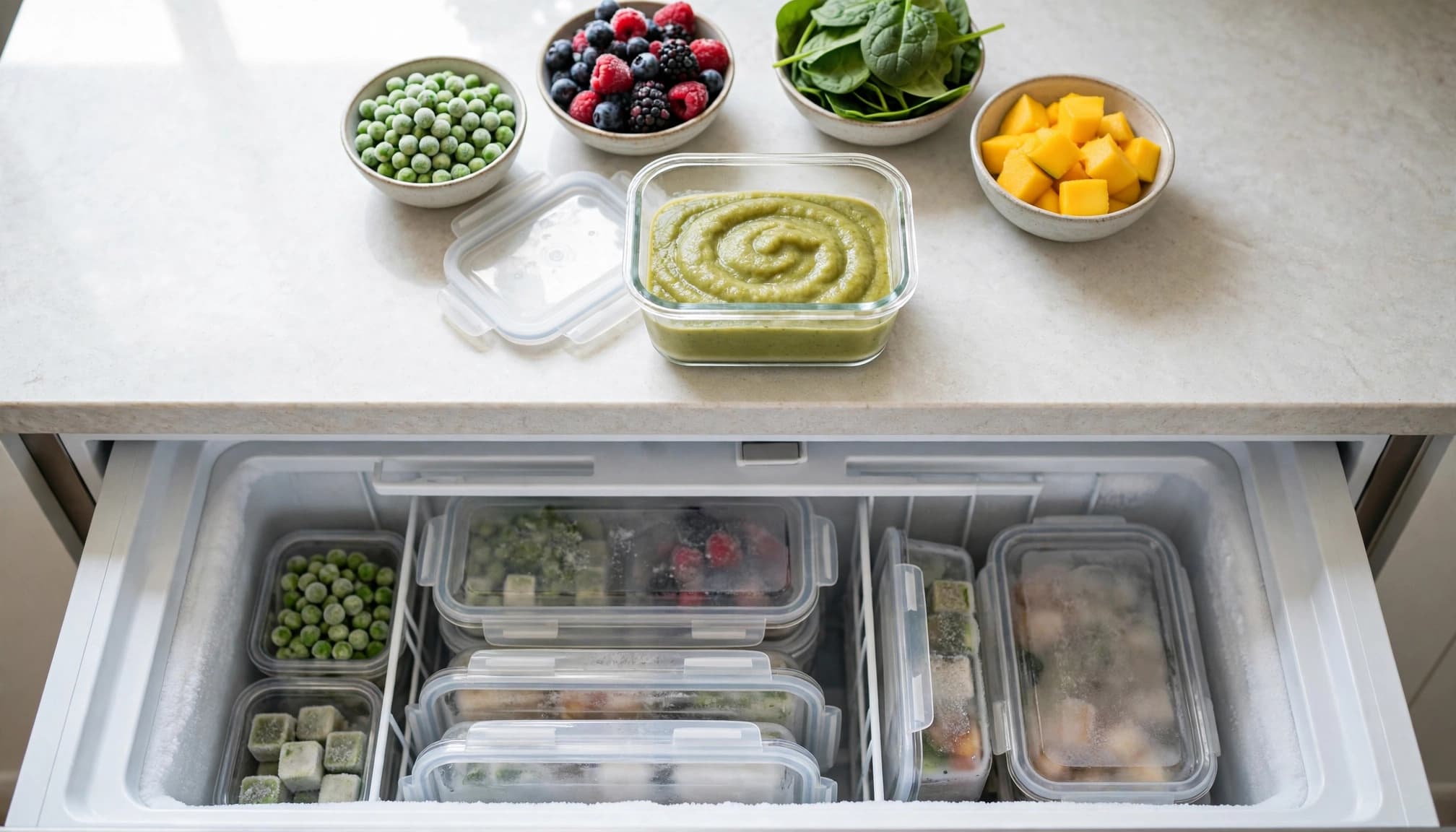
Freezing can help you save extra food before it reaches the end of its refrigerator window. Small portions thaw more quickly and make it easier to serve only what your baby needs.
Use freezer-safe containers or an ice-cube tray, then transfer frozen portions to a dated, labeled container. For a conservative routine, use frozen homemade baby food within one to two months.
Thaw food in the refrigerator, not on the counter. If you warm it, stir thoroughly and check for hot spots before feeding. Heat only the amount your baby is likely to eat, then discard food left in the serving bowl.
How to choose what fits your routine
The right option is the one you can prepare safely and use consistently. Fresh produce may be ideal for a quick meal at home, while frozen produce can support batch cooking and busy evenings.
Choose fresh when timing is simple
Fresh works well when you have ripe fruit available or already plan to cook vegetables for the family. It can also make sense when you want to mash a small serving immediately before eating.
Keeping bananas, avocados, and pears whole until mealtime helps protect their quality. Cut and mash them shortly before serving, then treat them as perishable food.
Choose frozen when planning reduces waste
Frozen produce can help when your family doesn't finish fresh ingredients quickly. It also gives you access to vegetables between grocery trips.
Keep a few dependable ingredients available, such as frozen peas, plain frozen vegetables, oats, lentils, or cooked portions stored safely. Take out only what you need, and return the rest to the freezer without letting it sit at room temperature.
A flexible routine may use both. You might prepare fresh avocado at lunch, use frozen peas for dinner, and freeze small portions of cooked sweet potato for another day.
The most useful choice is the ingredient you can keep plain, prepare safely, and serve in a texture your baby already knows.
Taking homemade baby meals beyond the kitchen
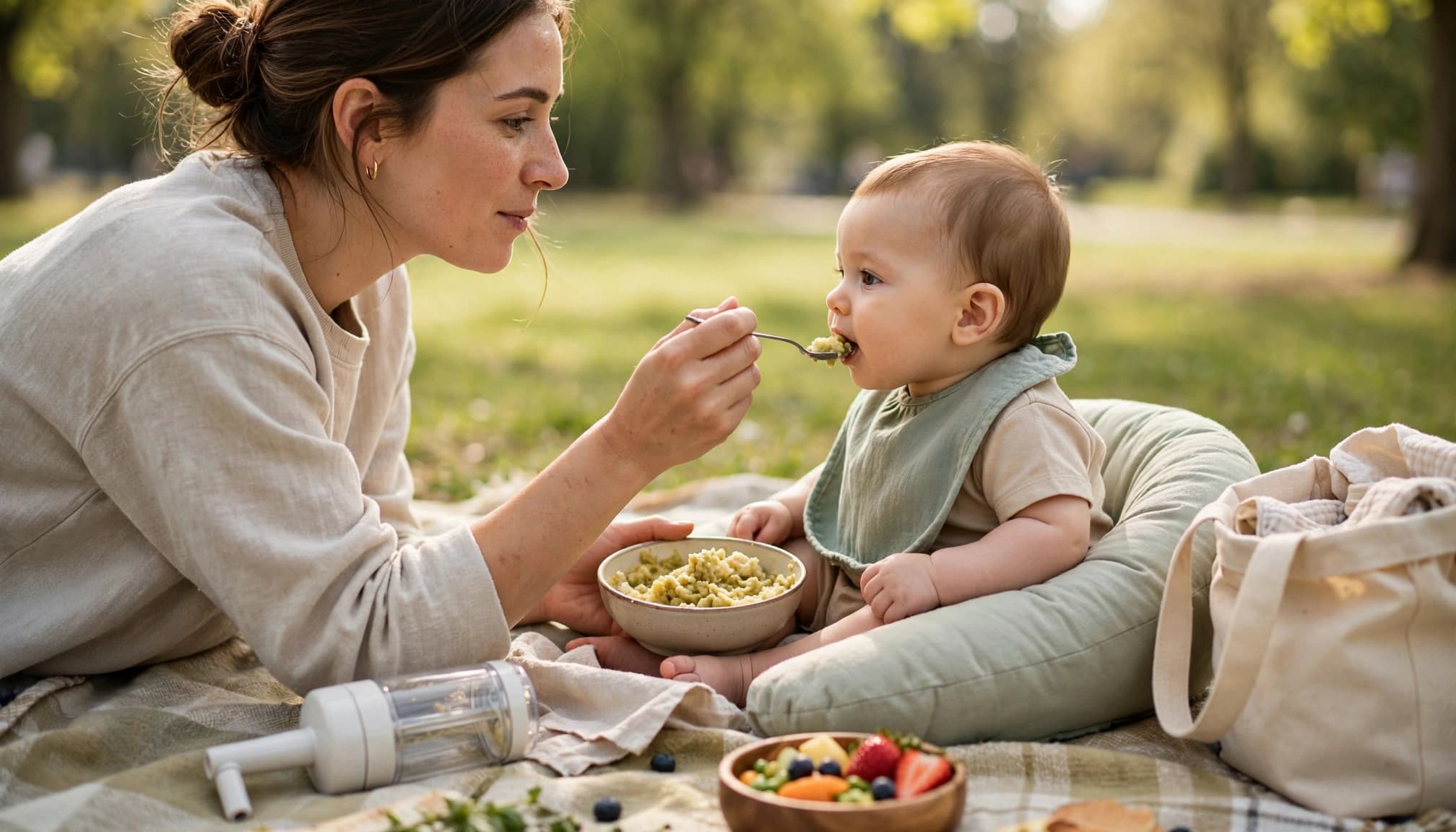
Fresh food can travel, but perishable meals need the same care outside the home. Pack chilled food in a clean, sealed container inside an insulated bag with cold packs. Keep the bag closed until mealtime, and don't leave it in a hot car.
For a restaurant meal, look for plain avocado, banana, soft cooked vegetables, unsalted beans, oatmeal, or a baked sweet potato. Ask for food without salt, sauces, honey, or added sugar. Prepare only a small serving, and check that it has cooled to a safe temperature.
If you're driving, wait until you reach a safe stopping place before feeding. Never pass food backward between seats while the vehicle is moving. A simple routine works well: park, wash your hands, prepare the food, feed your baby, clean the utensils, and return chilled food to the cooler or discard it.
Key takeaways for choosing produce
- Fresh fruit can be convenient when it is ripe and ready to mash.
- Frozen produce can reduce waste and keep plain ingredients available between shopping trips.
- Check labels for added salt, sugar, sauces, and seasoning.
- Cook firm produce until it becomes soft throughout.
- Match the texture to your baby's current feeding skills.
- Refrigerate prepared food promptly and keep it at 40°F or below.
- Thaw frozen portions in the refrigerator, and discard leftovers touched by your baby's spoon.
- Feed your baby upright, alert, and supervised.
FAQ about fresh and frozen baby food
Is fresh produce better than frozen for babies?
Neither choice is automatically better. Both can fit a healthy homemade feeding routine when the food is plain, handled safely, and prepared for your baby's abilities. Availability, ripeness, storage, and preparation time may matter more than whether the produce was fresh or frozen.
Can I use frozen vegetables in homemade baby meals?
Yes, choose plain frozen vegetables without added salt, sugar, sauces, or seasoning. Cook them until soft, allow them to cool, and mash them to a texture your baby already manages. Remove any firm skins, strings, or pieces that could be difficult to swallow.
How do I transport homemade baby food?
Use a clean, sealed container inside an insulated bag with ice packs. Keep perishable food cold until your baby is ready to eat. Prepare a small serving, and discard leftovers that have been in the feeding bowl or have warmed beyond safe storage conditions.
Can I make baby food while traveling?
You can prepare suitable soft foods during a trip if you have clean ingredients, a clean feeding surface, and a way to supervise your baby. A ripe banana, avocado, or properly cooked vegetable may need only mashing. Always check texture, temperature, and food-safety conditions before serving.
Conclusion
Fresh or frozen produce can both support homemade baby meals. Fresh ingredients are useful when you want to prepare a small serving right away, while frozen produce helps with planning, variety, and waste control.
Focus on plain ingredients, safe temperatures, clean tools, and textures your baby can manage. With the Wonder Wean, you can mash soft fruits, vegetables, pasta, rice, beans, and other suitable foods by hand without batteries, cords, or electricity. Its compact design fits in a diaper bag, purse, backpack, or carry-on, helping you offer healthy homemade food at a restaurant, park, or while traveling. If that flexibility fits your family's routine, you can Buy Now and keep fresh feeding within reach wherever the day takes you.