

Easy No-Cook Baby Meals With Real Whole Foods
A hungry baby rarely waits for the perfect moment. When the day gets busy, no-cook baby meals can help you offer fresh food without reaching for a sugary pouch or starting another pan on the stove.
The best options use familiar ingredients that are already ripe, cooked, or ready to mash. With the right texture and a little planning, your baby can eat satisfying meals made from fruit, vegetables, protein-rich foods, and healthy fats.
Start with your baby's current feeding skills, then keep the ingredients simple.
Why no-cook baby meals work for busy families
No-cook meals are not about serving raw food that a baby cannot manage. They are about using foods that need no additional cooking at the moment of feeding, such as ripe banana, avocado, plain yogurt, canned beans, or vegetables cooked earlier and stored safely.
This approach also makes it easier to share food with your baby. If lunch includes a baked sweet potato, soft beans, or plain chicken, you can set aside an unsalted portion before seasoning the family meal.
Begin when your baby is ready for solids
Most babies begin complementary foods around 6 months, when they can sit with support, hold their head steady, and bring food to their mouth. Breast milk or infant formula remains their main source of nutrition through the first year.
At the beginning, offer smooth purees or foods mashed until no firm lumps remain. As your baby gains experience, move toward thicker mashes and soft, small pieces. There is no prize for advancing texture too fast. A meal should fit the baby in front of you, not a schedule online.
Build a small but satisfying plate
A simple baby meal often needs only two or three foods. Pairing produce with fat or protein can make a snack more filling and introduces a wider range of nutrients over time.
For example, mashed avocado with plain whole-milk yogurt offers fat and protein. Banana mashed with smooth, unsweetened peanut butter provides energy and a common allergen in an easy-to-swallow form. A spoonful of mashed beans beside soft pear can also work well.
A meal does not need to look complicated to nourish a baby. Repeated exposure to plain, recognizable foods is part of learning to eat.
Whole-food building blocks for no-cook baby meals
Keep a few flexible ingredients in the fridge and pantry. Freshness matters, but convenience counts too, especially on a morning when everyone woke up early.
Soft fruits and ready-to-eat vegetables
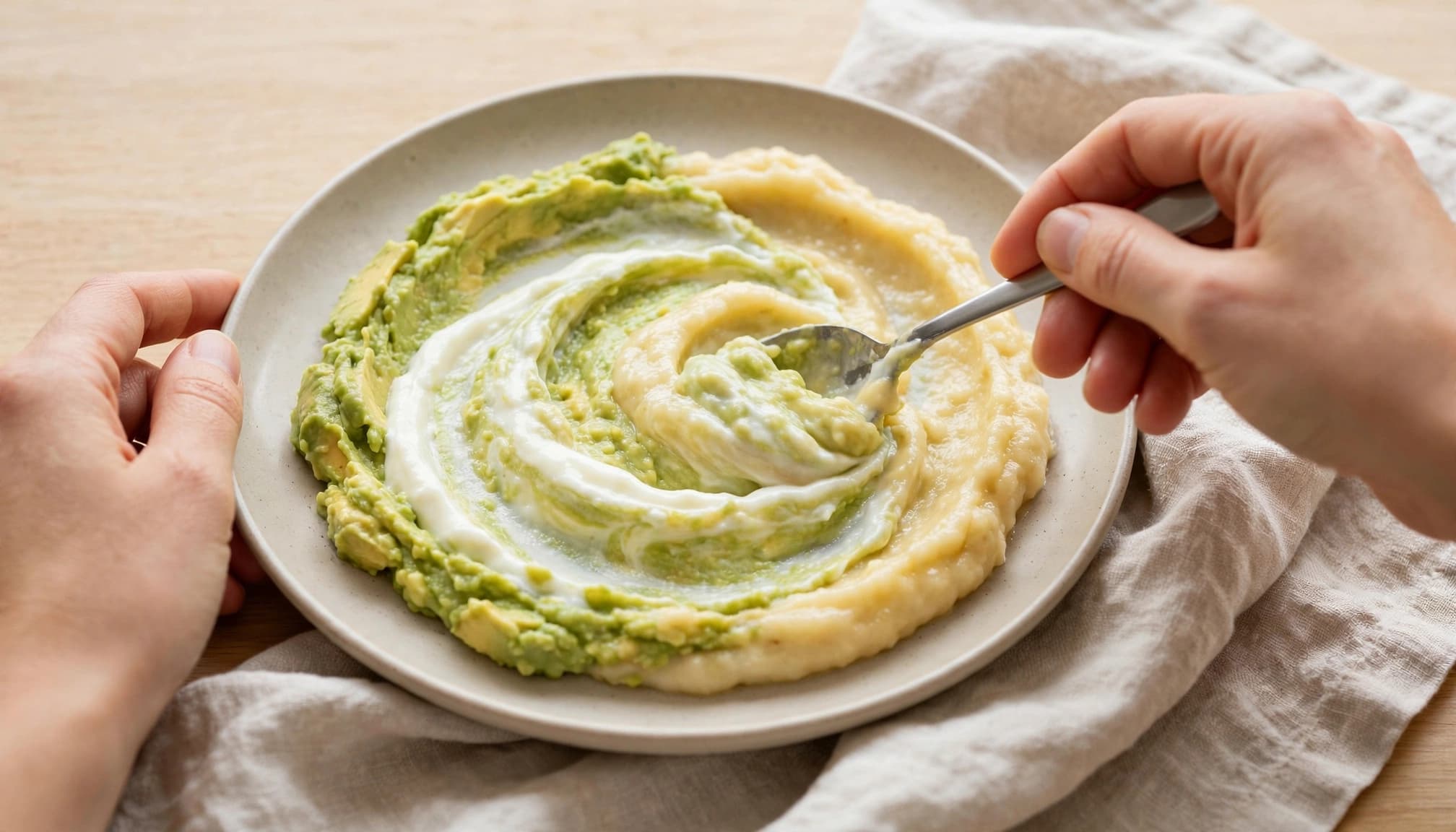
Ripe avocado and banana need little more than a fork. Very ripe peach, plum, mango, kiwi, melon, and pear can also be mashed or finely chopped for babies who handle soft pieces.
For vegetables, use leftovers prepared without salt. Cold roasted squash, steamed broccoli florets, baked potato, and cooked carrots can be mashed with a little water, breast milk, formula, or plain yogurt. Canned pumpkin with no added salt is another useful shortcut.
Choose produce at its softest. Raw apple, carrot coins, celery, and firm pear chunks are too hard for babies and carry a choking risk.
Protein, iron, and healthy fats
Babies need iron-rich foods once solids begin. No-cook options include canned lentils or beans rinsed well and mashed, plain hummus with a smooth texture, flaked canned salmon with bones removed, and leftover cooked egg mashed with avocado.
Plain, pasteurized whole-milk yogurt and cottage cheese can add protein. Check labels because flavored versions often contain added sugar, while many packaged foods contain more sodium than a baby needs.
Healthy fats help make small meals more substantial. Avocado, olive oil stirred into a vegetable mash, tahini thinned with water, and smooth nut or seed butter are practical choices. Always spread nut butter thinly or stir it into another food. Never offer a spoonful of sticky nut butter.
Five easy no-cook baby meal combinations
These no-cook baby meals use ingredients that are ready to serve or were safely cooked ahead. Adjust the texture with a fork, food masher, or small processor.
| Meal idea | Simple ingredients | Texture for newer eaters |
|---|---|---|
| Creamy green bowl | Ripe avocado, plain yogurt, banana | Mash until smooth |
| Peachy oat mash | Soft ripe peach, prepared plain oatmeal, yogurt | Finely mash peach into oats |
| Bean and sweet potato | Low-sodium beans, cooked sweet potato, olive oil | Mash thoroughly with water |
| Salmon potato bowl | Cooked potato, canned salmon, plain yogurt | Flake salmon and mash smooth |
| Pear and peanut butter | Very ripe pear, smooth peanut butter, yogurt | Grate or mash pear, then stir |
The table is a starting point, not a rigid menu. If your baby rejects pear today, offer it again another week alongside a familiar food. Babies often need many calm exposures before a new taste feels normal.
Creamy avocado, banana, and yogurt
Mash half a ripe avocado with a few slices of banana. Stir in plain pasteurized whole-milk yogurt until the mixture reaches your baby's usual consistency.
This meal travels well in a chilled container for a short outing. It also works as breakfast when your own meal is still cooling on the counter.
Sweet potato and white bean mash
Use a chilled baked or steamed sweet potato from the fridge. Add rinsed canned cannellini beans or chickpeas, then mash with a drizzle of olive oil and enough water to soften the mixture.
Beans offer plant-based iron and protein. Pairing them with sweet potato adds vitamin C, which helps the body absorb non-heme iron from plant foods.
Soft fruit with an allergen food
Mash ripe banana or pear with a small amount of smooth peanut butter thinned into yogurt or warm water. Serve a tiny amount when your baby is well and you can watch for a reaction.
Introduce common allergens one at a time when possible. Talk with your pediatrician first if your baby has severe eczema, an egg allergy, a prior food reaction, or another individual feeding concern.
Match the texture to your baby's skills
Texture is part of meal planning. A nutritious food can still be unsafe or frustrating if it is too hard, too sticky, or offered in pieces your baby cannot handle.
For babies new to solids
Smooth mashed meals are often easiest at first. Press food through a fork and look for firm bits, skins, seeds, and stringy pieces. Thin a thick mash slightly, but avoid making every meal watery.
Offer one food or a simple pair. This helps you notice allergies or tummy troubles and lets your baby learn each flavor without a crowded bowl.
For babies gaining confidence with food
As chewing skills develop, make mashes thicker and leave soft, pea-sized pieces. You can offer very soft strips of ripe avocado, omelet, peeled peach, or cooked sweet potato for supervised self-feeding.
A baby should always sit upright in a high chair or another secure seat while eating. Stay close and attentive throughout the meal. Eating while reclining in a stroller, car seat, or moving vehicle is not safe.
Keep baby meals safe, fresh, and low in sodium
Whole foods still need careful handling. Wash your hands, clean the counter, and rinse produce under running water before cutting or mashing it. Use clean bowls and spoons, especially when you are preparing food away from home.
Remove common choking hazards
Food size and texture matter more than the label "healthy." Cut round foods lengthwise into quarters, remove pits and tough skins, and cook hard vegetables until they are soft. Skip popcorn, whole nuts, hard candy, chunks of meat or cheese, raw apple, and whole grapes.
Also watch sticky foods. Thin nut and seed butters into yogurt, oatmeal, or fruit puree. Break up dense clumps of rice, pasta, and mashed potato with liquid so they do not form a gummy ball.
Store leftovers with care
Refrigerate prepared baby food promptly in a covered container. Use refrigerated leftovers within a short window, and follow food-safety guidance for the specific ingredients. If a spoon has been in your baby's mouth, saliva can introduce bacteria into the bowl. Discard the uneaten portion rather than saving it.
Avoid added sugar and excess sodium. Babies do not need sweetened yogurt, juice, salty crackers, cured meats, or seasoned restaurant sauces. Never give honey before 12 months because it can contain spores that cause infant botulism.
If you have concerns about weight gain, reflux, constipation, allergies, premature birth, or feeding development, ask your pediatrician or a registered dietitian for personal guidance.
Make fresh baby food easier outside the house
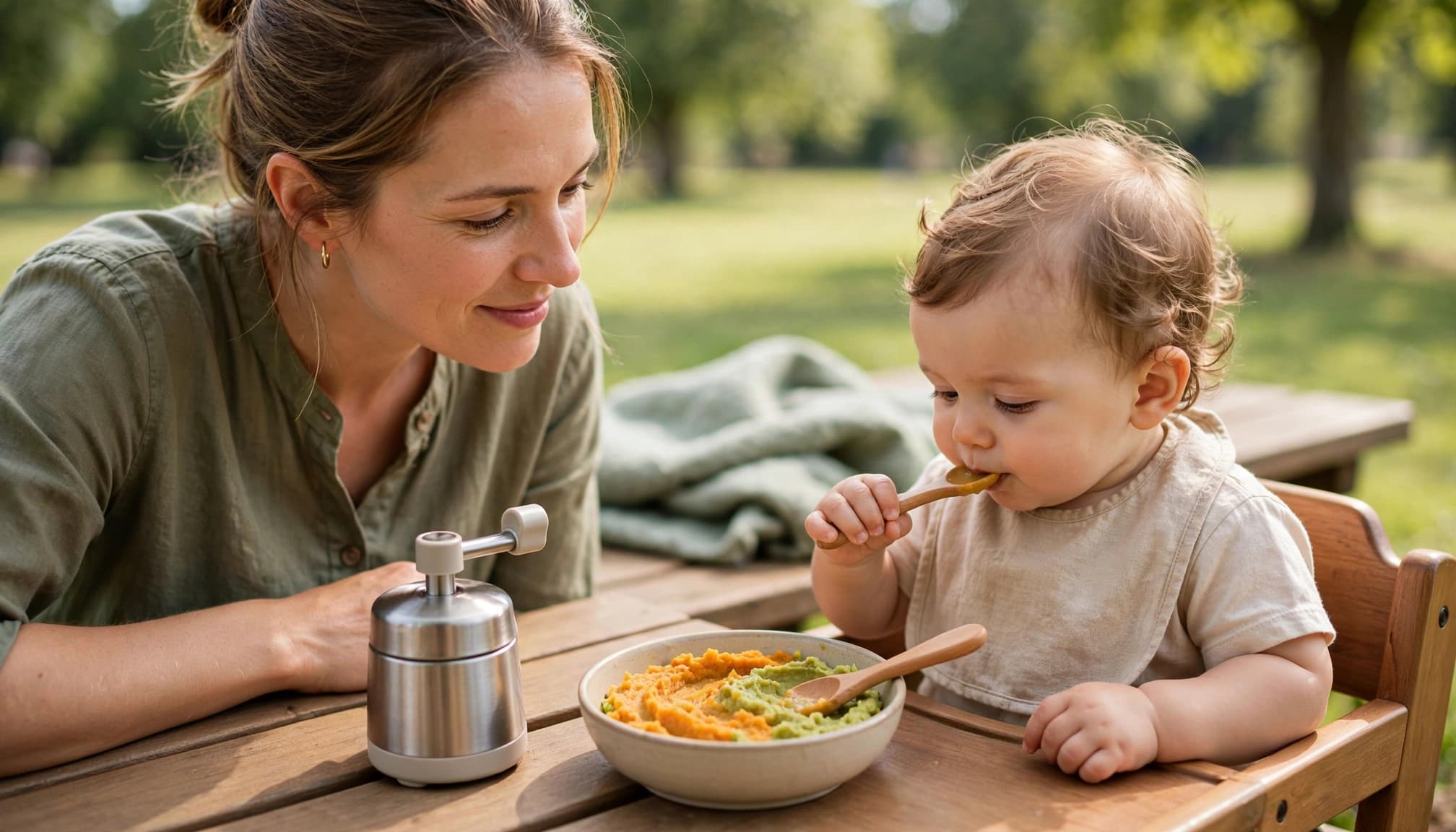
A little preparation prevents a hungry-baby scramble. Pack one soft fruit, one protein option, a spoon, a bib, wipes, and a small insulated bag with an ice pack. Then you can build a fresh meal instead of relying on whatever is sold nearby.
Use restaurant and picnic foods wisely
At a restaurant, plain baked potato, avocado, soft beans, steamed vegetables, scrambled egg, or a piece of ripe fruit may be available. Request food without added salt, butter, honey, or sauce when possible. Mash the food well and check its temperature before serving.
For picnics, keep perishable foods cold until mealtime. A banana and avocado can stay whole until you are ready to open and mash them, which reduces mess and browning.
Keep the routine flexible
Some days, your baby will eat several bites. On other days, they may only smear avocado across the tray. Both can be part of normal learning, especially while breast milk or formula remains the main nourishment.
Offer food without pressure and let hunger guide the amount. A calm routine builds more trust than trying to persuade a baby to finish a bowl.
Fresh food can fit real life
Easy meals made from whole foods do not require a perfect menu or hours in the kitchen. A ripe fruit, a chilled cooked vegetable, and a protein-rich addition can become a balanced baby meal in minutes.
Safe textures, clean preparation, and low-sodium ingredients matter more than fancy recipes. With a few reliable foods on hand, no-cook baby meals can make everyday feeding feel more manageable.
The Wonder Wean baby food maker helps parents mash fresh, age-appropriate foods wherever they are, whether that is at home, a cafe, a park, or while traveling. Its hand-powered design lets you turn a ripe avocado, banana, soft cooked vegetable, or other family food into a baby-friendly mash on the spot.