

Vitamin A Foods for Babies: Easy Ways to Serve Them
A sweet potato from tonight's dinner can become tomorrow's baby food with a little cooking and mashing. Vitamin A foods for babies don't need special packaging, complicated recipes, or a separate shopping trip.
The key is choosing familiar ingredients and giving them a safe texture for your baby's current skills. Colorful vegetables, ripe fruit, and a few everyday animal foods offer plenty of options.
Start with foods you already enjoy, then adjust their preparation as your baby learns to eat.
Why Vitamin A Matters in Your Baby's Diet
Vitamin A supports normal vision, immune function, and healthy growth. However, you don't need to calculate the vitamin content of every spoonful to offer a varied diet.
Plant foods provide beta-carotene
Carrots, sweet potatoes, winter squash, and dark leafy greens contain carotenoids, including beta-carotene. Your baby's body can convert beta-carotene into vitamin A.
Because these nutrients are fat-soluble, serving vegetables with some fat helps the body absorb them. Try mashed sweet potato with avocado or cooked greens mixed into plain, full-fat yogurt.
Orange produce is useful, but it shouldn't fill every bowl. Include iron-rich foods, such as lentils, beans, meat, or iron-fortified infant cereal, alongside vegetables.
Animal foods provide preformed vitamin A
Eggs and dairy foods contain preformed vitamin A, which the body can use directly. Breast milk and infant formula also supply vitamin A while your baby learns to eat solids.
Keep milk feeds central during this transition. Complementary foods add nutrients and eating practice, but a bowl of vegetables doesn't replace your baby's usual breast milk or formula feeds.
Vitamin A Foods for Babies You Can Use Every Week
Choose foods that fit your family's meals and soften easily. Fresh, plain frozen, and suitable canned vegetables can all make preparation more manageable.
These everyday options offer different flavors and simple serving possibilities.
| Food | Baby-friendly preparation | Easy pairing |
|---|---|---|
| Sweet potato | Cook until soft, then mash or offer tender wedges. | Mix with mashed lentils. |
| Carrot | Steam until completely soft, then puree or mash. | Combine with sweet potato. |
| Pumpkin or butternut squash | Cook until tender and remove tough skin. | Stir into cooked oatmeal. |
| Spinach or kale | Cook, remove tough stems, and blend or finely chop. | Mix into mashed beans. |
| Ripe mango | Peel, remove the pit, and mash soft flesh. | Fold into plain yogurt. |
| Egg | Cook thoroughly, then mash or offer soft omelet strips. | Pair with cooked squash. |
| Plain, full-fat yogurt | Choose pasteurized, unsweetened yogurt. | Stir in pumpkin puree. |
Orange vegetables and leafy greens are useful plant sources. Eggs and yogurt add variety, rather than needing to replace those vegetables.
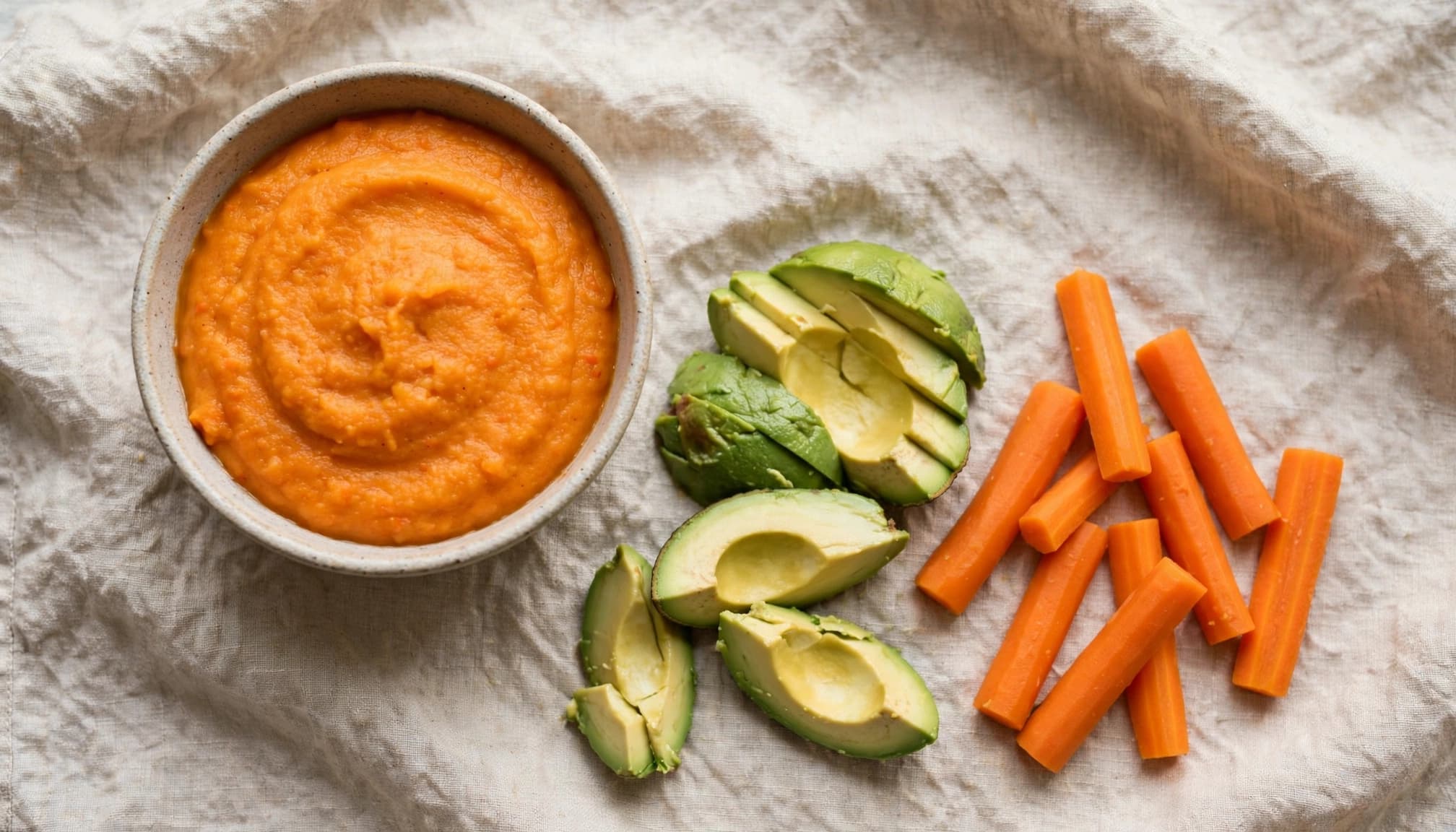
Avocado isn't a leading vitamin A source, but its soft texture and fat make it a practical partner for vegetable mashes.
Turn Orange Vegetables Into Easy Baby Meals
Sweet potatoes, carrots, and squash become naturally creamy when cooked thoroughly. Set aside your baby's portion before adding salty sauces or sweeteners to the family meal.
Make a carrot and sweet potato mash
Peel the carrot and sweet potato, cut them into pieces, and steam until both squash easily between your fingers. Check the carrot carefully because it can remain firm after the sweet potato softens.
Mash with a fork or blend, depending on your baby's skills. Add a little water, breast milk, or prepared formula only if needed to loosen the mixture.
Let it cool and check the temperature before serving. For a more complete meal, combine the vegetables with well-cooked, mashed lentils or tender, finely shredded chicken.
Use pumpkin and squash beyond puree
Roast or steam squash until the flesh is soft throughout. Remove the skin and seeds before mashing or preparing finger foods.
Plain canned pumpkin is a useful shortcut. Check that the ingredient is pumpkin, rather than sweetened pumpkin pie filling.
Stir pumpkin into cooked oatmeal, or mix squash with soft beans. Once your baby handles graspable foods, a very tender squash wedge offers another way to explore the same ingredient.
You can also freeze cooked vegetable mash in small portions, then thaw only what you need.
Add Greens, Mango, and Egg Without Complicated Recipes
Vitamin A foods for babies can fit into breakfast, lunch, or dinner. Changing the accompanying food keeps meals varied without requiring an entirely new recipe.
Blend leafy greens into familiar foods
Wash spinach or kale thoroughly, remove tough stems, and cook until tender. Then blend the leaves into a smooth mash or chop them very finely for a baby who manages texture.
Cooked greens can be fibrous, so check for long strands or firm pieces. Mixing them with sweet potato, mashed beans, or egg makes a softer, easier-to-manage meal.
Use a small amount alongside other ingredients rather than making every meal mainly greens. Frozen plain spinach can also save preparation time, provided you cook it according to its package instructions.
Pair ripe mango with yogurt or cooked egg
Choose mango that yields easily when pressed. Peel it, remove the pit, and mash the flesh, checking for stringy fibers.
Mix it into pasteurized, plain, full-fat yogurt for a simple spoon food. If dairy is new, introduce it separately before combining it with other unfamiliar ingredients.
Egg offers another option. Cook both white and yolk thoroughly, then mash the egg into soft squash or offer tender omelet strips when appropriate.
Egg and dairy are common allergens. Introduce one new allergenic food at a time, and seek personal guidance if your baby has severe eczema or an existing food allergy.
Match Food Texture to Your Baby's Eating Skills
Age alone doesn't tell you whether a baby can manage a particular food. Head control, upright positioning, hand skills, and experience with textures all matter.
Start with manageable spoon foods
Early spoon foods can be smooth or well-mashed, depending on your baby's readiness. Aim for a soft, spoonable texture without hard pieces or sticky clumps.
A fork may be enough for cooked sweet potato. Carrots and fibrous greens may need more blending to produce a consistent texture.
As your baby becomes comfortable, gradually leave tiny, very soft lumps. There's no need to keep every meal completely smooth once your baby manages more texture.
Offer food patiently and stop when your baby turns away or closes their mouth. Persistent coughing, swallowing difficulty, or distress deserves a discussion with your pediatric clinician.
Make finger foods soft and graspable
For early self-feeding, soft strips or wedges can be easier to hold than tiny cubes. Later, a developing pincer grasp makes smaller, soft pieces more practical.
Try a tender sweet potato wedge, soft omelet strip, or well-cooked squash piece. Each should squash easily between your thumb and finger.
Raw carrot sticks, firm carrot coins, and hard vegetable chunks aren't suitable substitutes. Cutting a hard food smaller doesn't make its texture appropriate.
Remove tough skins, pits, seeds, and bones. Also check the whole piece, since a soft outside can hide a firm center.
Keep Feeding Safe at Home and Away
Nutritious ingredients still need thoughtful preparation and supervision. The same safety habits apply whether you're eating at home, in a restaurant, or outdoors.
Sit your baby upright and stay close
Use a stable high chair or suitable feeding seat, with your baby upright and an attentive adult within arm's reach. Avoid feeding in a reclined stroller, car seat, or moving vehicle.
Gagging can be noisy as babies learn to manage food. Choking may be silent and can prevent breathing, so learn infant choking first aid and CPR through a certified course.
Never offer whole nuts, popcorn, whole grapes, hard raw vegetables, or thick spoonfuls of nut butter. Don't perform a blind finger sweep inside your baby's mouth.
Keep portable meals clean and properly chilled
Pack familiar foods when you're away from home, especially if allergies are a concern. New foods are easier to observe during a calm meal at home.
Wash hands and use clean utensils. Keep perishable foods chilled in an insulated bag with ice packs until mealtime, and discard leftovers from your baby's used bowl.
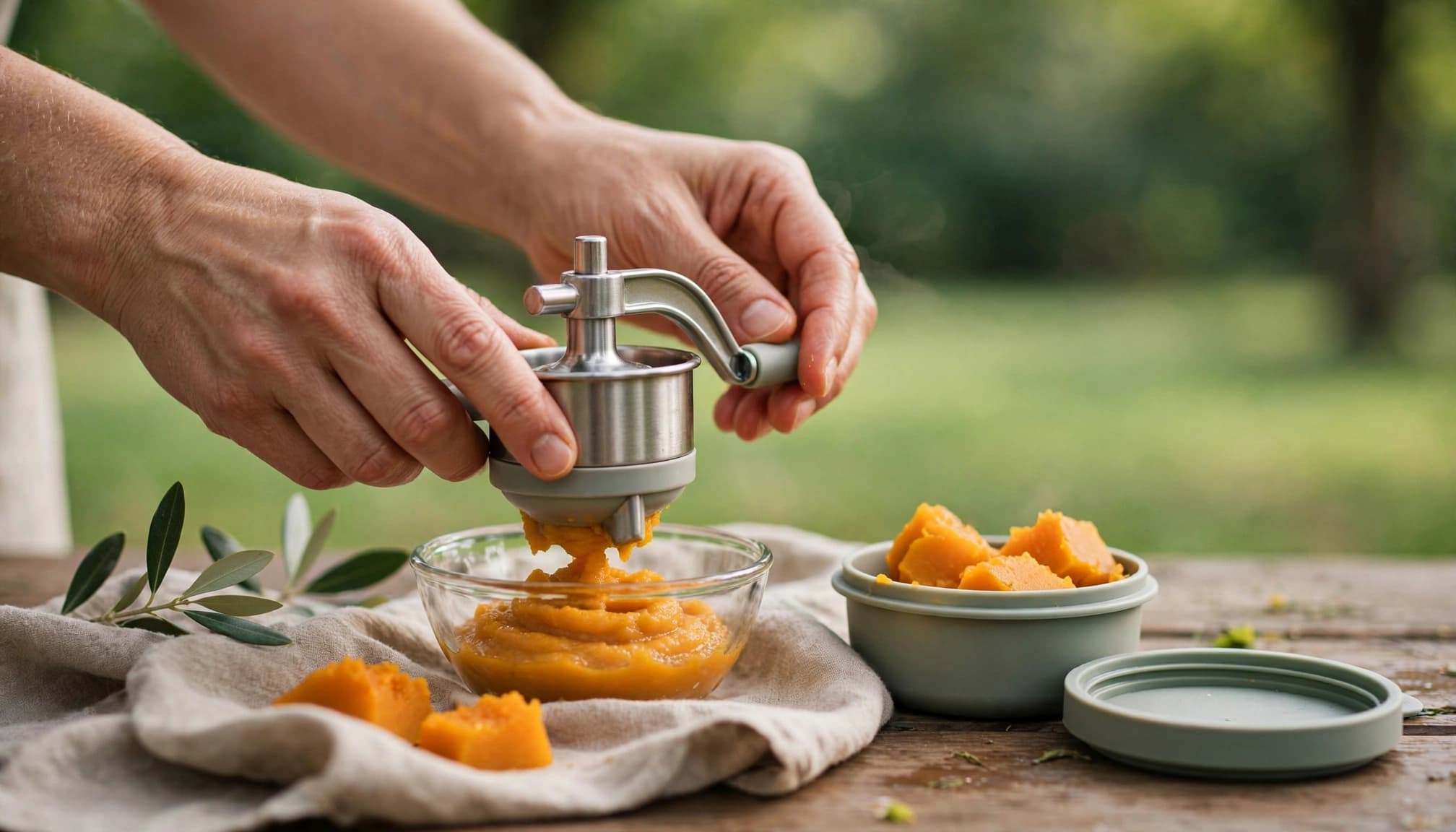
A portable food maker changes texture; it doesn't cook hard vegetables or keep food cold. Start with properly cooked, safely stored ingredients, then check the finished food before offering it.
Key Takeaways for Everyday Feeding
- Rotate sweet potato, carrot, squash, leafy greens, and other familiar foods instead of relying on one ingredient.
- Pair vegetables with iron-rich foods and some dietary fat to build more balanced meals.
- Change textures as your baby's skills develop, while keeping every piece soft and manageable.
- Stay close during meals, and keep food chilled and utensils clean when feeding away from home.
Simple family ingredients can provide variety without a cupboard full of specialized baby snacks.
Frequently Asked Questions
Does my baby need a vitamin A supplement?
Don't add vitamin A drops or supplements unless your baby's healthcare professional recommends them. Too much preformed vitamin A can be harmful.
Your clinician can review milk feeds, food intake, growth, and any medical concerns before deciding whether supplementation is appropriate. A varied diet and regular milk feeds are a more useful everyday focus than trying to increase one nutrient through supplements.
What if my baby refuses vegetables?
Keep offering them without pressure. A rejected carrot mash can appear another day alongside a familiar food, such as lentils or sweet potato.
You can also change the presentation when your baby's skills allow it. Some babies prefer a soft finger-food version to a spoon-fed mash.
However, don't disguise every vegetable with sweet fruit. Give your baby opportunities to experience different flavors, and let appetite guide how much they eat.
Make Fresh Food Fit Your Family's Day
Vitamin A foods for babies can come from the same ingredients you prepare for yourself. Focus on variety and safe preparation, rather than making every spoonful nutritionally perfect.
As your baby's skills grow, familiar foods can move naturally from smooth mashes to soft family-food textures.
The Wonder Wean's compact, hand-powered pocket blender helps you turn suitable everyday foods into baby food without electricity, including at restaurants or on outings. With soft ingredients and safe storage already handled, it's a practical way to offer healthy food on the go; you can Buy Now if it fits your family's feeding routine.