

Can Babies Eat Zucchini? Soft Ways to Serve It
Yes, babies can eat zucchini. Cook it thoroughly, then serve it as a smooth puree, soft mash, or tender finger food that suits your baby's skills.
Zucchini has a mild flavor that works on its own or alongside other familiar foods. The most important detail is softness: the food should be easy for your baby to manage.
Here's how to prepare zucchini for babies and make it part of a relaxed meal.
Key Takeaways
- Cook zucchini thoroughly and test that it squashes easily between your thumb and finger.
- Blend it smooth, mash it with a fork, or offer a soft piece your baby can grasp.
- Start with a small portion and let your baby decide how much to eat.
- Seat your baby upright and stay close throughout the meal.
- Pair vegetables with iron-rich foods to add variety to meals over time.
How to Prepare Zucchini for Babies
Start with a fresh zucchini and rinse it under running water. Use clean utensils and a clean preparation surface, then cook the zucchini thoroughly until it's soft all the way through.
Cooking time can vary, so look at the food rather than relying on a timer. Once it has cooled enough to touch, press a piece between your thumb and finger. It should squash easily without a firm center. If it doesn't, cook it longer and test it again.
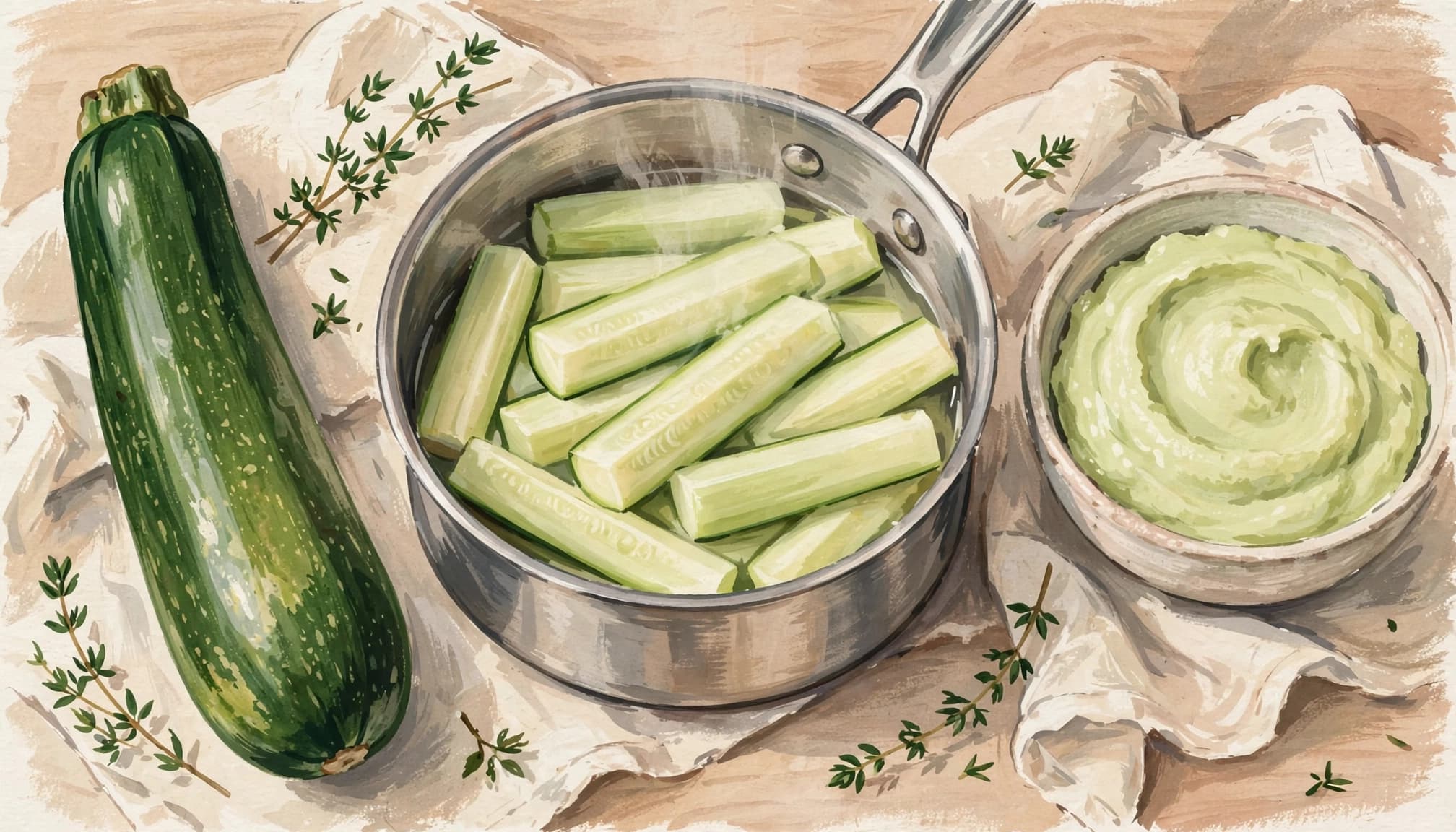
Set aside your baby's portion before adding salt or sauce to the rest of a family meal. Plain zucchini gives your baby a chance to taste the vegetable, and you can combine it with other foods they already enjoy.
Let the food cool before serving, and test its temperature. A small portion is plenty for a first taste. You can always offer more if your baby seems interested.
Choose a Texture Your Baby Can Manage
You can prepare the same cooked vegetable in several ways. Follow your baby's experience with food, and make changes gradually as their skills grow.
Smooth puree or soft mash
For a smooth puree, blend thoroughly cooked zucchini until no firm pieces remain. Add a little water if needed, then stir and check the consistency. A spoonable puree is easier to offer than one that's so thin it runs off the spoon.
If your baby already manages soft mash, press the cooked zucchini with a fork instead. Leave only small, tender lumps that squash easily. You can return to a smoother texture if your baby has trouble managing the mash.
You don't need a full-size appliance for every portion. Our guide to making baby food without a blender covers practical ways to prepare small servings by hand.
Tender finger food
For a baby who can manage finger foods, offer a very soft piece that they can grasp. Check the whole piece for firmness, including the center, and let it cool before placing it on the tray.
Your baby may hold, squeeze, or drop the food while learning. That's part of getting familiar with a meal. Stay nearby and give them time to handle each mouthful at their own pace.
Our guide to safe finger foods for babies has more ideas for preparing foods to match developing skills.
Keep Mealtimes Calm and Supervised
Seat your baby upright in a stable high chair and stay within arm's reach for the entire meal. Offer food when your baby is awake and able to focus on eating, rather than while they're playing or moving around.
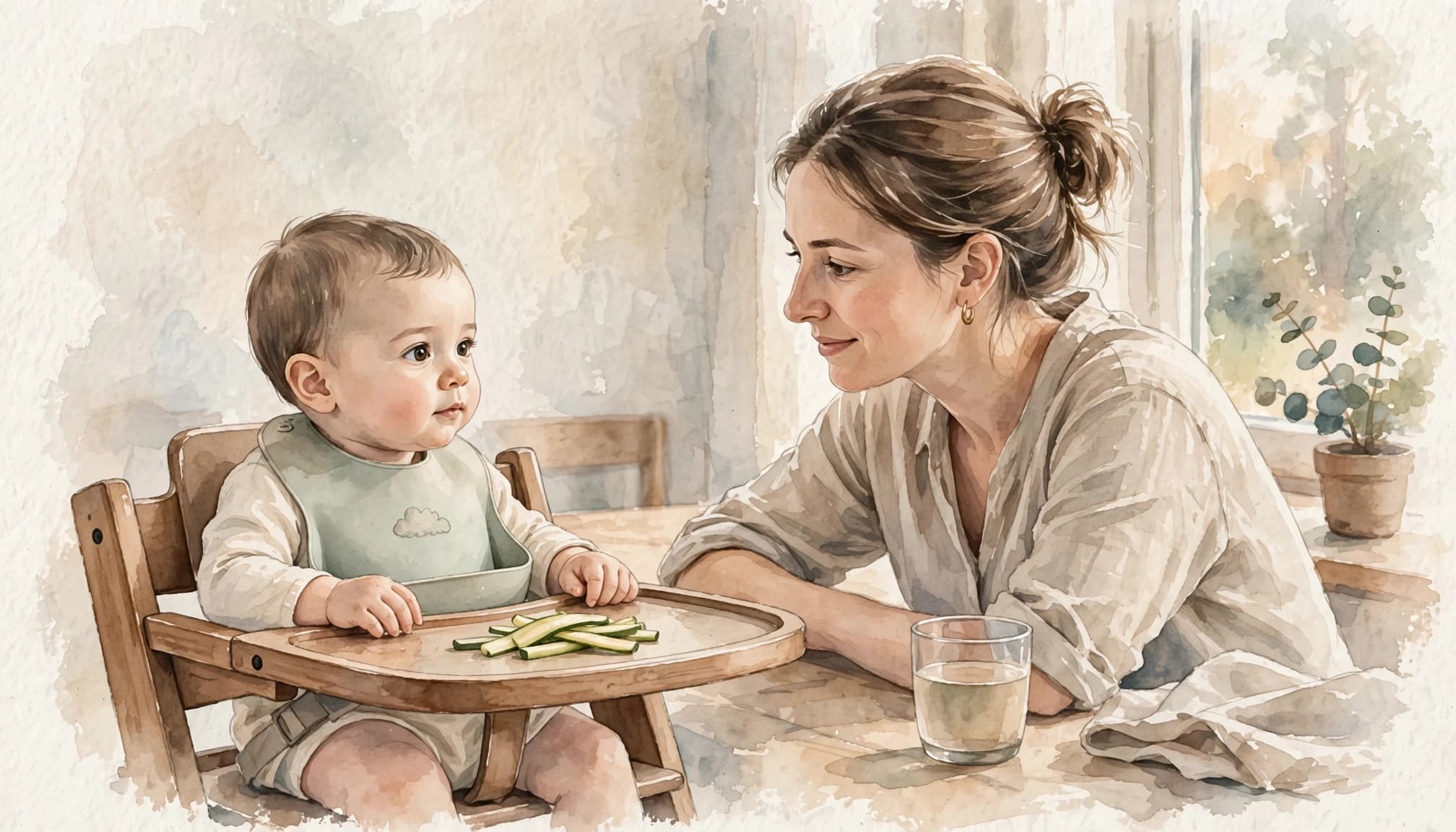
Avoid feeding in a reclined seat, stroller, or moving vehicle. If you're traveling, find a safe place to stop and seat your baby upright before offering food.
Gagging and choking are different. Gagging is often noisy and can happen as babies learn to manage food. A choking baby may be silent or unable to cry or cough effectively. Learn infant choking first aid and seek emergency help immediately if choking occurs.
Keep the mood low-pressure, too. A tablespoon or two may be enough for a new eater. Watch for signs that your baby has finished, such as turning away or losing interest, and avoid urging them to take another bite.
Simple Zucchini Serving Ideas
Once your baby has tried zucchini on its own, you can combine it with foods they've already eaten. Keep each ingredient soft and adjust the finished texture to match your baby's skills.
Add it to a vegetable mash
Mix cooked zucchini with soft sweet potato or potato. Mash the ingredients together, adding a little water if the mixture needs loosening. Start with more of the familiar ingredient if your baby is still getting used to the flavor.
You can also combine it with thoroughly cooked carrots. Test the carrots separately because they may stay firm longer than the other vegetables. Blend the mixture smooth or leave soft, tiny lumps for a baby who handles them comfortably.
These combinations are useful when you're preparing a family meal. Set aside plain cooked vegetables for your baby before seasoning the adult portions.
Pair it with soft grains or protein
Stir mashed zucchini into cooked oatmeal for a spoonable meal. Use plain oats and add enough liquid to make the mixture easy to move around the mouth.
For a more filling savory option, combine the vegetable with well-cooked, mashed lentils or beans. You can also add tender, finely shredded chicken to a texture your baby already manages. Keep the mixture moist and check for any firm pieces before serving.
A little plain, pasteurized whole-milk yogurt can make a vegetable mash creamy if your baby has already been introduced to dairy. Choose unsweetened yogurt and offer the combination in a small portion first.
Make a Pea and Zucchini Mash
Peas and zucchini make a simple green mash once your baby has tried each ingredient separately. Plain frozen peas are convenient because they're already shelled. Choose peas without added salt or sauce.
For a small batch, use half a medium zucchini, half a cup of peas, and a little warm water. Cook both vegetables until they're tender enough to squash easily, then mash or blend them together.
Add water a little at a time. The finished mash should be moist and spoonable rather than watery. Let it cool, then check the temperature and texture before offering it.
Pea skins can leave small bits in the mixture. If your baby needs a smoother consistency, blend longer and press the mash through a fine-mesh sieve. For a baby comfortable with soft lumps, a fork may create enough texture.
Serve a small amount in a separate bowl and keep the rest untouched for another meal. That way, you can respond to your baby's appetite without putting the whole batch on the table.
Build a Balanced Meal Around Vegetables
Vegetables add variety, but babies also need foods that provide iron when they begin eating solids. You don't have to fit every food group into each small serving. Instead, offer a range of suitable foods across meals.
Well-cooked lentils, mashed beans, tender meat, and iron-fortified infant cereal are options to include in your baby's routine. Prepare each food to match your baby's current texture skills. Meat needs to be tender and finely shredded or blended, while beans should mash easily.
Breast milk or infant formula continues to be an important part of your baby's diet. Early meals also give your baby time to become familiar with different tastes and textures.
If your baby has feeding difficulties or you aren't sure which textures are appropriate, talk with your pediatrician or another qualified feeding professional. Our ideas for simple whole-food meals for babies can also help you plan other combinations.
Store Baby Food and Pack It Safely
When preparing food ahead, spoon your baby's portion into a separate bowl. Discard food left in that bowl after the meal because a used spoon can transfer saliva into it.
Cool untouched cooked food promptly and refrigerate it in a covered container. Use refrigerated homemade baby food within one to two days, or freeze portions you won't use in that time. Small portions make it easier to thaw only what you need.
Thaw frozen food in the refrigerator. If you reheat a portion, stir it thoroughly and test the temperature before serving. Our guide to freezing and thawing baby food has more storage tips.
For a meal away from home, pack perishable food in an insulated bag with ice packs. Bring clean utensils and offer the food during a seated stop. Familiar ingredients and textures can make an outing easier for both you and your baby.
Frequently Asked Questions
Can I make zucchini puree without a blender?
Yes. Cook the zucchini thoroughly, then mash it with a fork or use a manual food maker. For a smoother texture, press the mash through a fine-mesh sieve and check that no firm pieces remain.
Can my baby eat zucchini often?
You can include it regularly as part of a varied diet. Offer other vegetables and iron-rich foods as well, so your baby has opportunities to experience different flavors and textures.
What if my baby doesn't like zucchini?
Your baby may need time to get familiar with a new flavor. Offer a small amount without pressure, then try it again another day. You can also mix it with a familiar food your baby already enjoys.
Should I add salt to my baby's portion?
Skip the added salt. Set aside a plain portion before seasoning the family meal, and use other familiar ingredients to add flavor.
A Simple Way to Serve Fresh Food
Zucchini is easy to adapt as your baby's eating skills grow. Keep it thoroughly cooked and soft, choose a manageable texture, and let your baby set the pace.
Our Wonder Wean can help you prepare healthy foods on the go. Its compact, hand-operated design lets you mash suitable cooked vegetables or soft fruit without electricity. Bring it along with safely packed food, or Buy Now to keep a portable baby-food maker ready for your next outing.