

Baby Food Freezer Storage for Busy Parents
Homemade meals become much easier when your freezer does part of the work. With the right baby food freezer storage routine, you can prepare small portions, protect freshness, and avoid wasting food during busy days.
The safest system is simple: cool food quickly, freeze portions you won't use soon, label everything, and thaw only what your baby is likely to eat. Recommendations can vary by your baby's age, feeding stage, ingredients, and healthcare provider's advice, so use this guide alongside personalized guidance from your pediatrician.
Baby food freezer storage basics
Freezing works best for plain fruit, vegetables, grains, beans, and suitable cooked proteins that have been prepared for your baby's current texture stage. Homemade purees and soft mashes should go into the freezer soon after preparation if you won't use them within the short refrigerator window.
Keep your freezer at 0°F (-18°C) or below. Cool cooked food promptly before freezing, but don't leave it sitting at room temperature while you wait for a convenient moment. Perishable food should be refrigerated or frozen within two hours. If the temperature is above 90°F, use a one-hour limit.
Choose ingredients your baby already handles safely. You might freeze unsweetened apple puree, mashed sweet potato, cooked pear, peas, or a vegetable and grain blend. Foods containing meat or egg yolk need a shorter refrigerator schedule, so freeze them promptly if you won't serve them within 24 hours.
A freezer is most useful when it supports your routine rather than encouraging large batches. Prepare enough for several meals, then keep portions small and easy to identify.
How to portion homemade baby food for the freezer
Portion size affects safety, waste, and convenience. Small servings thaw faster and help you heat only what your baby will probably eat.
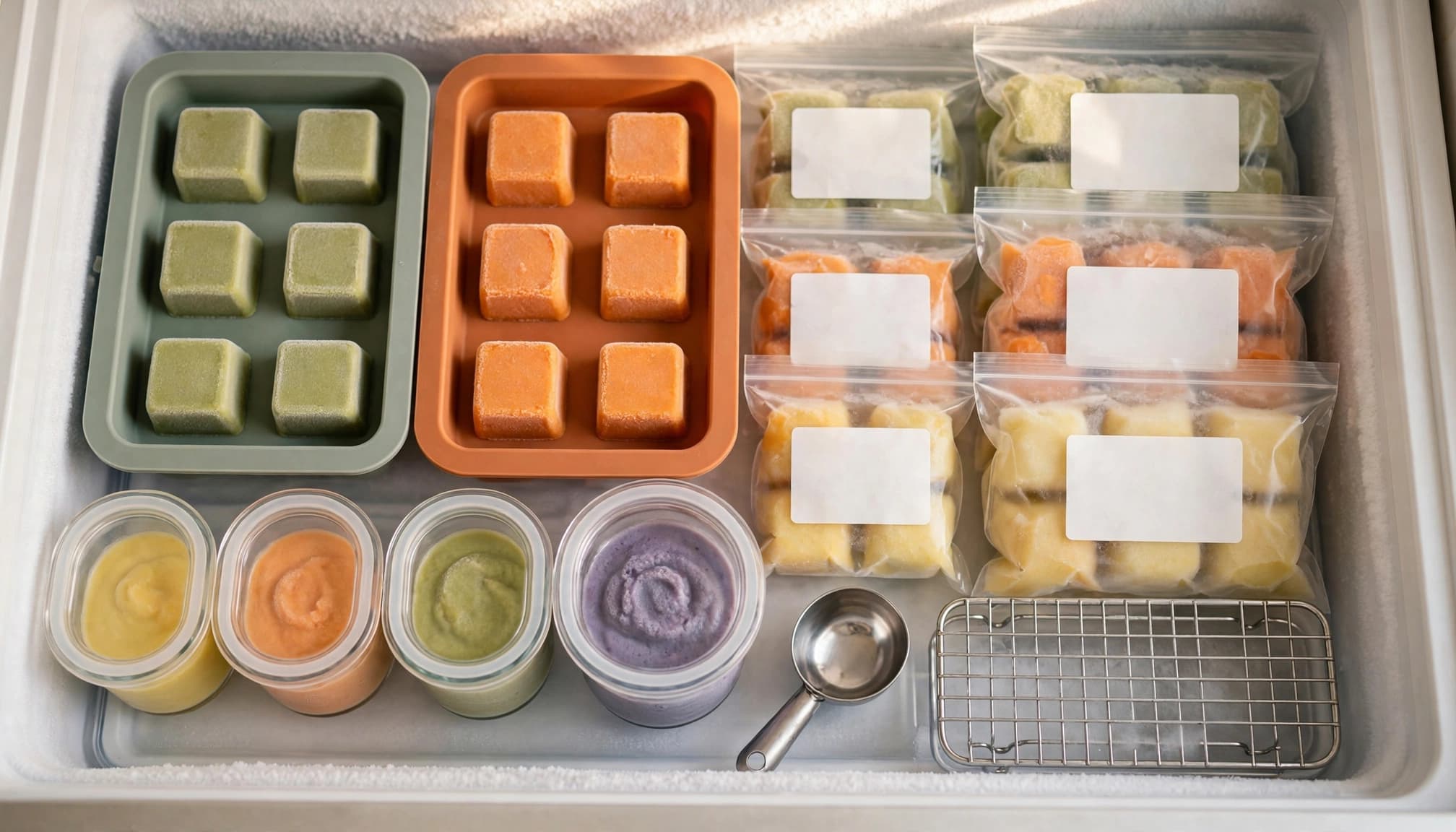
Start with small servings
For a new eater, one or two tablespoons may be enough. You can always add more to a clean bowl, but you can't safely return food after a used spoon has touched it.
Silicone freezer trays are useful for small cubes. Once the portions freeze solid, transfer them to a clean, airtight freezer container or bag. This frees the tray for another batch and makes it easier to combine different foods later.
Use slightly larger containers as your baby's appetite grows. Leave room for expansion, especially when using glass containers. Never fill a container to the lid because frozen food can expand and crack it.
Separate foods when helpful
Freezing ingredients separately gives you more flexibility. A few cubes of sweet potato, peas, pear, or cooked oats can become different combinations at mealtime.
You can also freeze a prepared blend if your baby already eats every ingredient safely. Keep ingredients separate when you're introducing a possible allergen or tracking which foods your baby tolerates.
Freeze food in the texture your baby currently manages. Some foods become thicker after freezing, so you may need to thin them with breast milk, formula, water, or another suitable liquid after thawing. Follow your pediatrician's guidance for texture and ingredients.
Containers, labels, and freezer organization
Good organization prevents the end-of-day guessing that leads to forgotten food. It also helps anyone else feeding your baby identify the right portion quickly.
Choose freezer-safe containers
Use clean, covered containers, silicone trays designed for freezing, or freezer bags made for food storage. Airtight packaging helps prevent freezer burn and keeps odors from spreading between foods.
Glass can work well when it is labeled freezer-safe and has enough room for expansion. Place containers on a flat surface until the food freezes, then stack them once solid.
Avoid storing baby food in a container that is cracked, stained, leaking, or difficult to clean. Wash reusable containers and utensils with hot, soapy water after each use.
Label every portion
Write the food name and preparation date on each container. If the food includes several ingredients, list them briefly. This matters when you have frozen multiple batches that look similar.
Use the oldest safe portion first. Arrange newer food behind older food so the next meal is easy to find. A small basket or freezer bin can keep baby portions together instead of scattered among family meals.
Labels also help caregivers follow your plan. Include texture notes when needed, such as "smooth puree" or "soft mash," but make sure the food matches your baby's current feeding ability.
How long does homemade baby food last?
Storage times depend on the food, temperature, preparation method, and guidance you follow. The safest household routine uses short refrigerator windows and a conservative freezer schedule.
| Storage method | Practical timeline | Best next step |
|---|---|---|
| Refrigerator at 40°F or below | 1 to 2 days | Serve soon or freeze |
| Puree with meat or egg yolk | Up to 24 hours | Serve or freeze promptly |
| Freezer at 0°F or below | 1 to 2 months for a simple household rule | Use the oldest portion first |
| FDA frozen homemade baby food guidance | 3 to 4 months | Follow current official guidance and food quality expectations |
The FDA lists three to four months for frozen homemade baby food, while FoodSafety.gov provides a broader one-to-two-month guideline for some homemade foods. Using frozen portions within one to two months gives busy families an easy, conservative routine.
Use the refrigerator clock carefully
Refrigerate prepared food within two hours, or within one hour when the temperature is above 90°F. Most homemade baby food is best used within one to two days in a refrigerator at 40°F or below.
Purees containing meat or egg yolk should follow a shorter, 24-hour schedule. If you won't use a batch soon, freeze it instead of letting it sit in the refrigerator until you forget when it was made.
Trust safe habits, not appearance
Food can look and smell normal while still being unsafe. Discard anything with mold, an unusual odor, or a strange texture. Also throw away food when you don't know how long it has been warm.
Freezing doesn't make spoiled food safe. Start with fresh ingredients, clean preparation surfaces, and containers that seal properly.
Thawing and reheating homemade baby food
Thawing and reheating deserve the same care as preparation. The goal is to warm one serving evenly without repeatedly moving the entire batch through temperature changes.
Thaw food in the refrigerator
Move a frozen portion to the refrigerator the night before you plan to serve it. Place it in a covered container to prevent leaks and contact with other foods.
You can also warm a frozen portion safely, but don't thaw baby food on the counter. Food that sits at room temperature can enter the temperature range where bacteria multiply quickly.
After thawing, stir the food well. Freezing can separate water from thicker ingredients, so check the texture and add a suitable liquid if needed.
Heat only one serving
Warm the amount your baby is likely to eat. Reheating the same batch multiple times makes temperature control harder and can affect quality.
If using a microwave, stir thoroughly because hot spots can form even when the outside feels cool. Heat food until it is hot throughout, then let it cool before serving. The USDA recommends reheating leftovers to 165°F.
Test the temperature yourself before offering it. A clean finger or small taste can help you check for hot areas, but always use a clean utensil. Never serve food straight from the microwave without stirring and checking.
Reheat once, serve the portion, and keep the untouched remainder separate from your baby's bowl.
Preventing contamination and reducing waste
Serve baby food from a separate bowl rather than feeding directly from the storage container. Spoon a small amount into the bowl, then refill it with a clean adult spoon if your baby wants more.
Once a spoon has touched your baby's mouth, saliva can introduce bacteria. Don't return leftover food from that bowl to the refrigerator or freezer. Discard it after the meal, even if the food still looks fine.
Keep untouched food in a clean, covered container and refrigerate it promptly. Store raw and cooked foods separately, and wash knives, cutting boards, hands, and utensils before preparing baby food.
Check cooked meals for bones, skin, gristle, hard pieces, and tough fragments before mashing. Avoid honey before 12 months, as well as foods with excessive salt, added sugar, or strong sauces.
Your baby should sit upright and be supervised throughout meals. Texture should match your child's current skills, and your healthcare provider can help with questions about allergens, readiness, reflux, or feeding development.
Packing frozen baby food for outings
A frozen portion can work for a park visit, daycare, or a short trip when you can keep it cold. Place it in a clean, sealed container inside an insulated bag with ice packs.
Keep the bag closed until mealtime and never leave it in a hot car. If the food warms for too long or you aren't sure how long it has been out, throw it away.
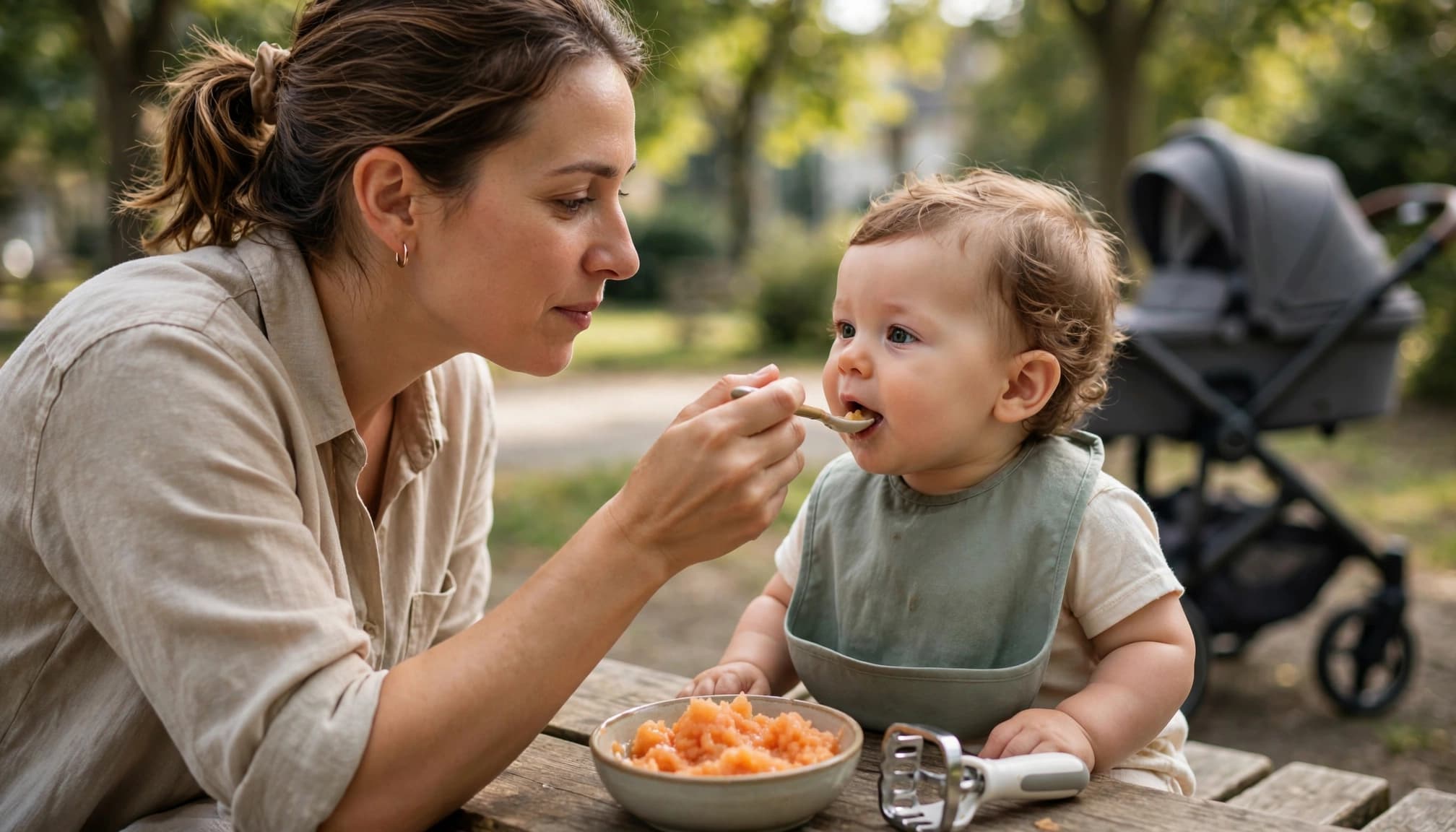
Pack only what you need
Count the meals you expect to serve and add one small backup portion for delays. Separate servings make it easier to keep the remaining food cold and reduce waste.
A practical feeding kit can include:
- A lidded bowl and baby spoon.
- A clean spare spoon.
- A washable bib and cloths.
- Hand wipes or sanitizer for adults.
- A cold pack and insulated bag.
- A sealable bag for used utensils and messy items.
For longer outings, fresh ingredients may be simpler than prepared puree. A whole banana or avocado can stay intact until mealtime. Once cut or mashed, treat it as perishable food.
Use fresh food when cold storage is uncertain
If you can't keep a prepared portion cold, make a fresh small meal instead. Soft ripe banana, avocado, plain cooked vegetables, or other age-appropriate foods can be mashed close to serving time.
At a restaurant or family gathering, ask for plain unsalted vegetables, rice, beans, oatmeal, or baked potato. Avoid heavily seasoned foods and check every bite for hard pieces.
The compact, hand-powered Wonder Wean can help you mash soft fruit or cooked vegetables without electricity. If it fits your family's routine, you can Buy Now and keep a simple feeding option available beyond the kitchen.
Baby food freezer storage FAQ
Can I freeze food in an ice cube tray?
Yes, a clean freezer-safe silicone tray can help create small portions. Cover the tray while freezing, then move solid cubes into a dated, airtight freezer bag or container. Label the food and preparation date so you can use older portions first.
Can I refreeze thawed baby food?
Avoid refreezing food that has thawed completely. Thaw only the portion you expect to serve, and keep it refrigerated while waiting for mealtime. If the food has been warm for an unknown period, discard it.
Can I save food left in my baby's bowl?
No. Once your baby's spoon has touched the food, saliva may contaminate it. Keep the main portion in a separate container and serve small amounts into the bowl as needed.
What should I do if frozen food changes texture?
Stir the thawed food and adjust the texture with a suitable liquid if your baby already uses it safely. Freezing can change thickness and make some foods watery. Follow your pediatrician's advice about the consistency appropriate for your baby's stage.
Conclusion
A dependable baby food freezer storage routine comes down to small portions, clear dates, short refrigerator windows, and careful temperature control. Thaw food in the refrigerator, reheat only one serving, stir it well, check for hot spots, and discard anything that touched your baby's mouth.
When you're away from home, keep prepared food cold or mash a fresh, soft ingredient close to mealtime. The Wonder Wean helps parents feed babies healthy foods on the go by mashing suitable fruit and cooked vegetables without electricity, so fresh feeding can remain practical even on the busiest days.