

How to Cut Baby Finger Foods Safely When Starting Solids
A ripe avocado looks simple enough to put on the high-chair tray. Then you wonder whether a slice is too big, too slippery, or too hard for your baby to manage. With baby finger foods, texture and shape matter together. A good cut helps your baby hold food, while a soft texture helps them break it down.
You don't need a drawer full of special snacks. You can adapt many everyday foods once you know what to soften, what to cut, and what to leave off the tray.
Start with your baby's feeding skills
The CDC recommends starting solids at about 6 months. That age is a starting point, not a deadline for finger foods. Breast milk or infant formula remains an important part of your baby's diet as solids are introduced.
Look for readiness beyond interest in your plate
A baby who's ready for solids can hold their head steady and sit upright with support. They can also bring objects toward their mouth and are learning to swallow food rather than push it straight back out.
Some babies begin with smooth or mashed foods. Others can manage very soft finger foods soon after starting. If your baby was born prematurely or has swallowing concerns, ask your pediatrician which textures to offer first.
Let the pieces change as your baby does
Early self-feeders often grab food with their whole hand. A soft strip that sticks out of their fist may be easier to eat than tiny diced pieces they can't pick up.
Later, as your baby learns to pick things up between thumb and forefinger, offer smaller soft pieces. Follow what you see at meals: can your baby grasp the food, move it around, and manage it comfortably? Don't rush to smaller cuts simply because another baby the same age eats them.
How to cut baby finger foods safely
No cut makes food risk-free. Before it reaches the tray, check whether the food is soft enough, whether its shape could block an airway, and whether your baby can manage it at their current stage.
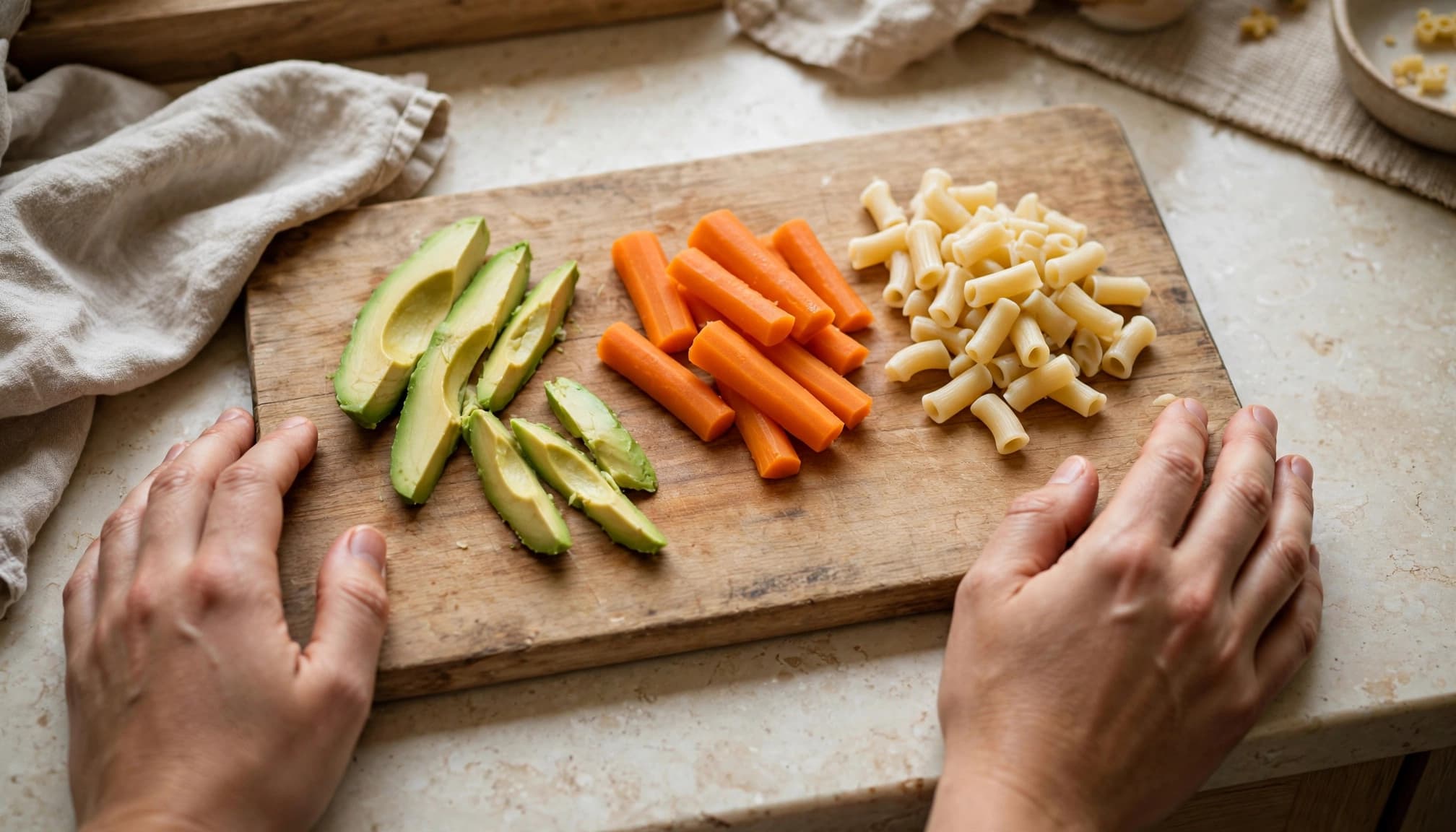
Soften food before deciding its size
Press a cooked piece between your thumb and finger. For a baby beginning finger foods, it should squash easily without a hard center. Cook firm fruits and vegetables until you can mash them with a fork. Tender food is easier to manage even before your baby has teeth.
Also consider the whole bite. Remove pits, bones, tough peels, and stringy parts. If a strip of food is rubbery or tough enough to pull away in a large piece, cook it longer, shred it finely, or serve it mashed instead.
Change round foods into non-round pieces
Grapes and cherry tomatoes need more than a cut across the middle. For a baby ready to manage small pieces, cut them lengthwise into quarters, then assess whether the pieces need further cutting or mashing. Flatten blueberries; cut or mash other round berries according to their size and softness.
Avoid coin-shaped slices of sausage or hot dog. These foods are worth skipping for an early eater. If served to an older child, the CDC advises cutting cylindrical foods into short, thin strips rather than rounds.
Prepare fruits and vegetables for early self-feeding
Produce is a useful place to start because you can often serve part of the family meal. Wash it well, then adjust its firmness and shape before your baby eats.
Fruit: ripe, tender, and free of pits
A ripe banana can be offered as a soft strip or mashed. Cut avocado into graspable slices; if it's slippery, a light coating of finely ground oats can help your baby hold it. Remove pits and any peel your baby cannot manage.
Cook firm apple and pear until very soft instead of offering raw chunks. You can serve tender slices to a baby using a whole-hand grasp, or mash the fruit for an earlier eater. With berries, check both texture and shape. A soft berry may still need to be flattened, cut, or mashed.
Vegetables: cook through the center
Steam or roast carrot and sweet potato until a piece squashes easily. Then offer a soft baton to a baby who can grasp it, or mash it for a baby learning to handle lumps. Raw carrot sticks and firm carrot coins aren't suitable substitutes.
Broccoli can work when both the floret and stem are very soft. Leave enough tender stem for a whole-hand grip, and watch for firm bits. Cook zucchini, green beans, and peas thoroughly too. Mash peas and other small round vegetables for an early eater rather than scattering them whole across the tray.
Serve protein and grains in manageable forms
Finger foods can do more than provide practice. Around the time solids begin, babies also need foods that supply iron, alongside breast milk or formula. The safest serving form still depends on each food's texture.
Keep meat, fish, eggs, and beans tender
Cook meat and poultry thoroughly, remove skin, fat, and bones, and finely shred or mince tender portions. Mixing dry shreds into mashed sweet potato or another moist food may make them easier to manage. Flake fully cooked fish carefully and check for bones before serving.
A fully cooked omelet can be cut into soft strips. Beans and lentils work well mashed or flattened; check for firm skins and whole round beans. If a protein feels dry, chewy, or difficult to squash, change its texture before offering it.
Check bread, pasta, and nut butter
Lightly toasted bread cut into strips may be easier to hold than soft bread that bunches into a sticky wad. Cook pasta until soft, then choose pieces your baby can grasp or cut them into small, manageable bites as their skills improve.
Never serve whole nuts or a thick spoonful of nut butter. For a baby ready to try peanut or another nut food, stir a small amount of smooth nut butter into oatmeal or yogurt until it is no longer thick and sticky. You can also spread it thinly on an appropriate soft food. Ask your pediatrician about introducing allergens if your baby has severe eczema, a known food allergy, or other concerns.
Know which foods to avoid or modify
A food can be nutritious and still pose a choking hazard in its usual form. The CDC's choking-hazard guidance calls out whole round foods, hard foods, sticky foods, and tough chunks.
Keep these common foods off a baby's tray unless you can prepare them appropriately:
- Skip whole grapes, cherry tomatoes, and berries. Cut round produce lengthwise into small pieces, flatten it, or mash it to suit your baby's skills.
- Don't serve raw apple chunks, raw carrots, popcorn, whole nuts, hard candy, or large chunks of cheese.
- Replace tough meat chunks and sausage coins with tender, finely prepared protein. Serve nut butter thinned or thinly spread, never as a thick blob.
Honey is a separate concern: don't give it before 12 months, including in foods that contain honey, because of the risk of infant botulism. Cutting or cooking a choking hazard also doesn't mean every baby is ready to eat it. When in doubt, choose a soft mash and revisit the finger-food version later.
Make every meal a seated, supervised meal
Good food preparation works best with a calm setup. Give your baby time to handle one piece at a time, and stay close enough to notice how eating is going.
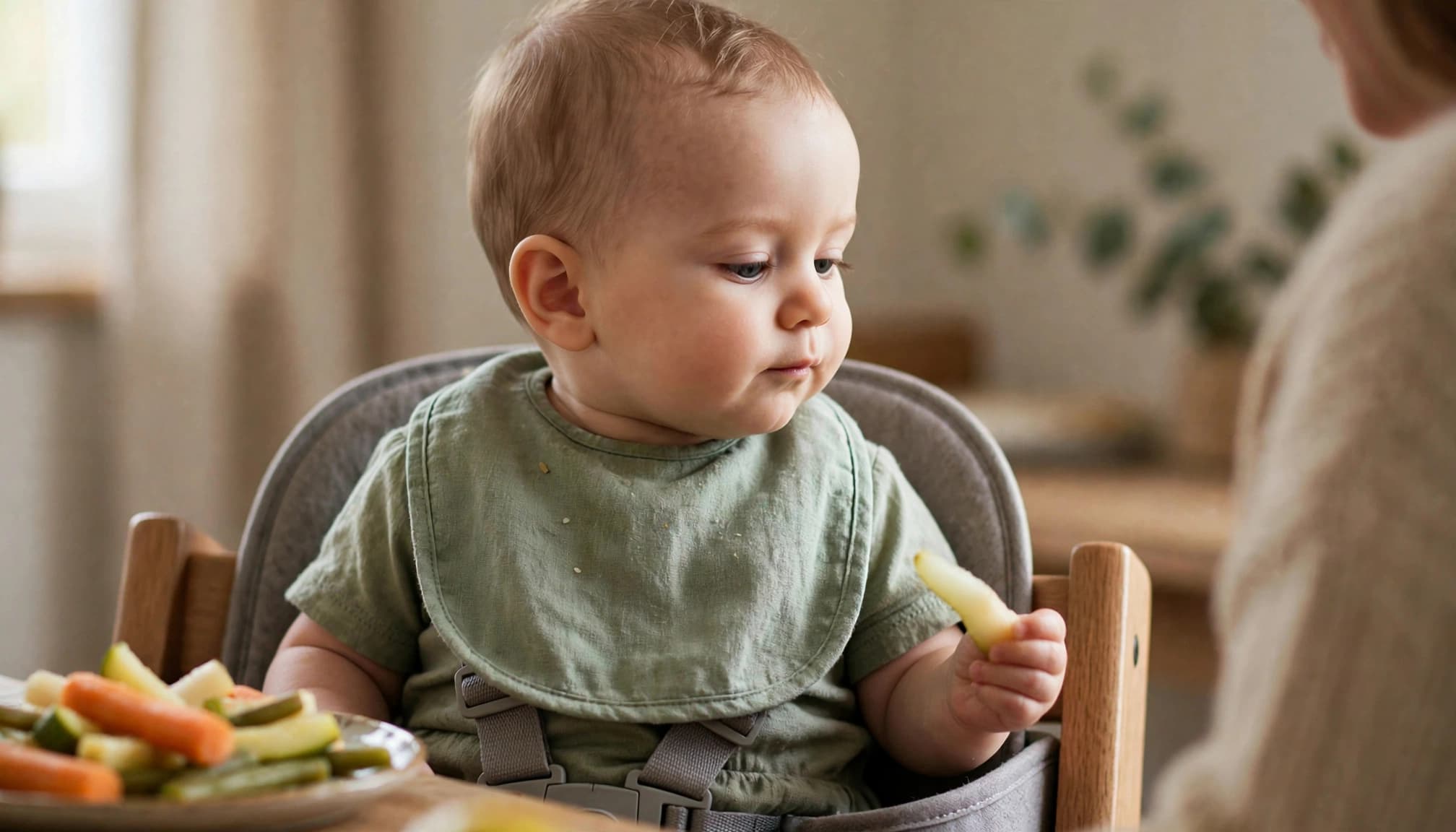
Sit upright and stay nearby
Seat your baby upright in a stable high chair or another safe feeding seat. Stay attentive throughout the meal; don't leave them eating while you step into another room. Avoid offering food while your baby crawls, lies back, rides in a stroller, or sits in a moving car.
Put a small amount of food on the tray and offer more as needed. This makes it easier to see what your baby has picked up. If they turn away or seem finished, you can stop rather than coaxing another bite.
Tell gagging from choking
Gagging can happen as babies learn to move food around their mouths. A gagging baby often makes noise, coughs, or retches because air is still moving. Stay close and watch carefully.
Choking may be quiet. A baby who cannot breathe, cry, or cough effectively needs immediate help. Call emergency services and use infant choking first aid. An infant CPR and choking-response class gives you a chance to practice those steps before you need them. If your baby repeatedly struggles with a texture, pause that food and speak with your pediatrician.
Keep everyday meals simple at home and away
You don't need separate recipes for every baby meal. Before adding salt or a tough topping to the family plate, set aside some cooked vegetables, tender protein, or ripe fruit. Adjust the portion by mashing it or cutting it to match your baby's skills.
When you're away from home, familiar foods make decisions easier. A ripe banana, soft avocado, or well-cooked vegetable can be prepared when your baby is ready to sit and eat. Introduce new allergens at home rather than for the first time during a trip, so you can watch for a reaction.
Convenient packaged snacks have their place, but puffs and crackers don't need to replace produce, beans, eggs, or other nourishing foods. Whatever you bring, keep the same seated, supervised routine you use at home.
Key takeaways
- Start solids at about 6 months when your baby shows readiness, then match finger foods to their eating skills.
- Choose food that squashes easily. Offer graspable soft pieces to an early self-feeder and smaller soft pieces as their grasp improves.
- Cook hard produce, change round shapes, and remove bones, pits, tough skins, and other hard parts.
- Keep your baby upright and within close watch. Even carefully cut food carries some choking risk.
Frequently asked questions
Are tiny pieces safer than long strips?
Not automatically. An early self-feeder may find a soft, graspable strip easier to hold than tiny pieces. A small hard cube is still a hazard. As your baby develops a pincer grasp, you can offer smaller pieces, provided they're soft and manageable.
Can a baby eat grapes when starting solids?
Don't offer whole grapes. For an early eater, mashing may be the better choice. When your baby can manage small soft pieces, cut grapes lengthwise into quarters and check that the pieces suit their skills. Stay nearby while they eat.
What if my baby gags on a finger food?
Watch whether your baby is making noise, coughing, and breathing. Gagging can be part of learning, but frequent difficulty with a particular texture deserves a pause and a conversation with your pediatrician. If your baby cannot breathe, cry, or cough effectively, treat it as choking and respond immediately.
A safer start with real food
That first avocado slice doesn't need a perfect measurement. It needs a texture your baby can squash, a shape they can manage, and an adult watching while they eat. Start with the baby in front of you, then change the food as their skills grow.
The Wonder Wean can help you offer healthy food on the go when a soft mash suits your baby better than finger foods. Its hand-powered baby food maker lets you prepare a fresh portion from suitable ingredients without electricity. At a restaurant or away from home, you can Buy Now to keep that option close, then seat your baby upright and supervise every bite.