

Vitamin E Foods for Babies: Easy, Safe Serving Ideas
A food can be rich in vitamin E and still need a few changes before it belongs on your baby's plate. The most useful vitamin E foods for babies include smooth nut or seed butters, soft-cooked greens, and small amounts of vegetable oils mixed into food.
You don't need special recipes or supplements to make room for these foods. Safe textures and a varied menu matter more than counting nutrients in every spoonful.
Start with your baby's readiness, then choose simple serving ideas that fit their feeding skills.
Key Takeaways
- Begin complementary foods around 6 months, when your baby shows developmental readiness.
- Offer nuts and seeds only in modified forms, such as smooth, thinned butter or finely ground ingredients mixed into moist food.
- Keep breast milk or infant formula central during the first year, and introduce new allergens thoughtfully.
- Vitamin E supplements aren't a routine addition to baby meals unless a clinician recommends them.
What Vitamin E Does for Your Baby
Vitamin E helps protect cells from damage and supports normal immune function. It's a fat-soluble nutrient, so the body absorbs it along with dietary fat.
These normal functions don't mean that extra vitamin E will prevent illnesses or improve development beyond meeting nutritional needs.
Understand the daily amounts without chasing them
The NIH Office of Dietary Supplements lists an Adequate Intake of 4 mg daily for babies birth through 6 months. For babies 7 through 12 months, the amount is 5 mg daily.
These are Adequate Intakes, rather than Recommended Dietary Allowances, because available evidence wasn't sufficient to establish infant RDAs. They describe total intake, including breast milk or formula, rather than a target your baby must reach through solids alone.
Keep the whole menu in view
Before starting solids, breast milk or infant formula supplies nutrition. Once complementary feeding begins, milk feeds remain important while food gradually adds nutrients and feeding practice.
Include vitamin E sources alongside iron-rich foods for babies, rather than letting one nutrient dominate the menu. For example, stir thinned seed butter into iron-fortified oatmeal or serve soft broccoli with mashed lentils. Small, varied meals leave room for both.
Vitamin E Foods for Babies and How to Serve Them
The NIH names nuts, seeds, vegetable oils, green leafy vegetables, and fortified cereals as vitamin E sources. Preparation makes these everyday ingredients more suitable for babies.
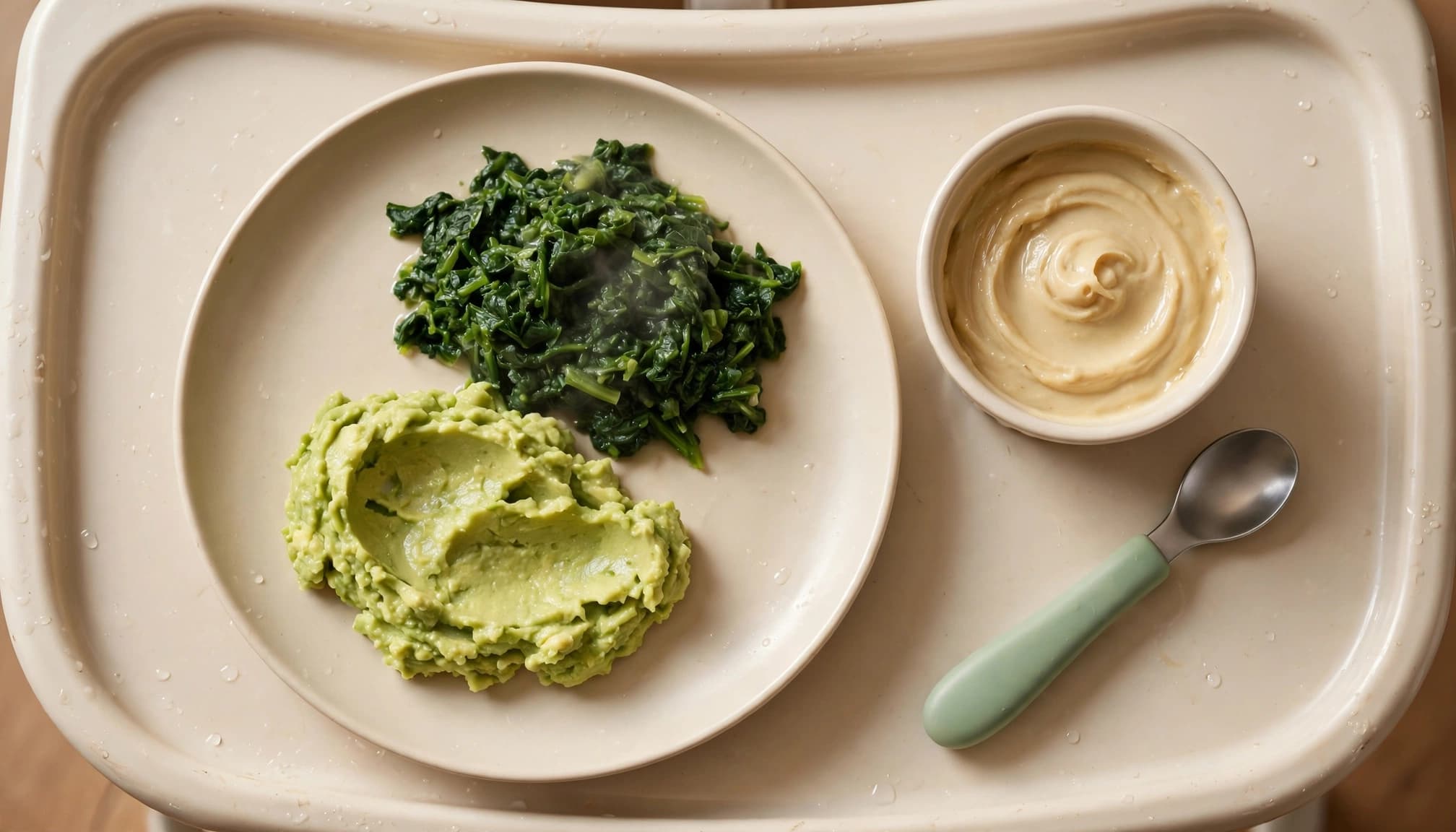
Use these options according to your baby's skills and allergy history.
| Food | Baby-appropriate serving idea | Main consideration |
|---|---|---|
| Sunflower seeds | Use smooth sunflower seed butter, thinned into oatmeal or puree. | Never serve whole seeds or sticky spoonfuls. |
| Almonds or peanuts | Stir smooth nut butter into a familiar moist food until fully combined. | Tree nuts and peanuts are allergens. |
| Spinach | Cook until tender, then puree or finely chop into a moist mash. | Remove tough stems and avoid stringy clumps. |
| Broccoli | Steam until very soft, then mash or offer an appropriately sized soft floret. | The stem must soften too. |
| Sunflower or safflower oil | Stir a small amount into cooked vegetables, beans, or lentils. | Mix into food rather than offer oil by itself. |
| Vitamin E-fortified cereal | Prepare to a soft consistency suited to your baby. | Vitamin E content depends on the cereal. |
Nut and seed products provide concentrated food sources, while vegetables add variety. However, a small baby portion doesn't automatically supply the full daily amount.
Choose plain, unsalted nut or seed butter without honey or added sweeteners. Fortified infant cereal can also have a useful place alongside whole foods; you don't need to exclude it to offer a mostly homemade menu.
Match Serving Textures to Your Baby's Skills
The CDC recommends introducing complementary foods at about 6 months, with introduction before 4 months not recommended. Readiness includes steady head control, sitting upright with support, and being able to swallow food.
Our guide to safe first foods for babies covers this starting point in more detail.
For babies beginning solids
Offer small amounts of smooth or well-mashed food. Cook spinach thoroughly and blend it into a familiar vegetable mash so it doesn't form stringy pieces.
For nut or seed butter, stir a small amount with warm water, prepared formula, breast milk, or puree. Continue mixing until no sticky clumps remain. Thick butter straight from the jar is a choking hazard, even when it's smooth.
Start with a few tastes and follow your baby's interest. Closing their mouth or turning away means it's time to stop.
For babies managing more texture
As skills develop, offer lumpier mashes and soft finger foods. Broccoli should squash easily between your fingers, including its stem. A floret with a graspable stem can suit early self-feeding when prepared this way.
Later, as a pincer grasp develops, smaller soft pieces may be easier to pick up. An older baby who manages toast can try a thin smear of nut butter on toast fingers.
You can also practice combining baby-led weaning with purees. Your baby doesn't need one fixed feeding style.
Introduce Nut and Seed Foods Thoughtfully
Peanut and tree nuts are common allergens. Sesame is another major allergen, and other seeds can cause reactions too. A food's nutritional value doesn't remove its allergy risk.
For most babies, allergenic foods can join the menu when complementary feeding begins, rather than being delayed without a medical reason.
Make the first taste easy to observe
Introduce one new allergenic food at a time, when your baby is well and you can stay nearby afterward. Choose earlier in the day rather than during travel or just before bedtime.
Mix it into a food your baby has already tolerated. For example, introduce thinned almond butter in familiar oatmeal instead of combining several new ingredients.
The CDC suggests waiting 3 to 5 days between new foods to help identify reactions. Once your baby tolerates an allergen, continue offering it regularly in a safe form.
Know when medical guidance matters
Talk with your pediatric clinician before introducing peanut if your baby has severe eczema, an egg allergy, or a previous food reaction. Some higher-risk babies need a clinician-led introduction plan between 4 and 6 months.
Stop feeding if symptoms appear. Hives, facial swelling, or vomiting after a new food need prompt medical attention. Breathing difficulty, tongue swelling, collapse, or severe symptoms require emergency care.
Thinning nut butter reduces its choking risk, but it doesn't reduce the food's ability to cause an allergic reaction.
Prevent Choking at Every Meal
Some vitamin E sources need careful modification. Never offer whole nuts, whole seeds, or spoonfuls of thick nut or seed butter to a baby. Finely ground ingredients should disappear into a moist food rather than remain loose and dry.
Likewise, cook vegetables until tender and remove tough stems or skins. Cutting a hard food into tiny pieces doesn't make it suitable for a new eater.
Seat your baby upright in a stable high chair or secure feeding seat. Stay within arm's reach throughout the meal, and avoid feeding while your baby reclines in a stroller or car seat.
Gagging often includes noise or retching as babies learn to manage food. Choking can leave a baby unable to breathe, cry, or cough effectively, and it may be silent.
Learn infant choking first aid and CPR before starting solids. If choking occurs, act immediately using infant first-aid guidance and seek emergency help. A soft-looking meal still needs attentive supervision.
Easy Meal Combinations With Familiar Ingredients
Once your baby has tolerated each ingredient, vitamin E sources can fit into ordinary meals. Keep portions small and prepare more only if your baby remains interested.
Oatmeal with thinned seed butter is a simple breakfast option. Prepare iron-fortified infant oatmeal as directed, then mix in smooth sunflower seed butter until evenly combined. Add more liquid if the mixture becomes sticky.
For a vegetable meal, cook broccoli until soft and mash it with well-cooked lentils. A small amount of sunflower oil can loosen the mash. Our vegetable mash recipes offer more ways to vary soft vegetables without salty sauces.
Another option is cooked spinach blended into mashed potato or sweet potato. Puree thoroughly for a beginner, then leave soft lumps as your baby's skills grow.
You can also stir already-tolerated smooth almond butter into plain, pasteurized yogurt. Thin it first so the final mixture has no thick pockets. Yogurt can be a food before age 1, but it shouldn't replace breast milk or formula as the main drink.
Skip honey before 12 months, including honey mixed into butter or cereal. Added salt and sweeteners aren't needed for these meals.
Keep Meals Simple When You're Away From Home
Pack familiar foods rather than introducing a new allergen during an outing. A small container of vegetable mash or oatmeal with already-tolerated seed butter can keep the meal straightforward.
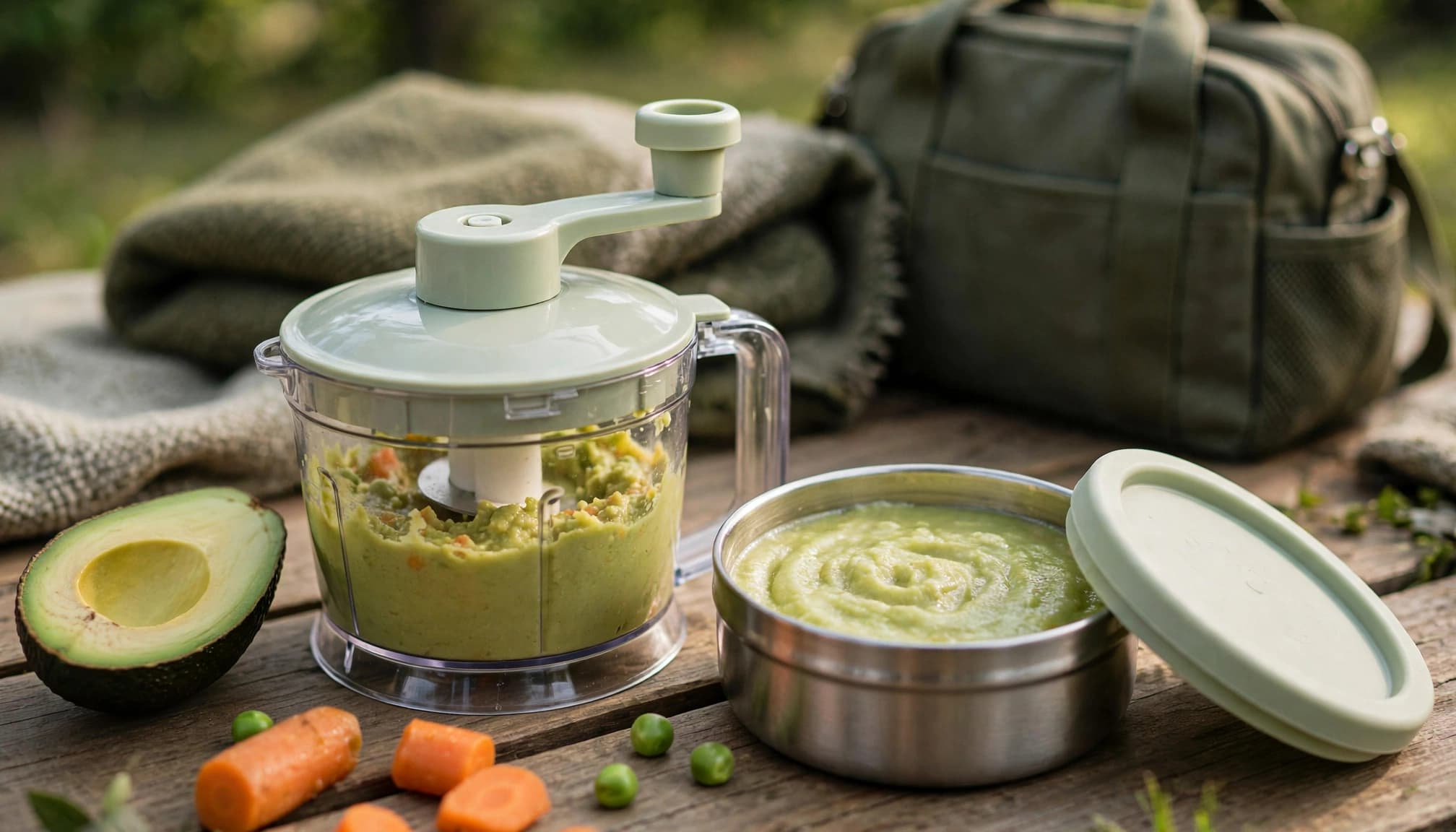
Wash your hands before preparing food and use clean utensils. Keep perishable prepared meals chilled in an insulated bag with ice packs. Discard food left in a bowl after feeding, because the spoon can transfer saliva into it.
On hot days, food warms quickly. Don't leave baby meals sitting in a parked car or on a picnic table while you finish other activities.
Stop somewhere your baby can sit upright securely before offering food. Being on the go shouldn't mean eating in a moving vehicle. Also carry enough breast milk or formula for your usual feeding routine; a few spoonfuls of solids don't replace milk feeds.
Frequently Asked Questions
Does my baby need a vitamin E supplement?
Vitamin E supplements aren't a routine requirement for healthy babies. Breast milk or formula, followed by a varied complementary diet, usually supplies this nutrient.
Babies with certain medical conditions affecting fat absorption may need individual treatment. Your pediatric clinician should guide supplementation and dosing rather than a parent adding an over-the-counter product to food.
Can babies eat spinach and nut butter around 6 months?
Yes, when they're developmentally ready and the food has an appropriate texture. Cook and puree spinach, and thin smooth nut butter into a familiar moist food.
However, seek guidance before peanut introduction for severe eczema, egg allergy, or a previous reaction. Never serve whole nuts or thick spoonfuls of butter.
Make Vitamin E Part of Everyday Feeding
Vitamin E fits into a varied menu through carefully prepared nut or seed foods, soft vegetables, and oils mixed into meals. Keep texture and supervision at the center of every serving.
Our Wonder Wean can help you offer healthy foods even on the go. The lightweight, compact manual baby food processor lets you mash ripe fruit or soft-cooked vegetables without batteries, cords, or electricity. It costs $39.99 and has minimal parts for cleaning. If it fits your family's routine, Buy Now for a portable way to prepare familiar foods to your baby's usual texture.