

Iron Rich Baby Foods for Starting Solids
Once solids begin, iron rich baby foods deserve a regular place on your baby's menu. At about 6 months, babies need an iron source outside breast milk, according to the Centers for Disease Control and Prevention. Iron supports healthy growth, brain development, and blood production.
The good news is that iron-rich first foods don't need to be complicated. Soft meats, beans, lentils, eggs, and iron-fortified infant cereal can fit naturally into family meals. With the right texture and close supervision, you can offer nutritious foods at home, in a restaurant, or while traveling.
Why Iron Matters When Solids Begin
Babies are born with iron stores that help meet their needs during the first months. Around 6 months, those stores begin to decline, so complementary foods become an important source of iron.
The American Academy of Pediatrics recommends beginning complementary foods from all food groups while emphasizing iron sources. Breast milk or iron-fortified infant formula remains the main source of nutrition, but solid foods now add nutrients your baby needs.
What Changes Around Six Months
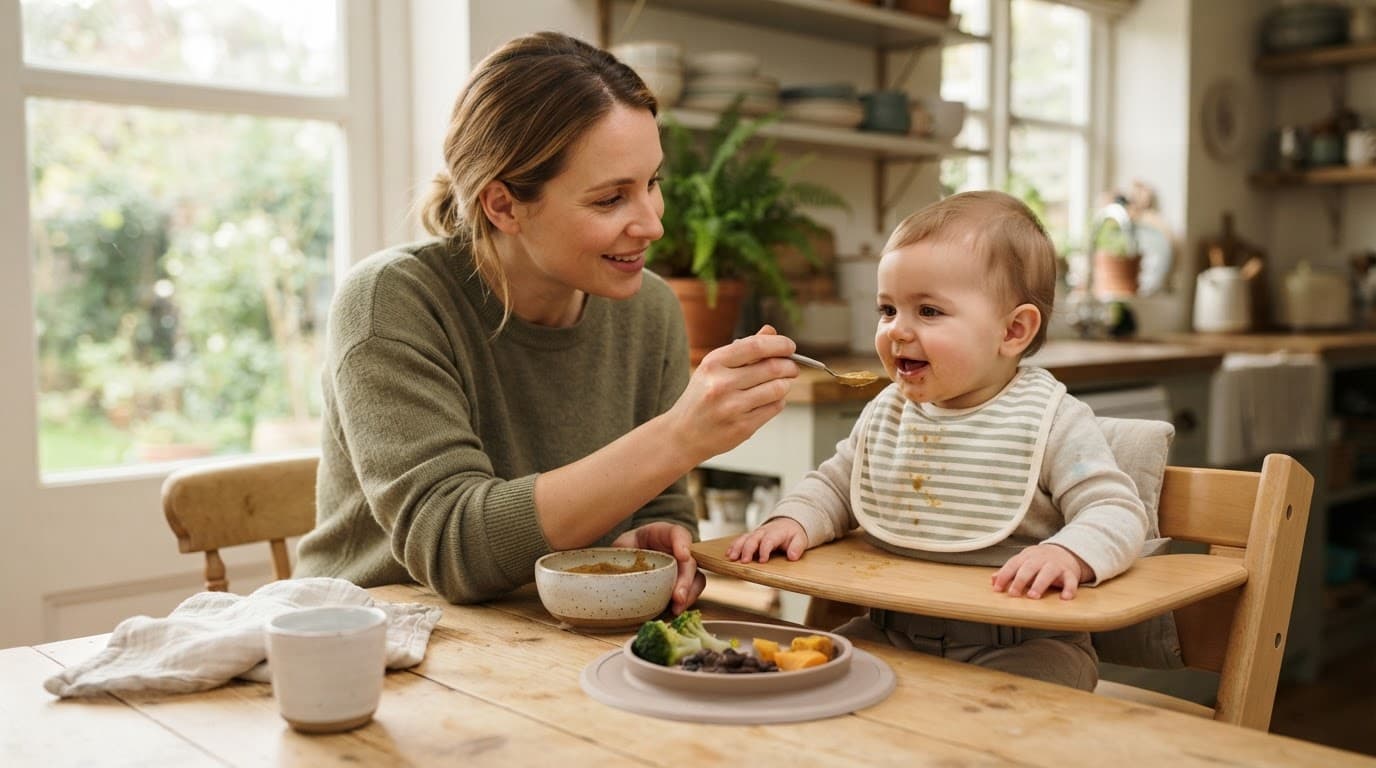
Start solids when your baby shows signs of readiness, usually around 6 months. These signs include sitting upright with support, controlling the head and neck, reaching for food, and swallowing food instead of pushing it back out.
Iron doesn't need to be the only nutrient on the plate. However, offering an iron-rich food at least once daily gives your baby regular practice with important flavors and textures.
Exclusively breastfed babies may need an iron supplement before iron-rich solids become a regular part of meals. The AAP has recommended asking a pediatrician about iron supplementation, especially for breastfed babies and babies born prematurely.
How Much Iron Does a Baby Need?
The recommended amount for babies from 7 to 12 months is about 11 milligrams of iron per day. Babies won't measure that amount from a single serving, and appetite can vary widely from meal to meal.
Instead, offer iron-rich foods regularly. A few spoonfuls of lentils, a small amount of pureed meat, or iron-fortified cereal can contribute to your baby's daily intake.
Best iron rich baby foods for starting solids
The most useful choices include both animal foods and plant foods. Animal meats provide heme iron, which the body absorbs efficiently. Beans, lentils, vegetables, and fortified cereals provide non-heme iron.
Soft Animal Foods
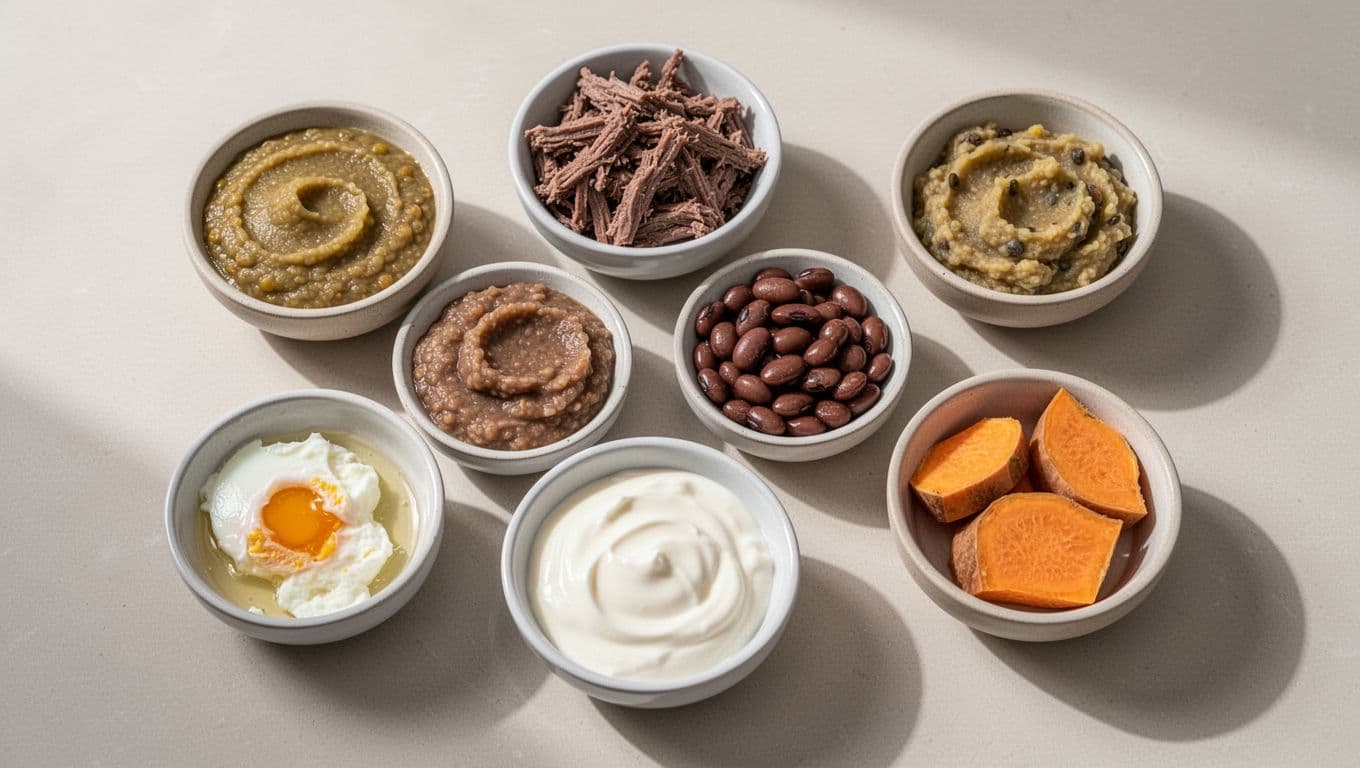
Tender meat is one of the most concentrated food sources of iron for babies. You can puree cooked beef or lamb with breast milk, formula, water, or a soft vegetable. As your baby develops better chewing skills, move toward finely minced meat with plenty of moisture.
Dark meat from chicken or turkey also contains iron. Remove skin, bones, and tough pieces before blending or mincing. Canned fish with low mercury, such as salmon, can also work when it is thoroughly checked for bones and mashed to a soft texture.
Eggs contain iron and offer another practical option. Serve them fully cooked, then mash them with avocado, sweet potato, or plain yogurt. Begin with a small amount if egg is a new food.
Plant and Fortified Foods
Iron-fortified infant cereal is an easy first food because it has a smooth texture and provides a reliable source of iron. Plain oatmeal or multigrain infant cereal can be mixed with breast milk, formula, or water to create a thin puree.
Lentils, black beans, kidney beans, chickpeas, and peas also provide iron. Cook them until soft, remove tough skins when needed, and blend or mash them thoroughly. A little olive oil or avocado can improve the texture without adding sugar or salt.
Green vegetables contain some iron, too. Soft-cooked spinach, broccoli, and peas work well when combined with beans, lentils, or meat. These combinations add flavor while keeping the meal nutrient-dense.
Natural foods can form most of your baby's menu, but fortified cereal still has a useful place. It offers a simple way to increase iron intake, especially when your baby is eating only small portions.
Pair Iron-Rich Foods With Vitamin C
Vitamin C helps the body absorb non-heme iron from plant foods and fortified cereals. Serve a vitamin C food during the same meal rather than worrying about perfect nutrition across the entire day.
Good choices include mashed strawberries, mango, kiwi, tomatoes, broccoli, and soft bell pepper. Cook vegetables until tender, then puree or mash them to match your baby's feeding skills.
Easy Meal Combinations
Try these simple pairings:
- Mix iron-fortified oatmeal with mashed strawberries or mango.
- Stir pureed lentils into soft-cooked tomato or broccoli.
- Combine mashed black beans with avocado and a little tomato.
- Serve finely minced beef with sweet potato and soft broccoli.
- Blend chickpeas with roasted red pepper until smooth.
- Add mashed egg to a soft vegetable puree.
These meals don't need several ingredients. One iron source and one vitamin C food are enough to create a helpful pairing.
Keep the Flavor Mild
Babies don't need added salt, sugar, honey, or strong sauces. Herbs such as cinnamon in oatmeal or mild basil with vegetables can add variety without masking the natural taste of the food.
Offer new flavors repeatedly, even when your baby rejects them at first. A food may need several exposures before it becomes familiar. Follow your baby's hunger and fullness cues rather than pressuring them to finish.
Choose Textures Your Baby Can Manage
Texture should match your baby's development, not a fixed calendar. Some babies begin with smooth purees, while others manage soft mashed foods or very tender finger foods soon after starting solids.
The food should be soft enough to squash easily between your thumb and finger. Remove bones, pits, seeds, and tough skins before serving.
Move Beyond Smooth Purees
A smooth puree can help a beginner learn how to move food around the mouth. After your baby handles that texture comfortably, gradually make foods thicker and less blended.
Mash beans and lentils with a fork instead of fully blending them. Offer soft minced meat mixed into vegetable puree. Leave small, soft lumps in mashed egg or avocado as your baby gains control.
This gradual change helps your baby practice eating skills. It also makes family foods easier to adapt without preparing a completely separate meal.
Make Finger Foods Soft and Safe
When your baby is ready for finger foods, cut food into shapes that are easy to hold and soft enough to mash. Large, hard, round, or sticky foods can create choking hazards.
Cook carrots and green beans until soft. Cut large fruit into thin slices, and quarter grapes and cherry tomatoes lengthwise. Never serve whole nuts to a baby or young child. Finely ground nuts or smooth nut butter thinned into a puree are safer forms.
Seat your baby upright during meals and stay within arm's reach. Gagging can happen as babies learn, but choking is quiet and requires immediate action. Learn infant choking first aid before your baby begins eating solids.
Introduce Allergens Alongside Iron-Rich Foods
Common allergens can be introduced when your baby is developmentally ready for solids, usually around 6 months. Potential allergens include egg, peanut, tree nuts, wheat, dairy, soy, sesame, fish, and shellfish.
Introduce one new allergenic food at a time in a small amount. This makes it easier to identify the food if a reaction occurs. Once your baby tolerates it, continue offering it regularly in a safe form.
Use Safe Forms of Allergenic Foods
Never give whole peanuts or nuts. Thin smooth peanut butter with warm water, breast milk, formula, or fruit puree. Stir it well, then offer a small amount from a spoon.
Cook egg thoroughly before serving. Remove bones from fish and mash it until soft. Plain pasteurized yogurt can be offered as a food, but it shouldn't replace breast milk or formula as your baby's main drink.
If your baby has severe eczema, a known food allergy, or a previous reaction, speak with your pediatrician before introducing peanut or other allergens. Seek urgent medical help for breathing trouble, facial swelling, repeated vomiting, or signs of a severe reaction.
Foods and Drinks to Avoid Before 12 Months
A short list of restrictions helps keep meals safe without making feeding stressful.
Skip Honey Until After the First Birthday
Don't give honey before 12 months. Honey can contain bacteria that cause infant botulism, a serious illness. This includes raw honey, cooked honey, and honey used in baked foods.
Check ingredient labels on cereals, snacks, and prepared foods. Some products contain honey even when they don't taste strongly sweet.
Keep Cow's Milk as a Food, Not the Main Drink
Cow's milk should not replace breast milk or infant formula as your baby's main drink before 12 months. It doesn't provide the right balance of nutrients for young babies and can displace iron-rich foods or formula.
Small amounts of plain, full-fat yogurt can fit into meals. Cow's milk used in cooking may also be acceptable, but ask your pediatrician if you're unsure about your baby's diet.
Avoid juice, sweet drinks, and foods with added sugar. These add little nutritional value and can make water or milk less appealing later.
Watch for Choking Hazards
Avoid whole nuts, popcorn, hard raw vegetables, whole grapes, chunks of meat, tough fruit skins, and spoonfuls of thick nut butter. Cut and cook foods before serving, and supervise every meal.
Keep Iron-Rich Baby Foods Practical at Home or Away
Fresh food doesn't have to stay in your kitchen. Cook extra lentils, beans, vegetables, or meat at home, then store portions safely for later meals. You can also adapt a suitable part of your own meal by removing salt, sauces, bones, and hard pieces.
Before feeding away from home, pack a clean bowl and spoon. Keep perishable foods cold, prepare a small serving, and discard leftovers that have touched your baby's mouth.
Prepare Fresh Food While Traveling
A restaurant may have soft avocado, banana, cooked vegetables, beans, or plain egg that you can mash for your baby. At a park or during a family visit, you can use ingredients you already carry instead of relying only on packaged food.
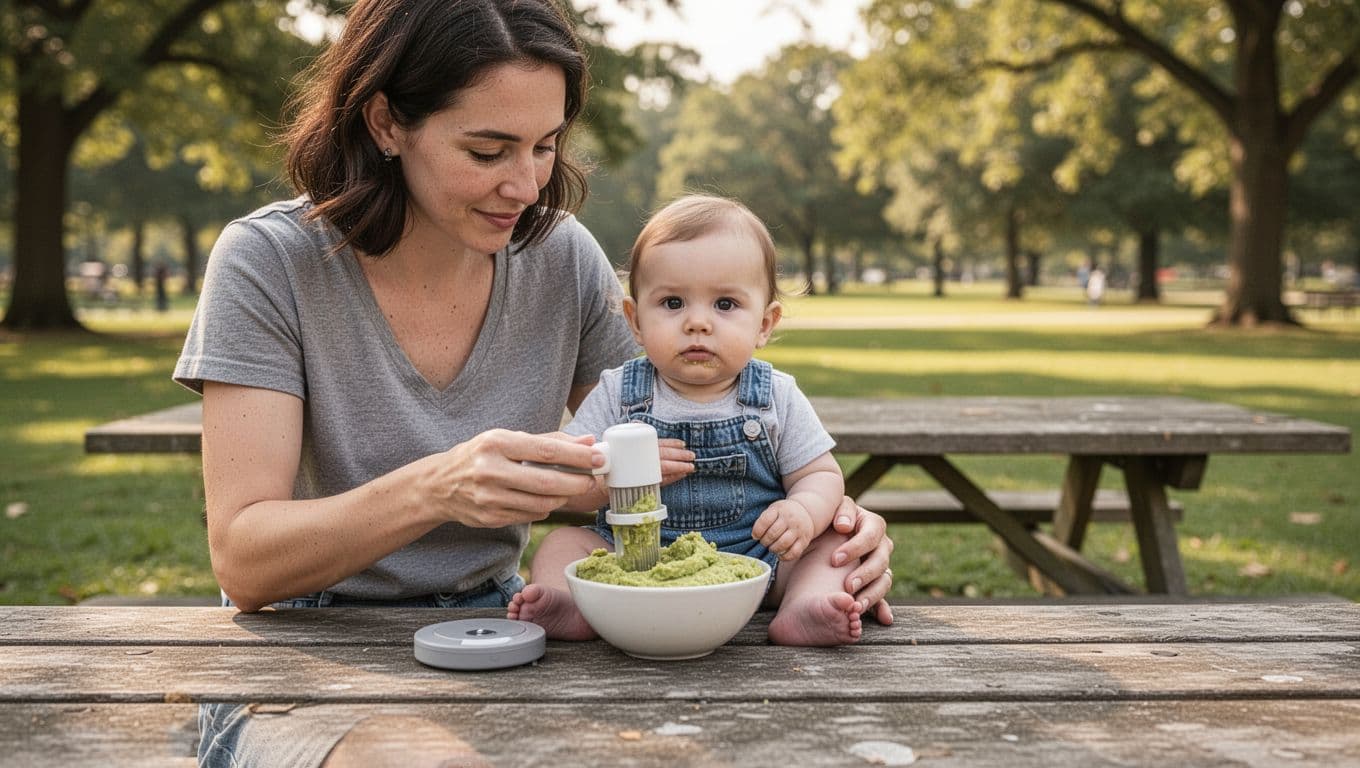
The Wonder Wean is a compact, hand-powered pocket blender that helps you mash fresh food without electricity. It can turn soft beans, avocado, vegetables, egg, or tender meat into a baby-friendly texture at a picnic table, restaurant, or while traveling.
Use it with clean ingredients and supervise your baby throughout the meal. If preparing fresh iron rich baby foods away from home would make you more comfortable offering family foods, you can Buy Now.
Conclusion: Keep Iron on the Menu
Iron-rich foods don't need to be elaborate. Offer soft meat, beans, lentils, eggs, or iron-fortified cereal regularly, and pair plant-based choices with vitamin C foods when you can.
Follow your baby's readiness, increase textures slowly, and supervise every bite. Avoid honey before 12 months, and keep cow's milk from replacing breast milk or formula as the main drink.
On busy days, the Wonder Wean can help you prepare fresh, healthy food wherever your family is eating. With safe textures, clean preparation, and close supervision, iron rich baby foods can become part of everyday family life, not another task limited to your kitchen.