

First Foods for Babies: Natural Starts to Solids
Starting solids can feel exciting and unsettling at the same time. You want to offer wholesome food, but every new texture brings questions about preparation, allergies, and choking.
The best first foods for babies are soft, simple, and easy to adapt to your baby's stage. Around 6 months, when your baby shows signs of readiness, you can begin with small tastes while breast milk or infant formula remains an important source of nutrition.
There isn't one perfect feeding method. Smooth mashes, soft finger foods, spoon-feeding, and a combination can all fit a responsive approach. Start with safe textures, follow your baby's cues, and build variety slowly.
When Your Baby Is Ready for First Solids
The CDC and NHS recommend starting complementary foods at around 6 months. Age matters, but developmental readiness matters too. Babies shouldn't begin solids before 4 months, and your pediatrician can help if your baby was born prematurely or has a health condition.
Look for readiness signs
Your baby may be ready when they can sit upright with steady head and neck control. They should also show interest in food and bring objects to their mouth.
Other signs include:
- Opening their mouth when food approaches.
- Reaching for food or trying to hold a spoon.
- Swallowing food instead of pushing it out with the tongue.
- Staying upright in a high chair with appropriate support.
A baby who simply watches you eat may not be ready yet. Wait until several readiness signs appear together.
Let your baby set the pace
Offer a small amount when your baby is calm and alert, not overtired or extremely hungry. A teaspoon or two is enough at first. Some babies prefer a preloaded spoon, while others enjoy picking up soft pieces themselves.
Responsive feeding means paying attention to cues. Turn the meal into a pause if your baby closes their mouth, turns away, or becomes upset. Breast milk or formula should continue alongside solids, since early meals are practice rather than a replacement for milk feeds.
Best First Foods for Babies
Natural foods don't need complicated recipes. A ripe avocado, soft-cooked vegetable, or mashed bean can give your baby a new flavor without added sugar, salt, or packaged ingredients.
Choose one food at a time when you want to observe how your baby responds. Once individual foods feel familiar, combine them into simple meals.
Start with iron-rich foods
Iron-rich foods deserve regular attention when babies begin solids. Offer soft, fully cooked egg, finely shredded tender meat, smooth lentils, mashed beans, tofu, or iron-fortified infant cereal.
Prepare meat until tender, then shred or blend it with water, breast milk, formula, or an unsalted cooking liquid. Beans and lentils should be cooked until they collapse easily. Mash them smooth at first, then leave a little texture as your baby's skills improve.
Egg should be fully cooked, with both the white and yolk firm. Plain yogurt can also be offered around 6 months, as long as it's pasteurized and free from added sugar.
Add colorful fruits and vegetables
Avocado, banana, pear, peach, mango, and ripe melon are easy to mash when soft. Cook firmer fruits, such as apples, until tender before grating or blending them.
Sweet potato, squash, zucchini, broccoli, peas, and carrots work well when steamed, roasted, or boiled until soft. A cooked carrot should squash easily between your fingers. Raw carrot sticks and hard apple chunks aren't safe choices for a beginning eater.
How to Prepare Safe Textures for Your Baby
Texture should match your baby's current abilities, not a strict calendar. Some babies move quickly from smooth foods to soft pieces, while others need more time.
Begin with smooth, thick mashes
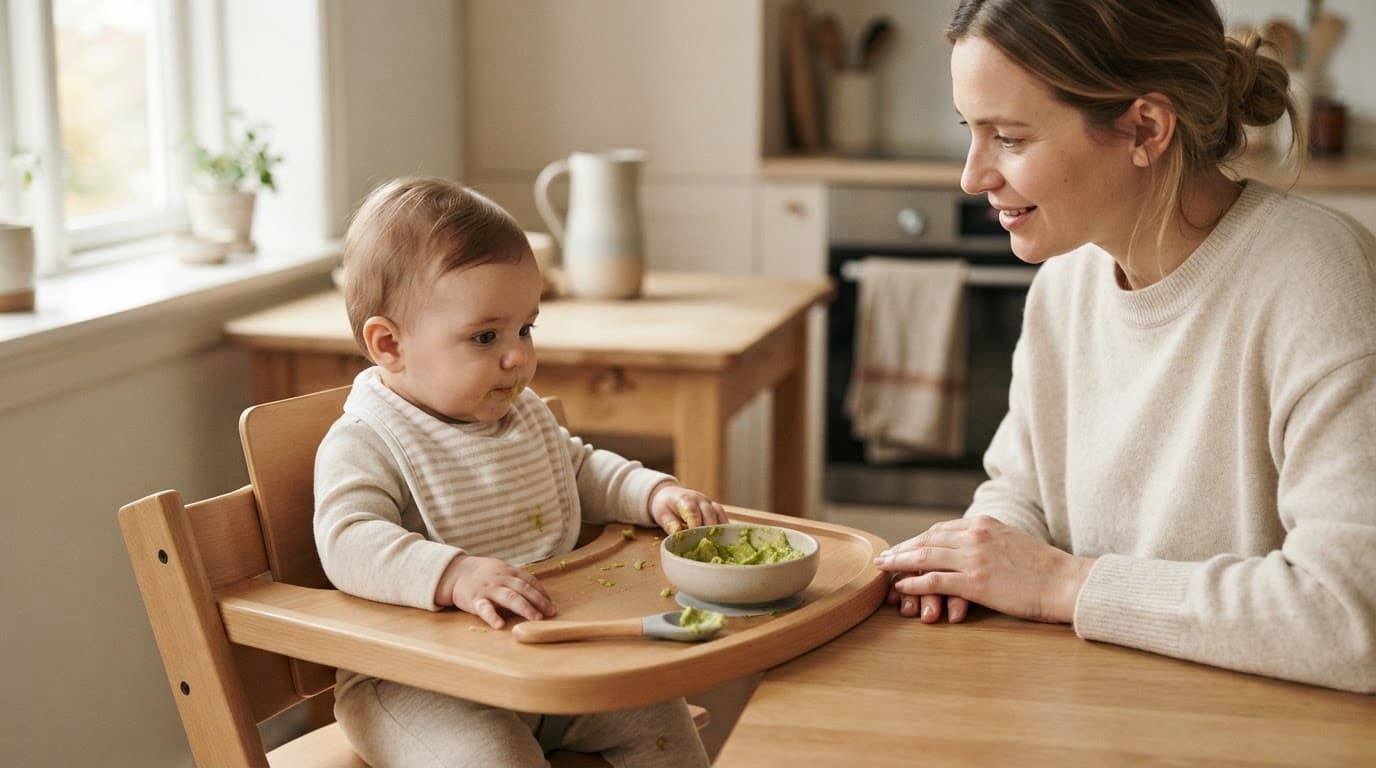
Early foods can be smooth and thick enough to stay on a spoon. You can mash ripe banana or avocado with a fork. For cooked vegetables, use a fork, food mill, or blender.
Add a small amount of water, breast milk, or prepared formula if the food needs thinning. Avoid making every food watery, since thicker textures give babies more practice managing food in their mouths.
As your baby becomes comfortable, move toward mashed foods with soft lumps. Gradually offer foods that require gentle chewing, even before teeth appear. Babies use their gums to break down tender foods.
Make finger foods soft and manageable
When your baby can sit steadily and bring food to their mouth, soft finger foods can support self-feeding. Cut food into pieces your baby can hold, then check that each piece squashes easily.
Soft strips of roasted sweet potato, ripe pear, steamed broccoli florets, or very soft toast can work for babies who are ready for them. As the pincer grasp develops, offer smaller soft pieces that your baby can pick up with their thumb and forefinger.
Always seat your baby upright in a stable high chair. Stay close and watch during the entire meal.
Introduce Allergens Without Delaying Them
Current guidance from the CDC and NHS supports introducing common allergens in safe, age-appropriate forms once your baby starts solids. Delaying them by default isn't recommended for most babies.
Common allergens include peanut, egg, dairy, wheat, fish, shellfish, soy, and sesame. Begin with a small amount of one allergenic food, then watch for a reaction. Introducing new allergens separately makes it easier to identify the possible cause of a problem.
Peanut butter needs special care. Never offer a spoonful of thick peanut butter or whole peanuts. Instead, thin smooth peanut butter with warm water, breast milk, formula, or yogurt until it has a loose, smooth consistency. You can mix a small amount into a familiar puree.
Fully cooked egg can be mashed into avocado or served alone. Plain yogurt can be offered by spoon or spread thinly on a soft strip of toast. If your baby has severe eczema, a known food allergy, or another allergy concern, ask your pediatrician about the safest introduction plan.
Hives, facial swelling, repeated vomiting, coughing, wheezing, or trouble breathing need prompt medical attention. Breathing problems require emergency care.
Gagging and Choking Are Different
Gagging is a normal protective reflex as babies learn to move food around. It can be noisy and may include coughing, retching, or watery eyes. Your baby may look surprised, but they can usually breathe and make sound.
Choking happens when food blocks the airway. A choking baby may be unable to cough, cry, breathe, or make a sound. Their skin may change color, and the situation requires immediate action.
Gagging is often loud because air is still moving. Choking can be quiet because the airway is blocked.
Reduce choking risks at every meal
Prepare food according to its texture and shape. Cook hard produce until soft, grate it, or mash it. Cut round foods into safe shapes, and avoid dense pieces that can seal the airway.
Never offer whole nuts, popcorn, hard raw vegetables, hard candy, marshmallows, or thick clumps of nut butter. Whole grapes are also a risk. Cut grapes lengthwise into small, manageable pieces, and make sure they are soft enough for your baby's stage.
Stay within arm's reach during meals. Learn infant CPR and choking first aid from a certified course, and don't put your fingers into your baby's mouth unless you can clearly see and remove an object.
Foods to Avoid Before 12 Months
Some foods can wait, while others should not be offered during the first year.
The CDC advises against honey before 12 months because it can contain spores linked to infant botulism. Don't add honey to food, water, formula, or a pacifier.
Cow's milk shouldn't replace breast milk or formula as your baby's main drink before 12 months. You can use small amounts of cow's milk in cooking, and pasteurized yogurt and cheese are generally suitable once solids begin.
Babies don't need added salt or sugar. Avoid stock cubes, bouillon, gravy, sweetened yogurt, juice, and heavily seasoned family foods. Set aside your baby's portion before salting the meal.
Unpasteurized milk, cheese, or juice should also stay off the menu. Wash produce, clean preparation surfaces, and refrigerate foods that need chilling. Discard food left in your baby's bowl after a meal, since saliva can transfer bacteria back into it.
Feeding Healthy First Foods Away From Home
Eating outside the house doesn't mean you need to depend on pouches. A ripe banana, avocado, soft bread, plain yogurt, or an unseasoned portion of cooked vegetables can work when you're visiting family or eating at a restaurant.
Pack a clean spoon, bib, and small bowl. If you bring prepared food, keep it cold as needed and serve it within safe storage limits. At restaurants, ask for plain foods without salt, sauces, honey, or added sugar. Mash the food to the texture your baby already handles well.
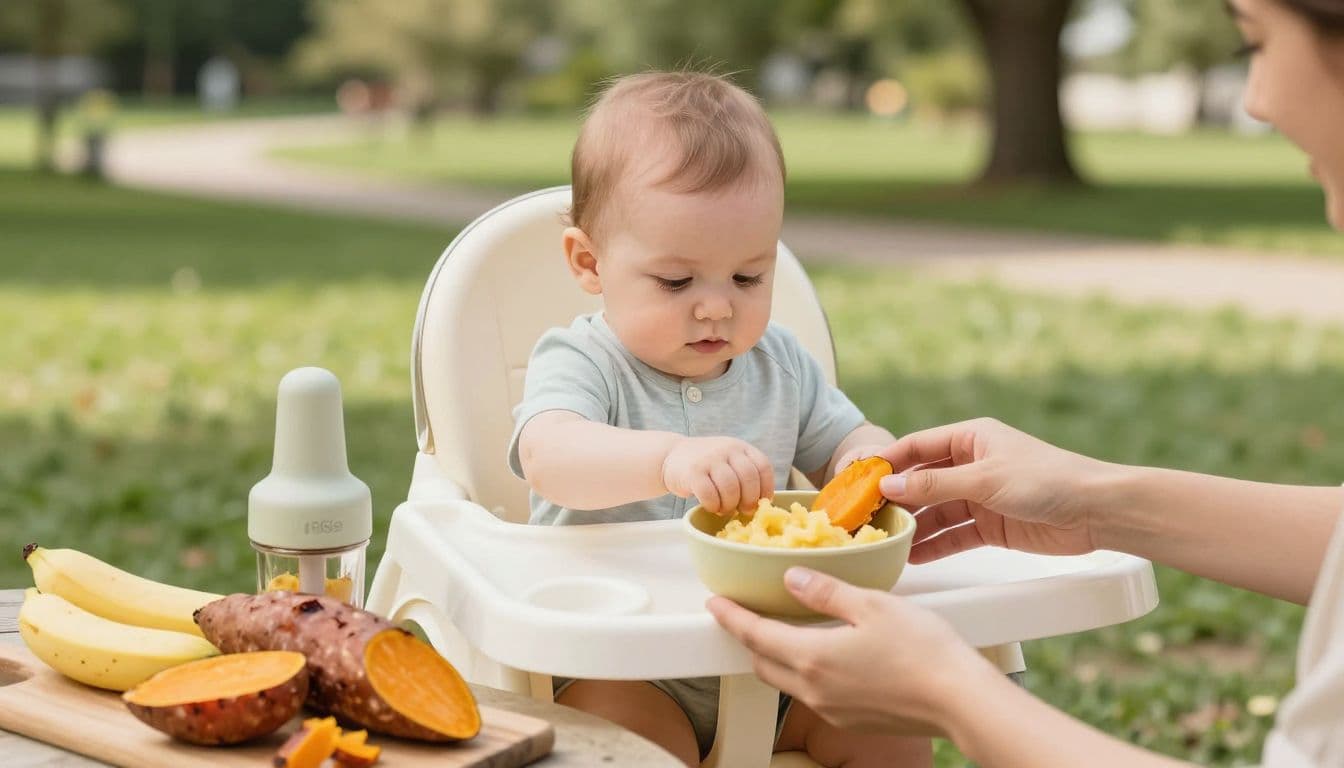
The Wonder Wean baby food maker can help you prepare fresh food while you're away from home. Its compact, hand-powered design lets you mash foods such as banana, avocado, or soft sweet potato without electricity. You can use ingredients already available at home, at a restaurant, or during a day outdoors.
The Wonder Wean doesn't replace handwashing, safe food temperatures, or careful texture checks. It gives you another practical way to serve familiar, healthy foods when carrying a full meal setup isn't convenient. If that fits your routine, you can Buy Now.
Conclusion
The right first foods for babies are soft, nourishing, and prepared for their current skills. Begin around 6 months when your baby shows readiness, keep milk feeds in place, introduce allergens in safe forms, and offer new textures at a comfortable pace.
Gagging can be part of learning, while choking needs urgent action, so upright seating and close supervision matter at every meal. With a few simple foods and the right preparation, your baby can enjoy fresh meals at home or on the go, including food mashed with the Wonder Wean when you need a compact feeding option.