

Natural Vitamin B12 Foods for Babies on a Mixed Diet
A good source of vitamin B12 can be part of your baby's meals without replacing breast milk or infant formula. Natural vitamin B12 foods for babies are mainly animal foods, such as meat, fish, eggs, and dairy, while some fortified foods can add another option.
Your baby's age, feeding skills, and milk feeds all matter. Offer a variety of suitable foods, prepare each one safely, and ask your pediatrician about individual needs, especially if your baby eats few or no animal foods.
Key Takeaways
- Meat, fish, shellfish, eggs, and dairy naturally contain vitamin B12. Amounts vary by food.
- Fortified foods can contribute B12, but the amount depends on the product.
- Breast milk and infant formula also provide B12. Breast milk levels depend partly on the nursing parent's B12 status.
- No single food guarantees that your baby gets enough. Offer a varied diet and discuss concerns with your pediatrician.
Natural B12 Sources That Fit a Baby's Diet
Solids are generally introduced at around 6 months, when a baby is developmentally ready, alongside breast milk or infant formula. The CDC does not recommend starting solids before 4 months. For age-appropriate first foods, see our guide to safe first foods for babies.
Meat, fish, and shellfish
Tender beef, chicken, and other meats contain B12. Cook meat until soft, then finely mince or shred it. Moistening it with water, breast milk, formula, or an unsalted cooking liquid can make it easier to manage.
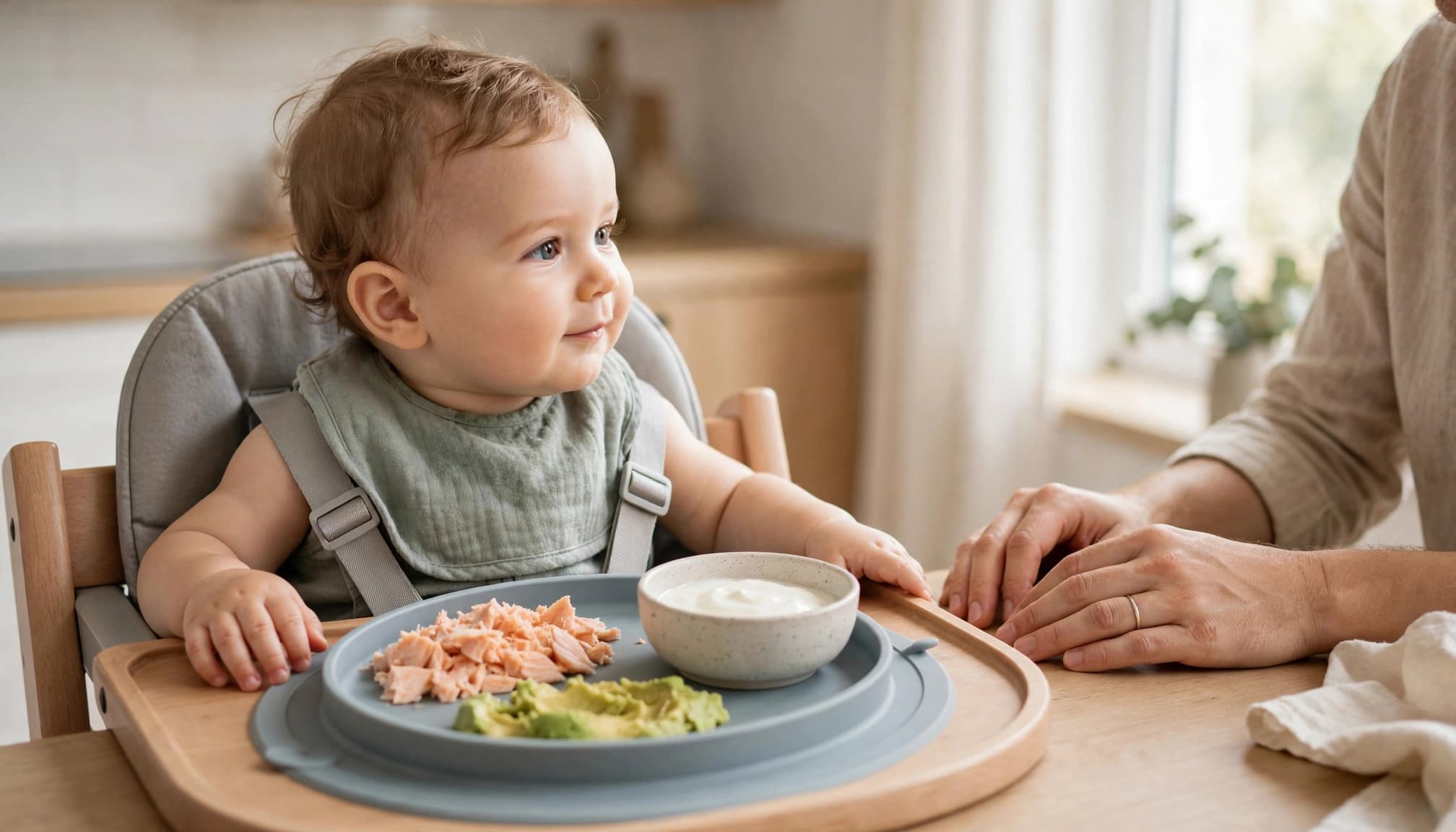
Fully cooked fish, including salmon, is another option. Remove every bone, then flake and mash the fish. Fully cooked shellfish can also be minced finely and mixed into a soft food. Fish and shellfish are common allergens, so introduce them in an age-appropriate form and watch your baby closely.
Dairy and eggs
Plain, pasteurized yogurt and cheese can provide B12 once your baby is eating solids. Choose unsweetened products, and mix yogurt into a puree or offer a texture your baby can handle. Cow's milk can be an ingredient in food, but it shouldn't replace breast milk or formula as the main drink before 12 months.
Eggs are another food to include in a varied diet. Cook them thoroughly and serve them mashed or in another soft form appropriate to your baby's feeding skills. Eggs and dairy are common allergens. If your baby has severe eczema, a known food allergy, or a previous reaction, ask your pediatrician for guidance before introducing new allergens.
How Much B12 Is in Common Foods?
The NIH Office of Dietary Supplements lists an Adequate Intake of 0.5 micrograms per day for infants ages 7 to 12 months. An Adequate Intake is a population reference, not a prescription for an individual baby's menu.
The figures below are for standard food servings reported by the NIH Office of Dietary Supplements. They are not recommended baby portions.
| Food | Standard serving | Vitamin B12 |
|---|---|---|
| Cooked Atlantic salmon | 3 oz | 2.6 mcg |
| Pan-browned 85% lean ground beef | 3 oz | 2.4 mcg |
| 2% milk | 1 cup | 1.3 mcg |
| Plain fat-free yogurt | 6 oz | 1.0 mcg |
| Breakfast cereal fortified with 25% of the Daily Value | Serving amount varies | 0.6 mcg |
Babies eat much smaller amounts, and their intake changes from meal to meal. Use these numbers to compare food sources, not to calculate a serving for your child.
Fortified foods need a label check
Some cereals are fortified with B12, but the amount varies by product. Infant cereal and ready-to-eat breakfast cereal aren't interchangeable products, so choose foods designed for your baby's age and follow their preparation directions. Fortified foods can complement a mixed diet, but no one cereal or meal guarantees adequate intake.
Breast Milk and Formula Also Contribute
Breast milk and infant formula are important sources of nutrition during the first year. Formula contributes B12, while the amount in breast milk depends in part on the lactating parent's B12 status. The NIH notes that infants may be at greater risk of low B12 intake when a breastfeeding parent has a deficiency or follows a vegan diet without reliable B12 supplementation.
If you breastfeed and avoid animal foods, or you have concerns about your own B12 status, bring them up with your healthcare provider. Your baby's pediatrician can consider the whole feeding picture, including milk feeds, solids, growth, and any health history.
For mixed-diet meal inspiration, see our baby meal plan for starting solids. Keep breast milk or infant formula as the main milk feed while your baby learns to eat a range of foods.
Simple Ways to Serve B12 Foods
Start with a small taste and match the texture to your baby's skills. A spoonful of soft mashed salmon, finely minced beef mixed into a vegetable puree, plain yogurt stirred into fruit, or fully cooked egg mashed with avocado can bring B12-containing foods into familiar meals.
At first, smooth or well-mashed textures may be easier. As your baby develops feeding skills, offer thicker mashes and soft, graspable pieces. For example, tender shredded meat can be mixed into mashed beans, while flakes of boneless fish can be mashed with soft potato or squash. A little water or unsalted cooking liquid can loosen dense food.
Soy tofu and sesame tahini can add variety, but they are not natural B12 sources unless fortified. They may still have a place in meals for other nutritional reasons. Check that a product is appropriate for your baby's age and introduce soy and sesame carefully because they are common allergens.
Offer a familiar food alongside a new one, and let your baby decide how much to eat. Appetite varies; a baby may take a few bites one day and eat more another day. You can find more texture ideas in our guide to safe textures for baby-led weaning.
Prepare Each Food to Reduce Choking Risk
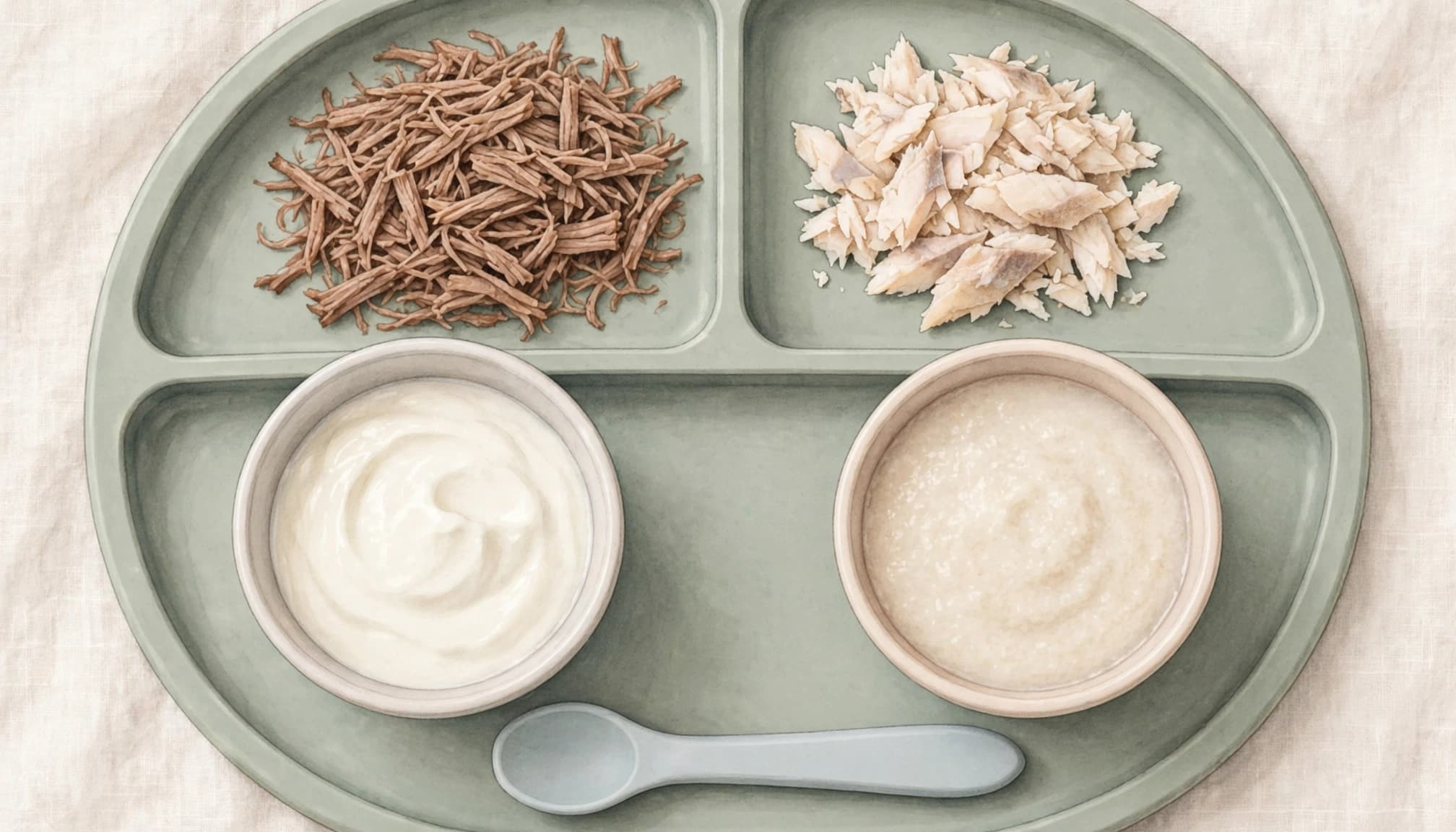
Food choice matters, but shape and texture matter too. Cook meat until tender and finely mince or shred it. Flake fish carefully and remove bones. Mash or mince shellfish, and cook eggs thoroughly. Keep food soft enough to squash easily between your fingers when your baby is new to solids.
Avoid hard, round, and sticky hazards
Never offer whole nuts, popcorn, hard raw vegetables, or firm chunks of food to an infant. Thick spoonfuls of nut butter can also cause choking. If you serve smooth nut butter, thin it thoroughly into a puree or other soft food. For baby-led feeding, shape and soften foods to suit your child's current skills rather than relying on age alone.
The CDC's choking hazard guidance recommends preparing foods to reduce choking risk. Seat your baby upright in a stable high chair and stay close, watching throughout the meal. Avoid feeding while your baby is lying down, moving around, or riding in a car.
When to Ask Your Pediatrician About B12
Talk with your pediatrician if your baby eats few or no animal foods, or if your family follows a vegan diet. The same applies if you breastfeed and have a B12 deficiency or follow a diet that may leave your own B12 intake low. A clinician can consider your baby's age, milk feeds, growth, diet, and medical history before recommending any changes.
Don't rely on one food to meet every need. B12 is one part of feeding; babies also need a range of suitable foods as they become ready for solids. Meat and fortified infant cereal, for example, can also be useful sources of iron. For more ideas, see our guide to iron-rich foods for babies.
Frequently Asked Questions
Can a baby get B12 from plant foods?
Most unfortified plant foods, including tofu and tahini, aren't reliable natural sources of B12. A fortified food may contain it, but the amount depends on the product. If your baby eats few or no animal foods, ask your pediatrician how to meet their needs.
Is yogurt a suitable B12 food before age one?
Plain, pasteurized yogurt can be offered as a food once your baby is ready for solids. Choose an unsweetened option and serve it in a texture your baby manages safely. Cow's milk should not replace breast milk or infant formula as your baby's main drink before 12 months.
Does one serving of fish or meat meet a baby's B12 needs?
You can't assume that one serving will meet a baby's needs. Portions, appetite, and B12 content vary, and the reference amounts for adult-size servings aren't infant portion recommendations. Include different suitable foods and discuss concerns with your pediatrician.
How can I offer B12 foods while we're out?
Pack a familiar, safely prepared food and keep perishable items at a safe temperature. When a suitable soft food is available, mash or mince it to match your baby's skills. Our portable Wonder Wean Baby Food Processor works without batteries, cords, or electricity. Buy Now if a compact tool for preparing fresh food on the go would help.
Make B12 Foods Part of a Varied Routine
Meat, fish, shellfish, eggs, dairy, and some fortified foods can all contribute B12 to a baby's mixed diet. Breast milk or infant formula contributes too, while safe preparation and variety help make meals suitable for your baby's stage.
When you're away from home, our lightweight Wonder Wean Baby Food Processor can help mash fresh, healthy foods without power, with minimal parts to clean. It gives you a practical way to prepare a soft meal on the go.