

Healthy Baby Meal Plan for Starting Solids With Whole Foods
First bites can feel high-stakes when every spoonful is new. A baby meal plan for starting solids can stay simple, with soft whole foods, small portions, and time for your baby to learn.
Breast milk or infant formula still provides most nutrition through the first year. Solid foods gradually add flavor, texture, iron, and eating practice without replacing milk feeds too soon.
Start with your baby's readiness cues, then build meals around foods you already enjoy at home.
Start solids when your baby is ready
Most babies begin complementary foods at about 6 months, and the CDC advises against starting before 4 months. The calendar matters, yet your baby's body skills matter more. A baby born early or with a health condition may need individual guidance from their pediatrician.
Look for feeding readiness signs
Your baby should have steady head and neck control and be able to sit upright with support. They should also open their mouth for food, bring objects to their mouth, and swallow food instead of pushing it right back out with their tongue.
Interest alone isn't enough. Watching you eat may be exciting, but safe eating starts with posture, head control, and the ability to move food around the mouth.
Keep milk feeds at the center
In the beginning, offer solids once a day when your baby is rested and mildly hungry. One or two tablespoons can be plenty. Then continue breastfeeding or offering formula as usual.
A meal may last two minutes or 20. Follow your baby's cues. Turning away, pressing lips together, or throwing food often means they are finished, not that they need persuasion.
Build a baby meal plan around iron and variety
Early meals don't need to look like a miniature dinner plate. Start with one soft food at a time, then combine familiar foods after your baby has tolerated them well.
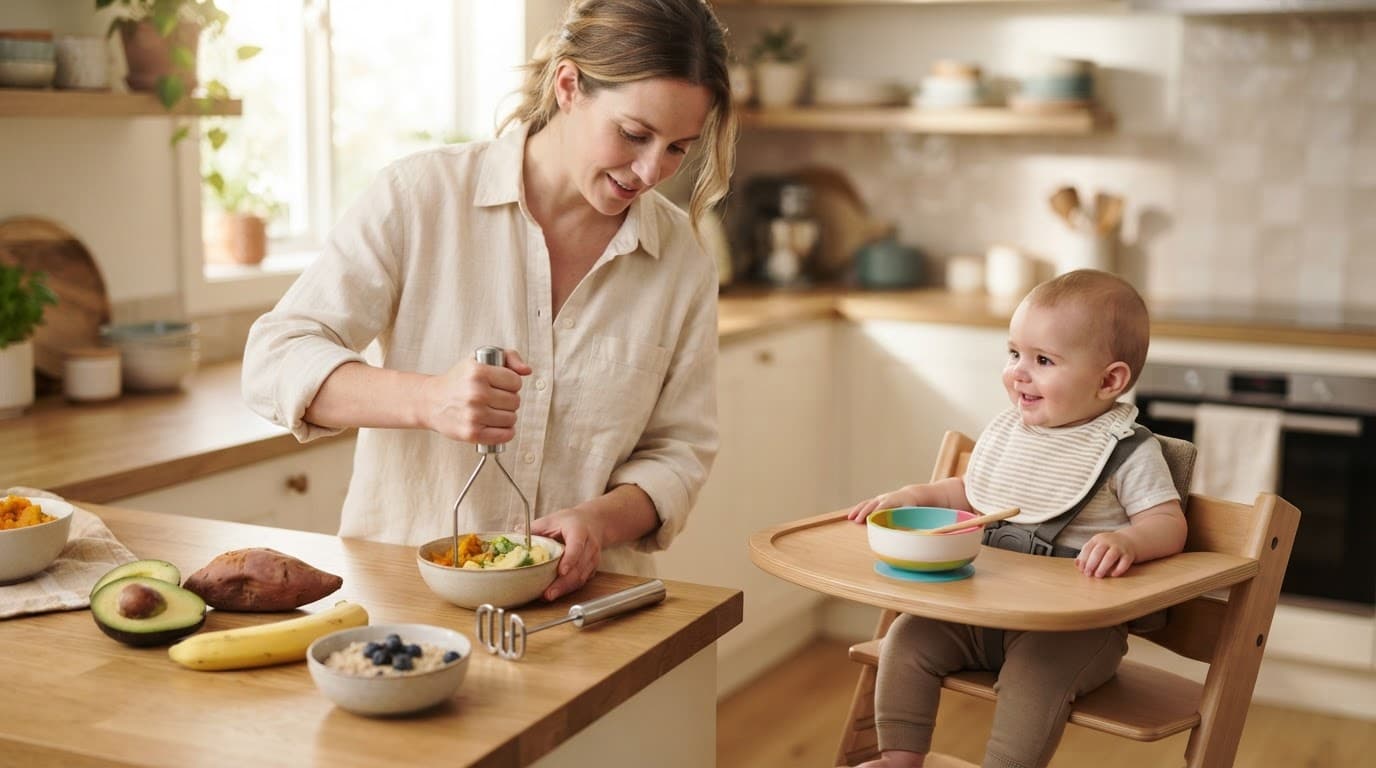
Put iron-rich foods on the menu early
Babies need iron as the stores they were born with begin to run lower. Tender beef, chicken, lentils, beans, tofu, well-cooked egg, fish, and iron-fortified infant oatmeal are useful choices.
Cook foods until they are very soft, then mash or blend them to match your baby's skills. For example, thin lentils with water, breast milk, or prepared formula. Mix shredded chicken with sweet potato or pear until the texture is soft and moist.
Offer produce alongside protein foods when it feels natural. Mashed broccoli, ripe avocado, steamed zucchini, pear, squash, and berries cooked into oatmeal all bring different flavors to the table.
Use a flexible meal formula
After a few foods are familiar, build meals with an iron-rich food plus a soft fruit or vegetable. Add a gentle source of fat, such as avocado, olive oil, or plain full-fat pasteurized yogurt, when it suits the meal.
A baby meal plan works best when it follows your family rather than a rigid schedule. You might offer mashed black beans and squash one day, then oatmeal with cooked apple the next. Skip added sugar and salt, since babies don't need either.
A gentle 15-day whole food starter menu
This slow introduction gives you time to see how your baby handles each food. Offer the food once daily alongside usual breast milk or formula feeds. If your baby has eczema, a past reaction, or another allergy concern, ask their clinician before introducing common allergens.
| Days | Soft food to offer | Baby-safe preparation |
|---|---|---|
| 1 to 3 | Sweet potato | Steam until very soft, then mash with water. |
| 4 to 6 | Red lentils | Cook until falling apart and mash into a thick puree. |
| 7 to 9 | Ripe avocado | Mash until smooth, with no firm chunks. |
| 10 to 12 | Chicken thigh | Cook thoroughly, shred finely, and blend with squash or water. |
| 13 to 15 | Well-cooked egg | Mash finely with avocado or a little water. |
CDC guidance suggests waiting three to five days between new foods when you want a clear observation window. Keep a simple note of what your baby ate and any reaction you notice.
After this first stretch, combine accepted foods and repeat favorites often. A baby may reject avocado today and enjoy it next week. Calm, repeated exposure works better than pressure.
Match textures to your baby's eating skills
Soft foods can still pose a risk when they are served in the wrong shape. Texture should change gradually as your baby gains experience moving food with their tongue, gums, and developing chewing skills.
Begin soft, then add gentle texture
At first, offer smooth purees, thick mashes, or foods that flatten easily between your fingers. A thick mash is easier for many babies to manage on a pre-loaded spoon than a thin, runny puree.
As skills grow, move toward mashed foods with soft lumps, finely minced meat, and small pieces of well-cooked vegetables. Steam apples, carrots, and green beans until they squash easily. Raw versions are too hard for a new eater.
Set up each meal for safety
Seat your baby upright in a stable high chair, with an attentive adult close by for the entire meal. Don't offer food in a car seat, stroller, recliner, or while your baby crawls around.
Avoid whole nuts, popcorn, hard raw vegetables, chunks of apple, coin-shaped sausage, and spoonfuls of nut butter. Quarter grapes and cherry tomatoes lengthwise. Stir smooth nut butter into oatmeal or thinly spread it on a soft food.
A soft-looking food can still be dangerous in the wrong shape. Round foods need to be cut lengthwise and into small pieces.
Gagging is often noisy and protective. Choking may be silent and can prevent breathing. Infant first-aid training gives parents a practical plan for an emergency.
Introduce allergens with care, not fear
Common allergens belong in a whole-food approach, but their form and timing matter. Current CDC and American Academy of Pediatrics guidance does not require a fixed order for introducing foods or a delay for common allergens.
Offer one allergen in a safe form
Once your baby handles a few basic foods, introduce one allergen at a time during the day, when you can observe them. Well-cooked mashed egg, thinned smooth peanut butter, plain pasteurized yogurt, soft wheat cereal, and flaky cooked fish are age-appropriate examples.
Start with a small amount. Then offer the food again regularly if your baby tolerates it. A baby with severe eczema, a diagnosed food allergy, or a previous reaction needs personal medical advice before trying peanut or other allergens.
Stop feeding and seek emergency medical help for trouble breathing, repeated vomiting, facial swelling, widespread hives, unusual sleepiness, or a pale, limp appearance after a new food.
Keep these foods off the menu for now
Do not give honey before age 1, including honey in baked foods, because of infant botulism risk. Cow's milk should also wait as a drink until after the first birthday, although plain pasteurized yogurt and cheese can fit into meals.
Skip unpasteurized milk, cheese, and juice. Avoid foods with added sugar, high salt, caffeine, and fried coatings. Breast milk or infant formula remains the right main drink during this stage.
Make real-food preparation fit normal days
Fresh baby food doesn't require separate cooking every night. Small habits can make a whole-food baby meal plan easier to keep when life gets busy.
Set aside a baby portion before seasoning
When you cook lentils, vegetables, chicken, or fish for the family, remove your baby's portion before adding salt or spicy sauces. Mash it with a fork, or blend it with a little liquid until it reaches the right texture.
Freeze extra plain portions in small containers, then thaw them in the refrigerator. Refrigerate prepared food within two hours, and discard leftovers from your baby's bowl because saliva can introduce bacteria.
Build a rotation, not a perfect menu
Keep a few dependable foods on hand, such as bananas, avocados, frozen vegetables, oats, lentils, and eggs. These ingredients can become different meals without a long grocery list.
Offer familiar foods beside one new taste. That approach gives your baby something comfortable while still making room for curiosity.
Keep healthy foods possible away from home
Errands, visits, travel, and restaurant meals don't have to push fresh food aside. Pack a spoon, bib, water for thinning food, and a small insulated bag when you will be out during a meal.
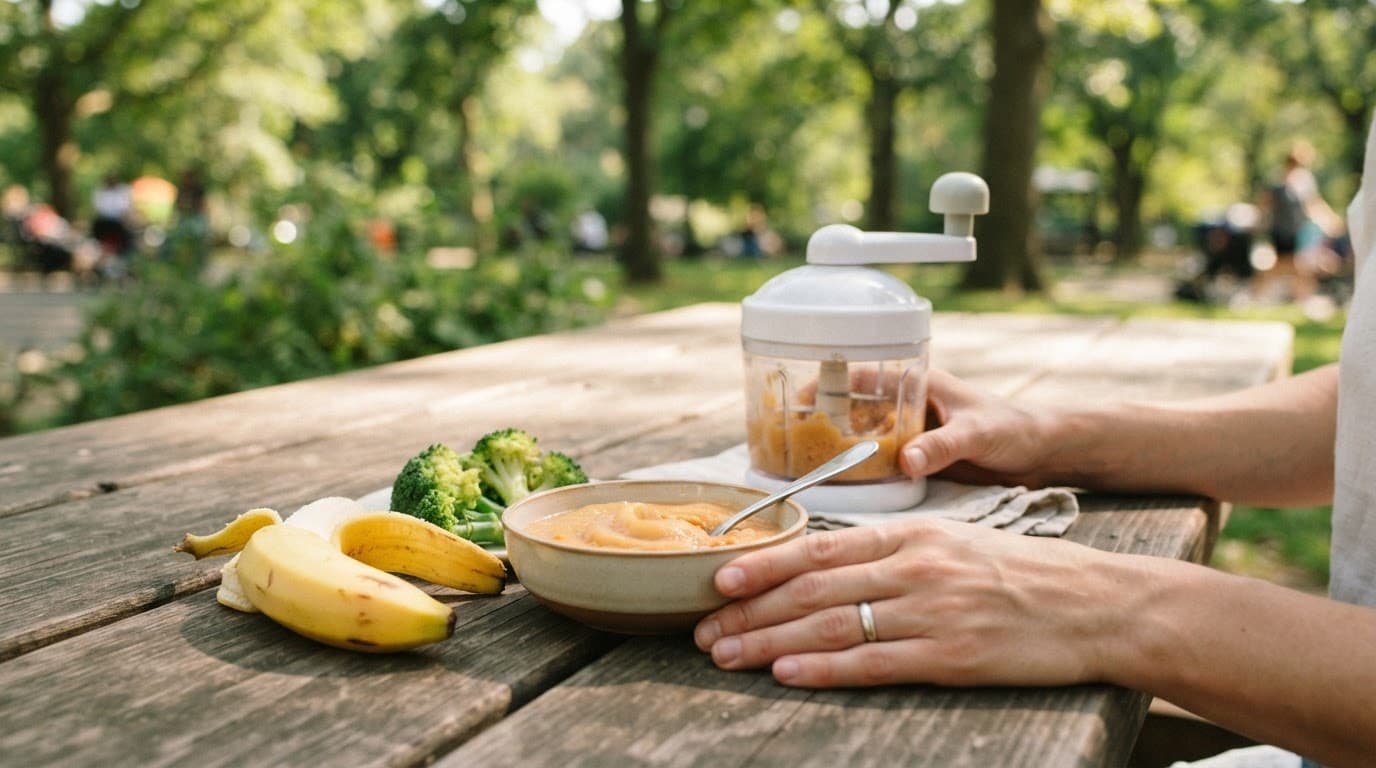
Choose simple foods when you are out
At a cafe or restaurant, look for ripe avocado, a plain baked sweet potato, soft cooked vegetables, oatmeal, banana, or unsalted beans. Check that food is soft enough, cool it before serving, and avoid sharing anything that is heavily seasoned.
At the park, a banana or avocado can become a quick meal without relying on a sweet pouch. Close supervision and the same safe textures still apply outdoors.
Mash a fresh meal on the spot
The compact, hand-powered Wonder Wean can mash ripe fruit, tender vegetables, and cooked proteins without electricity. It helps you use ingredients already available at home, at a restaurant, or on a family trip.
For a flexible way to keep healthy foods in your baby's routine during errands and travel, Buy Now.
A confident start begins with simple foods
A nourishing first-food routine starts with readiness, soft textures, and close supervision. Breast milk or formula remains central while whole foods slowly add iron, flavor, and new skills.
Your baby's appetite will change from day to day. Keep offering simple, safe foods, and let each relaxed meal build familiarity over time.