

Can Babies Eat Tofu? Safe Textures and Serving Ideas
That plain block of tofu in your fridge can become a simple baby meal, but its texture matters. Tofu for babies can fit into starting solids when your child is developmentally ready and you introduce soy with care.
Because tofu contains a common allergen, the first serving deserves a little planning. Keep texture and supervision at the center of every meal, even after your baby has eaten tofu without a reaction. Start with readiness, then choose a serving style your baby can manage.
When Can Babies Start Eating Tofu?
Tofu can be offered when your baby is ready for complementary foods, usually around 6 months. You don't need to wait until toddlerhood simply because it contains soy.
Look for readiness beyond age
Your baby should have steady head control and be able to sit upright with support. They should also show interest in food and begin moving food backward in their mouth rather than consistently pushing it out.
These signs matter more than reaching a particular birthday. If your baby was born prematurely, has difficulty swallowing, or struggles with head control, ask their pediatric clinician for an individual feeding plan.
The same readiness checks apply whether you plan to spoon-feed, offer finger foods, or combine both approaches.
Keep milk feeds in place
Early solids complement breast milk or infant formula. They don't replace your baby's main source of nutrition during the first year.
Start with small opportunities to explore food rather than expecting a full bowl. Your baby may touch, taste, or refuse something before becoming comfortable with it.
Tofu can join other safe first foods for babies. Keep offering varied foods, including iron-rich choices, rather than building every meal around one ingredient.
Introduce Soy Thoughtfully
Tofu contains soy, a common food allergen. Current CDC and American Academy of Pediatrics guidance supports introducing common allergens during infancy in appropriate forms, without routine delays.
However, your baby's medical history may change the plan.
Choose a calm first serving
Offer tofu when your baby is healthy and alert, preferably earlier in the day. Choose a familiar setting where you can watch them during and after the meal.
Begin with a small taste of smooth silken tofu or another texture your baby already manages. Introduce soy separately from other new allergens so a reaction is easier to trace.
For example, avoid making the first soy exposure a tofu mixture containing unfamiliar yogurt or sesame tahini. Use a food your baby has already tolerated if you need to combine ingredients.
Once soy is tolerated, keep it in regular meal rotation. Wonder Wean's guidance on introducing common allergens safely offers more background.
Know when to seek medical advice
Ask your pediatrician about introducing soy if your baby has severe eczema, a diagnosed food allergy, or a previous reaction. Personalized advice is also appropriate whenever your child's allergy history worries you.
Stop feeding if symptoms appear. Hives or other suspected reactions need prompt medical advice.
Call emergency services for breathing difficulty, swelling of the tongue, repeated vomiting, sudden limpness, or severe symptoms after eating. If your child has a prescribed allergy emergency plan, follow it.
Don't offer tofu again after a suspected reaction until a qualified clinician advises you.
Safe Tofu Textures for Babies
The package label is only a starting point. Silken, soft, firm, and extra-firm tofu have different textures, and preparation can change them further.
Always check the food you actually serve.
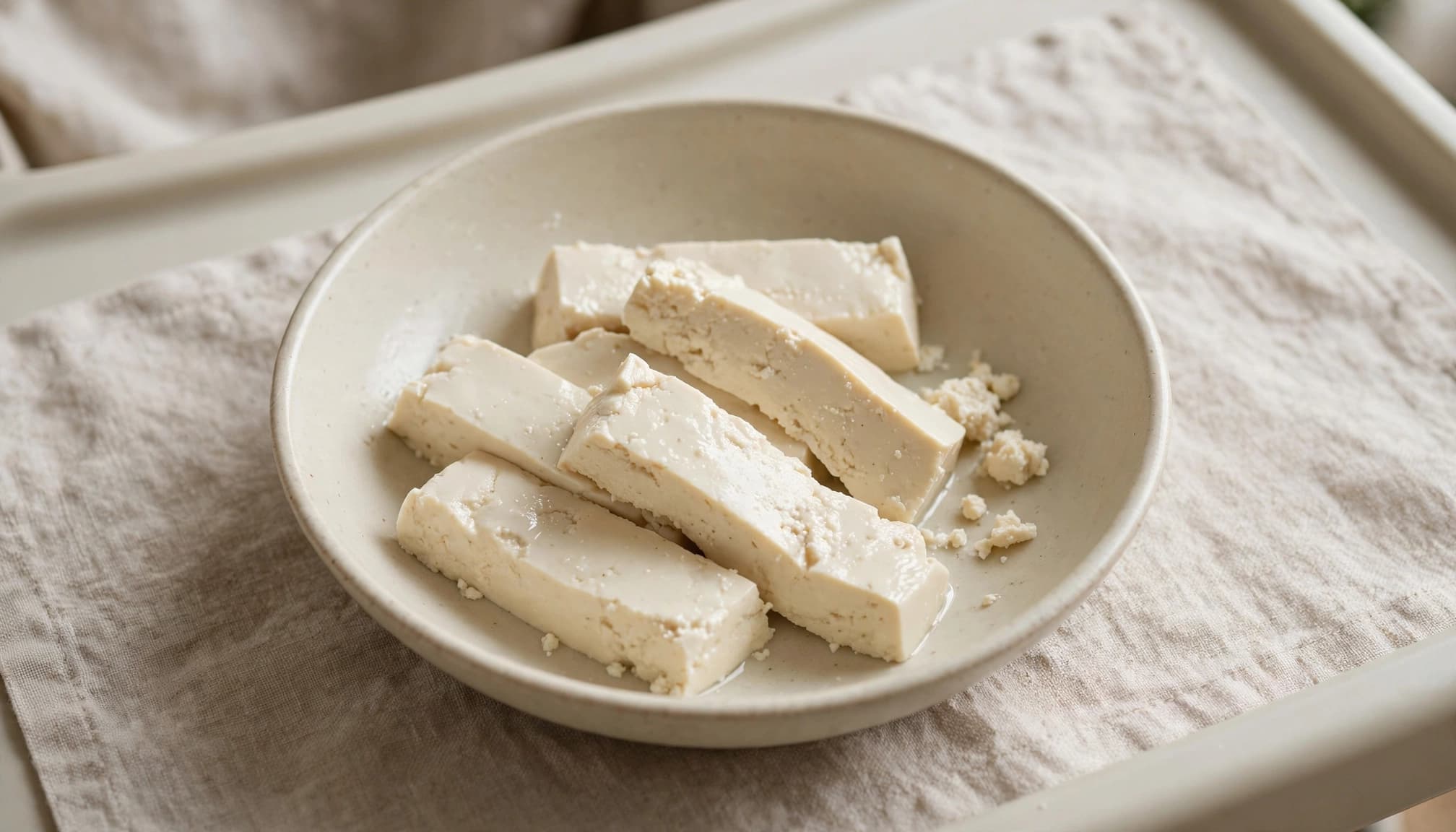
Smooth and mashed spoon foods
Silken tofu mashed until smooth is a practical first option. Check for firm pieces and aim for a soft consistency your baby can move comfortably in their mouth.
As eating skills develop, a thicker mash with tiny, soft lumps may work. You can mash with a fork and adjust the consistency with a little suitable liquid if needed.
Offer the spoon gently and wait for your baby to open their mouth. Never push food in or scrape it against their upper lip.
These principles also apply to safe textures for homemade baby food, including vegetables and beans.
Soft finger foods for ready self-feeders
If your baby can grasp food and bring it to their mouth, soft tofu may be offered in an appropriate finger-food form.
For an early whole-hand grasp, a larger soft strip may be easier to hold. Later, small soft pieces may suit a developing thumb-and-finger grasp.
No single cut is safe for every baby. Check that the tofu squashes easily between your fingers and avoid firm, rubbery chunks or crisp crusts.
If a piece breaks into shapes your baby struggles with, switch to mashed tofu or a pre-loaded spoon. Ask a feeding professional for guidance if texture management is difficult.
Simple Tofu Serving Ideas
Keep the first soy serving simple. After your baby has tolerated tofu and the other ingredients separately, you can combine familiar foods.
There's no need for salt, sweet sauces, or a complicated recipe.
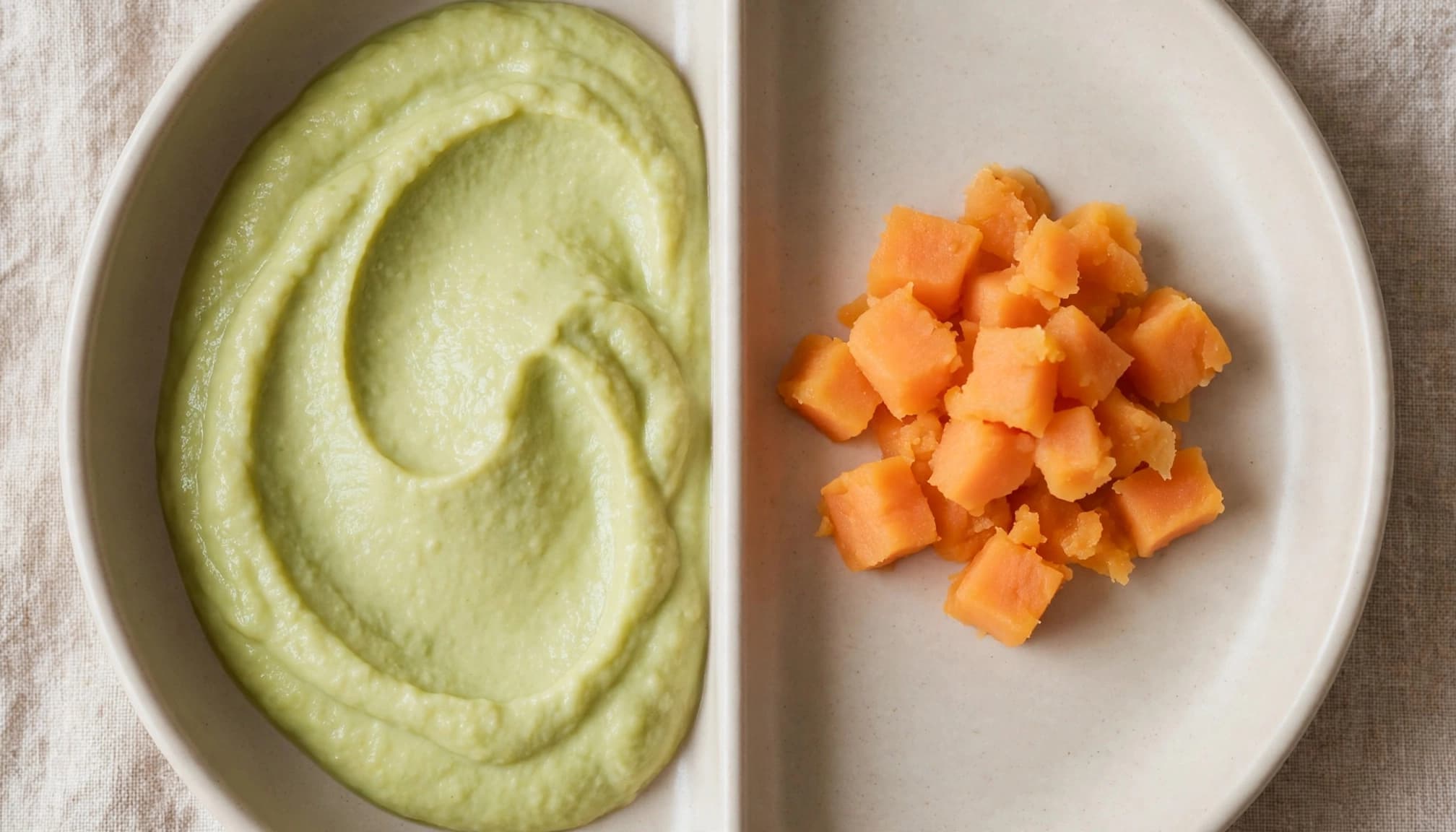
Easy combinations for spoon-feeding
Mash smooth silken tofu with ripe avocado for a soft spoon food. Check the consistency before serving because avocado can make the mixture thicker.
Another option is tofu mixed with well-cooked sweet potato. Mash each ingredient first, then combine a small portion so no firm vegetable pieces remain.
For a different flavor, stir smooth tofu into familiar mashed pear or banana. Cook pear first if it's too firm to mash easily.
These combinations work without added sweeteners. Honey should stay off the menu until after 12 months because of infant botulism risk.
Adapt familiar family foods
A plain portion of tofu alongside very soft vegetables can fit into a family meal. Set aside your baby's food before adding salty sauces or crisping the tofu.
Keep vegetable textures appropriate too. Steam broccoli or carrots until very soft, then mash or prepare them for your baby's current skills.
Don't assume an adult tofu dish is suitable because tofu appears in it. Sauces may contain additional allergens, and fried coatings can change the texture.
For more combinations, look at healthy lunch ideas for babies, then adapt ingredients your child already tolerates.
Reduce Choking Risks at Every Meal
Even soft foods need close supervision. Seat your baby upright in a stable high chair or suitable feeding seat, and stay within arm's reach.
Avoid feeding while your baby is reclining, crawling, or riding in a moving vehicle. Save meals during outings for a safe, stationary feeding setup.
Tolerating soy doesn't make every tofu preparation safe. Allergy safety and choking safety require separate checks.
Check the whole meal, not only the tofu. Hard raw vegetables, whole nuts, popcorn, and firm chunks of food are choking hazards for infants. Thick spoonfuls of nut butter are unsafe too.
Gagging can happen while babies learn to handle textures. It often involves noise, coughing, or retching. Choking may be quiet, and a baby may be unable to breathe, cry, or cough effectively.
Learn infant choking first aid and CPR through a qualified course. If choking occurs, act immediately using your training and seek emergency help.
Don't put your fingers into your baby's mouth unless you can clearly see and safely remove an object.
Prepare and Store Tofu Safely
Fresh food still needs careful handling. Follow the tofu package's preparation and storage instructions, including any directions after opening.
Wash your hands and use clean utensils, bowls, and preparation surfaces. If you heat the food, let it cool to a comfortable temperature before offering it.
Keep untouched food separate
Transfer a small serving into your baby's bowl rather than feeding directly from the main container. That keeps saliva away from food you plan to save.
Discard leftovers from the bowl your baby has eaten from. Meanwhile, promptly refrigerate untouched portions according to the package instructions.
USDA food-safety guidance recommends refrigerating perishable food within 2 hours, or within 1 hour when temperatures exceed 90°F (32°C). Those are maximum limits, not targets for leaving baby food out.
Keep your refrigerator at 40°F (4°C) or below.
Plan for meals away from home
Carry tofu and prepared mixtures in an insulated bag with cold packs. Pack a clean spoon and serving container, and prepare only what you expect to offer.
Choose familiar, previously tolerated foods for outings. A restaurant, park, or road trip is a less convenient place for a first soy exposure.
At restaurants, ask about sauces and other ingredients. If your baby has a diagnosed allergy, discuss cross-contact precautions with staff and follow your clinician's plan.
Cold storage remains necessary even when you mash food immediately before feeding.
Let Appetite and Skills Guide Portions
There's no need to persuade your baby to finish a serving. Start small, offer more if they show interest, and stop when they turn away or close their mouth.
A refused meal doesn't automatically mean your baby dislikes tofu. Hunger, tiredness, and unfamiliar texture can all affect their response. Offer it again another day without pressure, provided there was no suspected reaction.
You can also change the serving style as skills develop. Smooth tofu, a soft mash, and suitable finger foods offer different eating experiences.
A flexible approach to combining purees with baby-led weaning lets you choose what works at each meal. Your baby doesn't have to follow one feeding method exclusively.
Keep the focus on comfortable practice and varied foods rather than counting bites.
Make Tofu Part of a Safe Feeding Routine
Tofu can join your baby's meals once they're ready for solids, with a thoughtful soy introduction and skill-appropriate textures. Close supervision matters every time, even when the food is familiar.
If allergy concerns or swallowing difficulties arise, get personalized medical advice before continuing.
The Wonder Wean's compact, hand-powered pocket blender helps caregivers prepare healthy foods on the go without electricity. For fresh meals made with suitable ripe or properly cooked ingredients at restaurants, family visits, or while traveling, Buy Now and check each finished texture before feeding your seated, supervised baby.