

Healthy Baby Lunch Ideas Using Everyday Whole Foods
A baby lunch doesn't need a separate recipe, a long ingredient list, or a pouch from the store. A few soft, familiar foods can become a satisfying meal in minutes.
These healthy baby lunch ideas use everyday foods such as fruit, vegetables, oats, beans, eggs, yogurt, and avocado. They are easy to adjust as your baby learns new textures and begins eating more of the family meal.
Start with foods your baby already enjoys, then add one small new flavor or texture at a time.
Build Healthy Baby Lunch Ideas Around Simple Food Groups
A balanced baby lunch often includes a soft source of energy, a fruit or vegetable, and a food with protein or healthy fat. You don't need every category at every meal. Across the day and week, variety matters more than perfection.
For example, mashed sweet potato with plain yogurt and soft pear can work well. So can oatmeal with mashed banana and a spoonful of smooth peanut butter thinned with water or breast milk, if peanut has already been introduced safely.
Begin with a familiar base
Soft grains and starchy vegetables make lunches filling without much preparation. Try well-cooked oats, quinoa, brown rice, potatoes, sweet potatoes, or small pasta cooked until very tender.
Mash the food with a fork for early eaters. Older babies can manage soft clumps and small pieces they can easily squash between their gums. Add a little water, breast milk, formula, or unsalted broth if the food seems dry.
Add color and gentle flavor
Steamed carrots, peas, zucchini, broccoli florets, spinach, squash, and ripe tomatoes all bring different tastes to the table. Fruit works too, especially ripe banana, peaches, pears, mango, berries that have been mashed, and avocado.
Offer foods plain at first so your baby can recognize each flavor. Later, mild additions such as cinnamon, garlic powder, cumin, or a squeeze of lemon can make family foods feel more inviting.
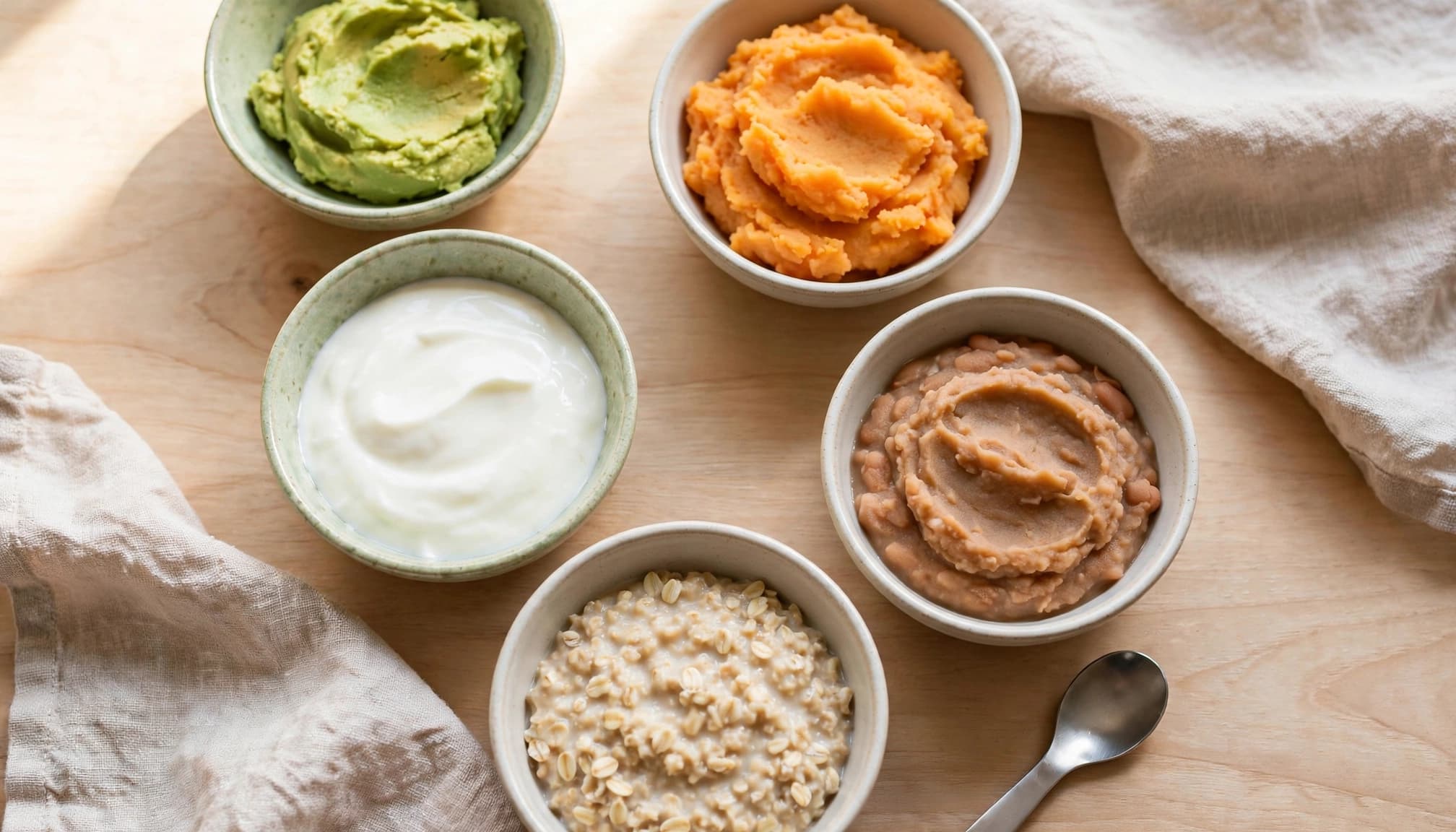
Eight Everyday Whole-Food Baby Lunch Combinations
These lunches are flexible, so swap ingredients based on what you have in the fridge. Portions can be small. Babies have tiny stomachs, and appetite often changes from one day to the next.
Sweet potato, black beans, and avocado
Cook sweet potato until it collapses easily under a fork. Mash it with thoroughly cooked black beans and ripe avocado. Add water as needed for a smoother texture.
This meal has soft carbohydrates, plant protein, and fat. For a baby practicing self-feeding, offer thick mashed scoops on a pre-loaded spoon.
Oatmeal with banana and yogurt
Prepare plain oats until soft, then stir in mashed banana and full-fat plain yogurt. Cinnamon is optional if your baby has already tried it.
Use unsweetened yogurt with no added flavors or syrups. If dairy isn't part of your baby's diet, mashed avocado or a smooth bean puree can add creaminess instead.
Egg, peas, and potato
Scramble an egg until fully cooked, then finely mash it with soft peas and cooked potato. A small spoonful of water helps bring the mixture together.
Egg provides protein and iron, while peas add a sweet flavor many babies accept easily. Serve it warm rather than hot.
Lentils with carrots and rice
Simmer red lentils until they are very soft. Mix them with mashed steamed carrots and well-cooked rice for a gentle, hearty lunch.
Red lentils break down easily, so they suit babies still learning to move food around their mouths. A splash of water creates a smooth puree when needed.
Yogurt, soft fruit, and oats
Mix plain yogurt with mashed ripe peach, pear, or berries and a spoonful of cooked oats. This option is useful on warm days when a lighter lunch sounds good.
Peel fruit with tough skins, and mash berries well. Avoid adding honey for babies under 12 months.
Chickpeas, zucchini, and olive oil
Cook chickpeas until very tender, then mash them completely with steamed zucchini and a small drizzle of olive oil. Blend or press through a sieve for younger babies.
Canned chickpeas can work if you choose no-salt-added varieties and rinse them well. Their skins may need extra mashing for a smoother result.
Salmon, broccoli, and potato
Flake fully cooked salmon carefully and check for bones. Combine it with soft broccoli and mashed potato, then moisten the mixture with water or breast milk.
Fish offers a welcome change from eggs and beans. Keep the pieces small and soft, especially while your baby is still learning textured foods.
Pasta with tomato and white beans
Cook small pasta shapes until very soft. Toss them with peeled, cooked tomato and mashed white beans. Cut or mash the pasta to match your baby's feeding skills.
This is a useful way to adapt a family pantry meal. Skip salty jarred sauces, and use plain cooked ingredients instead.
A baby lunch can be repeated often. Familiar meals build confidence, and variety can happen over several days rather than at one sitting.
Match the Texture to Your Baby's Stage
The right texture is not one fixed rule. It changes with your baby's age, feeding experience, oral skills, and comfort with solids. Watch your baby during meals and move forward gradually.
Smooth purees for new eaters
For babies early in their solid-food journey, aim for smooth, spoonable foods. Mash avocado, banana, sweet potato, lentils, peas, or cooked apple until there are no hard lumps.
Thin purees only enough to help your baby swallow comfortably. A runny puree can slide off the spoon and make self-feeding harder.
Thicker mashes as skills grow
Once your baby handles purees well, offer thicker mashes with soft, tiny lumps. Fork-mashed beans with sweet potato, oatmeal with banana, and mashed peas are good next steps.
This stage helps babies practice moving food with their tongue. Gagging can happen as they learn, but ongoing coughing, distress, or trouble breathing needs immediate attention.
Soft finger foods for self-feeding practice
Babies who sit with support and bring food to their mouths may enjoy soft pieces. Offer ripe avocado slices rolled in finely ground oats, very soft broccoli florets, strips of omelet, or peeled ripe pear slices cooked until tender.
The food should squash easily between your thumb and finger. Stay close and seated with your baby throughout the meal.
Keep Lunch Safe Without Making It Complicated
Whole foods are simple, but baby food still needs thoughtful prep. Wash produce, cook firm foods until soft, and serve meals at a comfortable temperature.
Avoid adding salt and sugar. Babies don't need them, and plain foods help them get used to natural flavors.
Watch for common choking hazards
Some nutritious foods need changes before they belong on a baby plate. Cut round foods lengthwise and soften hard foods. Never offer popcorn, whole nuts, spoonfuls of sticky nut butter, hard raw apple, raw carrot coins, whole grapes, or chunks of firm cheese.
Spread nut butter thinly on toast fingers for an older baby, or stir it into oatmeal until smooth. Crush or finely grind seeds, and cook vegetables until they are easy to mash.
Introduce common allergens thoughtfully
Egg, peanut, dairy, wheat, soy, sesame, fish, and shellfish are common allergens. When your baby is ready for solids, offer one new allergenic food earlier in the day and in a form that fits their skills.
For instance, stir smooth peanut butter into warm oatmeal or offer well-cooked scrambled egg. If your baby has eczema, an existing food allergy, or a history that concerns you, ask your pediatric clinician for personal guidance before introducing allergens.
Store leftovers with care
Put perishable leftovers in the refrigerator soon after the meal. Food that has touched your baby's spoon should not be saved, because bacteria from saliva can multiply in it.
Instead, scoop a small portion into a separate bowl and refill as needed. Reheat leftovers until steaming, then cool and stir before serving.
Make Lunch Easier on Busy Days
A little preparation gives you more options when lunchtime arrives fast. Cook a few plain ingredients during dinner prep, then save them for your baby's meal the next day.
Keep a small rotation in mind: one cooked vegetable, one fruit, one filling base, and one protein or fat. That framework prevents the daily question of what to serve.
Prep ingredients, not perfect meals
Steam extra sweet potato, carrots, broccoli, or peas when you make dinner. Cook plain lentils or quinoa in a larger batch. Keep ripe bananas, avocados, eggs, and plain yogurt on hand.
Then combine two or three items at lunchtime. Potato and peas can become a mash today, while the same potato can pair with egg tomorrow.
Let your baby join family lunch
Family meals don't have to be spicy or salty to taste good. Before seasoning a pot of lentils, soup, or vegetables, set aside a baby portion. Mash it, thin it, or cut it into soft pieces.
Eating together also lets babies watch how food is handled. They may not eat much every time, and that's normal. Offer without pressure, then let appetite lead.
Pack Fresh Food for Lunches Away From Home
Outings can make fresh feeding feel harder, especially when a baby eats at an unpredictable time. Pack soft foods that travel well in a cooler bag, such as mashed sweet potato, yogurt, cooked lentils, banana, avocado, or steamed vegetables.
Bring a bib, spoon, wipes, water, and a small container. If food needs refrigeration, keep it cold with an ice pack and return leftovers to the cooler promptly.
Use foods already on hand
A restaurant baked potato, a side of steamed vegetables, ripe avocado, or plain beans can become part of a baby lunch. Ask for food without added salt, sauces, or heavy seasoning when possible.
At a park or while traveling, a portable mashing tool gives you more freedom. You can soften and mash familiar food rather than relying on whatever packaged snack is nearby.
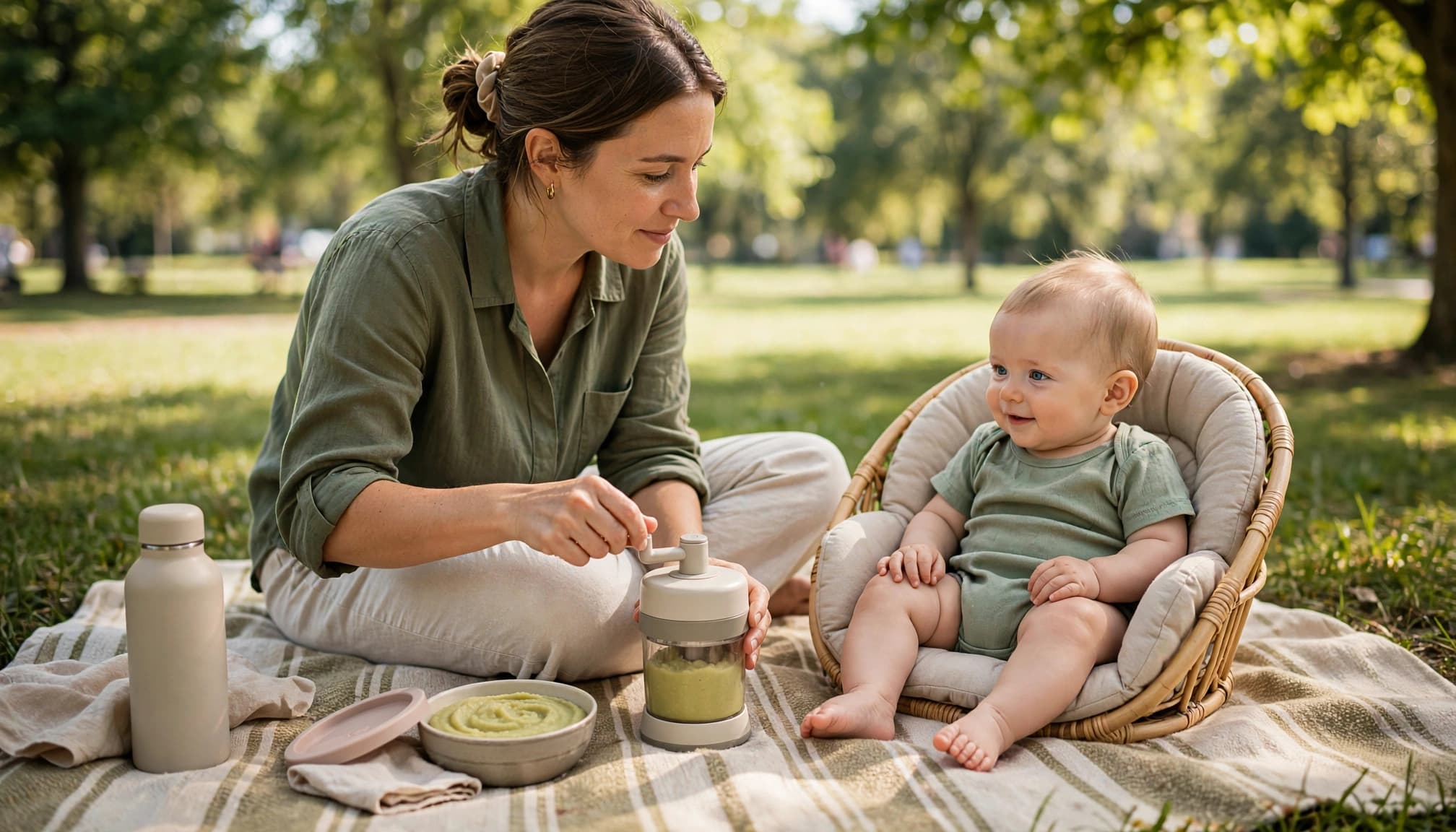
The Wonder Wean helps caregivers mash fresh foods wherever lunch happens, without electricity or a bulky blender. Its compact hand-powered design makes avocado, cooked vegetables, beans, fruit, and other soft foods easier to prepare on the spot. When you want a practical way to keep serving whole foods beyond your kitchen, Buy Now.
A Flexible Way to Feed Your Baby Well
The most useful healthy baby lunch ideas are the ones you can make again on an ordinary Tuesday. Start with soft whole foods, use textures your baby can manage, and repeat favorites without worry.
As your baby grows, a bowl of mashed beans, vegetables, and avocado can slowly become soft pieces of the same meal. Simple food, offered often and safely, builds a steady foundation for eating.