

Peas for Babies: Easy Ways to Serve Them Soft
Peas for babies can be as simple as cooked peas mashed with a fork or blended into a smooth puree. The key is to make them soft and easy to manage, then adjust the texture as your baby's feeding skills grow.
Plain fresh or frozen peas both work, and you don't need a complicated recipe. Start with your baby's readiness for solids, then prepare peas in a texture that suits them.
When Can Babies Start Eating Peas?
Babies can try peas once they're ready for solid foods. Readiness involves more than interest in your plate: your baby also needs the physical skills to sit and manage food safely.
Look for signs of readiness
Your baby should be able to sit upright with support, hold their head steady, and bring food toward their mouth. They may also watch you eat or open their mouth when food is offered.
If you're unsure whether your baby is ready, talk with their pediatrician. Your baby's individual development matters more than copying another family's feeding schedule.
Choose a manageable first texture
For an early meal, cooked peas can be blended smooth or mashed until very soft. Either approach can work, depending on what your baby is comfortable handling.
Whole peas are small and round, so mash or flatten them rather than scattering them intact across the tray. A smooth puree also needs a final look for stubborn skins or unblended peas.
How to Cook Peas Until They're Soft
Plain fresh or frozen green peas are convenient choices. Look for peas without added sauces or seasoning, and set aside your baby's portion before salting the family meal.
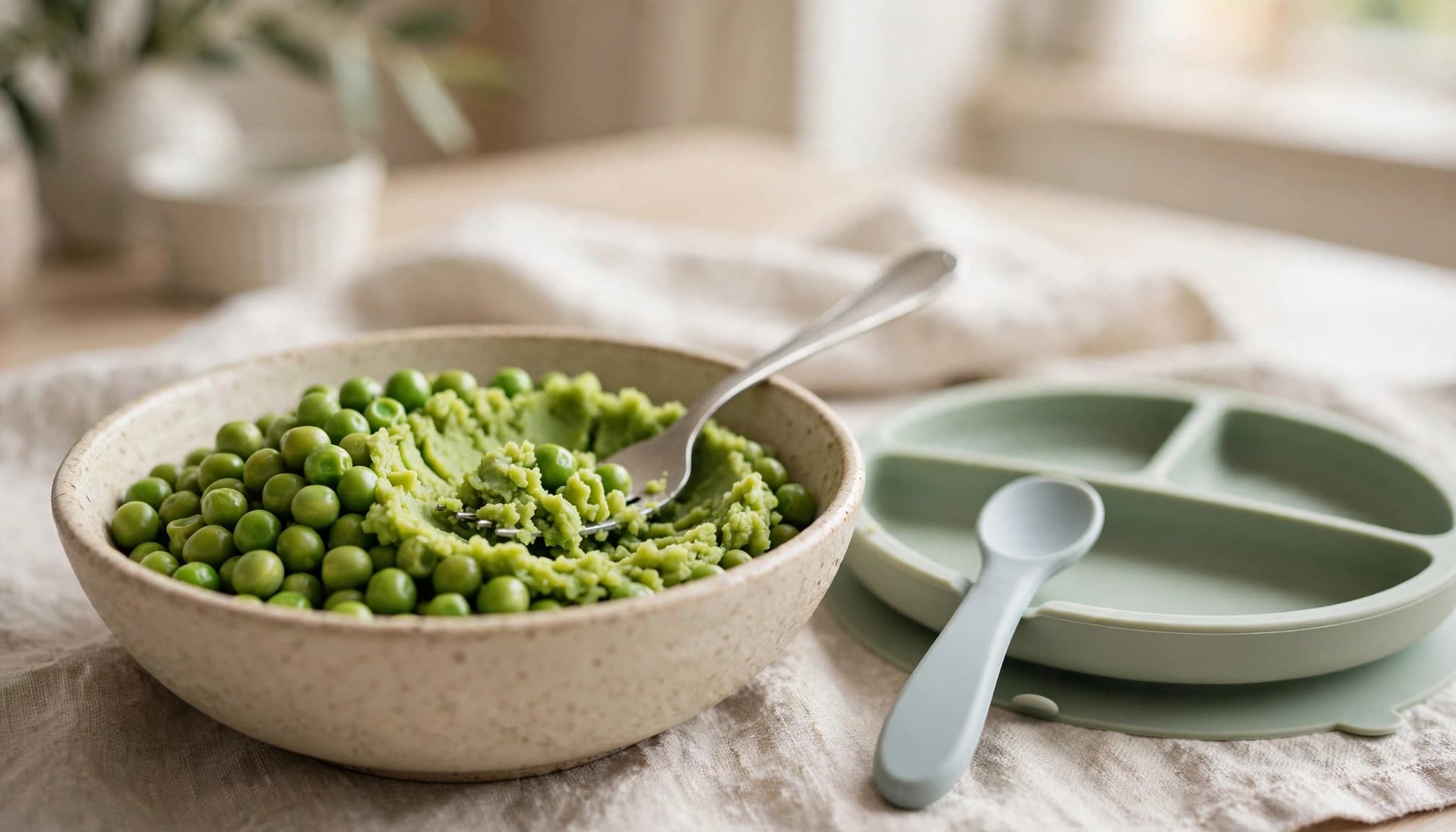
Steam or simmer them
Rinse fresh peas and remove them from their pods. Steam them over water or simmer them in a saucepan until they're tender throughout. Frozen peas can go straight into the pan without thawing first.
Use a fork to press several peas against the side of the pan. They should crush easily, with no firm center. If they resist, continue cooking until they're softer.
Mash or blend before serving
Drain the peas, keeping a little unsalted cooking water if you want to loosen the mixture. Mash with a fork for a soft texture, or blend for a smoother puree. Add water gradually so the food remains moist and spoonable.
Let the peas cool before serving. Look through the finished mixture for intact peas and tough bits of skin. If the skins won't blend smoothly, press the puree through a fine-mesh sieve.
Peas are one of several folate-rich foods for babies that can be prepared with familiar kitchen tools.
Adjust Pea Texture as Your Baby Learns
The same batch of cooked peas can become different meals as your baby gains experience. Choose a texture your baby handles comfortably, and make changes gradually.
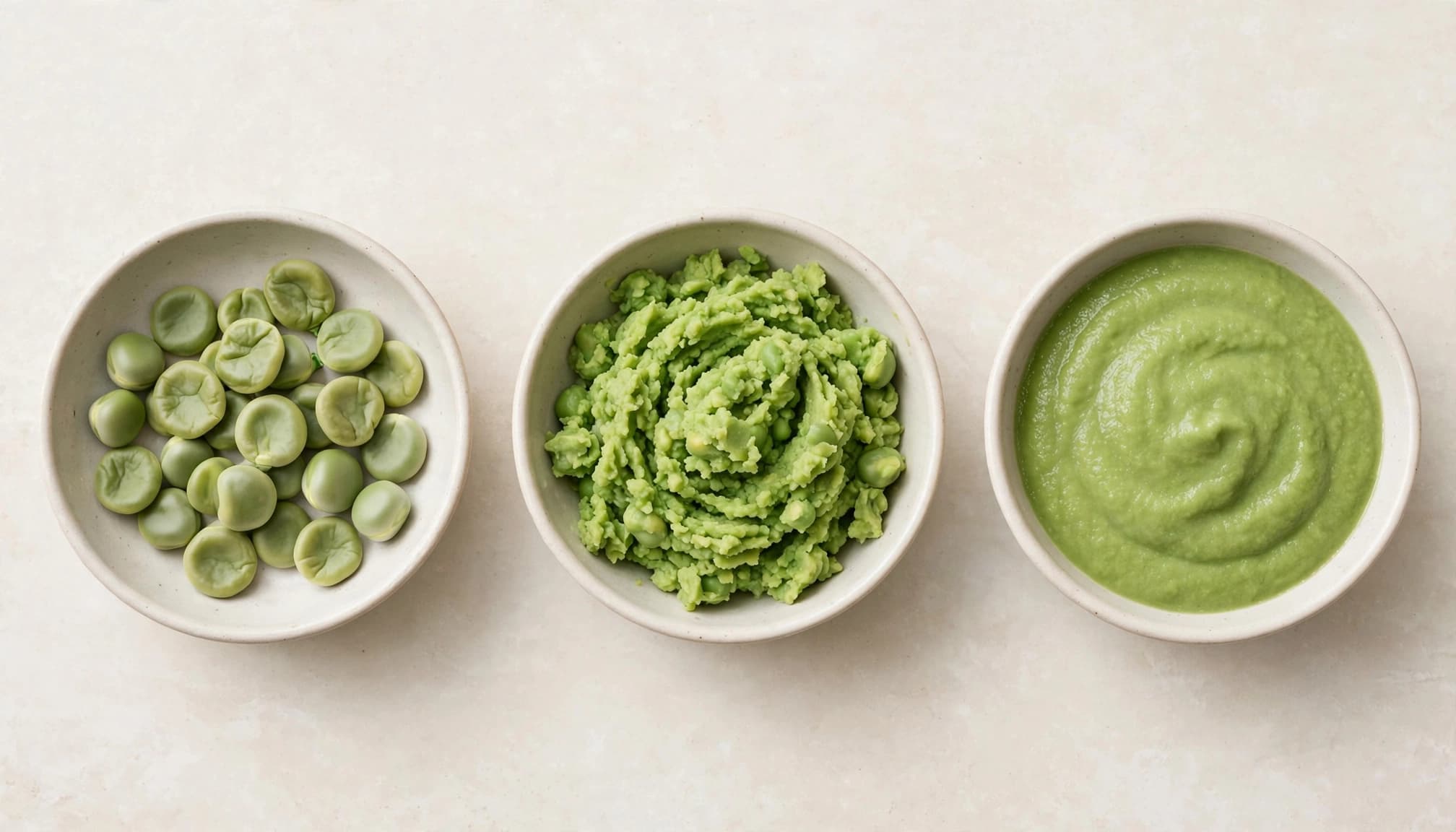
Smooth puree
Blend tender peas with a little water until the mixture is even and free of firm pieces. A sieve can help remove skins that remain noticeable after blending.
Aim for a puree that stays on the spoon and moves easily when stirred. Add liquid a little at a time; a thin, watery mixture can be harder to keep on a spoon. Offer it slowly, allowing your baby time to swallow between tastes.
Soft mash
For a thicker texture, press the peas thoroughly with a fork instead of blending them completely. Leave only soft, small lumps that squash easily between your fingers.
Stir in a little water if the mash looks dry. As you prepare it, move the fork through the whole bowl so intact peas don't collect at the edges. The texture should feel moist rather than crumbly.
Flattened peas for practice
As your baby develops a more precise grasp and handles soft pieces comfortably, you can offer well-cooked peas that have been flattened. Press each one so it no longer has a round shape, and remove any tough skins.
Watch how your baby manages the change. If a thicker or more textured serving seems difficult, return to a smoother mash and try again later. Our guide to safe textures for babies learning to chew offers more ideas for making gradual changes.
Simple Ways to Serve Peas for Babies
Plain peas let your baby get to know their flavor. Once your baby has tried other ingredients, you can also combine them into easy meals with different tastes and textures.
Peas and potato
Cook a plain potato until it mashes easily, then mix it with thoroughly mashed peas. Add a little water if needed to make the combination moist.
Potato gives the peas a mild flavor and a softer consistency. You can keep the mixture smooth for spoon-feeding or leave small, soft lumps for a baby who is comfortable with them. Our vegetable mash recipes for babies offer more combinations for everyday meals.
Peas and soft pasta
Cook plain pasta until tender, then mash or cut it to suit your baby's feeding skills. Stir through mashed peas and a little water to keep the mixture moist.
Small pasta shapes can work well, but shape alone doesn't make a food suitable. Pay attention to how soft the pasta is and how your baby manages it. Skip salty sauces in your baby's portion.
Peas with avocado or egg
Mix mashed peas with ripe avocado for a soft, creamy meal. You can also serve mashed peas beside fully cooked egg, prepared in a texture your baby can manage.
Introduce ingredients separately before combining them, particularly common allergens such as egg. If your baby has an allergy or you're concerned about introducing an allergen, ask their pediatrician for individual guidance.
Build Variety Around Peas
Peas can be part of a varied menu without appearing at every meal. They offer folate, a B vitamin, and their mild flavor works alongside many foods your family already eats.
Include iron-rich foods
As your baby starts solids, offer foods that supply iron as well as vegetables. Suitable options include fully cooked meat, lentils, beans, and iron-fortified infant cereal, prepared in a texture your baby can manage.
For example, you might serve a soft lentil mash alongside peas. Cook the lentils until tender and mash them thoroughly. Adding a little water can keep the meal moist.
Let peas taste like peas
There's no need to mix every serving with a sweeter food. Offering plain mashed peas gives your baby a chance to become familiar with their natural flavor.
Your baby may enjoy them right away or need more relaxed opportunities. Both are normal. You can alternate a small taste of plain peas with a familiar combination such as peas and potato, without pressuring your baby to eat either one.
Make Mealtimes Safe and Comfortable
Soft food still needs close supervision. Set up your baby in a stable seat, and keep your attention on them throughout the meal.
Sit upright and stay close
Offer food while your baby is sitting upright, rather than reclining or moving around. Stay within reach and avoid feeding in a moving car.
Give your baby time to handle each mouthful. If you're spoon-feeding, wait until they've swallowed and are ready before offering more. A preloaded spoon can also let your baby take part in the meal with your help.
Pay attention to the finished texture
The finger-squash test is a useful starting point: soft food should crush easily between your fingers. Peas also need attention to their shape and skins, so inspect the mash for pieces that remain round or tough.
A smooth-looking mixture can be thicker or drier than it seems. Stir it before serving, add a little water if needed, and make sure it isn't hot. Our tips for preparing soft foods for baby-led weaning cover more ways to adapt family foods.
What to Do When Peas Don't Go Down Easily
A new food can take practice. If your baby seems uncomfortable with the texture, pause the meal and consider what might make the next attempt easier.
If the mash is too textured
Return to thoroughly blended peas or press the mixture through a sieve. You can also combine the puree with soft potato to make it smoother.
Once your baby is comfortable again, try a slightly thicker mash. Small changes can be easier to manage than moving straight from a smooth puree to flattened pieces. Ask your pediatrician for help if feeding difficulties continue or concern you.
If your baby refuses the taste
A turned head or closed mouth is a good reason to stop offering food. Your baby can try peas again at another meal, perhaps beside a familiar food they already enjoy.
Keep the experience low-pressure. Touching the mash, watching it on a spoon, or taking a small taste can all be part of getting familiar with a new food.
Frequently Asked Questions
Can I use frozen peas for baby food?
Yes. Plain frozen peas are a practical option for peas for babies. Cook them until tender, then mash or puree them and remove any tough skins.
Do I need to peel every pea?
No. The goal is a finished texture your baby can manage. If the skins become soft and blend into the food, you don't need to remove each one. Use a sieve or remove pieces that stay tough.
Can my baby feed themselves mashed peas?
Yes. You can offer a preloaded baby spoon and let your baby bring it toward their mouth, with your help as needed. Stay close, keep your baby upright, and allow time between mouthfuls.
Can I add salt or sugar?
Plain peas don't need added salt or sugar. If you're cooking for the family, set aside your baby's portion before adding seasonings or sauces.
Keep Peas Soft and Simple
Tender peas can become a smooth puree, a moist mash, or flattened pieces as your baby's skills grow. Focus on softness and shape, and let your baby take the lead on how much they eat.
Our Wonder Wean can help you offer healthy foods on the go. Its compact, hand-powered design mashes suitable soft foods without electricity or batteries, making it handy at a restaurant or family visit. If you'd like to add one to your feeding kit, you can Buy Now.