

Baby Food Textures by Age: Safe Chewing Practice
The right baby food textures can help your child build confidence with eating, but age alone doesn't decide when to move forward. Some babies begin with smooth purees, while others manage soft mashed foods or tender finger foods soon after starting solids.
Your baby's posture, head control, interest in food, and ability to move food around the mouth matter more than a strict calendar. Use the stages below as flexible guidance, then adjust meals to match your baby's current skills.
Developmental readiness matters more than the calendar
Many babies begin complementary foods around 6 months, when they can sit upright with support and control their head and neck. Breast milk or infant formula remains the main source of nutrition during the early stages of solid feeding.
Signs your baby may be ready
Readiness usually appears through several signs together. Your baby may:
- Sit upright with steady head and neck control.
- Open their mouth when food approaches.
- Reach for food or bring objects toward their mouth.
- Swallow food instead of repeatedly pushing it out with the tongue.
- Show interest during family meals.
A baby who only watches you eat may need more time. Start with a small amount, often one or two tablespoons, and let your baby decide how much to eat. Turning away, closing the mouth, or losing interest usually means the meal is finished.
Safe seating supports safer practice
Seat your baby upright in a stable high chair with appropriate support. Stay within arm's reach and pay attention throughout the meal.
Avoid feeding in a car seat, stroller, reclined seat, or moving vehicle. A secure position gives your baby better control while using the tongue, gums, and jaw to manage new textures.
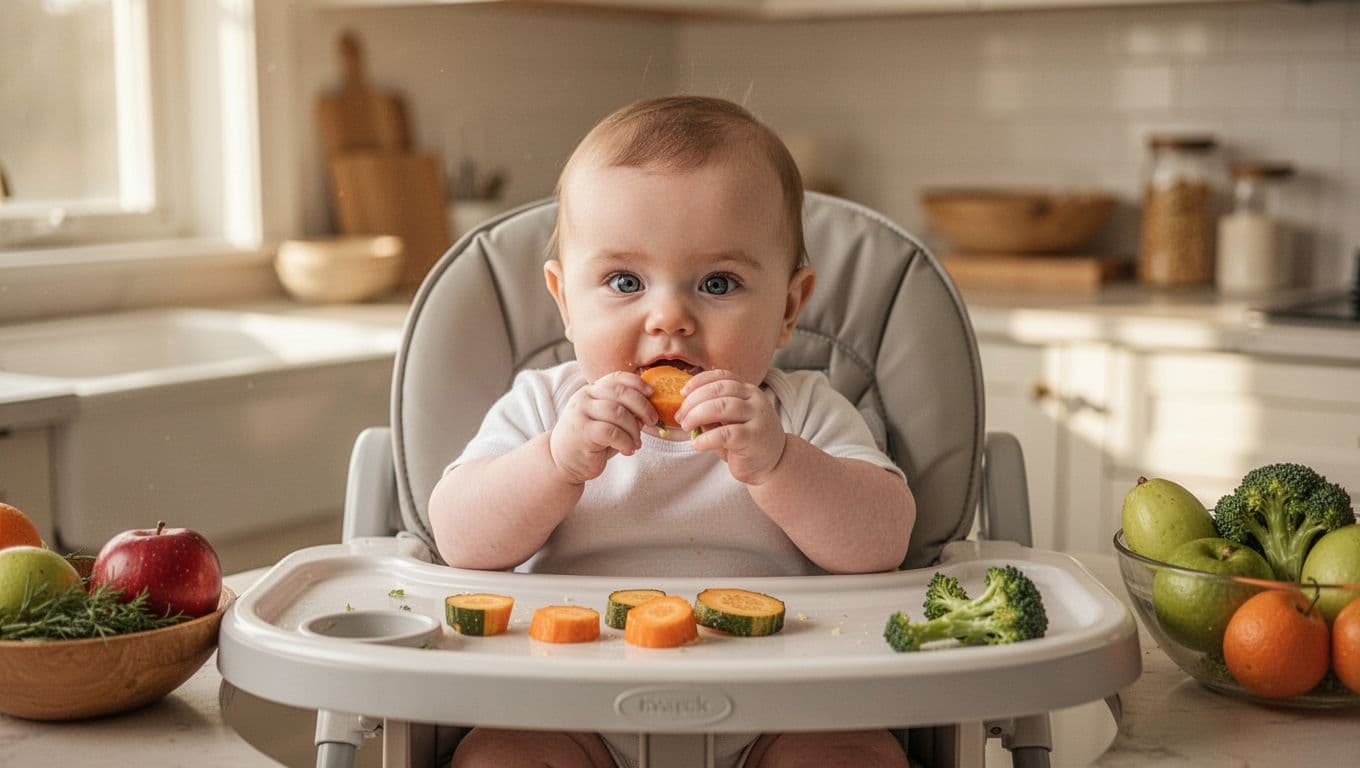
How baby food textures progress by age
Age ranges can provide a general reference, but they aren't instructions for every child. Move forward when your baby handles the current texture comfortably, not because a particular month has arrived.
Around the start of solids
Beginning eaters often do well with smooth, thick purees or soft mashes that stay on a spoon. Good examples include mashed avocado, plain yogurt, cooked sweet potato, soft lentils, mashed beans, ripe banana, and thick infant cereal.
Add a small amount of water, breast milk, prepared formula, or cooking liquid if food needs loosening. Avoid making every meal watery. A thicker, spoonable texture gives your baby more practice moving food around the mouth.
Cook vegetables until they mash easily with a fork. Remove seeds, tough skins, pits, bones, and stringy pieces before blending or mashing.
As your baby gains control
Many babies gradually manage thicker mashes and tiny, soft lumps during the middle part of the first year. Change the preparation method before changing the ingredients. For example, press beans or lentils with a fork instead of blending them completely.
You can also leave small soft lumps in mashed egg, avocado, peas, or sweet potato. Finely minced meat mixed into vegetable puree adds texture while keeping the meal moist. Tender meat should be thoroughly cooked and finely shredded or minced.
Watch your baby's response. Pushing food out, coughing repeatedly, tiring quickly, or becoming upset may mean the texture needs adjusting.
Later in the first year
When your baby sits steadily, brings food to their mouth, and manages soft lumps, they may be ready for graspable pieces. Offer tender strips or wedges rather than hard, tiny pieces that are difficult to pick up.
Soft broccoli florets, ripe avocado wedges, strips of omelet, tender zucchini, ripe pear, soft pasta, and toast strips with a thin spread can work for babies who are ready. The food should squash easily between your thumb and finger.
Babies can practice chewing with their gums before they have many teeth. Still, every piece must be soft enough to break apart easily.
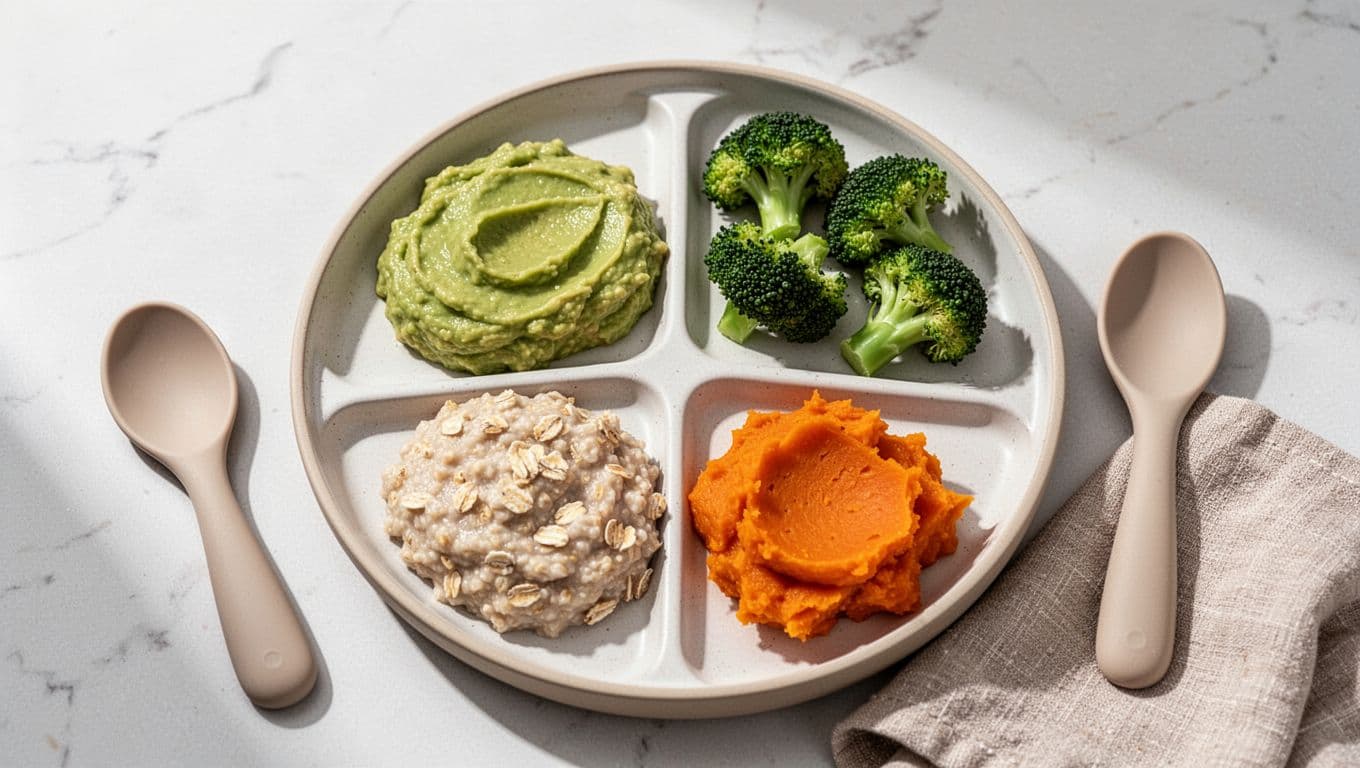
How to prepare food for safer chewing practice
Texture depends on more than blending time. Shape, moisture, firmness, and stickiness all affect how easily a baby can manage food.
A useful test is simple: press the food between your thumb and finger. If it doesn't flatten easily, cook it longer, mash it, grate it, or choose a softer preparation.
Smooth puree is helpful for early spoon practice, but it doesn't need to remain the texture for every meal. You can blend cooked vegetables with water, breast milk, prepared formula, or unsalted cooking liquid. As your baby gains control, blend for less time or use a fork.
For family foods, set aside your baby's portion before adding salt, sugar, spicy sauces, or other ingredients that don't fit their feeding plan. Plain cooked vegetables, beans, lentils, egg, tender meat, oatmeal, and fruit can be adapted without preparing a completely separate meal.
Try simple combinations after your baby has handled each ingredient individually. Mashed avocado with fully cooked egg offers a soft texture and healthy fat. Sweet potato with finely shredded chicken creates a moist meal. Lentils with mashed carrot and a little olive oil can provide iron, protein, and energy.
Keep food moist but not sticky
A mash should stay on the spoon without dripping like water. However, it shouldn't be so thick or sticky that your baby struggles to move it around the mouth.
Thick nut butter is difficult to manage by itself. Stir a small amount into oatmeal or yogurt, or spread it very thinly on a soft food if it fits your baby's feeding plan.
Store homemade food carefully
Set aside the portion you plan to store before feeding your baby. Food touched by a spoon that has been in your baby's mouth should be discarded rather than refrigerated for another meal.
Cool untouched food promptly in a covered container and refrigerate it for one to two days. Reheat only the amount you plan to serve, stir it well, and check the temperature before offering it.
Choking-safety checks for every texture
Soft food can still be unsafe when it is served in the wrong shape. Avoid whole grapes, popcorn, whole nuts, hard raw carrots, raw apple chunks, hard candy, large pieces of meat, coin-shaped sausage, and thick spoonfuls of nut butter.
Cook firm produce until soft throughout. Cut round foods lengthwise, and modify food according to your baby's current ability. Remove bones, pits, tough skins, hard pieces, and seeds.
Stay close while your baby eats. Gagging can be loud as babies learn to manage new textures, while choking may be quiet and prevent normal breathing.
Safety disclaimer: This article provides general information, not individual medical advice. Ask your pediatrician or a qualified feeding professional about your baby's readiness, allergies, swallowing, premature birth, or other health concerns. Learn infant CPR and choking first aid from a certified course.
Honey should not be offered before 12 months because of the risk of infant botulism. Added sugar and excess salt also don't belong in a baby's everyday meals.
Making natural baby food practical when you're away
Fresh food doesn't have to mean complicated travel preparation. Choose a soft, plain ingredient your baby has already eaten safely, such as ripe banana, avocado, soft cooked vegetables, oatmeal, yogurt, beans, or tender fruit.
When eating at a restaurant, select a simple ingredient without sauces or added salt. A ripe avocado, soft vegetable, or plain cooked potato can be mashed into a texture your baby already knows. Introduce new foods at home first, so you have time to watch for a reaction.
Pack meals that match the texture your baby practices at home. A baby still eating smooth food needs a smooth or familiar mash. A baby managing soft pieces may handle a tender broccoli floret, ripe fruit wedge, or soft pasta prepared in an appropriate shape.
The Wonder Wean can help you mash fresh foods on the spot without electricity, whether you're at home, traveling, visiting family, or eating out. Its compact, hand-powered design makes it easier to offer familiar, healthy ingredients while reducing dependence on packaged pouches and jars.
Key takeaways for choosing baby food textures
- Let developmental readiness guide texture changes more than age alone.
- Keep your baby upright, supported, and within arm's reach during every meal.
- Start with smooth, thick foods, then gradually offer soft lumps and tender pieces.
- Test food by pressing it between your thumb and finger.
- Remove bones, pits, seeds, tough skins, and hard pieces before serving.
- Avoid hard, round, sticky, and dense foods that can create choking risks.
- Keep breast milk or formula central during the first year.
- Follow your pediatrician's guidance when feeding concerns arise.
Baby food texture FAQs
When should my baby move beyond smooth puree?
Move beyond smooth foods when your baby handles the current texture comfortably and shows good control while eating. You can begin by making familiar foods thicker, blending for less time, or mashing them with a fork.
There is no prize for moving quickly. Some babies need longer with smooth food, while others accept soft lumps early. Watch your baby rather than forcing a texture that causes repeated coughing, distress, or fatigue.
Does my baby need teeth before eating soft finger foods?
No. Babies can use their gums to break down tender foods, but the pieces must be soft enough to squash easily. Offer appropriate shapes and stay close during the entire meal.
Soft finger foods support self-feeding when a baby can sit steadily, bring food to their mouth, and manage the texture. If your baby struggles, return to a familiar consistency and ask a health professional for guidance if concerns continue.
How can I tell whether a food is too hard?
Press it firmly between your thumb and finger. If it stays firm, cracks without flattening, or requires strong pressure, it isn't soft enough for a young eater.
Steam, roast, boil, grate, shred, or mash the food until it breaks apart easily. Raw carrots, hard apple chunks, whole nuts, and popcorn remain unsafe choices for young children even when they seem small.
A calmer path through changing textures
Baby food textures usually progress through practice, not a strict schedule. Begin with a consistency your baby can manage, then make small changes as their posture, mouth control, and confidence improve.
Fresh foods such as avocado, sweet potato, beans, lentils, egg, fruit, and tender vegetables can provide variety without complicated recipes. With the Wonder Wean, you can mash healthy foods wherever the day takes you, so feeding your baby well on the go can stay simple and familiar.