

Folate-Rich Foods for Babies: Easy Serving Ideas
Your baby's next meal may already be sitting in your pantry or waiting on the family dinner table. Offering folate-rich foods for babies can be simple when you choose familiar ingredients and prepare them safely.
You don't need elaborate recipes or a perfectly balanced bowl at every sitting. Start with soft, manageable textures, keep breast milk or formula central during the first year, and let your baby set the pace.
A few everyday foods make a practical starting point.
Key Takeaways
- Chickpeas, green peas, and asparagus offer folate and can become baby-friendly foods with careful preparation.
- Begin solids around 6 months when your baby shows developmental readiness, then adjust textures as feeding skills grow.
- Mash beans thoroughly, cook vegetables until tender, and keep your baby seated upright with close supervision.
- Use familiar foods for outings, keep perishable meals cold, and check the finished texture before serving.
Start With These Folate-Rich Foods for Babies
Folate is a B vitamin found in everyday foods. Rather than calculating nutrients at each meal, offer varied foods over time.
Chickpeas, green peas, and asparagus are useful choices. Your baby may accept one quickly and need several relaxed opportunities with another.
Chickpeas and green peas
Cook chickpeas until they crush easily under a fork. For a beginning eater, puree them with enough water to create a moist, spoonable texture. Chickpeas can become dry or pasty, so check the consistency carefully.
Plain canned chickpeas are a convenient alternative. Choose no-salt-added varieties when available, rinse them, and mash thoroughly. Remove any loose skins that remain tough.
For peas, cook fresh or frozen peas until tender, then mash or puree them. Check for intact round peas and stubborn skins before serving. Mixing peas with soft potato can make a smoother meal without adding sugar or salt.
Asparagus prepared until tender
Asparagus needs more preparation than ripe fruit or canned beans. Snap or cut away the woody base, then steam or boil the tender portion until it mashes easily.
For early spoon-feeding, blend it with cooked potato or another familiar soft ingredient. Check for stringy fibers, even when the asparagus looks well cooked.
Offer a small taste first. Its flavor may be unfamiliar, and repeated, pressure-free exposure gives your baby time to get used to it. You can serve it separately before mixing it into a meal.
Three Easy Meals Using Familiar Ingredients
Once your baby has tried the individual ingredients, simple combinations can make family meals easier to share. Start with a small portion and prepare more if your baby remains interested.
Chickpea and sweet potato mash
Steam or bake sweet potato until the center collapses under a fork. Mash it with thoroughly softened chickpeas and a little water or unsalted cooking liquid.
Blend more thoroughly for a baby who needs a smooth texture. For a baby managing soft lumps, use a fork and check that no firm chickpeas remain.
A little olive oil can loosen a dry mixture. However, add liquid gradually so the finished food stays moist and easy to manage rather than sticky.
Pea and potato spoon meal
Cook peas and peeled potato until both are tender. Mash them together, checking the peas carefully for whole pieces and skins.
For a smoother meal, pass the mixture through a food mill or blend it briefly. Add water only as needed to reach your baby's usual consistency.
Serve a small scoop on a spoon. A baby practicing self-feeding can try a preloaded spoon with your help. Let them pause between mouthfuls rather than continually offering another bite.
Asparagus with soft pasta and white beans
Cook pasta beyond a firm adult texture, and prepare asparagus until tender. Combine these with soft white beans, then mash or finely process everything to match your baby's skills.
For a younger eater, the ingredients should form a moist mash without firm pasta pieces or vegetable fibers. Babies comfortable with more texture may manage softly crushed beans and appropriately sized, very soft pasta.
Set aside the baby's portion before adding salty sauces or strong seasonings to the family meal.
Match the Texture to Your Baby's Feeding Skills
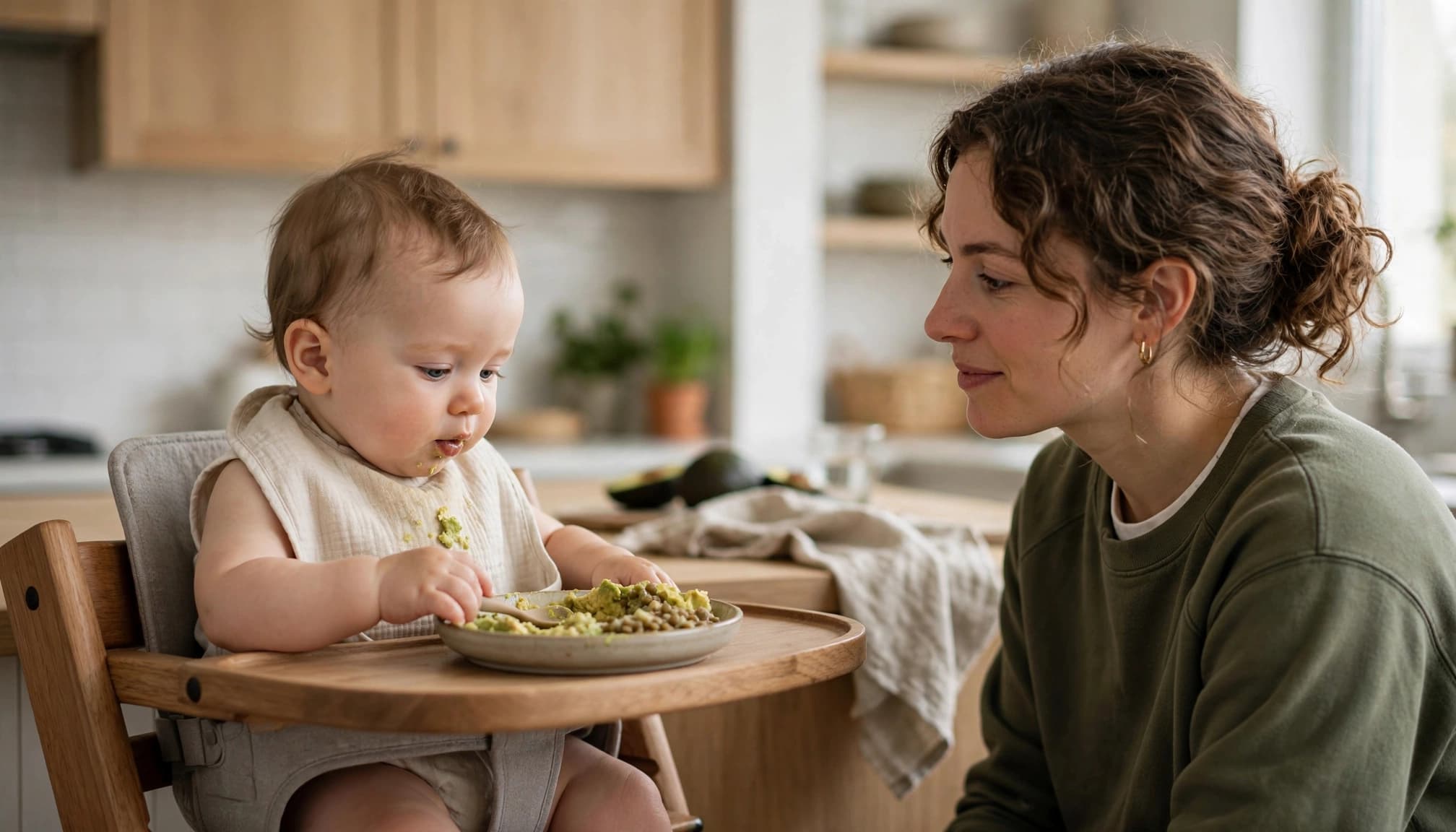
Age gives a general starting point, but feeding experience and oral skills matter too. Begin solids around 6 months when your baby has steady head control, can sit with support, and shows other signs of readiness.
Ask your pediatrician if you're unsure, especially after premature birth or when feeding has been difficult.
Smooth foods and gentle texture changes
Early spoon foods can be smooth purees or very soft mashes. Add a little water, breast milk, or prepared formula when needed, but avoid making every meal watery.
As your baby becomes comfortable, gradually leave small, soft lumps. Use the same familiar ingredients while changing the texture slightly.
Watch how your baby manages the food. Repeated coughing, distress, or difficulty swallowing needs medical advice rather than a push toward more challenging textures. A feeding specialist can help when progression feels difficult.
Soft finger foods and close supervision
For babies ready to self-feed, food should squash easily between your thumb and finger. A tender broccoli floret with a soft stem or a ripe avocado wedge may work when shaped for your baby's grasp.
Keep whole chickpeas and round peas out of an early eater's bowl. Mash or flatten them thoroughly instead.
Test the thickest part of a vegetable, not just its soft outer edge. A tender broccoli floret can still have a firm stem.
Always seat your baby upright in a stable feeding seat. Stay within arm's reach and give the meal your full attention.
Prepare Whole Foods Without Extra Work
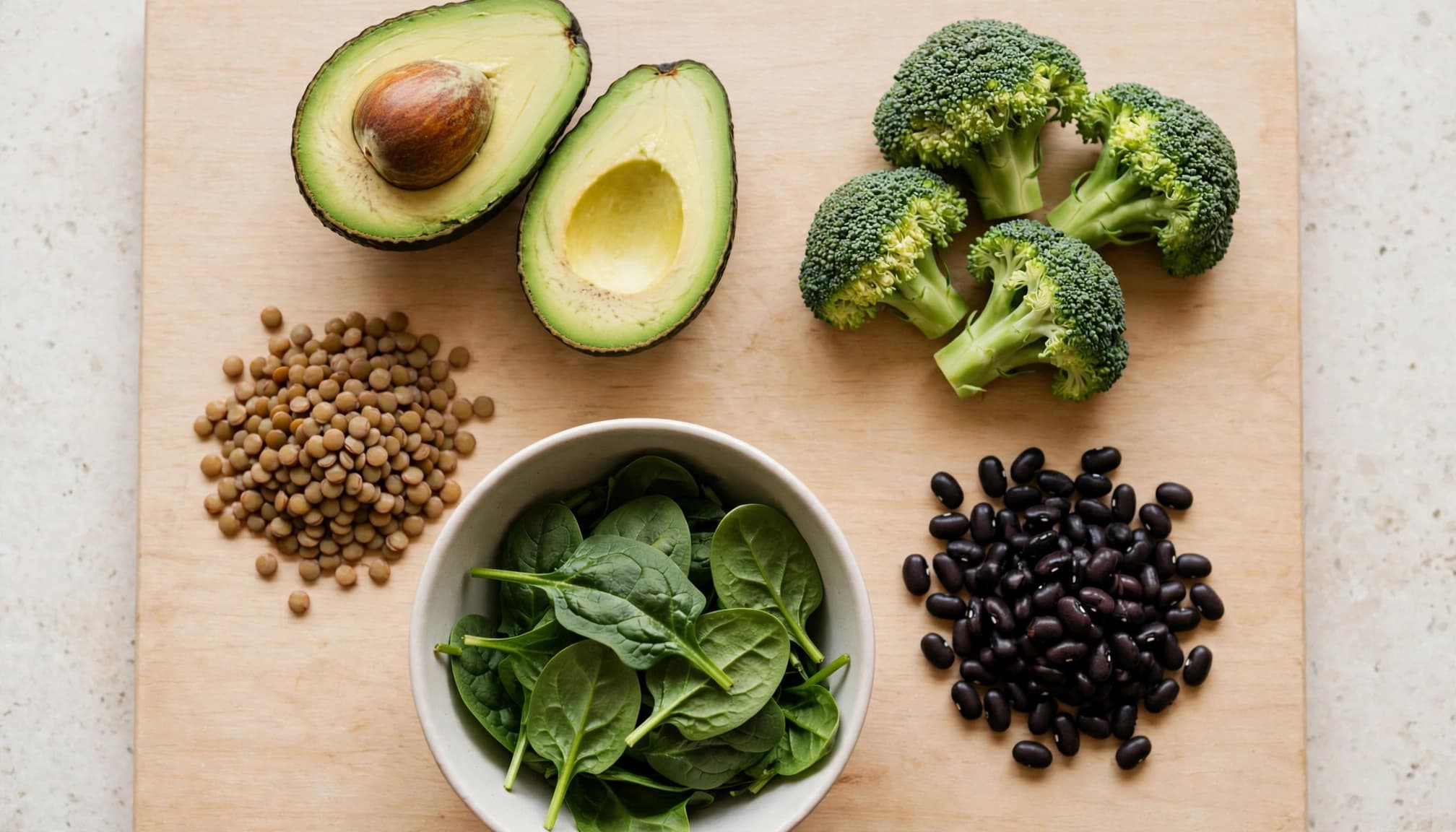
Fresh, frozen, and plain canned ingredients can all fit a practical feeding routine. Frozen peas save shelling time, while canned beans avoid a long cooking step.
Wash produce before preparing it. Cook firm vegetables until they soften throughout, then remove tough stems, skins, or fibers before mashing. Cooked spinach needs careful chopping or blending so stringy pieces don't remain.
Use a fork for ripe avocado and thoroughly softened beans. A food mill or blender can help when you need a smoother consistency. However, equipment doesn't replace cooking or checking for hard pieces.
Set aside a baby's portion before adding salt to a family dish. Once plain flavors are familiar, a little cumin in beans or mild garlic powder in vegetables can add variety. Avoid seasoning blends that contain salt.
Prepare a small batch of an ingredient rather than several elaborate meals. For example, cooked chickpeas can become a plain puree one day and a sweet potato mash the next.
Before storing food, separate the untouched portion from the serving bowl. Discard leftovers that have contacted your baby's used spoon.
Keep Folate Foods Within a Varied Menu
Folate-rich foods for babies belong alongside other foods, rather than becoming the whole menu. Continue offering breast milk or infant formula, which remains central during the first year.
Include iron-rich foods as solids become established. Tender meat, beans, lentils, and iron-fortified infant cereal are practical options when prepared safely.
For plant-based iron foods, pairing them with vitamin C foods helps iron absorption. You might combine mashed chickpeas with soft cooked red pepper or serve mashed beans with tomato prepared to your baby's texture needs.
Familiar avocado, plain pasteurized full-fat yogurt, or a little olive oil can also fit meals. Choose combinations your baby has already tolerated, especially before taking them away from home.
Keep common allergens separate when first introducing them so a reaction is easier to identify. Ask your baby's clinician for guidance if your baby has severe eczema, a known allergy, or swallowing concerns.
Above all, follow hunger and fullness cues. Turning away or closing the mouth is a reason to pause, even when food remains.
Pack Fresh Meals Safely for Outings
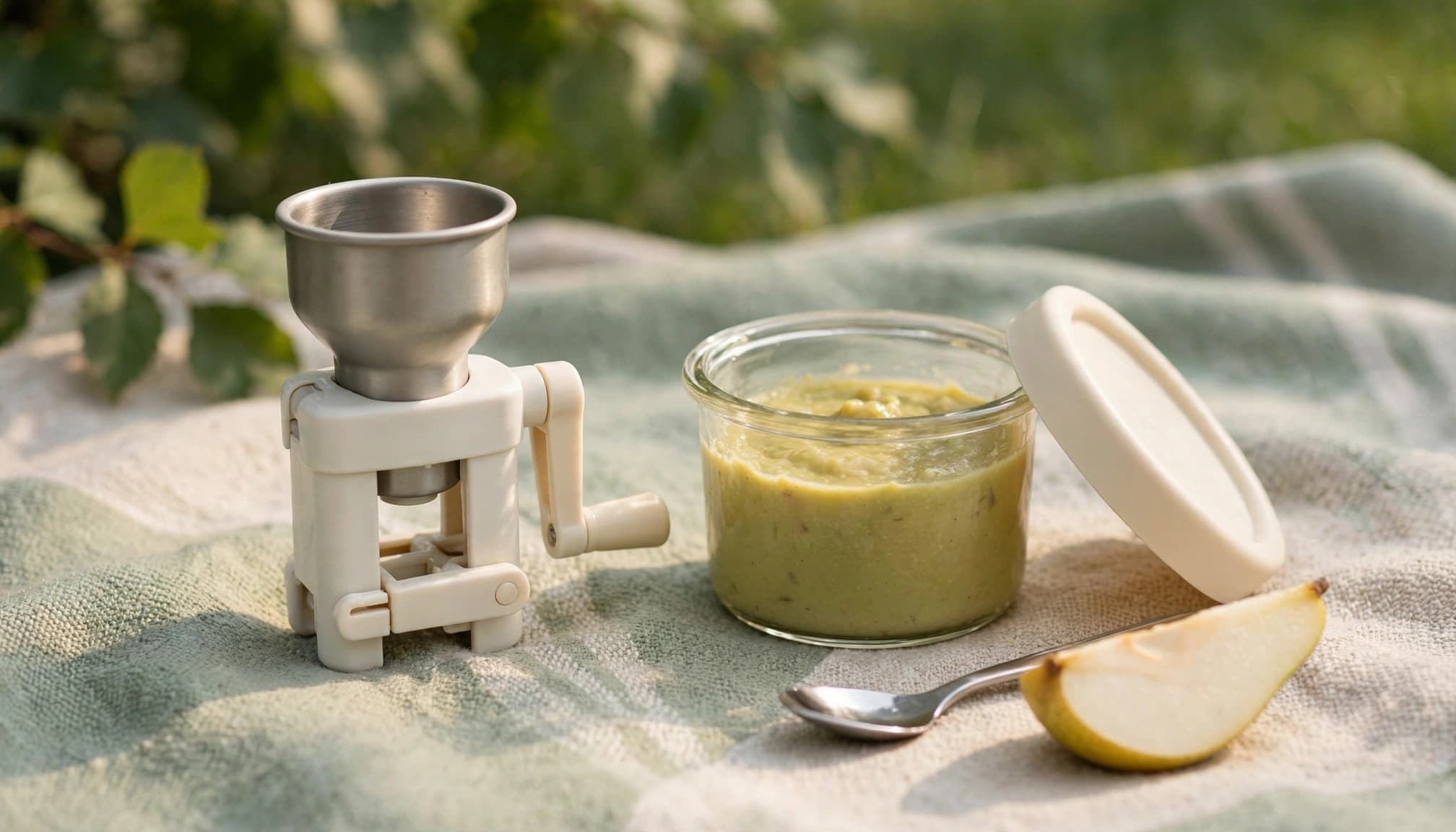
Choose familiar ingredients for travel days. A first taste of a new food is easier to manage at home, where you can watch for a reaction.
Pack cooked peas, chickpeas, or vegetable mash in a clean, sealed container inside an insulated bag with ice packs. Keep perishable food cold until serving.
As a general food-safety rule, discard perishable food left unrefrigerated for more than two hours. That limit drops to one hour when temperatures exceed 90°F.
Bring clean utensils and a small serving bowl. Transfer only what you expect your baby to eat, then keep the untouched food chilled.
A compact, hand-powered tool such as the Wonder Wean can help you mash soft ingredients at your destination. Cook firm foods beforehand and check the finished meal for skins, fibers, or hard pieces.
Stop traveling before feeding. Use a secure upright feeding seat, stay close, and never offer meals in a moving car or a reclined car seat.
Frequently Asked Questions
How much should I offer at first?
Start with a small taste, such as a teaspoon or two, and offer more if your baby remains interested. This is a starting portion, not a target.
Appetite varies between meals and days. Continue usual breast milk or formula feeds, and stop when your baby shows fullness rather than encouraging them to empty the bowl.
What if my baby refuses green vegetables?
Try again another day without pressure. Offer a small amount beside a familiar food, or change the preparation once your baby knows the individual flavors.
For example, peas may be more acceptable mashed with potato than served alone. Avoid hiding every vegetable in sweet foods, since repeated exposure helps your baby become familiar with savory tastes.
Does my baby need a folate supplement?
Don't add a folate or folic acid supplement without advice from your baby's clinician. Supplement decisions depend on the child's diet and medical needs.
If your baby eats a restricted diet, has poor growth, or has a medical condition affecting feeding, ask for individual guidance. Food choices alone can't answer those questions.
Make Fresh Feeding Fit Your Day
Offering variety in safe textures matters more than creating a perfect bowl. Repeat familiar foods, introduce changes gradually, and let your baby guide the portion.
The Wonder Wean helps parents offer healthy foods even on the go by mashing soft ingredients without electricity. Try cooked chickpeas with sweet potato or ripe avocado, prepared smooth for an early eater or softly textured as skills grow. Keep ingredients safely chilled and check every serving before feeding. If this flexibility suits your routine, Buy Now and bring simple, fresh food along for the day.