

Can Babies Eat Mushrooms? Safe Cooking and Texture Tips
Mushrooms can be part of a baby's meals after they're ready for solids, but preparation matters as much as cooking. Serve plain, edible mushrooms cooked until tender, then adjust the texture and cut to match your baby's current eating skills.
Guidance from the CDC and other health organizations covers starting solids and preventing choking in general, but it doesn't give mushroom-specific serving rules. Here's how to apply that general advice carefully, and when to ask your child's healthcare provider for individual guidance.
Can babies eat mushrooms?
A baby who's ready for solids can try a small amount of plain, thoroughly cooked edible mushroom. Treat it as a new food, and serve it in a texture your baby can manage. This is an application of general feeding guidance, not a mushroom-specific recommendation from the CDC.
Choose mushrooms sold for eating, such as common white button or cremini mushrooms. Avoid wild-picked or unidentified mushrooms. Never assume cooking makes an unknown mushroom safe.
What the general guidance says
The CDC recommends introducing solids at about 6 months, when a baby shows signs of developmental readiness. It advises against introducing solids before 4 months. Its guidance discusses safe textures and preparation, but doesn't name mushrooms as a food to serve or avoid.
A baby's age alone doesn't determine readiness. Your child should have good head control, sit with support, and show interest in food. For a fuller overview of starting solids, see our baby meal plan for starting solids.
Mushrooms aren't a replacement for varied first foods
Mushrooms can add variety to meals, but keep offering a range of appropriate foods, including iron-rich options. Don't count on mushrooms alone to meet a baby's nutritional needs. Early meals can be small, and your baby can decide how much to eat.
When can babies try mushrooms?
Most babies begin solids around 6 months, but readiness and feeding skills vary. Introduce mushrooms only when your baby is already starting solids and can manage the texture you plan to serve.
Start with your baby's skills
For a beginner, serve a smooth or thick mash without firm bits. As your baby handles that comfortably, gradually offer thicker mashed foods and small, soft lumps. There's no need to rush toward chunkier food. Our guide to safe textures for homemade baby food describes ways to adjust consistency as skills develop.
Ask about individual medical needs
General feeding advice may not fit a child with a swallowing or feeding disorder, significant developmental needs, a history of food reactions, or a prescribed diet. If any of those apply, ask your pediatrician or feeding specialist whether mushrooms and a particular texture are suitable.
This is also sensible if your child was born prematurely or has another medical condition that affects feeding. A clinician who knows your baby's history can offer advice tailored to them.
How to prepare mushrooms for babies
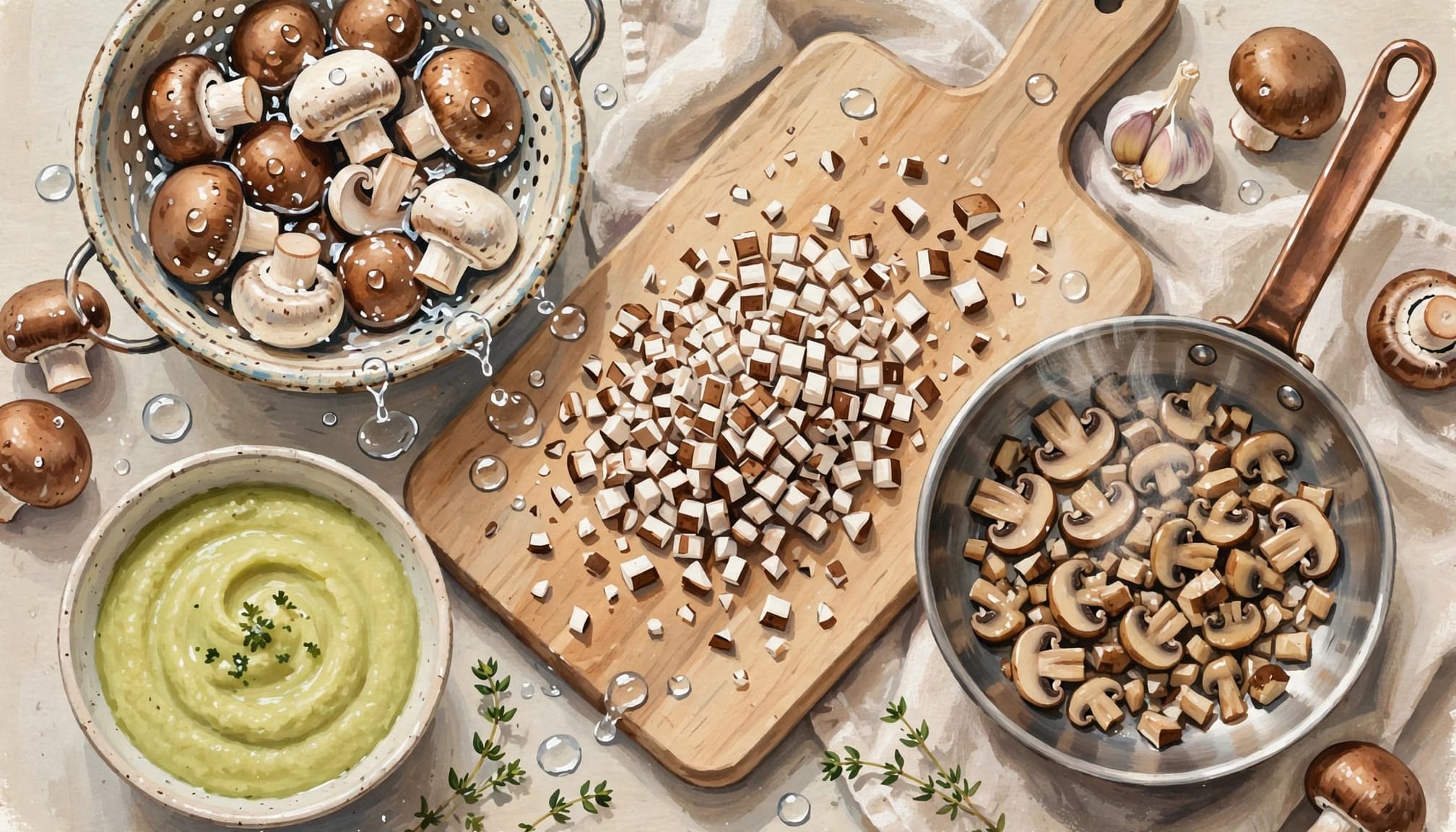
Begin with fresh, commercially sold mushrooms and clean hands, tools, and work surfaces. Rinse the mushrooms under cool running water, trim away dry ends, and cook them thoroughly until tender.
Cook until tender, then check each piece
You can sauté, steam, or simmer mushrooms until they soften throughout. Avoid serving them raw or firm to a baby who's learning to eat. Cooking helps soften the food, but it doesn't by itself make every shape or texture appropriate.
After cooking, press a piece between your fingers or with a fork. It should squash easily. If it still feels springy, rubbery, or firm, cook it longer or prepare it more finely.
Keep the recipe plain
Serve mushrooms without added salt, salty sauces, or stock cubes. The CDC advises limiting high-salt foods for young children, and the NHS says not to add salt to a baby's food or cooking water.
For an early taste, mash a small amount of cooked mushroom into a familiar food, or offer it as a single ingredient. Once your baby has managed the foods separately, you can combine it with a soft vegetable mash. Keep the ingredient list simple so you can notice how your baby responds.
Choose a texture and cut that fit your baby
Mushrooms can be soft after cooking but still have a springy or slippery feel. Match the serving form to your baby's present feeding skills rather than assuming one preparation works for every age.
For new eaters, mash or puree
For a baby just starting solids, finely puree or mash cooked mushroom until no firm pieces remain. You can mix it with a familiar smooth food to make it easier to manage. Check that the consistency is spoonable, not sticky or gummy.
As your baby becomes more comfortable, use a fork to leave tiny, soft bits. Move gradually, and return to a smoother texture if your child struggles with the change. Our guide to preparing soft foods for self-feeding covers how to match food textures to developing skills.
For growing eaters, cut small and soft
When your baby manages soft lumps, chop cooked mushrooms finely and check for any larger or chewy pieces. The AAP's HealthyChildren.org gives a general guideline to cut food for young children into pieces no larger than one-half inch. For mushrooms, smaller pieces or a fine mince may suit a beginner better.
Food shape and texture both affect choking risk. A large mushroom piece can be difficult to manage even when cooked, so don't rely on tenderness alone. Keep checking whether each bite squashes easily.
Serve mushrooms with close supervision
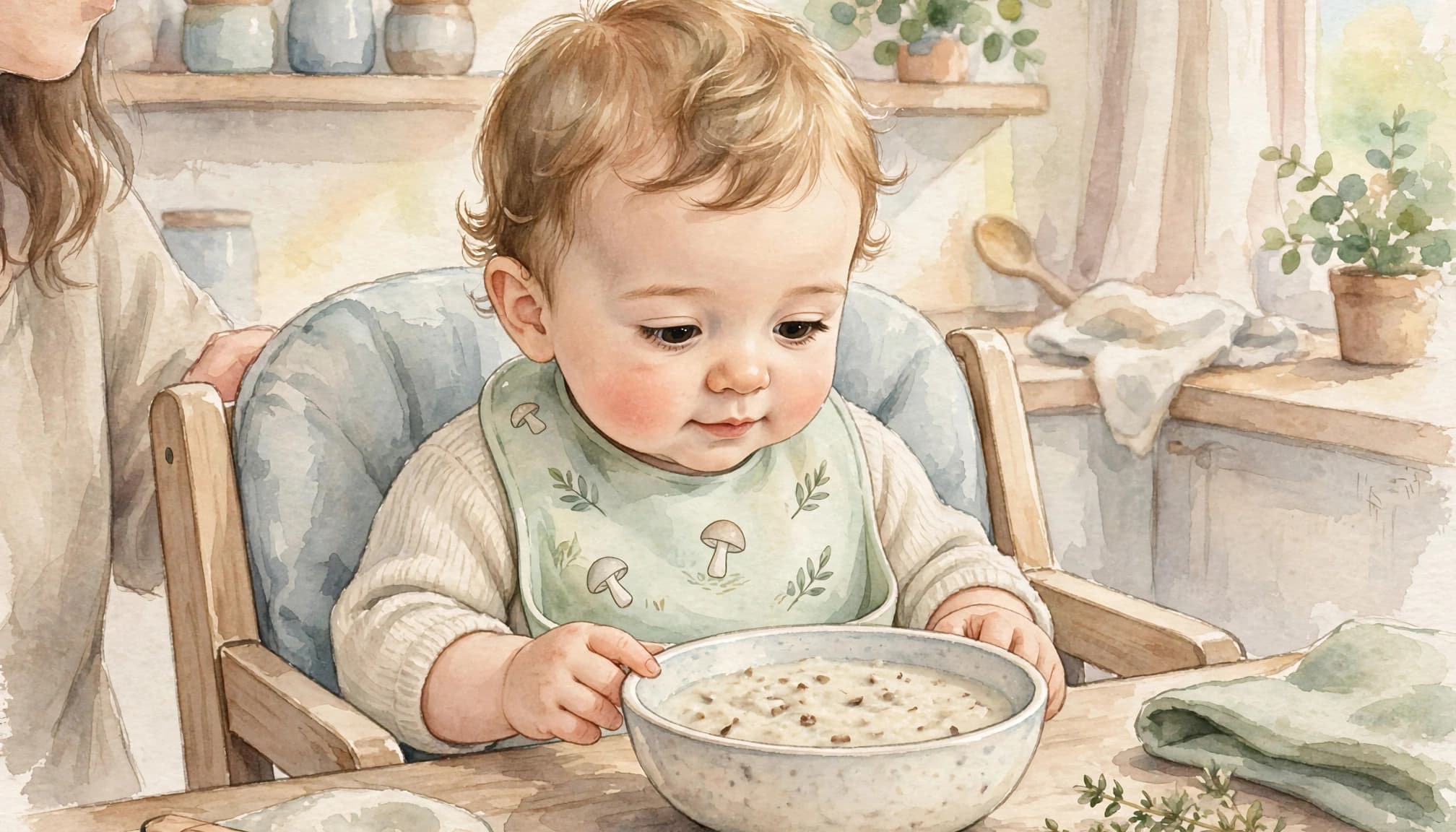
Set your baby upright in a stable high chair and stay close throughout the meal. Don't offer food while your baby is lying down, walking, playing, or riding in a moving car. A calm meal makes it easier to watch how your baby handles each bite.
Cooking doesn't replace choking precautions
The CDC says choking risk depends on food size, shape, texture, and preparation. Cut or mash food to suit your baby's abilities, and supervise closely. Even a well-cooked food can be hard for a baby to manage if it's served in an unsuitable piece or texture.
Gagging can happen as babies learn to handle food, but choking may be silent and requires urgent action. Consider taking an infant choking-response or CPR course before starting solids, and call emergency services if your baby can't breathe.
Introduce mushrooms as a new food
The CDC recommends starting with a single-ingredient food and waiting 3 to 5 days before introducing another new food. That general approach can make it easier to notice a possible reaction. It isn't a mushroom-specific allergy rule.
Watch for symptoms such as hives, a rash, vomiting, or diarrhea. If your baby has trouble breathing, seek emergency help immediately. For a child with known food allergies, follow the care plan made with their healthcare provider.
Store leftovers safely
Set aside the portion you plan to save before feeding your baby. Food from a bowl or spoon that has been in your baby's mouth shouldn't go back into storage, because saliva can introduce bacteria.
Refrigerate untouched cooked food promptly in a clean, covered container. FoodSafety.gov gives general storage guidance for homemade baby food of 1 to 2 days in the refrigerator and 1 to 2 months in the freezer. Those figures apply to homemade baby food generally, not specifically to mushrooms. See our advice on safe storage times for homemade baby food.
Reheat only what you'll serve
Warm the portion you plan to offer, stir it well, and check its temperature before feeding. Don't save food left in your baby's bowl for another meal. For outings, pack food safely and keep perishable portions cold until serving.
Key takeaways
- Babies can try cooked edible mushrooms after they're ready for solids, but official guidance doesn't set mushroom-specific rules.
- Cook mushrooms until tender, then mash, puree, or finely chop them to suit your baby's skills.
- Cooking alone doesn't prevent choking. Shape, texture, upright seating, and close supervision matter.
- Keep portions plain, introduce new foods thoughtfully, and store leftovers safely.
Conclusion
Mushrooms can add a new flavor to your baby's menu when they're prepared with care. Start with a small amount of a familiar, edible mushroom, cook it until tender, and serve it in a texture your baby can manage.
Your baby's feeding skills, not a calendar alone, should guide each change in texture. Keep meals plain and supervised, and ask a healthcare professional for advice when your child has specific medical needs.
FAQ
Can babies eat mushrooms that are blended?
Yes, a smooth mash or puree can suit a baby who is beginning solids, provided the mushroom is thoroughly cooked and the texture fits your child's feeding skills. Check for any remaining firm pieces, and don't make the food so sticky that it's hard to move in the mouth.
Should mushrooms be the first food a baby tries?
They don't have to be. The CDC's general advice is to introduce single-ingredient foods, but it doesn't identify a required order for foods or give a mushroom-specific schedule. Begin when your baby is ready for solids, and offer a small amount in an appropriate texture.
How can I prepare baby food when we're out?
The Wonder Wean Baby Food Processor is a lightweight, compact manual option for mashing fresh food on the go. It needs no batteries, cords, or electricity, and has minimal parts to clean. For a portable way to prepare baby food, Buy Now.