

How Long Homemade Baby Food Lasts in the Fridge
Fresh pear puree can look perfect on day three, but a baby's food storage clock starts when you finish making it. For homemade baby food fridge storage, refrigerate food promptly and use most batches within one or two days.
That short window may feel limiting, yet it gives you a clear plan for keeping fresh food safe. Clean containers, small portions, and a separate serving bowl reduce waste without turning meal prep into a daily scramble.
Homemade baby food fridge storage: use it within 1 to 2 days
The FDA advises keeping a refrigerator at 40°F (4°C) or below and using homemade baby food within 1 to 2 days. That guideline covers fruit, vegetable, and mixed purees. Write the preparation date on every container, because guessing which batch is older is never helpful at the end of a long day.
| Food type | Refrigerator time | Best next step |
|---|---|---|
| Fruit, vegetable, and mixed purees | 1 to 2 days | Serve or freeze |
| Purees with meat or egg yolk | 1 day | Serve or freeze |
| Batch you will not use soon | Do not hold in the fridge | Freeze promptly |
The FDA's baby-food guidance lists one to two days for homemade food. The FoodSafety.gov storage chart allows two to three days for plain strained fruits and vegetables. Still, a 48-hour household rule is easy to remember and gives you a conservative margin.
Keep meat and egg yolk on a shorter schedule
Purees containing meat or egg yolk should be used within 24 hours. The USDA WIC food-safety guidance uses that shorter timeline, so treat a chicken-and-sweet-potato blend differently from plain apple puree.
If you make a larger batch, freeze the portions you will not serve the next day. A date label and a simple ingredient note also help you spot protein-containing meals quickly.
Chill cooked food promptly and use clean containers
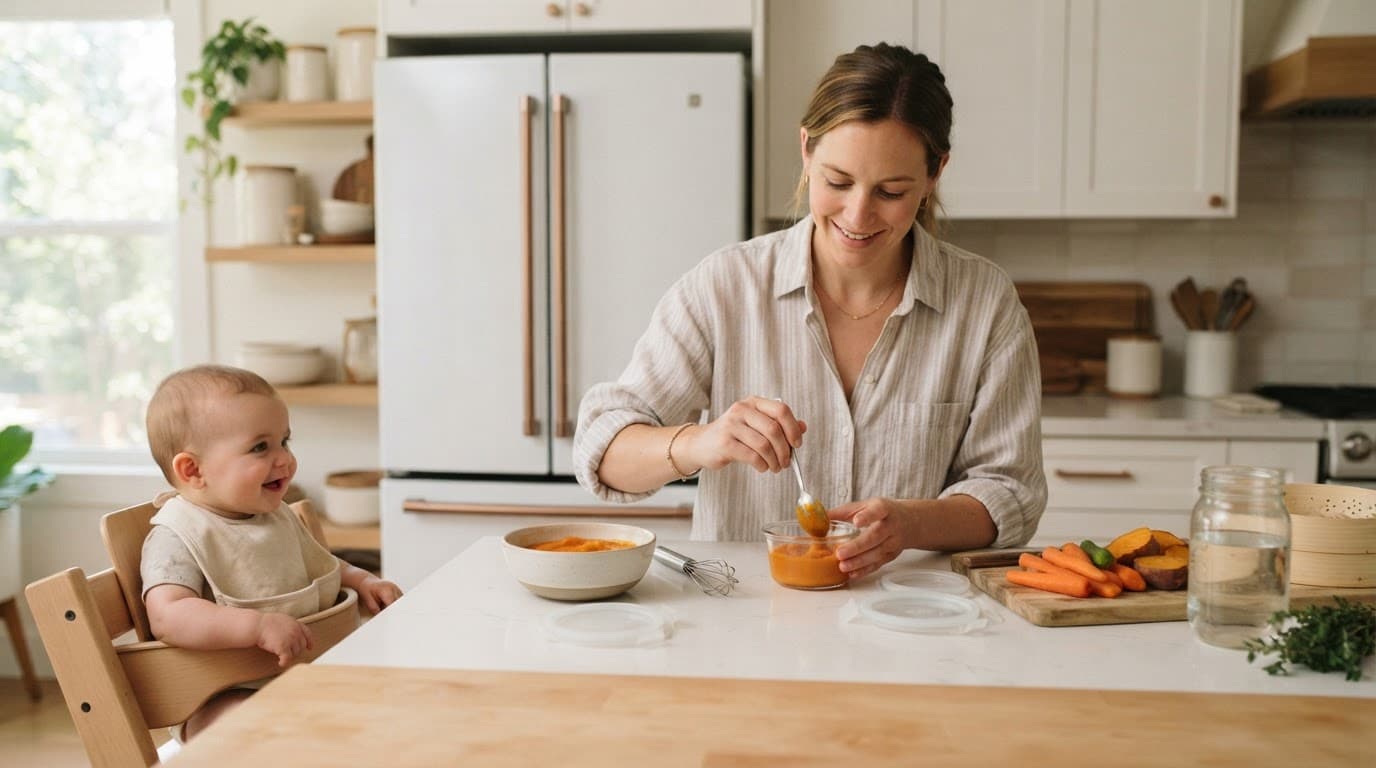
After cooking and mashing, divide the puree into shallow, clean, airtight containers. Refrigerate or freeze it right away rather than leaving a large bowl on the counter to cool slowly. Shallow portions cool faster and are easier to thaw later.
The two-hour rule still applies
Discard prepared puree that has sat at room temperature for two hours, even when it still smells fine. When the air temperature is above 90°F, that limit drops to one hour.
A puree does not need to look spoiled to become unsafe after it has been warm for too long.
Use containers with snug lids, clean utensils, and washed hands. Avoid filling containers to the rim if you plan to freeze them, because food expands as it freezes. The FDA also recommends throwing out food with mold or anything that looks or smells suspicious.
Protect each portion during feeding and freezing
A hungry baby can make it tempting to bring the whole container to the high chair. However, one small serving bowl keeps the rest of the batch protected.
Serve a little, then refill if needed
Spoon only the amount you expect your baby to eat into a clean bowl. Once a spoon has touched your baby's mouth, do not put it back into the storage container.
Discard food left in the feeding bowl or any portion contaminated by a used spoon. Saliva can introduce bacteria, so refrigerating that food again does not reset its storage time. Also discard any puree with an unusual odor, color, or texture, even if it is still within the date range.
Freezer storage has a different timeline
Freezing is useful for food you will not serve within a day or two. Freeze fresh portions in a covered ice-cube tray, then move the frozen cubes to a dated freezer bag or airtight container.
Keep the freezer at 0°F (-18°C). The FDA lists three to four months for frozen homemade baby food, while FoodSafety.gov gives a broader homemade-food guideline of one to two months. Using frozen portions within one to two months keeps the routine simple and conservative. Thaw portions in the refrigerator, not on the counter.
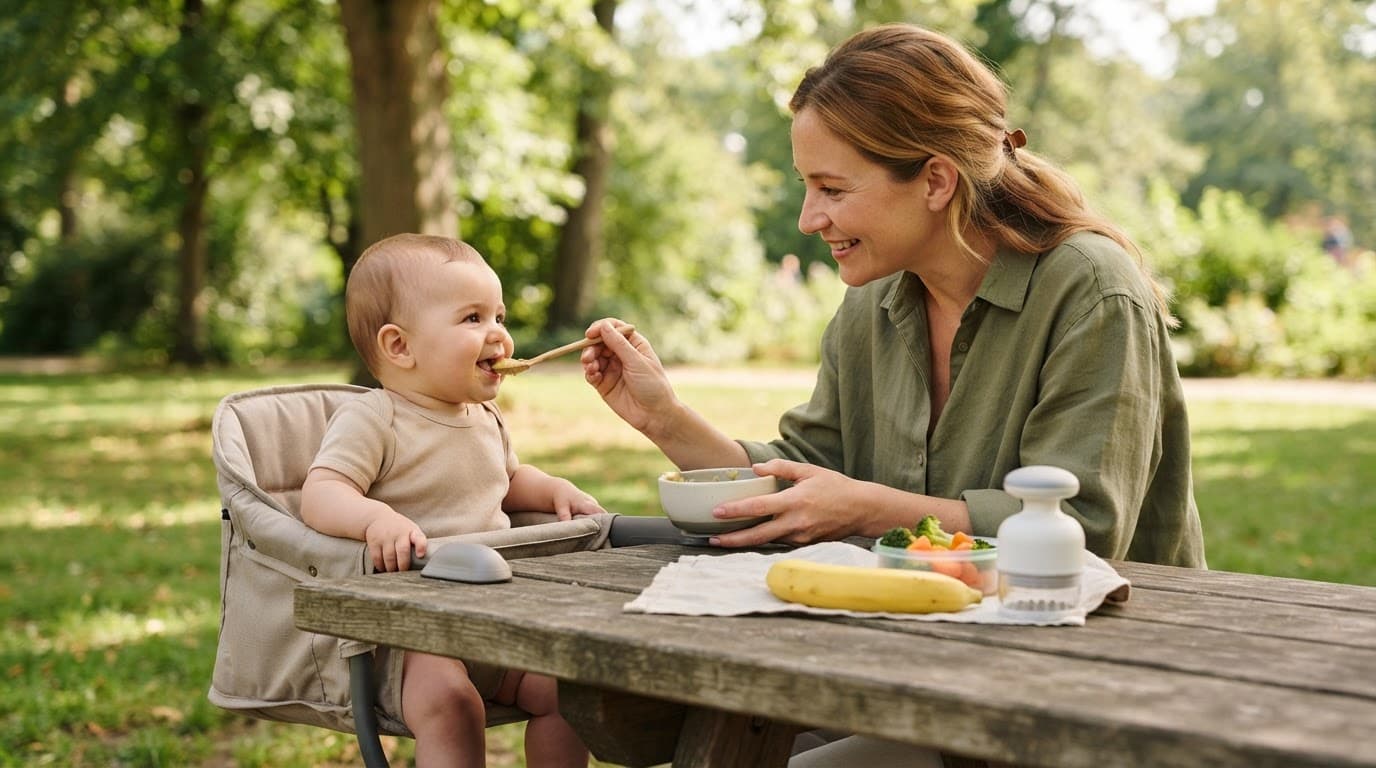
For a park day or a long drive, pack one chilled portion in an insulated bag with ice packs. If it cannot stay cold, make a fresh small meal instead.
Fresh food works best with a short timetable
A simple storage routine makes homemade feeding feel manageable. Chill food quickly, date each portion, serve only what your baby will eat, and freeze the rest before the refrigerator window closes.
Every baby has different feeding needs. Follow your pediatrician's advice about textures, ingredients, allergies, and foods that suit your baby's stage.
With the compact, hand-powered Wonder Wean, you can mash soft ripe fruit or cooked vegetables wherever you are, without electricity. It helps parents feed their baby healthy foods on the go, and you can Buy Now when fresh meals away from home fit your routine.