

Apples for Baby: Cooking and Safe Serving Shapes
Cook apples until soft, then serve them in a texture and shape your little one can manage. Firm raw apple pieces can be a choking hazard, so cooking is an important first step.
Whether you prefer spoon-feeding or self-feeding, you can start with the same soft cooked apple and prepare it in different ways. A few simple checks will help you choose the right serving for your baby.
When Can Babies Start Eating Apples?
Babies can usually begin complementary foods around 6 months, when they show signs of readiness. Look for steady head and neck control, the ability to sit with support, and interest in bringing food to their mouth.
Breast milk or infant formula remains the main source of nutrition during the first year. Early solid meals give your baby a chance to practice eating, so a small amount of apple is plenty to start. Offer more if your baby wants it, and stop when they turn away or close their mouth.
Start with plain apple if it's a new food. That lets your baby get familiar with its flavor and makes it easier to notice how they respond. As their skills grow, you can offer different textures and combine apple with other foods they've tried.
Choose and Prepare Apples for Baby
A sweet or tart apple can work for baby food. Pick one that looks fresh and feels firm before cooking. If your family enjoys its flavor, it's a reasonable choice for your baby's portion, too.
Wash your hands and rinse the apple under running water. Then peel it and remove the stem, core, and seeds. Peeling helps you avoid tough pieces of skin that a new eater may struggle to manage.
Cut the flesh into fairly even pieces before cooking. For a spoonable meal, smaller pieces are easy to soften and mash. If you plan to offer a graspable piece, keep some peeled sections larger and check their texture after cooking.
Use a clean knife, board, and pan. Apples don't need sugar or salt, and their flavor often becomes sweeter as they cook.
How to Cook Apples Until Soft
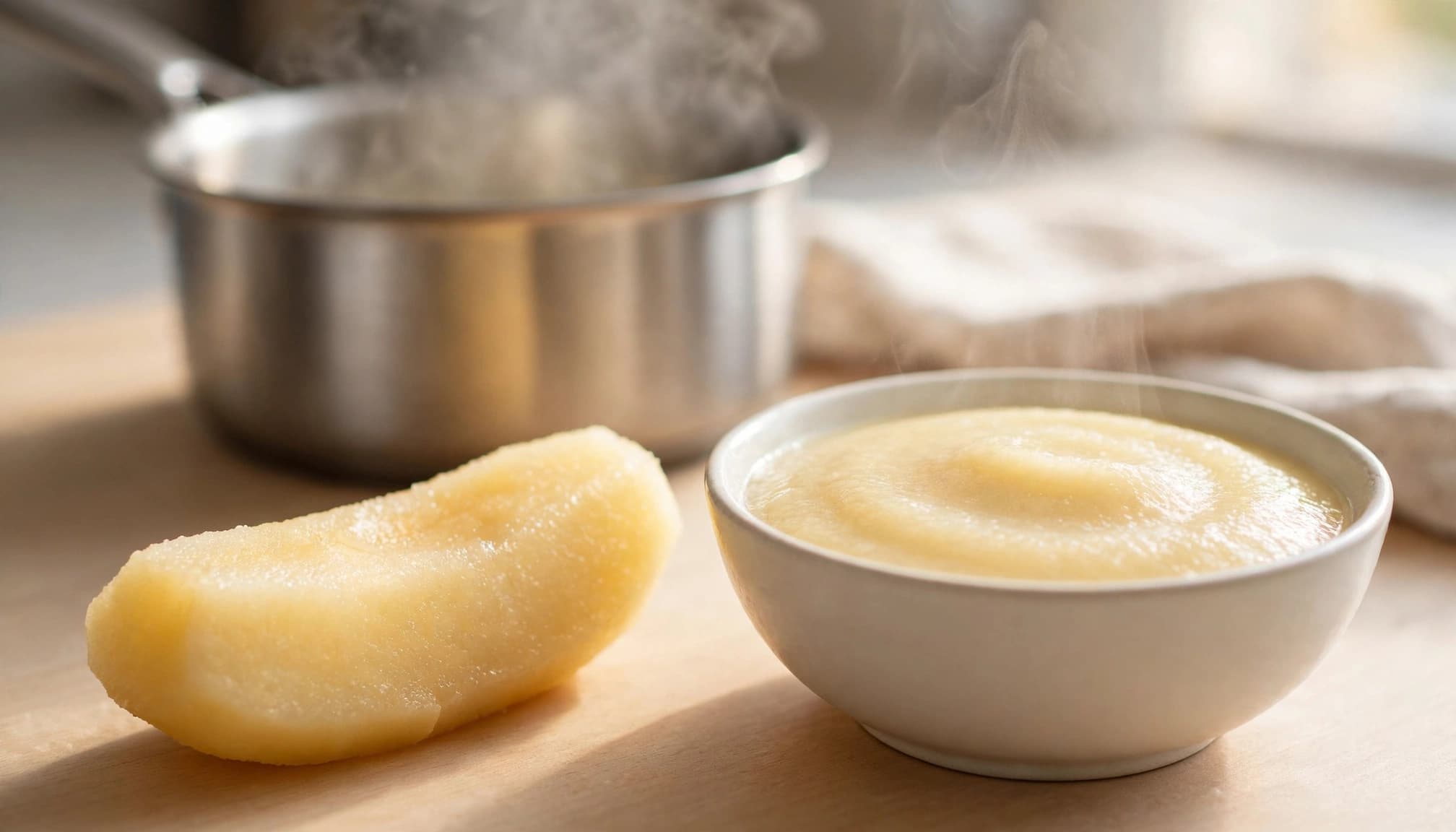
Steaming, simmering, baking, and microwaving can all soften apples. The important part is the finished texture: each piece should squash easily between your fingers or under the back of a fork.
Steam or simmer on the stove
For steaming, place peeled apple pieces in a steamer basket over simmering water. Cover the pan and cook until the pieces are soft throughout.
To simmer, put the pieces in a saucepan with a small amount of water. Cover and cook gently, stirring as needed. Once the apple is tender, drain it and save a little of the cooking water if you plan to thin a mash.
Test more than one piece, especially if they aren't all the same size. A soft outside can still hide a firm center.
Bake or microwave
For baking, arrange peeled apple pieces in a baking dish and cook until tender all the way through. Remove any firm or dried edges before serving.
For the microwave, place chopped apple in a microwave-safe dish with a little water and cover it loosely. Heat until soft, then stir well. Microwave heating can leave hot spots, so let the apple cool and check its temperature before offering it.
Cooking time varies with the apple and the size of the pieces. Use the softness test rather than the clock to decide when it's ready.
Choose a Safe Apple Shape for Your Baby
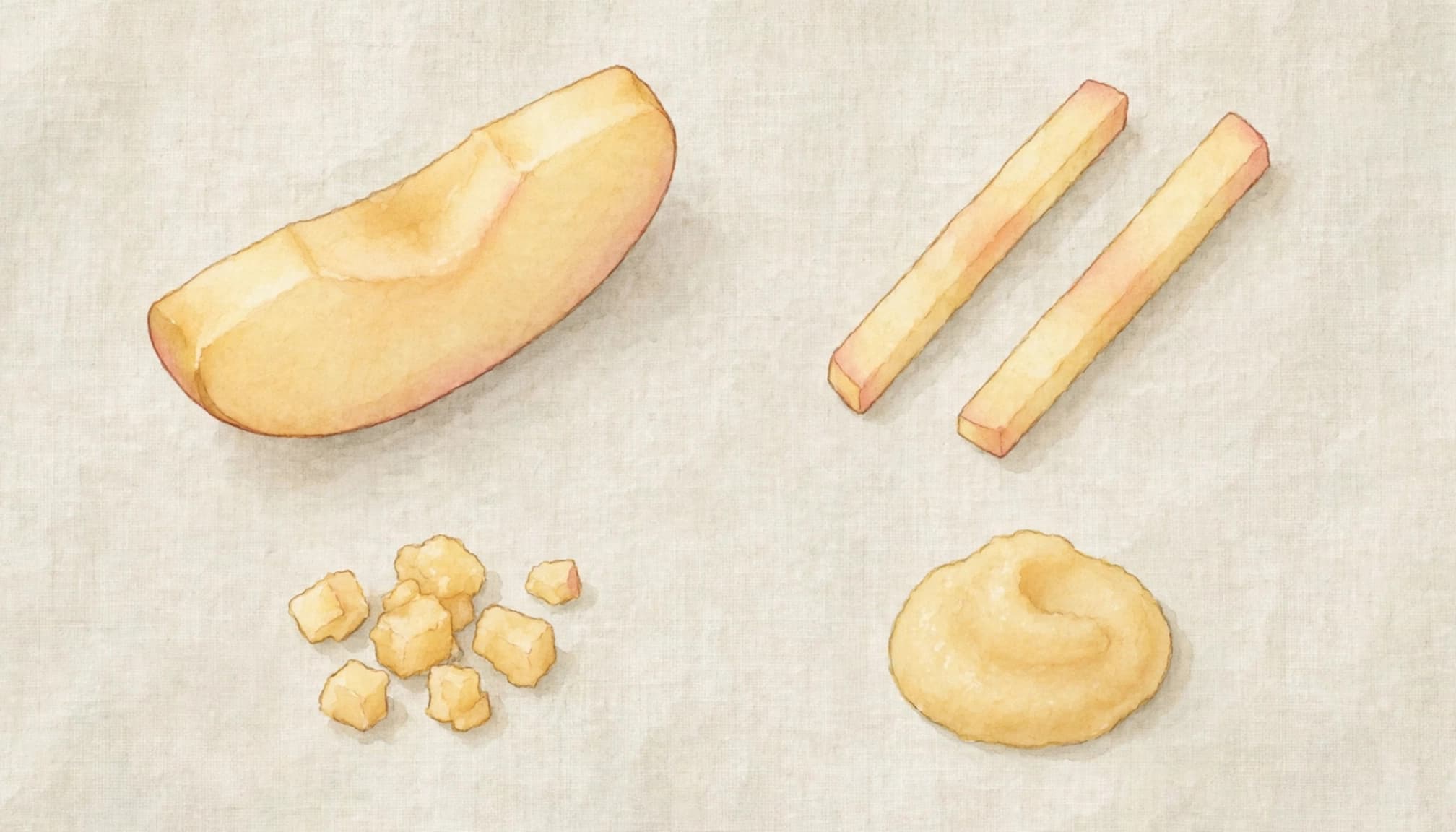
Your baby's feeding skills matter more than a date on the calendar. The same cooked apple can become a puree, a mash, or a finger food, depending on how your baby manages food now.
Smooth puree or soft mash
For a baby starting with a spoon, blend or mash the cooked apple until it has a consistency they handle comfortably. Offer a small amount on a spoon, or let your baby bring a preloaded spoon to their mouth.
A thicker puree can be easier to keep on a spoon than a runny one. As your baby becomes comfortable with texture, try a soft mash with small lumps that squash easily.
Soft pieces for self-feeding
A baby ready to grasp food may be able to explore a soft, peeled apple spear or strip. It should be tender enough to squash easily, while holding together well enough to pick up.
Stay close as your baby handles it. If a piece breaks off in a size your baby can't manage, remove it and adjust the serving. A cooked piece still needs careful supervision, even when it feels soft.
Small pieces for a developing grasp
Once your baby can pick up and manage smaller foods, offer small, soft pieces of cooked apple. Cut them into manageable pieces rather than leaving dense chunks. You can also press them lightly with a fork.
Avoid firm raw slices and hard apple chunks. For more ideas beyond apples, see our guide to safe finger foods for babies.
Make Apple Puree or Mash
Once the cooked apple has cooled enough to handle, place it in a clean bowl. Press it with a fork for a rustic mash, or blend it for a smoother puree. Remove any piece that hasn't softened fully.
If the mixture feels too thick for your baby, add a little cooking water and mix again. Add liquid gradually so the puree doesn't become unnecessarily runny. You can leave it thicker when your baby is comfortable with that texture.
There's no need to keep every portion perfectly smooth as your baby's eating skills develop. Our guide to baby food textures by age offers more help with moving toward soft lumps and finger foods.
Serve apple on its own, or make a small batch and keep some plain. That gives you flexibility to combine it with different foods at later meals.
Baby-Friendly Foods to Pair With Apples
Once your baby has tried ingredients individually, cooked apple can add flavor to a simple meal. Match the texture of every ingredient to your baby's skills, and mash or blend the combination as needed.
Apple with oats or yogurt
Stir mashed apple into plain, well-cooked oatmeal. For a younger eater, blend the mixture further or add a little water if it becomes too thick. Iron-fortified infant cereal is another option that can add iron to the meal.
Plain, pasteurized full-fat yogurt also pairs well with apple once dairy is familiar. Choose unsweetened yogurt and stir in cooled apple puree. A little cinnamon can add flavor without sugar.
Apple with lentils or savory foods
Soft cooked lentils and apple make a simple combination for a spoonable meal. Mash the lentils thoroughly, then mix in apple until the texture suits your baby. Lentils also provide iron, which babies need as they begin solids.
You can pair apple with mashed sweet potato or a small portion of well-cooked, finely shredded chicken. Keep chicken moist and remove any skin, bones, or tough pieces.
Skip added salt and sweeteners. Never give honey to a baby under 12 months, including in baked apples or oatmeal, because of the risk of infant botulism. If you add a new allergen such as dairy or peanut, introduce it separately so you can observe your baby's response.
Keep Mealtimes Safe and Calm
Seat your baby upright in a stable high chair or secure feeding seat. Stay close and attentive throughout the meal, whether you're offering puree or soft pieces. Avoid feeding in a car seat, stroller, or reclined position.
Let your baby set the pace. They may explore the apple with their hands, accept a few bites, or show they're finished quickly. There's no need to persuade them to empty the bowl.
Gagging can be noisy while a baby learns to move food around their mouth. Choking may be silent and can prevent effective coughing or breathing. Learn infant choking first aid and CPR before your baby starts solids. If your baby is choking, call emergency services immediately and follow the dispatcher's instructions.
Store and Serve Cooked Apple Safely
If you're preparing apple ahead, cool it promptly and refrigerate it in a clean, covered container. Keep the portion you plan to serve separate from the rest of the batch.
Use a clean spoon to transfer a small amount into your baby's bowl. Once a spoon has touched your baby's mouth, don't return it to the storage container. Discard food left in the feeding bowl after the meal.
You can freeze extra portions in clean, covered containers. Thaw them in the refrigerator or use a microwave and serve promptly after heating. Don't thaw baby food on the counter. Stir warmed food and check for hot spots before serving.
For more detail, see our guides to refrigerating homemade baby food safely and freezing baby food in portions.
When you're away from home, carry cooked apple in an insulated bag with ice packs and keep it cold until mealtime. Choose a safe place for your baby to sit upright, then serve a small portion with clean utensils.
Make Soft Apple Part of Your Routine
A plain cooked apple can work for spoon-feeding or self-feeding as your baby develops. Focus on softness and supervision, then adjust the shape to fit the skills your baby has now.
Our compact Wonder Wean can help you prepare healthy foods away from home. Pack properly chilled cooked apple, then mash a small portion by hand when your baby is ready to eat. It needs no electricity or batteries, making it useful beyond your kitchen. Buy Now