

Plain Yogurt for Babies: How to Choose Unsweetened Options
Plain yogurt can be a simple first food once your baby is ready for solids. The best choice is pasteurized and unsweetened, with a texture your baby can manage and a label you've checked yourself.
Flavored yogurt can contain added sweeteners, while plain yogurt naturally contains milk sugar. A quick look at the ingredients and Nutrition Facts panel helps you tell the difference. Here's how to choose and serve it with care.
Key Takeaways
- Choose pasteurized, plain yogurt without added sugar, syrups, honey, or sweet flavorings.
- Look at both the ingredient list and the Nutrition Facts panel. Total sugars can include lactose, the natural sugar in milk.
- Offer yogurt when your baby is ready for complementary foods, generally around 6 months, and serve a small amount that suits their skills.
- Keep your baby upright and supervised while eating. Ask your pediatrician about individual needs, including allergies and feeding concerns.
How to Choose Plain, Unsweetened Yogurt
Start with the ingredient list
Look for yogurt described as plain or unflavored, then read the full ingredient list. A short list without sweeteners is a useful sign, but the front of the package isn't enough to tell you whether sugar was added.
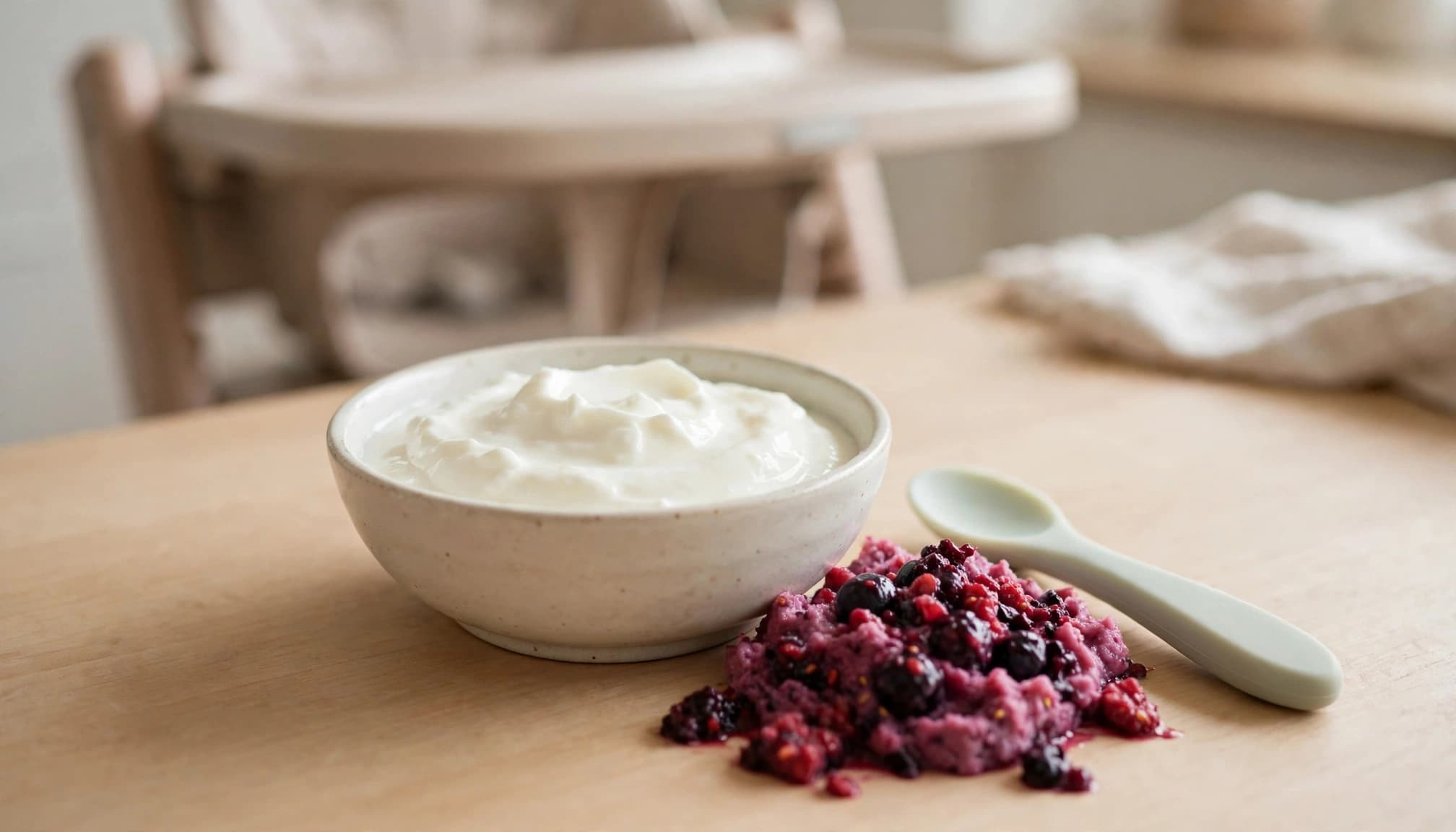
Watch for ingredients such as sugar, cane sugar, syrup, honey, or fruit juice concentrate. Fruit can be part of a yogurt product without making it a plain option. If you want to add fruit, you can mix a little mashed ripe fruit into plain yogurt yourself.
Compare total sugars with added sugars
On the Nutrition Facts panel, Total Sugars includes all sugars in the yogurt, including naturally occurring lactose. The separate "Includes" line beneath it shows how many grams of added sugars are part of that total. The FDA explains that the label's Added Sugars value is distinct from sugars that occur naturally in foods.
For example, a yogurt may list total sugars while showing 0 grams of added sugars. That doesn't mean it's sugar-free; it means the label doesn't report added sweetener. The FDA's guide to added sugars on food labels explains how to read those lines. The CDC advises avoiding added sugars for children under 24 months, including added sugars found in some flavored yogurts.
When Yogurt Fits into a Baby's Diet
Follow readiness for solids
Babies generally begin complementary foods at around 6 months, when they show developmental readiness. Signs include sitting with support, steady head control, and the ability to bring food toward the mouth. Age is a guide, not the only factor, so your baby's skills matter too.
Yogurt can be one food in a varied diet once solids begin. It doesn't replace breast milk or infant formula, which remain central to nutrition during the first year. For ideas on beginning with simple foods, see our guide to safe first foods for babies.
Yogurt is different from cow's milk as a drink
Cow's milk shouldn't replace breast milk or infant formula as a baby's main drink before 12 months. That guidance is about serving cow's milk as a beverage, not a blanket ban on yogurt as a food. The CDC lists pasteurized yogurt among foods without added sugars.
Choose pasteurized yogurt rather than products made with unpasteurized milk. If your baby has a medical condition or a special feeding plan, ask your pediatrician which dairy foods fit.
Serve a Small Portion with a Safe Texture

Begin with a little and follow your baby's cues
Offer a spoonful or two at first, then let your baby's interest guide the amount. Some babies will taste a little and stop; others may want more. There's no single portion that every baby needs to eat.
Keep the meal relaxed. If your baby turns away, closes their mouth, or loses interest, pause instead of urging another bite. Yogurt is one part of a developing diet, and appetite can vary from meal to meal.
Match the consistency to your baby's skills
For a baby new to solids, offer a smooth, spoonable texture without firm pieces. As your baby becomes more comfortable moving food in their mouth, you can serve a thicker mash or stir in soft fruit that has been mashed to a suitable consistency. A mixture should stay on the spoon without being sticky or difficult to move around the mouth.
Seat your baby upright and stay close throughout the meal. Texture needs vary, so follow your baby's progress and your pediatrician's advice. Our article on baby-led weaning purees and textures covers ways to adjust food as feeding skills develop.
Make Plain Yogurt a Simple Part of Meals
Plain yogurt has a mild taste that pairs easily with soft foods. Keep the additions simple, especially when your baby is still learning individual flavors and textures.
Mix in soft fruit or oats
Stir a little mashed banana, ripe pear, peach, or well-mashed berries into yogurt. For younger babies, mash the fruit until it has a texture they already handle comfortably. As skills develop, you can leave soft, tiny pieces if your baby manages them safely.
Soft cooked oats also make an easy pairing. Stir them into plain yogurt with mashed fruit, adjusting the texture if needed. Avoid sweetening the mixture with honey, sugar, or syrup. Honey should not be given before 12 months.
Keep the first combinations uncomplicated
When a food is new, offering it simply can make it easier to notice how your baby responds. For instance, serve plain yogurt by itself before adding a fruit your baby hasn't tried. You can also offer it alongside familiar foods rather than mixing several new ingredients into one bowl.
If your baby has a dairy allergy or dairy isn't part of their feeding plan, don't use yogurt as a substitute without guidance. A pediatrician can help you choose alternatives that meet your baby's needs.
Consider Milk Allergy and Individual Needs
Yogurt contains milk, which is a major food allergen. On packaged foods, FDA rules require milk to be identified in the ingredient list or a nearby "Contains" statement. Read the package each time you choose a product, especially if your baby has a known allergy or a history of reactions.
Introduce yogurt when your baby is well and you can observe them. If your baby has severe eczema, a known food allergy, or a previous reaction, talk with your pediatrician before introducing dairy. Our guide to how to safely introduce common allergens offers more context for introducing allergenic foods.
If you notice a reaction, stop serving the food and contact your child's healthcare professional for advice. Breathing trouble or swelling of the face or tongue calls for urgent medical care.
CACFP Rules Are Not Home Serving Targets
The USDA's Child and Adult Care Food Program (CACFP) infant meal pattern allows 0 to 4 ounces of yogurt for infants 6 to 11 months who are developmentally ready for solids. That range is a program allowance, not a required portion or a target for every baby at home.
Since October 1, 2025, yogurt served through CACFP must contain no more than 12 grams of added sugars per 6 ounces. The USDA's 2026 CACFP infant meal-pattern guidance clarifies that this limit applies to infant yogurt in the program. For home feeding, choose unsweetened yogurt and let your baby's appetite and skills guide the serving.
Taking Yogurt and Other Foods on the Go
Yogurt needs to stay cold, so pack it in an insulated cooler with a cold source for an outing. Bring a clean spoon and serve a small portion in a separate bowl. Avoid dipping a spoon that has been in your baby's mouth back into the original container, and discard food left in the serving bowl.
If keeping yogurt cold isn't practical, choose another familiar food that fits your baby's feeding stage. Soft banana or avocado can be mashed into a suitable texture while you're away from home. Our tips for making baby food without a blender include ways to prepare fresh foods without kitchen appliances.
Frequently Asked Questions
Can babies have yogurt before their first birthday?
Yogurt can be offered as a food once a baby is ready for complementary foods. The guidance against cow's milk before 12 months concerns using it as a drink or main milk source. Choose pasteurized, unsweetened yogurt, and ask your pediatrician about your baby's specific feeding plan.
Should I choose full-fat yogurt?
There isn't one fat percentage that suits every baby in every circumstance. Check the label and discuss your baby's needs with their pediatrician, particularly if they have a medical condition or a specific dietary plan.
Is plain yogurt sugar-free?
No. Plain yogurt can contain lactose, a naturally occurring milk sugar. Look at the "Includes" line for added sugars rather than treating the total sugars number as proof that sweetener was added.
Can I add fruit to plain yogurt?
Yes, if the fruit and texture suit your baby's feeding stage. Mash soft fruit well for a new eater, and avoid adding sugar, syrup, or honey. For babies under 12 months, leave honey out entirely.
Choose the Label, Then Follow Your Baby
A clear label, pasteurized ingredients, and a manageable texture make plain yogurt a straightforward food to offer when your baby is ready. Start with a small amount, watch your baby's cues, and make changes with your pediatrician's guidance when individual needs call for it.
When you're away from home, our hand-powered Wonder Wean can help mash fresh foods such as soft fruit into a baby-friendly texture. It gives you another way to offer healthy foods on the go. Buy Now.