

Can Babies Eat Pasta? Safe Shapes and Simple Sauces
Yes, babies can eat pasta when they're ready for solid foods, usually around 6 months. For pasta for babies, the key is to cook it until soft and serve it in a texture and shape your child can manage.
Pasta can be a simple base for vegetables, lentils, beans, or other familiar foods. Start with your baby's readiness and feeding skills, then make the meal as soft or textured as needed.
Is pasta for babies safe once solids begin?
Pasta can fit into a baby's meals after solids begin, provided it's prepared safely. Most pasta contains wheat, a common allergen, so consider the ingredients and introduce it in a form your baby can manage.
Start when your baby is ready
The CDC recommends starting solid foods at about 6 months. Signs of readiness include sitting with support, holding the head and neck steady, opening the mouth for food, and swallowing instead of pushing food back out with the tongue. Babies shouldn't start solids before 4 months.
Breast milk or infant formula remains a main source of nutrition during the first year. At first, pasta is one way to explore new tastes and textures, not a replacement for milk feeds.
If your baby is new to solids, begin with a smooth mash or puree that includes well-cooked pasta. As their eating skills develop, you can offer thicker textures and soft pieces. A baby meal plan for starting solids can help you think through gradual changes in texture and meal variety.
Introduce wheat thoughtfully
Wheat is a common food allergen, and pasta made with wheat contains it. The American Academy of Pediatrics says common allergens can be introduced when a baby is ready for solids, rather than delayed by default.
Offer a small amount of plain pasta as a new food and watch for a reaction. Check the ingredient list, since pasta can contain other ingredients too. If your baby has severe eczema, a known food allergy, or a previous reaction, ask your pediatrician how to introduce wheat.
Choose pasta shapes based on your baby's skills
No single pasta shape works best for every baby. The right choice depends on texture, size, and how comfortably your child handles food. A shape isn't safe simply because it's small or soft, so stay close while your baby eats.
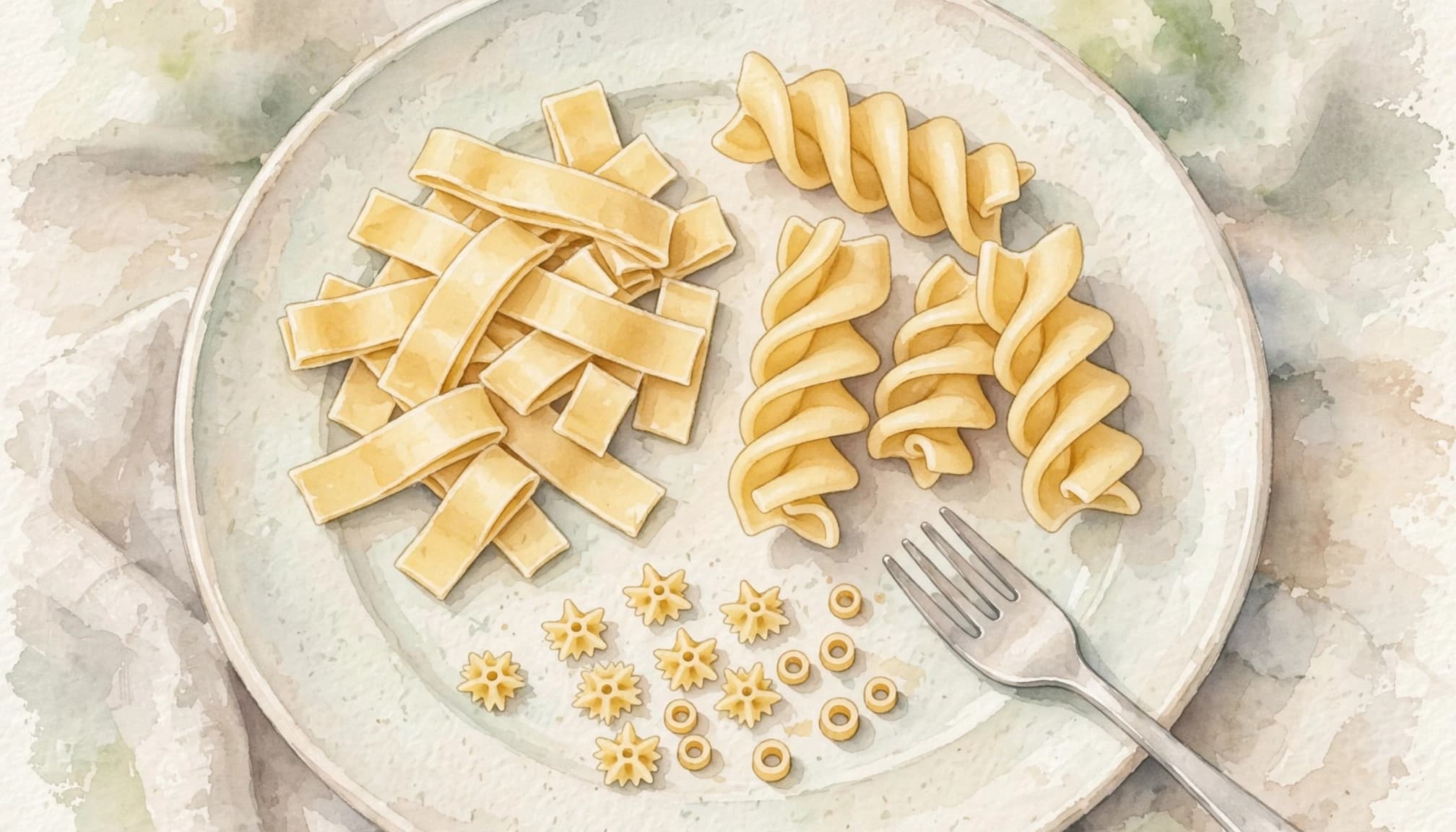
For babies still learning to eat
If your baby is just beginning solids, mash cooked pasta into a smooth or slightly textured sauce. You can also blend it with soft vegetables or lentils. Check for firm pieces, tough skins, or strands that haven't broken down.
Some babies at this stage are ready for very soft finger foods, while others need more time with mashed foods. Follow the texture your child already manages comfortably rather than moving ahead because of age alone.
For babies who pick up soft foods
As your baby gains control, offer pieces of very soft pasta that are easy to grasp and chew. Wider noodles can be cut into manageable lengths, while soft spirals or small tubes may work for babies who handle pieces well. If short shapes are hard for your baby to pick up, mix them with a thick sauce or mash them lightly.
The CDC advises cooking food until it's soft enough to mash with a fork and adapting the texture to your baby's development. Safe textures for baby-led weaning can offer more ideas for combining spoon-fed foods with soft pieces.
Cook pasta until it's soft throughout
Follow the package directions, then check the pasta before serving. It should be soft enough to mash easily with a fork. If it still feels firm in the center, cook it longer. Pasta shapes and brands vary, so the package time is a starting point, not a safety test.
The NHS's vegetable pasta recipe for babies aged 7 to 9 months cooks pasta for 10 to 12 minutes until soft, then mashes or blends the meal to a smooth texture with soft lumps. That timing is a useful example, but your own pasta may need more or less cooking.
Adapt the texture after cooking
For a new eater, mash the pasta with a fork or blend it into a sauce. Add a little water or another suitable liquid if the mixture is too thick. As your baby becomes more comfortable with solids, leave soft lumps or offer tender pieces alongside a mash.
A quick finger check can help: a cooked piece should squash easily between your fingers. Remove any tough or dry pieces, and cut long strands so they're easier to manage. Serve a small portion at a time, then offer more if your baby remains interested.
Keep the cooking water plain
Don't add salt to your baby's pasta or cooking water. The NHS advises against adding salt to baby food. Instead, use vegetables, herbs, or other familiar ingredients to bring flavor to the sauce.
If you're cooking for the whole family, set aside a baby portion before adding salt, hot sauce, or a salty jarred sauce. That makes it easier to share the meal while keeping your baby's serving simple.
Simple sauces to serve with baby pasta
A soft sauce helps moisten pasta and makes it easier to mash or combine with other foods. Use plain ingredients your baby has already tried, and keep the texture suited to their current skills.
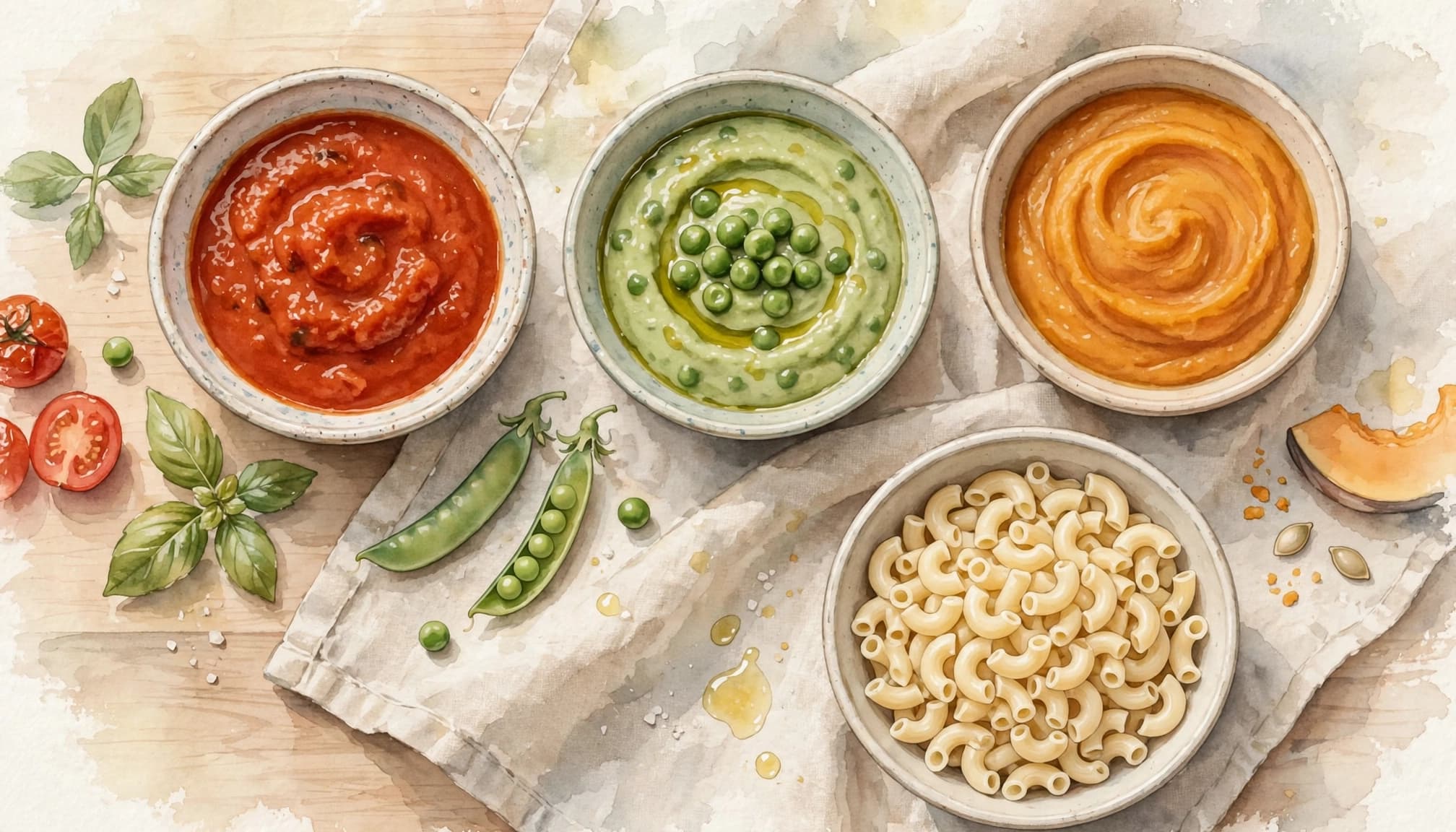
Tomato, broccoli, and lentils
The NHS vegetable pasta recipe combines tomato, broccoli, lentils, and pasta. Cook the ingredients until soft, then mash or blend them. Lentils add a soft, filling ingredient, while the vegetables bring familiar flavors.
For a younger eater, blend the mixture more smoothly. For a baby who manages soft lumps, mash it with a fork and check for any firm broccoli pieces or skins.
Cheesy tomato sauce with peas
The NHS also shares a cheesy pasta and peas recipe for babies aged 7 to 9 months. It pairs pasta with a cheese-and-tomato sauce and serves soft peas alongside. The recipe cooks pasta for 10 to 12 minutes and peas for about 5 to 6 minutes, then mashes or blends the meal to a soft texture.
For your baby, make sure peas are tender and mashed to match their skills. Avoid serving whole, firm peas to a baby who isn't ready to manage them.
Pumpkin with pasta, salmon, and cauliflower
Pumpkin can make a mild, soft sauce. The Hong Kong Department of Health's Family Health Service includes pumpkin sauce with shell pasta, salmon, and cauliflower in its meal-planning guide. The pumpkin is steamed and mashed, then combined with water and thickened.
For a home meal, mix soft pumpkin with well-cooked pasta and tender cauliflower. If adding salmon, cook it fully, remove any bones, and flake it into pieces that suit your baby's eating skills.
Build a filling meal around pasta
Pasta doesn't need a complicated recipe to make a satisfying meal. Combine it with soft vegetables and a source of protein or iron, such as lentils, beans, egg, or carefully prepared fish. For example, mash pasta with lentils and broccoli, or pair it with a soft vegetable sauce and flaked salmon.
Keep the serving size modest, especially when your baby is new to solids. Let your child set the pace and stop when they turn away, close their mouth, or lose interest. Breast milk or formula continues to play an important role during this stage.
Adapt family meals before seasoning
Plain pasta and cooked vegetables can be part of a family meal your baby can share. Set aside the baby's portion before adding salt, bottled sauce, or spicy ingredients. Then mash or cut it according to the texture your baby already manages.
For more ways to use plain family foods, see these baby-friendly family dinner ideas. Familiar ingredients can help you offer variety without preparing a separate meal each time.
Reduce choking risks at every meal
Pasta should be soft, and your baby should be seated upright in a stable high chair while eating. Stay close and watch throughout the meal. Don't feed your baby while they're lying down, crawling, or sitting in a stroller or car seat.
Cut long pasta strands into shorter lengths, and avoid pieces that are firm, sticky, or difficult for your baby to move around their mouth. Remove hard bits and check that sauces don't contain whole beans, firm vegetables, or other pieces your child can't manage yet.
Know the difference between gagging and choking
Gagging can be noisy and may happen as babies learn to manage food. Choking can be silent and may make it hard for a baby to breathe, cough, or cry. Stay within reach and learn infant choking first aid before offering finger foods.
Texture and shape both matter. Even a soft food can be difficult to handle if it's served in a form your baby isn't ready for. If your baby has swallowing difficulty, was born prematurely, or has a medical condition that affects feeding, ask your pediatrician or feeding specialist for advice.
Key takeaways
- Begin solids when your baby shows readiness, usually around 6 months.
- Cook pasta until it mashes easily with a fork, then serve it in a texture your baby handles comfortably.
- Choose shapes based on your child's current skills; no shape is automatically safe.
- Pair pasta with soft vegetables, lentils, beans, or other familiar foods.
- Keep your baby upright, supervised, and free from added salt at mealtimes.
Frequently asked questions
Can a 6-month-old eat pasta?
A baby may eat pasta around 6 months if they're developmentally ready for solids. Begin with very soft pasta mashed into a smooth or slightly textured food. Readiness and feeding skills matter more than a specific birthday.
Is pasta a choking hazard for babies?
Pasta can pose a choking risk if it's firm, sticky, served in a difficult shape, or offered before a baby can manage that texture. Cook it until very soft, adapt the size and form to your baby's skills, and supervise every bite.
Can babies eat pasta sauce from a jar?
Some jarred sauces contain added salt or ingredients your baby hasn't tried. A simple sauce made from soft vegetables, lentils, or other familiar ingredients makes it easier to control texture and seasoning. If using a family sauce, set aside the baby's portion before adding salt or hot ingredients.
Make pasta easier to serve at home or on the go
Soft pasta and a simple vegetable sauce can make a practical meal, whether you're at home or away. Our hand-powered Wonder Wean baby-food maker can help prepare fresh baby food when you don't have a kitchen appliance nearby. For a portable way to mash soft ingredients to your baby's stage, Buy Now.