

Healthy Baby Meals From Family Dinner Leftovers
Dinner leftovers can become tomorrow's baby meal, but only when you set aside the right foods at the right time. Baby meals from leftovers can save time, reduce food waste, and help your child get used to the flavors your family enjoys.
The goal isn't to give your baby every item on the dinner table. It is to choose simply prepared ingredients, change the texture for their stage, and follow safe food-handling habits. With a small pause before seasoning, one family meal can feed everyone well.
Start With a Family Meal Your Baby Can Safely Eat
The easiest baby-friendly leftovers come from meals built around plain vegetables, beans, grains, eggs, fish, or tender meat. Before you add salt, sugar, hot sauce, or a rich sauce, scoop out a small portion for your baby.
For example, a pot of lentils with carrots and sweet potato can become a soft mash. Roast chicken, squash, and brown rice can become a thicker puree or finely chopped meal. Plain pasta with cooked vegetables can work for an older baby who manages soft pieces.
Set aside a portion before seasoning
Many family dinners become less baby-friendly at the final step. Soy sauce, stock cubes, bacon, deli meats, bottled sauces, and cheese can add a lot of sodium. A baby's kidneys are still developing, so avoid added salt whenever possible.
Keep your baby's serving plain, then season the rest of the meal for older children and adults. Herbs such as basil, oregano, cumin, cinnamon, garlic, and mild ginger add flavor without relying on salt.
Skip leftovers that need too much fixing
Some meals are better saved for adults. Avoid using leftovers that are very salty, spicy, fried, heavily sweetened, or packed with processed ingredients. Honey is also unsafe for babies under 12 months, even when mixed into a cooked dish.
Choose another meal if you would need to pick through it for several minutes. A simple bowl of cooked vegetables and beans is a much better starting point than salty takeout noodles or pizza.
Safe Baby Meals From Leftovers Begin With Food Safety
A nutritious dinner can become unsafe if it sits out too long. Put leftovers in the refrigerator within two hours of cooking. If the room or outdoor temperature is above 90 F, refrigerate food within one hour.
Divide food into shallow containers so it cools faster. Large, deep containers trap heat in the middle, where bacteria can multiply. The USDA recommends using refrigerated leftovers within three to four days.
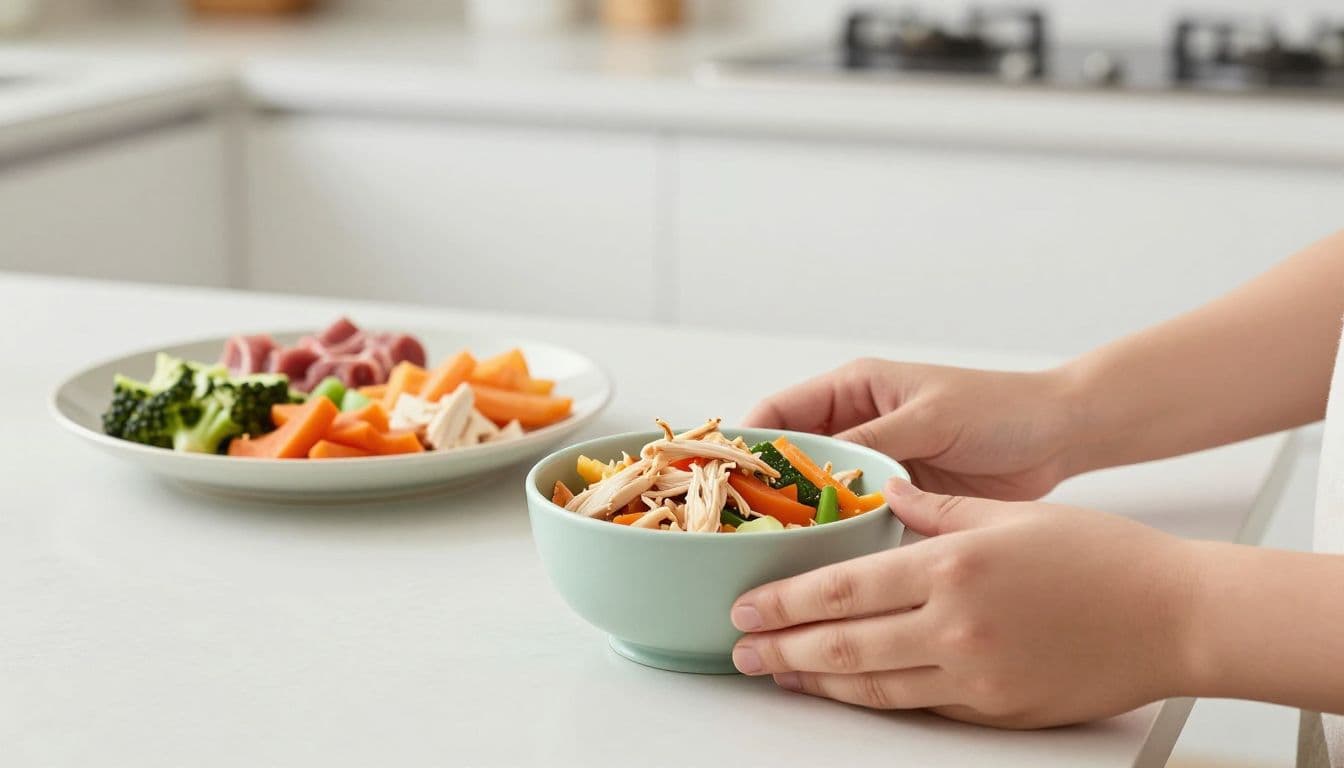
Reheat only the portion your baby will eat
Warm one small serving until it is steaming hot throughout, then let it cool to a safe temperature before offering it. The USDA recommends reheating leftovers to 165 F. Stir well because the center often stays hotter than the edges.
Test the food yourself before serving. Once your baby's spoon has touched the bowl, saliva can introduce bacteria. Throw away what remains in that served bowl rather than refrigerating it for later.
A clean adult serving spoon prevents the whole container from becoming a baby's leftover.
Keep raw and cooked foods apart
Wash hands before handling food, and use clean utensils for every step. Do not use a cutting board or knife that recently touched raw meat unless you have washed it thoroughly.
If dinner contained cooked chicken, fish, or ground meat, check for bones, skin, tough gristle, and hard fragments before making a baby portion. These details matter as much as the ingredients themselves.
Match Leftover Textures to Your Baby's Eating Stage
A food's texture changes what makes it safe. Babies who are beginning solids, often around six months and when developmentally ready, usually need smooth purees or very soft mashes. As their skills grow, thicker and lumpier textures help them practice moving food around their mouth.
Keep your baby seated upright and within arm's reach during every meal. Never offer food in a car seat, stroller, or reclined position.
Smooth food for early eaters
Mash cooked sweet potato with water, breast milk, or prepared formula until it is smooth. Blend soft lentils with cooked carrots, or puree peeled cooked apple with oatmeal. Start with a small amount and let your baby set the pace.
For baby meals from leftovers, thin the food only enough to make it manageable. A runny puree can slide too quickly, while a thick, spoonable mash gives your baby more control.
Soft lumps and finger-sized pieces for growing skills
When your baby can handle thicker textures, mash food with a fork instead of blending it completely. Flake cooked salmon carefully, shred tender chicken finely, and squash beans until their skins break down.
For baby-led feeding, offer food that squishes easily between your thumb and finger. Good choices include a large wedge of soft roasted squash, a ripe avocado spear, or a tender broccoli floret with a soft stem.
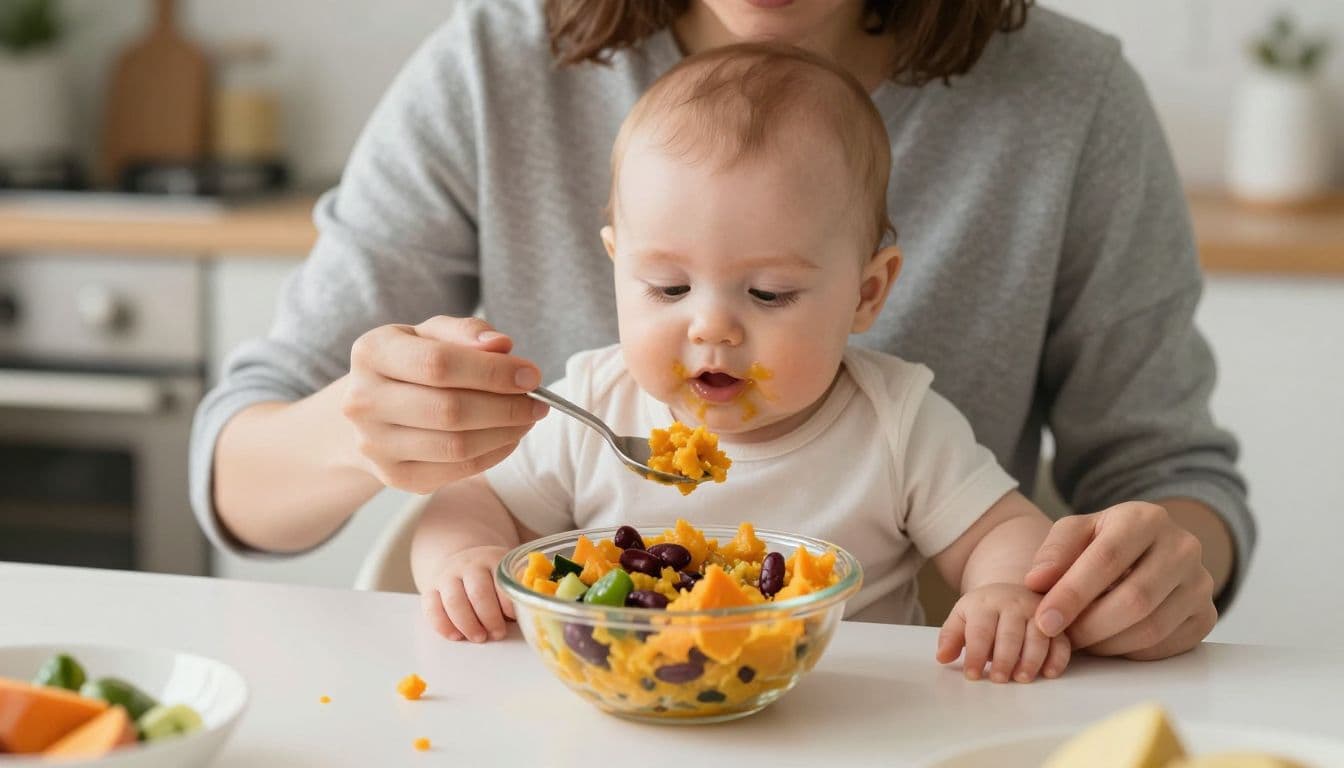
Turn Common Family Dinners Into Baby-Friendly Plates
You don't need a separate menu. A few ordinary dinner components can make satisfying meals with iron, protein, fiber, and healthy fats. Pairing an iron-rich food with produce also adds variety to the bowl.
The following ideas work only when the ingredients were cooked simply and stored safely:
- Chicken and vegetable tray bake: Remove skin and bones, then finely shred chicken. Mash it with soft roasted carrots, zucchini, or potatoes, adding a little water if needed.
- Bean chili night: Set aside beans, tomato, corn, and cooked sweet potato before adding salt or heat. Mash for a younger baby, or serve softly crushed beans for an older one.
- Salmon with vegetables: Check every bite for bones. Flake the fish, then mix it with mashed peas and potato or soft rice for a filling meal.
- Pasta dinner: Chop soft cooked pasta into small pieces. Toss it with finely minced vegetables and a little plain tomato sauce with no added salt.
- Breakfast-for-dinner eggs: Scrambled egg, cooked spinach, and soft diced potato make a quick leftover plate. Break the egg into tiny pieces for a baby still learning to chew.
Use gentle add-ins when a meal is too dry
A dry leftover often needs moisture before a baby can eat it comfortably. Stir in warm water, breast milk, prepared formula, unsalted broth, plain full-fat yogurt, or a little olive oil.
Avoid relying on butter, cream sauces, or cheese to soften every meal. They can be part of family food, but vegetables, beans, and fruit add more useful texture and flavor.
Introduce Allergens With Care, Not Fear
Family leftovers can include common allergens such as egg, dairy, wheat, soy, sesame, fish, shellfish, peanuts, and tree nuts. Early, regular exposure to safe forms of these foods can fit into family meals, but introduce a new allergen when your baby is well and you can watch for a reaction.
Offer a small amount of one new allergen earlier in the day. For peanut or tree nuts, use smooth nut butter thinned with water or mixed into porridge. Never offer whole nuts, spoonfuls of sticky nut butter, or hard chunks.
Watch for signs of an allergic reaction
Hives, swelling of the lips or face, repeated vomiting, coughing, wheezing, or unusual sleepiness need prompt attention. Trouble breathing, persistent coughing, or swelling of the tongue calls for emergency care.
Speak with your pediatrician before introducing allergens if your baby has severe eczema, an existing food allergy, or a previous reaction. Continue offering tolerated allergenic foods regularly, in age-appropriate forms.
Know the leftover choking hazards
Cooking makes some foods softer, yet it does not remove every risk. Cut grapes, cherry tomatoes, blueberries, and sausage pieces lengthwise into small pieces. Remove pits and seeds, grate raw apple or carrot, and avoid popcorn, hard candy, whole nuts, and chunks of meat or cheese.
Gagging can be noisy and is a normal protective reflex while babies learn. Choking is often silent. Learn infant choking first aid and stay close during every bite.
Make a Leftover Routine That Fits Real Evenings
A little planning makes healthy choices easier when dinner feels busy. Before serving the family, fill one small container with baby-safe ingredients. Label it with the date if you are preparing several portions at once.
A practical routine can look like this:
- Cook one component without salt, such as vegetables, beans, rice, chicken, or fish.
- Reserve a baby portion before adding adult sauces, salt, or heat.
- Cool it promptly in a shallow container and refrigerate it.
- Reheat only what your baby will eat at the next meal.
- Change the texture with a fork, blender, or small hand-powered food maker.
This habit also makes it easier to build on natural baby food routines. Your baby sees familiar ingredients in new shapes and textures, while you get more mileage from food you already prepared.
Fresh Baby Food Can Travel Beyond Your Kitchen
Leftovers are most useful when you can serve them away from home. Pack a chilled portion in an insulated bag with ice packs, and keep it cold until mealtime. If you cannot keep it cold, choose freshly prepared soft foods instead, such as ripe avocado, banana, or plain cooked vegetables from a restaurant meal.
At a cafe or family gathering, ask for unsalted steamed vegetables, plain rice, or a baked potato. Then mash a small serving for your baby rather than depending on a sugary pouch or a salty side dish.
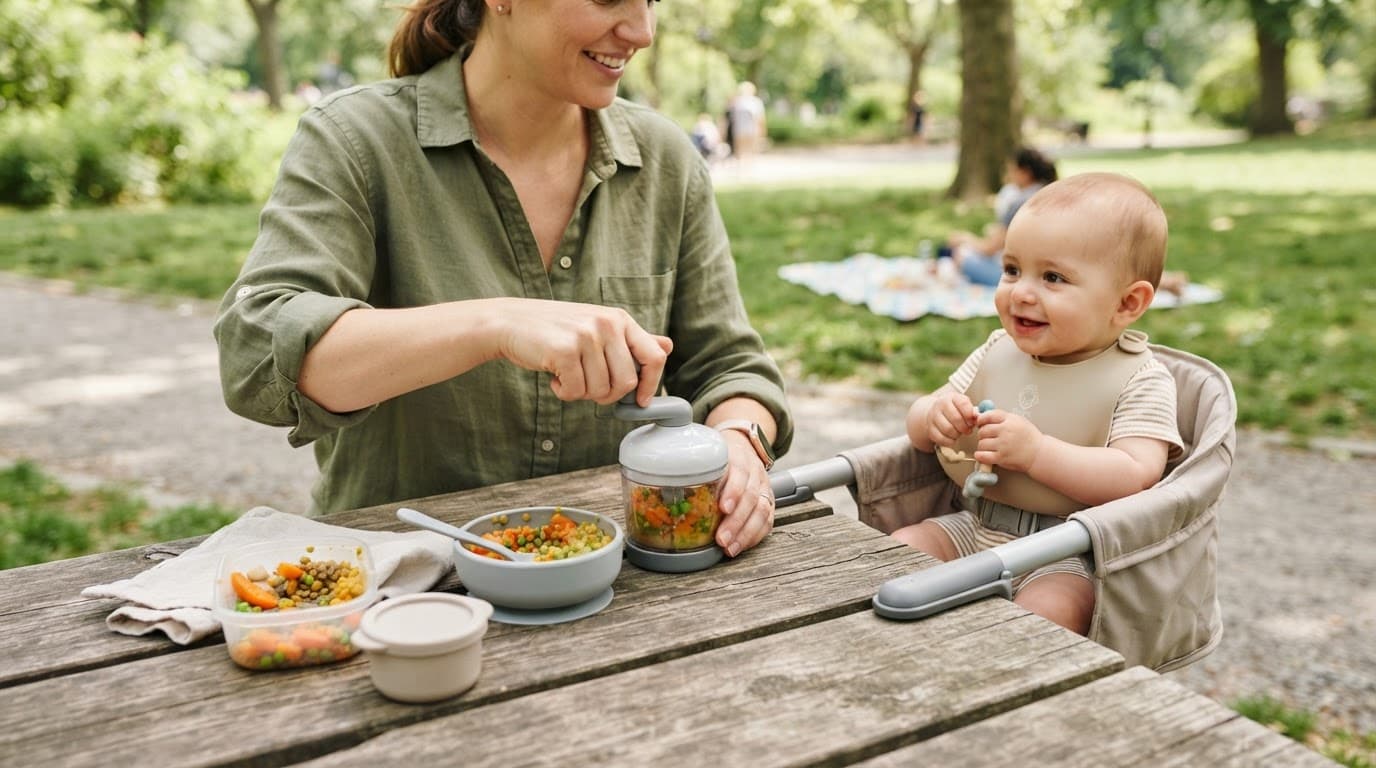
Pack tools that keep preparation simple
A small bowl, silicone spoon, bib, and wipes cover most meals. A compact hand-powered food maker can also turn warm, soft family food into an age-appropriate mash wherever you are.
For baby meals from leftovers, portability means you can use the food you trust without needing an outlet or a full kitchen. Always check the temperature and texture before serving.
Healthy Leftovers Can Become a Family Feeding Habit
Family dinner leftovers are a practical source of fresh baby food when you reserve plain ingredients, store them promptly, and adjust each bite to your baby's skills. Start with uncomplicated foods, stay alert for salt and choking risks, and treat allergens thoughtfully.
The best meals are often the ones already waiting in your kitchen. With a Wonder Wean baby food maker, you can mash healthy food on the spot at a park, restaurant, or while traveling. When you are ready to make fresh baby meals easier outside the house, Buy Now.