

Can Babies Have Honey? Age Limits and Hidden Sources
A drizzle of honey may seem like a natural way to sweeten your baby's oatmeal, but it needs to wait. The rule on honey for babies is clear: never give it before 12 months, in any form, because it can cause infant botulism.
That includes honey baked into food, stirred into cereal, or added to a pacifier. Once you know where it can hide, choosing suitable foods becomes much easier.
Key Takeaways
- Babies under 12 months shouldn't have raw, pasteurized, cooked, or baked honey.
- Read ingredient lists on packaged foods, including breads, cereals, yogurt, and sauces.
- An accidental taste doesn't mean your baby will become ill, but contact your pediatrician for guidance.
- Feeding difficulty, a weak cry, unusual floppiness, or breathing trouble need prompt medical attention.
Why Honey for Babies Must Wait Until 12 Months
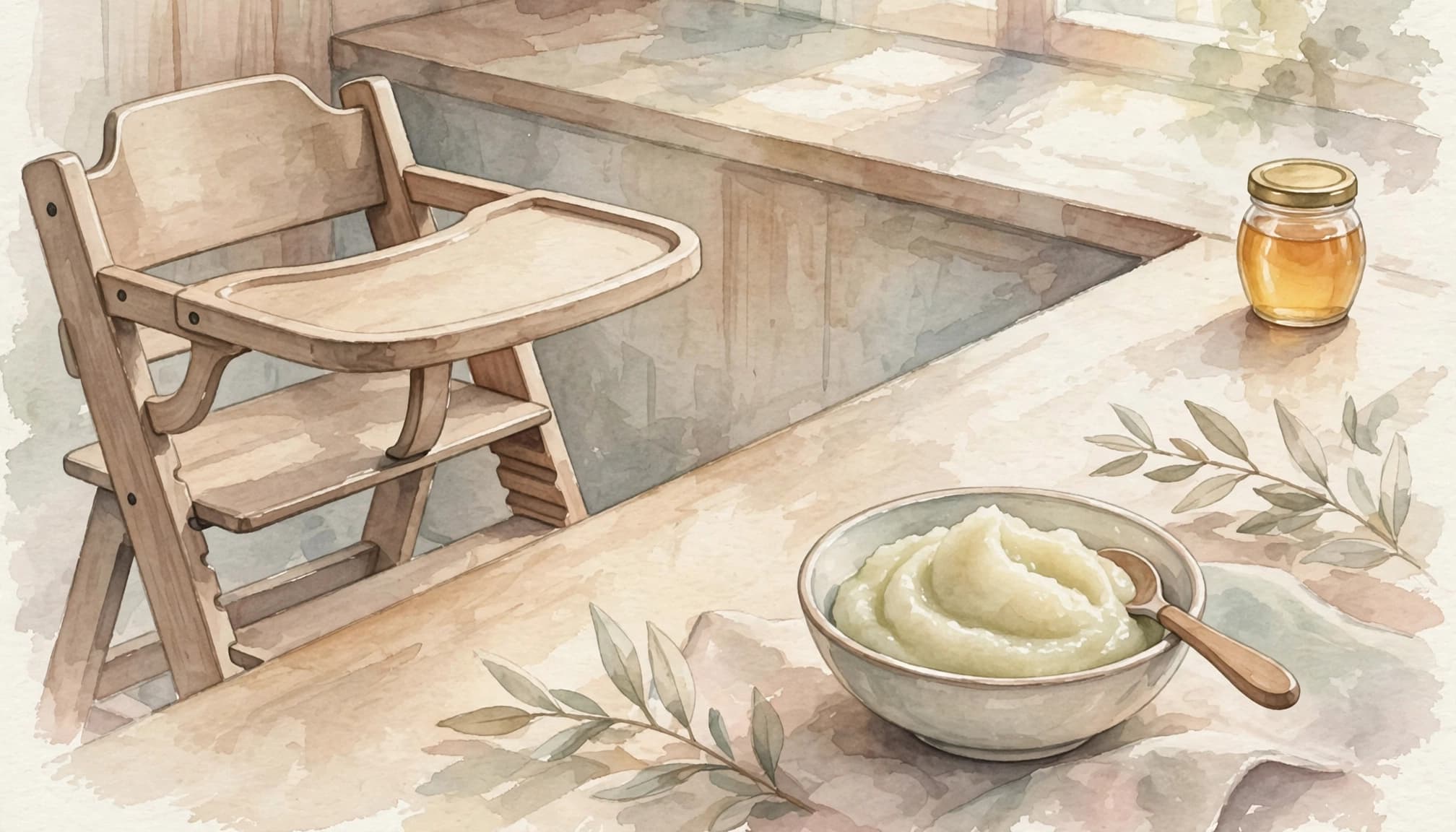
The age rule applies to every form
The Centers for Disease Control and Prevention (CDC) advises against giving honey to children younger than 12 months. Don't add it to food, water, infant formula, or a pacifier.
Raw, organic, local, and pasteurized honey all fall under this rule. A product's natural ingredients or careful sourcing don't remove the botulism concern.
Starting solids doesn't change the age limit, either. A baby who comfortably eats mashed vegetables or soft finger foods still needs to avoid honey until their first birthday.
How infant botulism develops
Honey can contain spores of Clostridium botulinum. If a baby swallows these spores, they can grow in the intestines and produce a toxin that affects nerves and muscles.
Infant botulism is rare, but it's serious. It can weaken sucking, swallowing, movement, and breathing.
You can't identify contaminated honey by its appearance, smell, or taste. Also, this is an infection risk, not the same process as a food allergy. Offering a tiny amount to test tolerance isn't a safe introduction strategy.
Cooking Doesn't Make Honey Suitable for Infants
Don't assume that baking, boiling, or mixing honey into a hot dish makes it safe before 12 months. Ordinary kitchen heating doesn't reliably destroy botulinum spores.
That means honey-sweetened muffins, homemade granola, and cooked sauces containing honey should stay off your baby's menu. Stirring honey into warm oatmeal doesn't change the rule.
Commercial manufacturing methods vary, too. The California Department of Public Health explains that it can't assess whether a particular honey-containing product contains viable spores.
A fully baked food can still contain an ingredient your baby needs to avoid. Cooking and ingredient safety are separate questions.
At home, use a honey-free recipe or remove your baby's portion before adding honey. Once honey is mixed throughout a dish, scraping off a topping or removing visible pieces won't make that portion honey-free.
Instead, offer a different food rather than trying to rescue the serving.
Hidden Sources of Honey in Foods and Products
Packaged foods and family meals
Honey can appear in foods that don't look like desserts. Some breads, crackers, cereals, yogurts, and nut butters contain it. Dressings, marinades, and glazes can also introduce honey into an otherwise savory meal.
These categories deserve a closer look, although not every product contains honey.
| Food or product | Where honey may appear |
|---|---|
| Bread, muffins, and crackers | Mixed into the dough or batter |
| Cereal and granola | In sweeteners, coatings, or clusters |
| Flavored yogurt and nut butter | Blended into the main ingredients |
| Dressings, sauces, and marinades | In the sauce or glaze |
Choose a honey-free version rather than avoiding the entire food category. For example, plain pasteurized yogurt can be suitable once solids begin, while a honey-sweetened version isn't suitable before 12 months.
Pacifiers, drinks, and shared bites
Never dip a pacifier in honey or use a honey-filled pacifier. The CDC has reported infant botulism cases associated with honey pacifiers.
Honey also shouldn't go into a baby's bottle, water, or other drinks. Don't offer it as a home remedy for a young baby's cough.
Shared food deserves attention as well. A bite of toast from an adult's plate may already have honey spread on it. Tell grandparents, babysitters, and other caregivers that the rule includes small tastes and mixed dishes.
Read the Ingredient List, Not Just the Front Label
Start with the full ingredient list. Look for honey, including descriptions such as organic honey or honey powder. These are examples, not an exhaustive list of possible wording.
Read through the whole list, even if honey isn't among the first ingredients. A small amount still falls under the under-12-month restriction.
Also read the ingredients for included sauces, toppings, or separate mix-in packets. A plain-looking food may come with a honey-containing addition.
Front-label claims such as "natural," "organic," or "made with whole grains" don't establish whether a food is honey-free. Likewise, the Nutrition Facts panel doesn't identify every sweetener by name.
The Added Sugars line helps you assess sweeteners overall, while the ingredient list tells you whether honey is present. Our guide to how to read baby food labels explains that distinction.
At restaurants or family gatherings, ask whether the food contains honey, including in sauces or glazes. If the ingredients are unclear, choose a familiar plain food instead. This is a useful habit whenever someone else prepares your baby's meal.
What to Do If Your Baby Accidentally Eats Honey
Respond calmly and contact your pediatrician
One accidental taste doesn't mean your baby will develop botulism. The California Department of Public Health describes a single exposure as typically not highly risky, although it isn't risk-free.
Stop offering the food and contact your pediatrician for advice. Tell them your baby's age, what they ate, approximately how much, and when it happened. Keep the packaging if available so you can describe the ingredients accurately.
Don't induce vomiting or use a home remedy. A well baby doesn't automatically need emergency treatment solely because of a small accidental taste.
However, symptoms may develop later rather than immediately. Follow your pediatrician's guidance about what to watch for during the following weeks.
Recognize symptoms that need medical attention
The American Academy of Pediatrics lists constipation, feeding or sucking difficulty, poor head control, drooping eyelids, a weak or changed cry, and unusual weakness or floppiness among infant botulism symptoms.
Constipation alone has many possible causes. Still, new constipation together with poor feeding or weakness deserves prompt attention.
Seek urgent medical assessment if your baby develops these symptoms, even without a known honey exposure. Tell the clinician about any possible exposure, but don't assume honey must be the cause.
Call 911 or your local emergency number for breathing difficulty, blue or gray coloring, or unresponsiveness. Severe weakness or difficulty swallowing also needs urgent evaluation. Don't wait for a routine appointment when your baby appears seriously unwell.
Choose Naturally Flavorful Foods Without Honey
Babies don't need sweeteners to enjoy food. Once your baby is developmentally ready for solids, soft fruit, vegetables, and plain foods offer plenty of flavor.
Mashed banana can add sweetness to oatmeal without honey. Soft cooked pear can accompany plain pasteurized yogurt, while mashed sweet potato works well on its own.
However, naturally sweet foods shouldn't replace variety. Include suitable iron-rich foods, such as mashed lentils, tender meat, or iron-fortified infant cereal, alongside produce. Our guide to safe first foods for babies offers more starting points.
Set aside an unseasoned baby portion before adding honey, salty sauces, or other adult seasonings to family meals. Planning a few familiar options through a whole-food baby meal plan can make this habit easier.
Texture and seating matter just as much as ingredients. Cook firm apples and pears until soft, thin smooth nut butter into another food, and avoid whole nuts or thick spoonfuls of nut butter.
Keep your baby upright in a stable high chair with an attentive adult nearby. Even on an outing, stop and create a safe feeding setup rather than offering bites in a moving car or stroller.
Breast milk or infant formula remains your baby's main drink throughout the first year.
Frequently Asked Questions About Babies and Honey
Can a 6-month-old have a tiny amount of honey?
No. The restriction applies until 12 months, including small tastes. Starting solids or managing finger foods doesn't make honey safe earlier.
Is pasteurized honey safer than raw honey?
Neither is suitable for babies under 12 months. Pasteurization doesn't reliably eliminate botulinum spores, so both forms need to wait until the first birthday.
Can a breastfeeding parent eat honey?
Yes. A breastfeeding parent can eat honey; botulinum spores aren't transmitted through breast milk. Avoid transferring honey directly to your baby's mouth through a spoon, pacifier, or food.
Should honey become a regular food after the first birthday?
It doesn't need to. The American Academy of Pediatrics considers honey safe regarding infant botulism from age 1. However, the CDC advises avoiding added sugars before 24 months. Honey counts as an added sugar when used to sweeten food.
Keep Baby Meals Simple and Honey-Free
A natural sweetener still needs an age limit. Until your baby's first birthday, keep honey out of every serving and contact your pediatrician about accidental exposure or concerning symptoms.
Simple, honey-free ingredients give you plenty of options without extra sweetness.
Our Wonder Wean baby food processor helps you prepare fresh, age-appropriate foods even on the go. It's lightweight, compact, and hand-powered, with no batteries, cords, or electricity needed. Mash suitable soft foods wherever your day takes you, while keeping clean preparation and safe feeding routines in place. If that fits your family's routine, Buy Now for a practical way to prepare healthy baby meals away from home.