

Baby Food Labels: Spot Additives and Added Sugar
A baby food pouch can look wholesome on the front and still require a closer look. Learning how to read baby food labels helps you tell the difference between natural sugar from fruit and sugar added during processing.
The process becomes easier once you know where to look. Ingredient order, the Nutrition Facts panel, and familiar sweetener names reveal much more than front-of-package promises. Start with the difference between total sugar and added sugar.
Natural sugar and added sugar are different
Sugar isn't automatically a problem in baby food. Fruits, vegetables, and dairy foods contain sugars that occur naturally. The important question is whether a manufacturer added another sweetener during processing.
Total sugar includes natural sources
The "Total Sugars" line includes all sugars in a food. That number can include fructose from apples, bananas, or pears, as well as lactose from plain yogurt or milk.
"Added Sugars" is a separate line beneath Total Sugars on most Nutrition Facts panels. It shows sugars added during processing, such as cane sugar, syrup, or honey.
For example, a pouch made only with pear puree may contain several grams of total sugar while listing 0 grams of added sugar. The sugar comes from the pear itself. That doesn't make the food sugar-free, but it does make the source clear.
A naturally sweet fruit puree also doesn't need extra sweetener to taste appealing. Babies are learning flavors, so foods with no added sugar allow them to experience the taste of the main ingredients.
Babies under 2 should have no added sugar
The Centers for Disease Control and Prevention says children younger than 24 months shouldn't have added sugars. The Dietary Guidelines for Americans also recommend avoiding added sugar before age 2.
That guidance applies to added sweeteners, not the natural sugars found in whole fruits, vegetables, or unsweetened dairy foods. It also doesn't mean you need to avoid every packaged food. Instead, check the label and choose products without added sugar when possible.
Honey needs extra attention. It counts as an added sugar when included in a product, and babies younger than 12 months should not eat honey because of the risk of infant botulism. Ask your pediatrician for advice if your baby has a medical condition, feeding difficulty, or special dietary need.
How to read baby food labels for additives and sugar
A label gives you two useful views of the same food. The ingredient list tells you what the food contains, while the Nutrition Facts panel shows amounts of key nutrients.
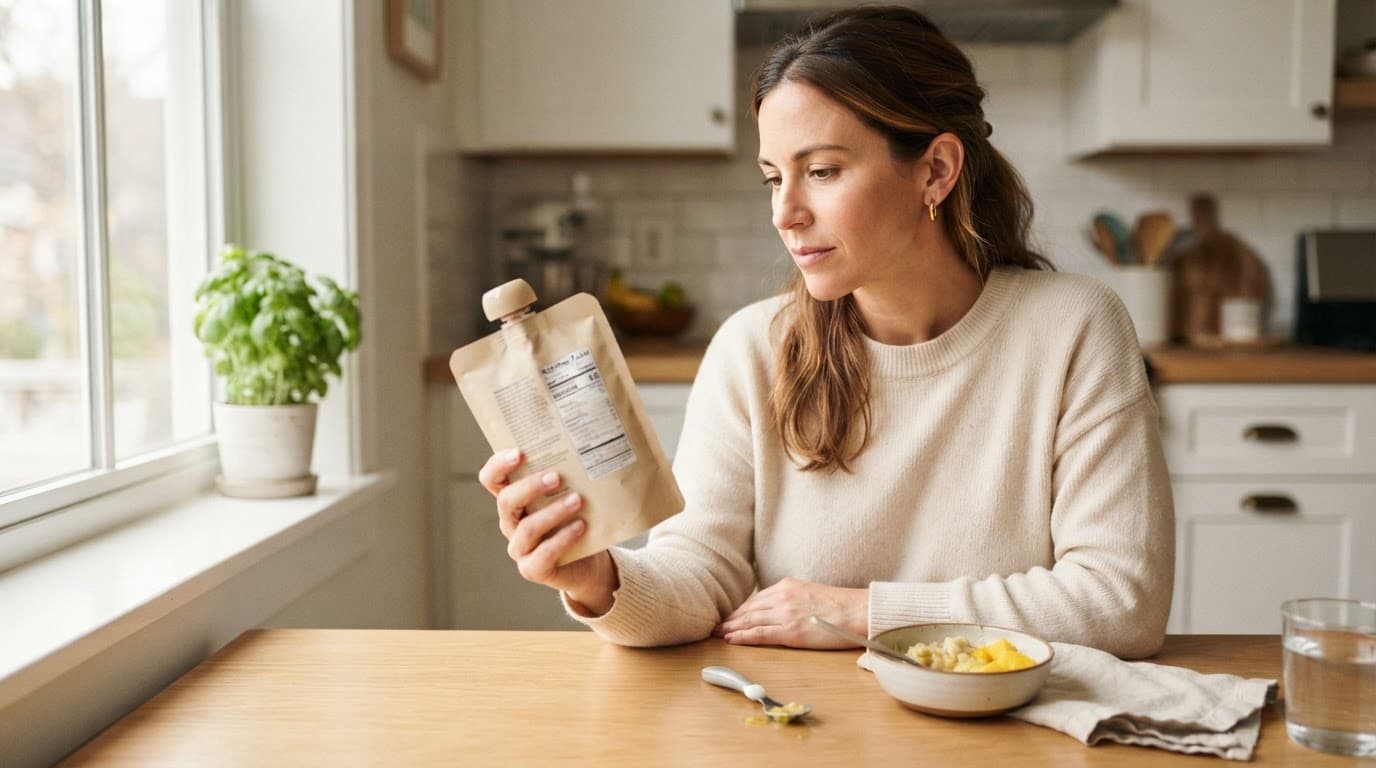
Start with the ingredient list
The FDA requires ingredients to appear in descending order by weight. The first ingredient weighs the most, and the last ingredient weighs the least.
That order makes the beginning of the list especially useful. If a fruit puree appears first, it makes up more of the product than ingredients listed later. If a sweetener appears near the beginning, the product contains a larger amount by weight.
A short list can make label reading easier, but length alone doesn't determine whether a food is a good choice. A product may contain several fruits, grains, vitamins, and texture ingredients without including added sugar.
Look for the main food first. You might see "carrots," "sweet potato," "oats," or "whole grain rice." Then scan the rest of the list for sweeteners, preservatives, thickeners, and ingredients your family needs to avoid.
Check the Added Sugars line
On the Nutrition Facts panel, find Total Sugars and then look directly below it for Includes X g Added Sugars. The word "includes" means the added sugar is already part of the total sugar number.
A product with 8 grams of total sugar and 0 grams of added sugar gets its sugar from its ingredients. A product with 8 grams of total sugar and 4 grams of added sugar gets half of that amount from added sweeteners.
The percent Daily Value can also appear beside added sugar. For babies and toddlers under 2, the practical target is still zero added sugar, even if the percentage seems small.
Serving size matters, too. A pouch may list one serving, but an older baby might eat more than that. Compare similar products using the same serving amount before deciding which contains less added sugar.
Common sweeteners and additives to recognize
You don't need to memorize every chemical name. A few common terms can help you spot added sweeteners, while other ingredients simply support texture, acidity, or shelf life.
Names that indicate added sweetener
Read the full ingredient list instead of searching only for the word "sugar." Manufacturers can use several names for sweetening ingredients, including:
- Cane sugar, table sugar, brown sugar, and evaporated cane juice.
- Corn syrup, glucose syrup, and high-fructose corn syrup.
- Brown rice syrup and other grain-based syrups.
- Honey and maple syrup.
- Fruit juice concentrate when it's used to sweeten the product.
These ingredients may appear in foods marketed with fruit or vegetable imagery. A product can contain apples and added apple juice concentrate, for example. The presence of fruit doesn't tell you whether the recipe contains additional sweeteners.
"Organic" also doesn't mean "no added sugar." Organic cane sugar, organic syrup, and organic honey are still added sugars. Check the Nutrition Facts panel and ingredient list together.
Some packaged foods use fruit puree as part of the recipe rather than a separate refined sweetener. The label can help you understand the entire formula, but your pediatrician can provide individualized guidance if you're unsure about a specific product.
Additives aren't automatically harmful
An additive is an ingredient used for a purpose. It may keep a food stable, adjust acidity, preserve color, or create a texture that's easier for babies to eat.
Citric acid can provide acidity. Ascorbic acid is vitamin C and can help maintain color. Pectin, guar gum, or similar ingredients can thicken a puree. These names may look unfamiliar, but unfamiliar doesn't automatically mean unsafe.
The FDA regulates food ingredients and requires them to appear on the label. Still, your child may need to avoid a particular ingredient because of an allergy, intolerance, or medical condition. A short conversation with your pediatrician is the right step when a label raises a health concern.
You can also choose a simpler product if that matches your preferences. Many parents prefer recipes with only a few recognizable ingredients, especially when they want each new food to be easy to identify.
A long ingredient list doesn't prove that a food is harmful. The label tells you what is present, while your baby's health history determines what may need special attention.
Compare products beyond the front of the package
Front labels are designed to catch your eye. Words such as "natural," "organic," or "made with real fruit" don't replace a look at the back panel.
Use this quick comparison when you have several options in front of you:
| Label area | What to check | What it tells you |
|---|---|---|
| First ingredients | Main foods and their order | Which ingredients make up the most by weight |
| Added Sugars | Grams under Total Sugars | Whether sweeteners were added |
| Serving size | Amount listed per serving | How much sugar and nutrition your baby receives |
| Ingredient list | Syrups, sugar, honey, and concentrates | Other names for added sweeteners |
| Additives | Acids, thickeners, or preservatives | Why certain functional ingredients appear |
The best choice depends on your baby's age, feeding stage, allergies, and your family's routine. A pouch with 0 grams of added sugar may still have more total sugar than a vegetable puree, simply because fruit is sweeter.
Treat front-of-package claims with care
A claim can be technically accurate and still give you an incomplete picture. "No sugar added" doesn't mean the food contains no sugar. It means the manufacturer didn't add sugar during processing, so naturally occurring sugar may remain.
Nutrient-content claims are generally limited on foods made specifically for children under 2, with some exceptions for vitamin and mineral information. Regardless of the front panel, read the ingredient list yourself.
Texture matters as much as sugar. Choose a consistency that fits your baby's development, and follow safe feeding practices. Never leave your baby alone while eating, and ask your pediatrician when you're unsure whether a food or texture is ready.
Build a quick label-reading habit
You don't need to spend ten minutes studying every jar. Use the same order each time:
- Check the age and texture guidance.
- Read the first three ingredients.
- Scan for added sweetener names.
- Find the Added Sugars line.
- Review any ingredient your baby must avoid.
After a few shopping trips, these steps take less than a minute. You can also compare labels on the store shelf by taking a quick photo, then checking the details when you have more time.
Fresh baby food when you're away from home
Packaged food can be useful, but it isn't your only practical option. When you're traveling, visiting family, or spending the afternoon at a park, you can often serve soft foods already available to your family.
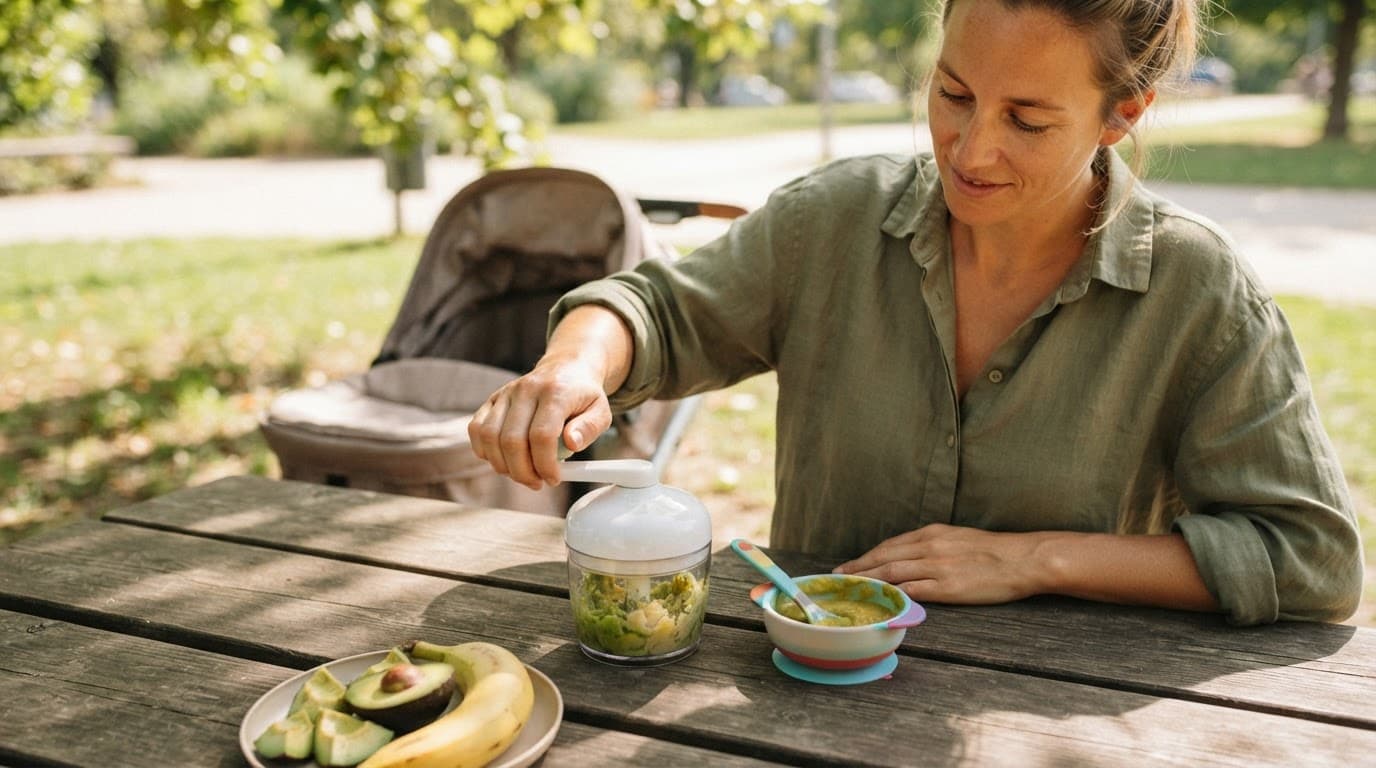
Make simple food on the spot
Soft avocado, banana, steamed vegetables, beans, and tender cooked foods can be mashed to suit your baby's stage. Preparing a portion when your baby is ready also lets you control the ingredients without carrying several jars or pouches.
The Wonder Wean is a compact, hand-powered pocket blender that lets caregivers mash food without electricity. You can use ingredients prepared at home or suitable soft foods available during a meal away from home.
For families who want more control over sweeteners, textures, and packaging, the Buy Now option makes it easier to prepare fresh baby food wherever the day takes you. Follow food-safety basics, use clean utensils, and serve age-appropriate foods.
Make baby food labels easier to understand
Reading a label becomes less stressful when you focus on two questions: What are the main ingredients, and was sugar added? Ingredients appear by weight, while the Added Sugars line separates added sweeteners from natural sugar.
Additives deserve a closer look, but they don't all indicate a problem. Choose foods that fit your preferences and your baby's needs, then ask your pediatrician about allergies, medical conditions, or feeding concerns. When you want a fresh alternative away from home, simple mashed foods and a portable tool can give you more control over every spoonful.