

Choking vs. Gagging: What Parents Should Know at Mealtime
Gagging can be a normal part of learning to eat, while choking can block a baby's airway and needs immediate action. When you're distinguishing choking from gagging at the table, pay close attention to your baby's breathing, sounds, and ability to cough or cry.
Gagging can look frightening, but it doesn't prove your baby is safe. Knowing which signs to watch for, how to respond, and how to reduce food risks can help you act with care during meals.
Key Takeaways
- Gagging is often noisy, while a baby with a blocked airway may be unable to cough, cry, or make a sound.
- A baby who is gagging still needs close observation. Trouble breathing, worsening distress, or a weak cough can signal an emergency.
- Keep babies seated upright and supervised while eating, and serve food in textures and shapes suited to their skills.
- Learn infant and child choking first aid before your baby starts solids.
Choking vs. gagging: what parents can observe
Gagging can be loud and dramatic
Gagging is a protective reflex that helps move food forward in the mouth. A baby may cough, retch, push out their tongue, water at the eyes, or even vomit. They can often still breathe and make noise, though the episode may look alarming.
Gagging can happen as babies learn to manage new textures. The American Academy of Pediatrics advises parents to slow down, offer a smoother texture or smaller amounts, or pause solids if gagging occurs. Stay close and watch your baby's breathing and responsiveness rather than assuming the episode is harmless.

Choking can be quiet
Food that blocks the airway can prevent a baby from breathing effectively. A baby with severe choking may be unable to cry, cough, or make a sound. They may look frightened or confused, struggle to breathe, or develop pale or bluish skin.
A forceful cough means some air is moving, but it doesn't rule out a problem. Watch closely: a cough that weakens, stops, or fails to clear the food can become an emergency. The NHS notes that gagging is often noisy, while severe choking may be silent. Use the whole picture, especially breathing and responsiveness, not sound alone.
What to do if an infant under 1 is choking
Give back blows and chest thrusts
If your infant can't cough, cry, or breathe effectively, act immediately. Ask another adult to call your local emergency number while you begin first aid. If you're alone, follow your training and the emergency dispatcher's instructions.
The American Red Cross recommends cycles of 5 back blows followed by 5 chest thrusts for a responsive infant under 1 year. For back blows, support your baby's head and jaw, position them face down along your forearm with the head lower than the body, and strike between the shoulder blades. Then turn the baby face up while supporting the head, and give chest thrusts with two fingers in the center of the chest, just below the nipple line. Repeat the sequence until the baby can cough or cry, the object comes out, or the baby becomes unresponsive.
If your baby becomes unresponsive
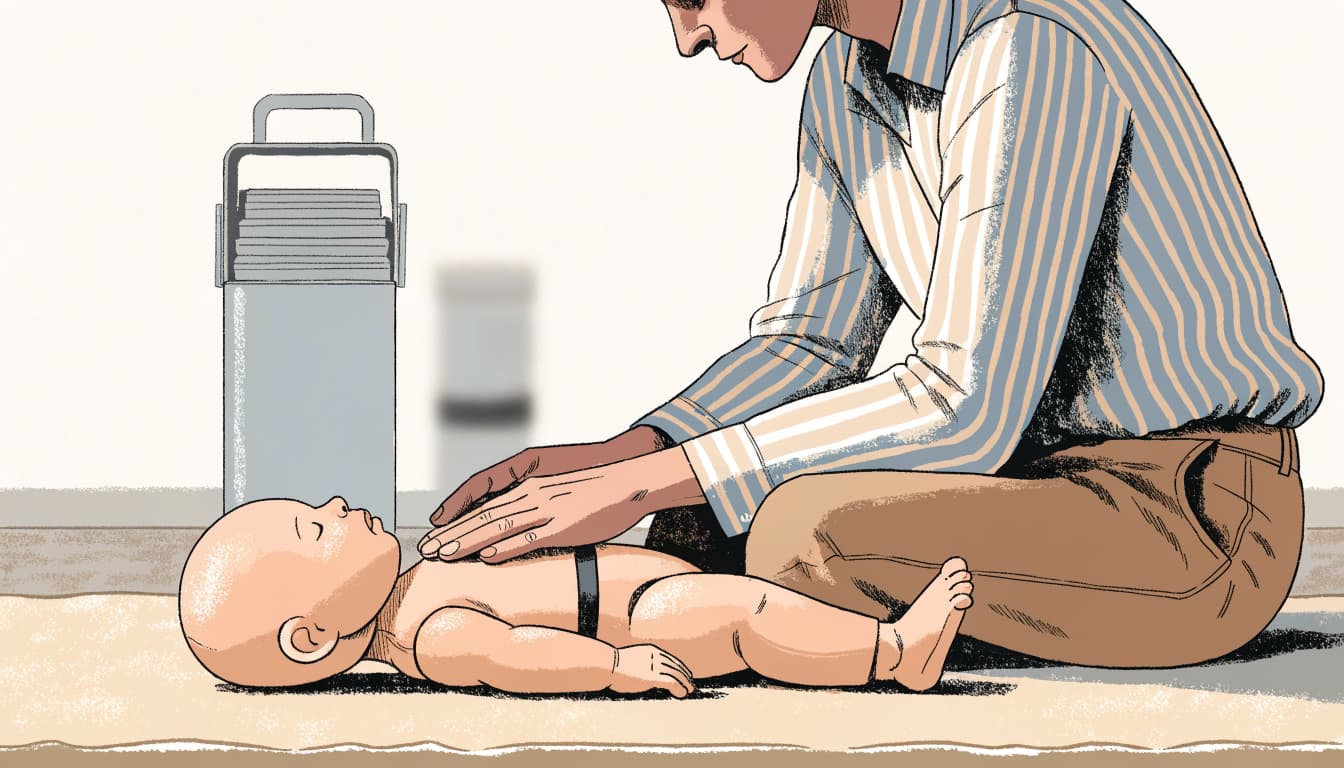
Lower your baby onto a firm, flat surface and start CPR, beginning with chest compressions, according to your training. If you open the mouth to give breaths, remove an object only if you can clearly see it. Don't make a blind finger sweep, since it can push food farther into the airway.
Emergency care is needed after a serious choking episode, even if the object comes out. A first-aid course can teach you how to perform these steps and how they differ for infants and older children.
What to do if a child over 1 is choking
For a child with severe choking, the Red Cross recommends 5 back blows followed by 5 abdominal thrusts. Repeat the sequence until the child can cough, cry, or speak, or becomes unresponsive. If the child can cough forcefully, encourage them to keep coughing and watch for any change in their breathing or ability to make sound.
If the child becomes unresponsive, lower them to a firm, flat surface and begin CPR according to your training. Call your local emergency number for severe choking, and follow the dispatcher's directions. Infant and child techniques differ, so make sure your training covers both age groups.
Lower choking risks during meals
Set up a safe seat and stay close
Seat your baby upright in a stable high chair, and stay alert and within reach throughout the meal. The CDC advises against eating while lying down, crawling, walking, or riding in a car or stroller. A baby can choke on food even when it looks soft or familiar, so supervision matters at every meal.
Keep mealtimes calm enough for you to notice changes in breathing and behavior. Avoid distractions that take your attention away from your baby. If your baby starts gagging, pause and give them time to manage the food before offering another bite.
Prepare high-risk foods carefully
The CDC lists foods such as whole grapes, nuts, hard raw fruit or vegetables, hot dogs, and large cheese chunks as choking hazards for young children. Popcorn, raw apple, raw carrot, and thick spoonfuls of nut butter also pose risks for babies learning to eat.
Change the shape and texture before serving. Cook firm produce until soft, cut round foods lengthwise into small pieces, and thin nut butter into a mash or spread it thinly. Remove pits, tough skins, bones, and hard pieces. Keep whole nuts and popcorn off a young baby's tray.
Match food texture to your baby's skills
Babies usually start solids around 6 months, when they show signs of developmental readiness. Begin with foods your baby can manage, then adjust the texture as their skills grow. A piece of cooked food should squash easily between your fingers before you serve it as a finger food.
Smooth purees, thicker mashes, and soft finger foods can all fit into a feeding routine. A mixed approach can pair a pre-loaded spoon with a soft finger food, without requiring your baby to master every texture at once. For ideas on safe first foods for babies and combining baby-led weaning with purees, choose foods that match your child's current abilities.
Make natural foods safer to handle
Healthy ingredients still need safe preparation. Steam or cook hard vegetables until soft, and mash dense foods with a little liquid if they form sticky clumps. Cut round foods such as grapes lengthwise into small, manageable pieces. Avoid hard, round, sticky, or tough foods that don't suit your baby's stage.
When you're away from home, a ripe banana or properly cooked vegetable can be mashed shortly before serving. Keep prepared food clean and chilled when needed, and discard food from your baby's bowl after a meal if a used spoon has touched it. For simple ways to prepare fresh food by hand, see our guide to making baby food without a blender.
When to seek medical help
Call your local emergency number if your baby or child can't breathe, cry, or cough effectively, or if their skin turns pale or blue. Don't wait to see whether severe symptoms pass. Follow the emergency dispatcher's instructions while giving age-appropriate first aid.
After an episode, contact your pediatrician if your baby has ongoing coughing, noisy breathing, difficulty swallowing, or repeated distress during meals. Frequent gagging, refusal of textures, or concerns about feeding development also deserve a conversation with a healthcare professional. Gagging can be part of learning, but persistent symptoms need individual attention.
Frequently asked questions
Can a baby gag and still be breathing?
Yes. A baby may gag, cough, retch, or water at the eyes while still moving air and making sound. Stay beside your baby and watch closely, because gagging does not guarantee that the airway is clear.
Should I pat a baby on the back if they are gagging?
If your baby is coughing forcefully and breathing, let them cough and keep watching. Back blows are part of choking first aid when a baby can't cough, cry, or breathe effectively. Learn the correct technique in a certified infant first-aid course.
Should I put my finger in my baby's mouth?
Don't sweep the mouth blindly. You could push food farther into the airway. Remove an object only if you can clearly see it and can take it out safely.
When should parents learn infant choking first aid?
Learn before your baby starts solids, and make sure other regular caregivers know the basics too. Choose a course that covers infant and child choking response and CPR, since techniques vary by age.
Make mealtimes safer and more flexible
The clearest distinction between choking and gagging is whether your child can move air, cough, or cry. Stay close, prepare food for your baby's current skills, and learn the right first-aid steps before an emergency occurs.
When you're feeding your baby healthy foods away from home, our Wonder Wean Baby Food Processor makes it easy to mash fresh ingredients without batteries, cords, or electricity. It's compact and lightweight, with minimal parts to clean. The Wonder Wean costs $39.99, and you can Buy Now. Keep food preparation age-appropriate, and supervise your baby throughout every meal.