

Can Babies Eat Rice? Safe Textures and Arsenic Awareness
Rice can be part of a baby's varied diet, and parents don't need to avoid it altogether. The practical approach is to serve it in a texture your baby can manage, prepare it thoughtfully, and offer other grains and foods too.
There isn't an official daily or weekly limit for how often babies can eat rice. Still, rice can contain inorganic arsenic, so variety matters. Here's how to include rice without relying on it as your baby's main grain.
Can babies eat rice?
Yes. Babies can eat cooked rice and infant rice cereal once they're ready for solid foods. Rice is one option among many, and it can be served plain or combined with other soft foods.
The CDC and American Academy of Pediatrics recommend starting foods other than breast milk or formula at about 6 months. Before starting, look for signs of readiness, such as steady head control, sitting with support, and swallowing food rather than pushing it back out. Starting solids before 4 months isn't recommended. Read more about safe first foods for babies.
Cooked rice and infant rice cereal aren't the same
Cooked rice is a grain prepared for a family meal. Infant rice cereal is a processed cereal designed for babies and may be fortified with iron. Both can fit into a baby's diet, but the FDA arsenic action level discussed below applies to infant rice cereal, not to every rice food.
Rice cereal can be mixed with breast milk, formula, or water to make a spoonable texture. It shouldn't go into a bottle unless a healthcare professional recommends it for a specific medical reason.
Start with the right texture
For a new eater, cook rice until very soft, then mash it or mix it into a smooth, soft food. As your baby develops feeding skills, you can offer a thicker mash with soft grains. A baby's age gives a general guide, but their ability to manage texture matters too.
Arsenic in rice: what parents need to know
Rice can absorb inorganic arsenic from soil and water as it grows. This is one reason public health guidance encourages variety, especially for babies and young children who may eat the same foods often.
Arsenic awareness doesn't mean rice must be removed from the menu. Instead, understand what the FDA guidance covers and avoid making rice the only grain your baby eats.
The FDA action level applies to infant rice cereal
The FDA set an action level of 100 micrograms per kilogram, also called 100 parts per billion, for inorganic arsenic in infant rice cereal. It gives manufacturers a benchmark for reducing arsenic in that specific product.
This number is not a limit for all rice or a serving-frequency recommendation. It also isn't a promise that a food contains no arsenic. The FDA's guidance on arsenic in infant rice cereal explains the action level.
No official weekly serving cap
Current CDC guidance doesn't set a maximum number of rice or rice-cereal servings per day or week. Rather than follow an unsupported number, offer a range of grains and other foods over time.
That approach keeps rice in perspective. It can be one familiar food in a varied diet, not the default cereal at every meal.
How often can babies have rice?
Rice can appear regularly, but it doesn't need to be the grain offered at every meal. Since there is no official serving cap, let variety guide your routine. If your baby eats rice one day, offer oatmeal, barley, or another suitable grain on a different day.
The CDC recommends offering a variety of fortified infant cereals, including oat, barley, and multigrain options, rather than only rice cereal. Other foods such as beans, lentils, eggs, vegetables, and fruit also help broaden meals. Breast milk or formula remains an important part of nutrition during the first year.
When choosing how often to serve rice, consider the whole pattern of what your baby eats. A varied menu is more useful than counting rice servings against a made-up weekly quota.
How to reduce arsenic when preparing rice
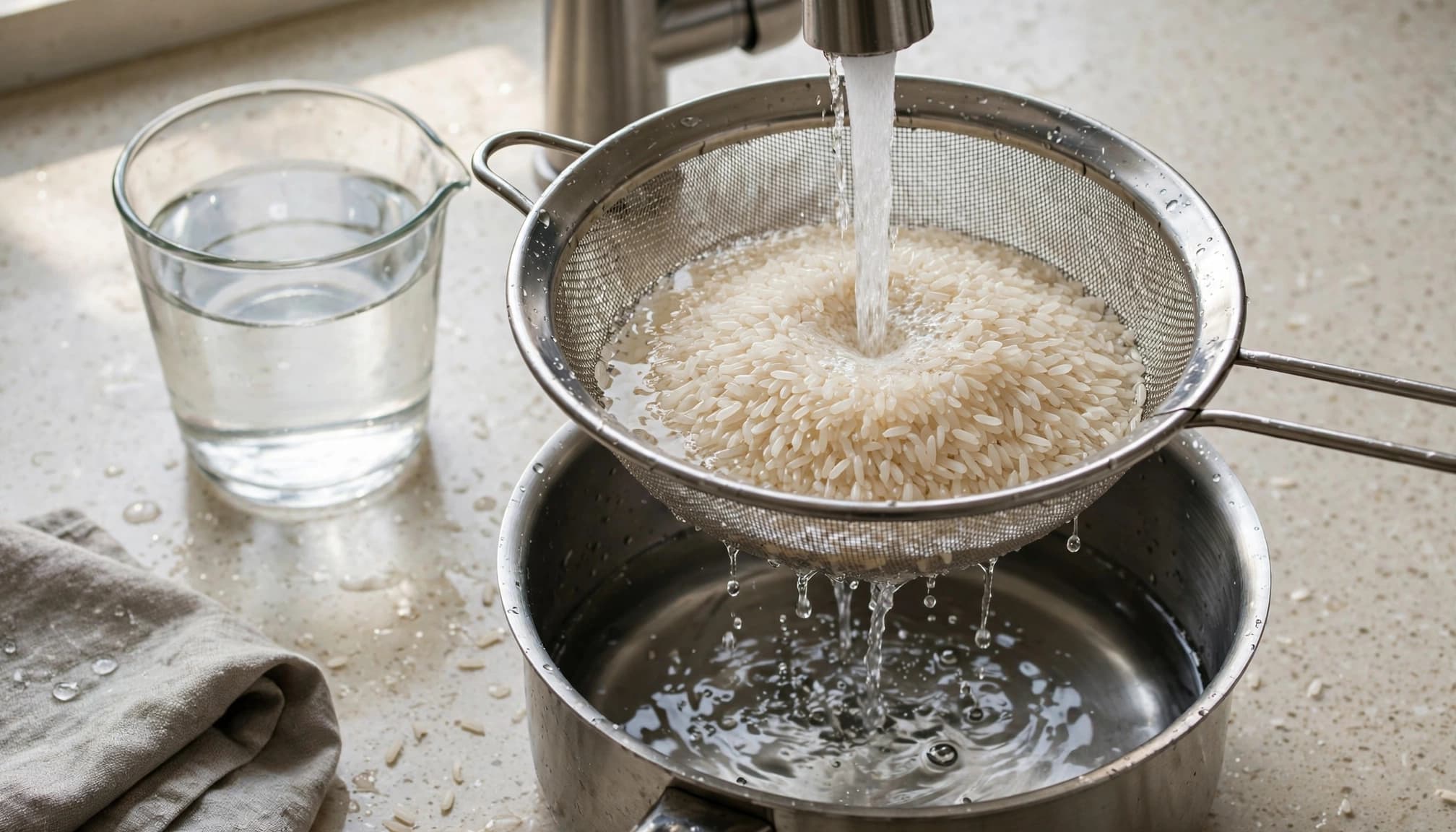
Home cooking can reduce inorganic arsenic in rice, although the method has a trade-off. The FDA says cooking rice in excess water and draining it can lower arsenic, but it can also remove some nutrients.
Use excess water, then drain
The FDA describes cooking rice in 6 to 10 parts water for 1 part rice, then draining the extra water. Depending on the rice type, this can reduce inorganic arsenic by about 40 to 60 percent.
There is a nutritional trade-off. In enriched polished and parboiled rice, this cooking method can also reduce folate, iron, niacin, and thiamine by 50 to 70 percent. Since babies need iron-rich foods, don't rely on rice as a primary source of iron. Include other suitable iron-rich foods and iron-fortified cereal.
Rinsing alone has little effect
Rinsing rice before cooking is not a dependable way to reduce arsenic in the cooked grain. The FDA reports that rinsing has minimal effect and can wash away nutrients from polished and parboiled rice. Rinse for ordinary kitchen reasons if you like, but don't treat it as the main arsenic-reduction step.
Serve rice at a safe texture
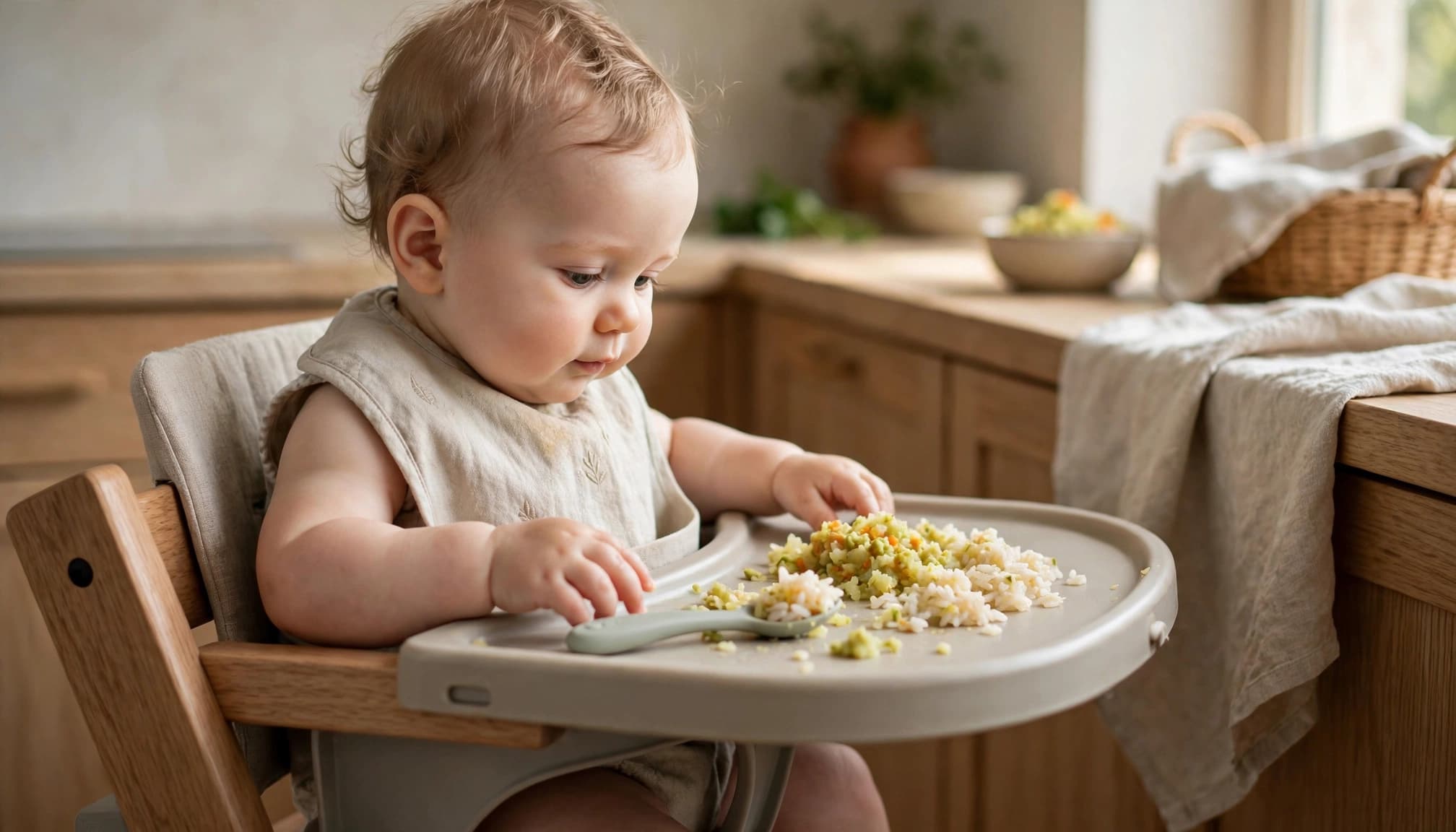
Rice can be sticky or form dense clumps, so texture deserves attention. Cook it until soft and adjust it to match your baby's current skills. You can mash it with a fork or combine it with a soft puree to make it easier to manage.
Match the food to your baby's feeding skills
Early solids may work best as a smooth, thick mash. As your baby becomes more comfortable, move gradually toward soft lumps and other textures. Break up sticky clumps of rice with a little water or another suitable liquid, and check that the result isn't gummy or difficult to move around the mouth.
For a baby who is ready to self-feed, serve rice incorporated into a soft, cohesive food rather than as dry, loose grains. Babies develop at different rates, so adjust based on how your child handles food. For more ideas on age-appropriate foods and textures for babies, keep both texture and posture in mind.
Keep meals supervised and upright
Seat your baby upright in a stable high chair and stay close throughout the meal. Don't feed while your baby is reclined, crawling, or riding in a stroller or car seat.
Gagging can happen as babies learn to manage new textures. It is often noisy and acts as a protective reflex. Choking can be quiet and may make it hard for a baby to breathe, cry, or cough. Learn infant CPR and choking first aid before solids become part of your routine, and seek emergency help if choking occurs.
Offer other grains and build balanced meals
Rice doesn't have to carry a meal on its own. Mix soft rice with mashed vegetables or another age-appropriate food, while continuing to offer other grains. This gives your baby chances to experience different tastes and textures.
Rotate grains and cereals
Oat, barley, and multigrain infant cereals are useful alternatives to rice cereal. Depending on your baby's skills, soft oatmeal or well-cooked grains may also fit. Offer iron-fortified infant cereal as one option, not the only source of iron in the diet.
A rotation doesn't need a strict schedule. Keep a few suitable options in mind and choose what fits the meal and your baby's abilities.
Add soft, nourishing foods
Combine a small amount of soft rice with mashed beans, lentils, vegetables, or another food your baby already handles well. Keep added salt and sugar out of baby portions. If you are adapting a family meal, set aside your baby's serving before adding salty sauces or seasonings.
A flexible approach can combine spoon-feeding with safe self-feeding. You might offer a soft mash alongside a tender piece of food sized for your baby's stage. See more about safe textures for baby-led weaning.
Key takeaways
- Babies can eat rice once they are ready for solids, usually around 6 months.
- There is no official daily or weekly limit for rice servings.
- Rice can contain inorganic arsenic, so include other grains and foods.
- Cooking rice in excess water and draining it can lower arsenic, but may also reduce nutrients.
- Serve rice very soft, with texture suited to your baby's feeding skills, and supervise every meal.
Frequently asked questions
Should I avoid rice because of arsenic?
No. Rice can be part of a varied diet. Arsenic awareness supports offering other grains too, rather than eliminating rice or serving it as the only grain.
Is rice cereal necessary when a baby starts solids?
No. Infant rice cereal is one option, not a requirement. The CDC recommends a variety of fortified infant cereals, such as oat, barley, and multigrain, instead of relying only on rice cereal.
Can I give my baby rice every day?
There is no official daily serving cap. However, offering different grains and foods helps keep rice from dominating the menu. If you have a specific nutrition concern, ask your pediatrician for advice tailored to your baby.
A balanced approach to rice
Rice can have a place at the table when it's prepared in a soft, manageable texture and balanced with other grains and foods. For arsenic awareness, focus on variety and understand the trade-offs of cooking methods rather than worrying over a fixed serving count.
When you're away from home, our Wonder Wean baby food processor can help you prepare fresh, soft foods for your baby without batteries, cords, or electricity. It's lightweight, compact, and has minimal parts to clean, so it can make offering healthy foods on the go more practical. The Wonder Wean is $39.99. Buy Now.