

What to Do When Your Baby Refuses Solid Foods
When your baby refuses solids, it can be hard to know whether to keep offering food or take a break. In most cases, a calm reset and small, repeated opportunities are more helpful than pressure.
Babies learn to eat at different paces. Check your baby's readiness, keep breast milk or formula central, and watch for signs that feeding needs medical attention.
What to do when your baby refuses solids
Start by looking at your baby's skills and cues rather than expecting a particular amount of food to disappear. Early solid meals are practice, and your baby may accept very little at first.
Check for readiness
The CDC recommends starting complementary foods at about 6 months, when a baby is developmentally ready. A baby should be able to hold their head and neck steady, sit with support, open their mouth for food, and swallow rather than consistently push food out with their tongue. Starting before 4 months isn't recommended.
If your baby turns away, closes their mouth, or loses interest, end the meal without coaxing. These cues can mean they're done for now. Try again at another meal when they're rested and alert.
Keep the first tastes small
Offer a tiny taste on a spoon, or let your baby explore a soft, age-appropriate food on the tray. The American Academy of Pediatrics (AAP) suggests starting with half a spoonful or less, then gradually offering more as your baby gets comfortable. A small amount is enough for practice.
The AAP notes that pushing food out with the tongue can happen while a baby learns to move food around and swallow. If your baby can't move food back to swallow, pause and try again in a week or two.
Why babies may turn down food
Refusal can have more than one cause, and one meal rarely tells the whole story. Notice what happens before, during, and after eating, then make one simple adjustment at a time.
Eating is a new skill
A spoon, unfamiliar taste, or thicker texture can feel strange to a new eater. Your baby may need time to touch, smell, or lick a food before taking a bite. Some babies accept smooth foods first, while others prefer to pick up a soft piece themselves.
A relaxed approach can include both purees and safe, soft finger foods. If that suits your family, see how to combine purees and baby-led weaning.
Timing and setting can affect interest
A baby who is sleepy, distracted, or not hungry may have little interest in solids. Try offering food when your baby is settled and awake, rather than stretching a meal after they turn away. Keep the setting calm and sit with your baby while they eat.
New flavors and textures can also take time to become familiar. You can offer a food again on another day, without asking your baby to finish it or making acceptance a condition of leaving the table.
Low-pressure ways to make meals easier
The goal is a safe chance to explore food, not a certain number of bites. Small adjustments to texture, temperature, and how food is offered may help you find a comfortable starting point.
Match the food to your baby's skills
Begin with textures your baby can manage, such as a smooth puree, a soft mash, or a tender piece that squashes easily. As your baby becomes more experienced, offer gradual changes in texture. Avoid food that's hard or difficult to chew, and supervise closely throughout the meal.
For ideas on simple, age-appropriate options, browse safe first foods for babies. Choose foods that suit your baby's feeding skills and any guidance from your pediatrician.
Let your baby take part
Place a small amount on a spoon and give your baby time to respond. If your baby turns away, don't slide the spoon into their mouth or try to distract them into eating. You can also let them touch a soft food or hold a preloaded spoon, with you close by.
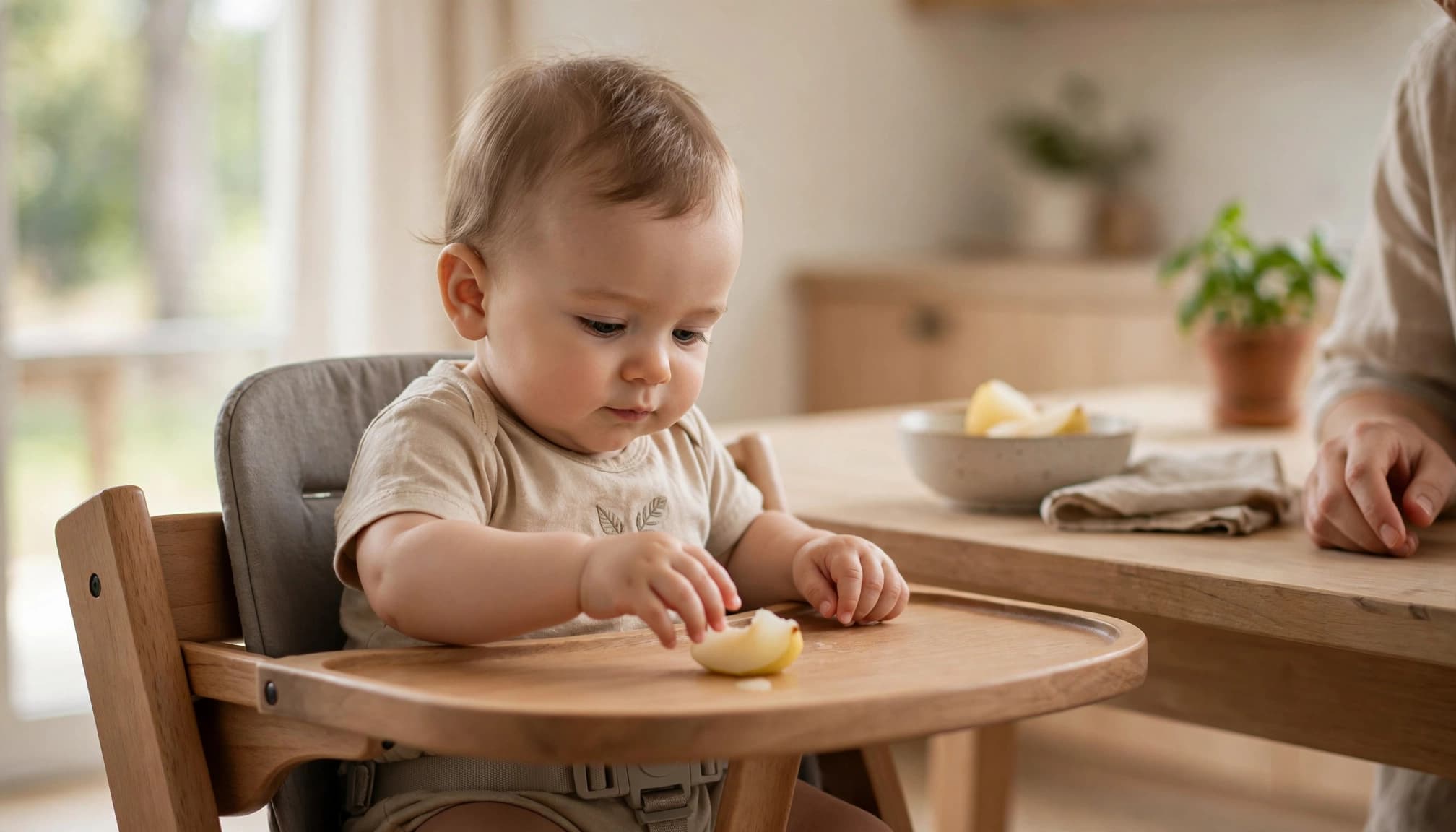
Keep milk feeds central while solids are new
Breast milk or infant formula remains a major source of nutrition during the transition to solid foods. Early meals don't need to replace regular milk feeds. Continue your usual feeding routine as your baby learns to taste, move, and swallow foods.
Offer solids when your baby is awake and comfortable, then follow their cues. Some meals may last only a short time, and some may include little or no swallowing. That alone doesn't tell you whether your baby is getting enough overall.
As your baby grows, solids gradually take on a larger role. If you're concerned about intake, growth, or how milk feeds fit with meals, your pediatrician can advise you based on your baby's age and health.
When to contact your pediatrician
Occasional refusal is different from a pattern that affects growth, hydration, or your baby's ability to eat safely. Share what you're seeing with your pediatrician if feeding concerns persist or worsen.
Call about ongoing refusal or feeding difficulty
The AAP advises contacting your child's doctor during office hours if a baby older than 9 months refuses most solid foods, is losing weight, or has frequent feeding problems. Also discuss repeated coughing or choking during meals, or ongoing difficulty moving food around and swallowing.
It may help to describe which textures your baby accepts, how often refusal happens, and whether feeding is stressful. That information gives the pediatrician a clearer picture than a single difficult meal.
Seek prompt help for signs of dehydration
Get prompt medical advice if your baby has no urine for more than 8 hours, a very dry mouth, no tears, or is drinking very little or nothing for more than 8 hours. These signs deserve attention, especially if your baby also seems unwell.
For trouble breathing, seek emergency help. If your baby has an immediate choking episode, treat it as an emergency rather than waiting to see whether future meals go better.
Know the difference between gagging and choking
Gagging can happen as babies learn to eat. It's usually noisy, while choking may be quiet and can block breathing. The NHS advises parents to treat choking as dangerous and learn the difference.
Keep your baby sitting upright in a stable seat and stay within reach during every meal. Match food shapes and textures to your baby's skills, and don't feed while they're lying down, crawling, or moving around. If you're unsure whether an episode was gagging or choking, contact your pediatrician for guidance.
Make feeding manageable away from home
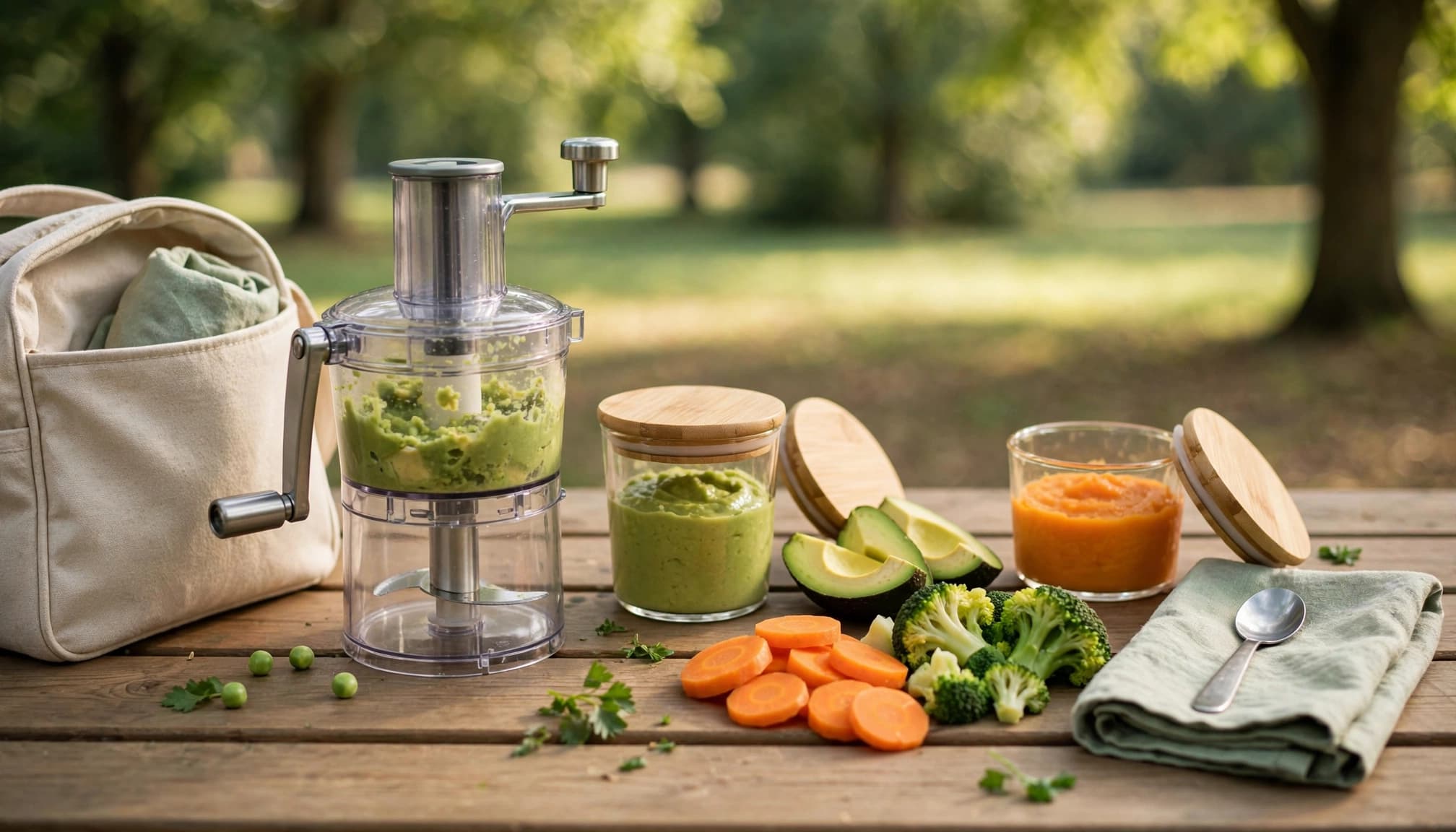
An outing doesn't need to disrupt a low-pressure routine. You can bring a familiar food your baby already handles, along with a clean bowl and spoon. Keep prepared perishable food chilled in an insulated bag with ice packs, and offer only a small portion at a time.
At a meal out, plain soft foods may be easier to adapt than heavily seasoned dishes. Mash a suitable portion to the texture your baby can manage, check that it's not too hot, and supervise while your baby eats. For more ideas, read about preparing baby food while traveling.
Key takeaways
- Start solids around 6 months when your baby shows readiness.
- Offer small tastes, follow your baby's cues, and avoid pressure.
- Keep breast milk or formula central while your baby learns.
- Contact your pediatrician about persistent refusal, weight loss, or feeding difficulty.
- Seek prompt help for signs of dehydration or trouble breathing.
Frequently asked questions
Should I keep offering solids if my baby refuses?
You can offer another small opportunity at a later meal, but stop when your baby turns away or loses interest. Keep the next offer calm and brief rather than trying to make up for what your baby didn't eat.
Is it normal for food to come back out of my baby's mouth?
Pushing food out with the tongue can be part of learning to eat. If your baby can't move food back to swallow, the AAP advises waiting a week or two before trying again. Ask your pediatrician if the difficulty continues or you're worried.
What if my baby is older than 9 months and still refuses most solids?
Contact your pediatrician during office hours. The AAP specifically recommends discussing refusal of most solid foods after 9 months, as well as weight loss or frequent feeding problems.
Keep mealtimes calm and responsive
A refusal doesn't mean you've failed or that your baby will never enjoy food. Check readiness, offer manageable tastes, and let your baby's cues guide the meal. Contact your pediatrician when refusal persists or safety concerns arise.
For outings, our Wonder Wean is a lightweight, compact manual baby food processor with minimal parts to clean. It needs no batteries, cords, or electricity, and can help mash suitable foods on the go. It costs $39.99. Buy Now