

Can Babies Eat Eggs? Safe Cooking and Serving Ideas
Eggs can be on your baby's menu long before their first birthday. Yes, babies can eat eggs once they're ready for solids, usually around 6 months, provided they're fully cooked.
The important details are readiness, allergy precautions, and a texture your baby can manage. You don't need special recipes, but dry egg chunks and runny yolks need different preparation before they belong on a baby's plate.
Start with a small taste, then use these cooking and serving ideas to make egg part of everyday meals.
Key Takeaways
- Offer eggs when your baby is developmentally ready for solids, generally around 6 months and never before 4 months.
- Cook both the white and yolk until firm, and cook egg dishes to 160°F (71°C).
- Start with a small amount, alongside a familiar food, when you can watch for a reaction.
- Mash egg for early spoon-feeding or offer soft, fully cooked strips when your baby can manage finger foods.
- Keep cooked eggs chilled during outings, and discard food left in your baby's served bowl.
When Can Babies Eat Eggs?
Look for feeding readiness
Your baby's skills matter more than a date on the calendar. Around 6 months, many babies can hold their head steady, sit upright with support, and reach for food.
They also need to swallow food rather than consistently push it back out. If you're unsure, ask your pediatrician about readiness before starting.
The American Academy of Pediatrics supports introducing common allergens during infancy rather than delaying them without a medical reason. However, that doesn't mean starting solids early just to offer egg.
You can introduce egg alongside other safe first foods for babies, using simple preparations that match your child's skills.
Offer whole egg as part of a varied diet
Fully cooked whole egg provides protein, fat, and choline, a nutrient involved in brain development. Both the yolk and white can fit into baby meals.
There's no need to separate them for a baby without a diagnosed egg allergy. However, egg shouldn't replace all other protein or iron-rich foods.
Continue offering foods such as soft lentils, tender meat, beans, and iron-fortified infant cereal. Breast milk or formula remains your baby's main source of nutrition during the first year, while solids gradually add nutrients and feeding practice.
Introduce Egg With Allergy Precautions
Make the first taste easy to track
Choose a day when your baby is well and you have time to stay nearby afterward. Offer a small amount of thoroughly cooked egg alone or mixed into a food they've already tolerated.
For example, mash egg into familiar avocado or sweet potato. Avoid adding another new allergen, such as yogurt, during the same first tasting.
If your baby has severe eczema, a known food allergy, or a previous reaction, speak with their clinician first. Most babies don't need routine allergy testing before introduction.
Once your baby tolerates egg, keep offering it regularly in suitable forms. There isn't one universal egg portion or schedule for every baby. These steps for introducing common allergens can help you plan other first tastes, too.
Recognize symptoms and act promptly
Food allergy symptoms often start within minutes to two hours, although some reactions occur later. Watch for hives, swelling, vomiting, coughing, or wheezing.
Stop feeding egg if symptoms appear. Contact your child's clinician about mild symptoms and whether further assessment is needed before another serving.
Call 911 immediately for breathing difficulty, tongue swelling, or a pale, limp, or faint appearance. Repeated vomiting, widespread hives, facial swelling, or sudden unusual sleepiness also need urgent medical attention.
If your child has a prescribed allergy action plan, follow it, including epinephrine instructions. Don't wait for serious symptoms to pass.
Cook Eggs Thoroughly Before Serving
Thorough cooking reduces the risk of foodborne illness, including Salmonella. Organic or pasture-raised eggs still need the same safe preparation.
For scrambled eggs, cook until completely set, with no wet or liquid areas. Keep the texture tender by using gentle heat rather than leaving the center undercooked.
Hard-boiled eggs should have firm whites and yolks throughout. Likewise, cook an omelet completely before slicing it for your baby.
The USDA recommends an internal temperature of 160°F (71°C) for egg dishes, such as casseroles. Use a food thermometer rather than judging those dishes by their browned surface.
Skip runny yolks, soft-boiled eggs, raw batter, and homemade sauces containing uncooked egg. Even if an adult enjoys these foods, they're unsuitable choices for an infant.
Mashing changes an egg's texture, but it doesn't make an undercooked egg safe.
Wash your hands after handling raw eggs, and clean utensils and work surfaces before preparing the baby's portion. Keep raw egg away from ready-to-eat ingredients.
Finally, let cooked egg cool to a comfortable eating temperature. Check the middle of the portion, because the surface can feel cool while the center remains hot.
Match Egg Texture and Size to Feeding Skills
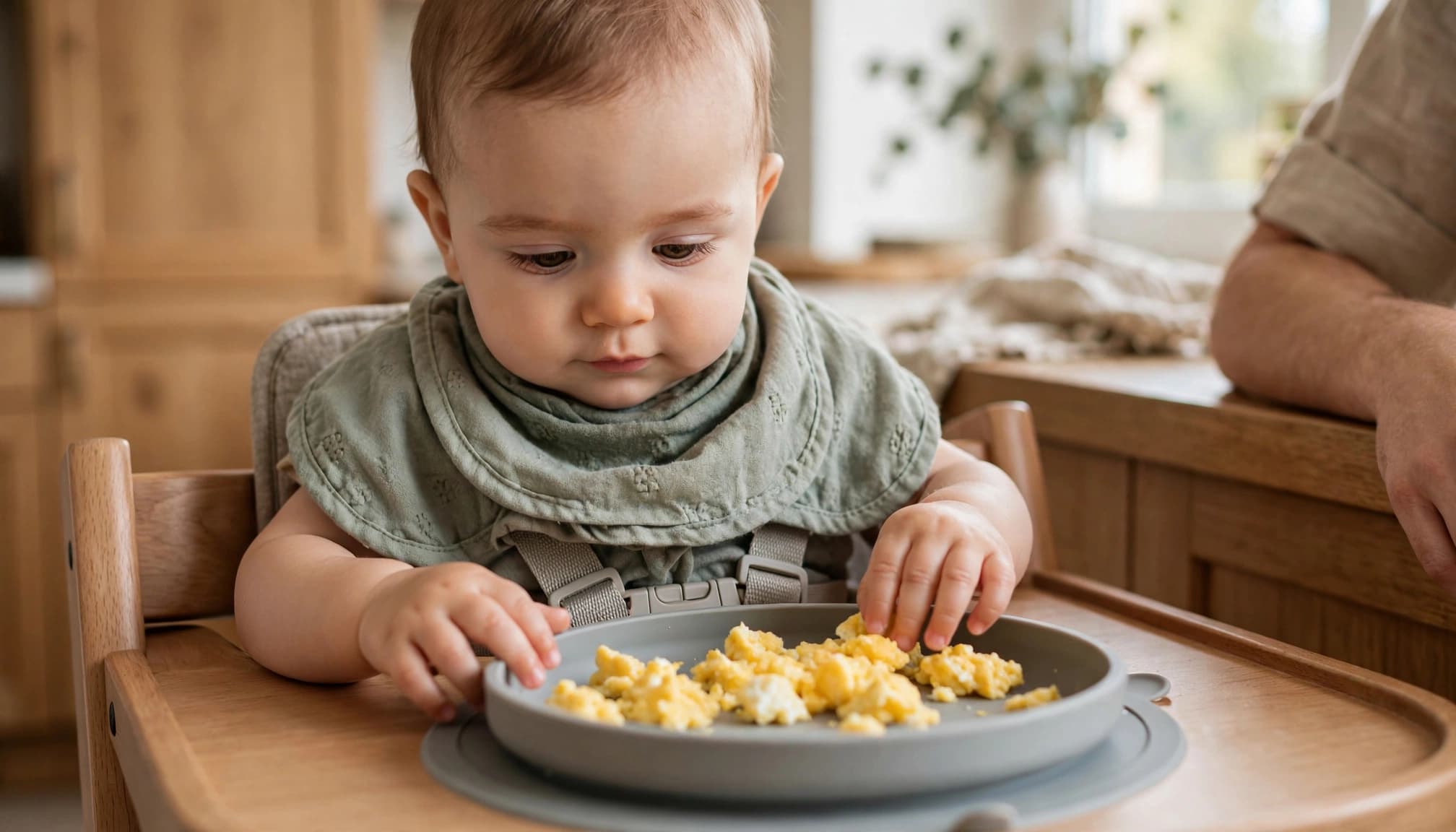
A nutritious ingredient still needs a suitable texture. Follow your baby's current abilities rather than assuming every child of the same age needs identical pieces.
Smooth and mashed egg for early eaters
For babies beginning spoon-feeding, finely mash a fully cooked hard-boiled egg. Add familiar avocado, vegetable puree, or a little water to soften the mixture.
Check carefully for firm white pieces. Hard-boiled egg white can feel springy, while plain yolk can feel dry and crumbly.
You can also mash fully set scrambled egg into cooked sweet potato. Aim for a moist, spoonable texture without hard lumps.
Offer small spoonfuls and let your baby set the pace. Turning away or closing their mouth means it's time to pause, even if food remains.
Soft strips and pieces for self-feeding
When your baby can manage graspable foods, offer a soft, fully cooked omelet in broad strips that extend beyond their fist. Avoid browned, tough edges or rubbery pieces.
As a more precise finger-and-thumb grasp develops, small, soft scrambled egg pieces become easier to pick up. However, size alone doesn't make a firm piece safe.
Egg should squash easily between your fingers. Adapt the texture if your baby struggles, and use this flexible approach to purees and finger foods rather than rushing.
Always seat your baby upright and stay within arm's reach. Learn infant choking first aid before offering finger foods; supervision alone can't prevent every incident.
Simple Egg Meals With Familiar Ingredients
Once egg is tolerated, you can combine it with foods your baby already knows. Plain ingredients make it easier to adapt a family meal without a separate recipe.
These combinations offer different textures for different feeding skills.
| Meal idea | Preparation | Suitable serving texture |
|---|---|---|
| Egg and avocado | Mash fully cooked egg into ripe avocado. | Smooth mash for early spoon-feeding. |
| Egg and sweet potato | Combine fully set scrambled egg with soft cooked sweet potato. | Fine mash or soft lumps as skills develop. |
| Vegetable omelet | Add finely chopped, cooked zucchini to egg and cook completely. | Soft, broad strips for babies managing finger foods. |
The useful starting point is a familiar ingredient and a manageable texture. You don't need to introduce several foods in one meal.
If you add plain pasteurized yogurt, first check that your baby has already tolerated dairy. Similarly, introduce wheat separately before offering egg with toast.
Skip added salt, and avoid honey before 12 months. For more variety across the week, use a whole-food meal plan for starting solids.
Begin with a small serving, then offer more if your baby remains interested. A few bites can be enough during early feeding practice.
Store and Carry Egg Meals Safely
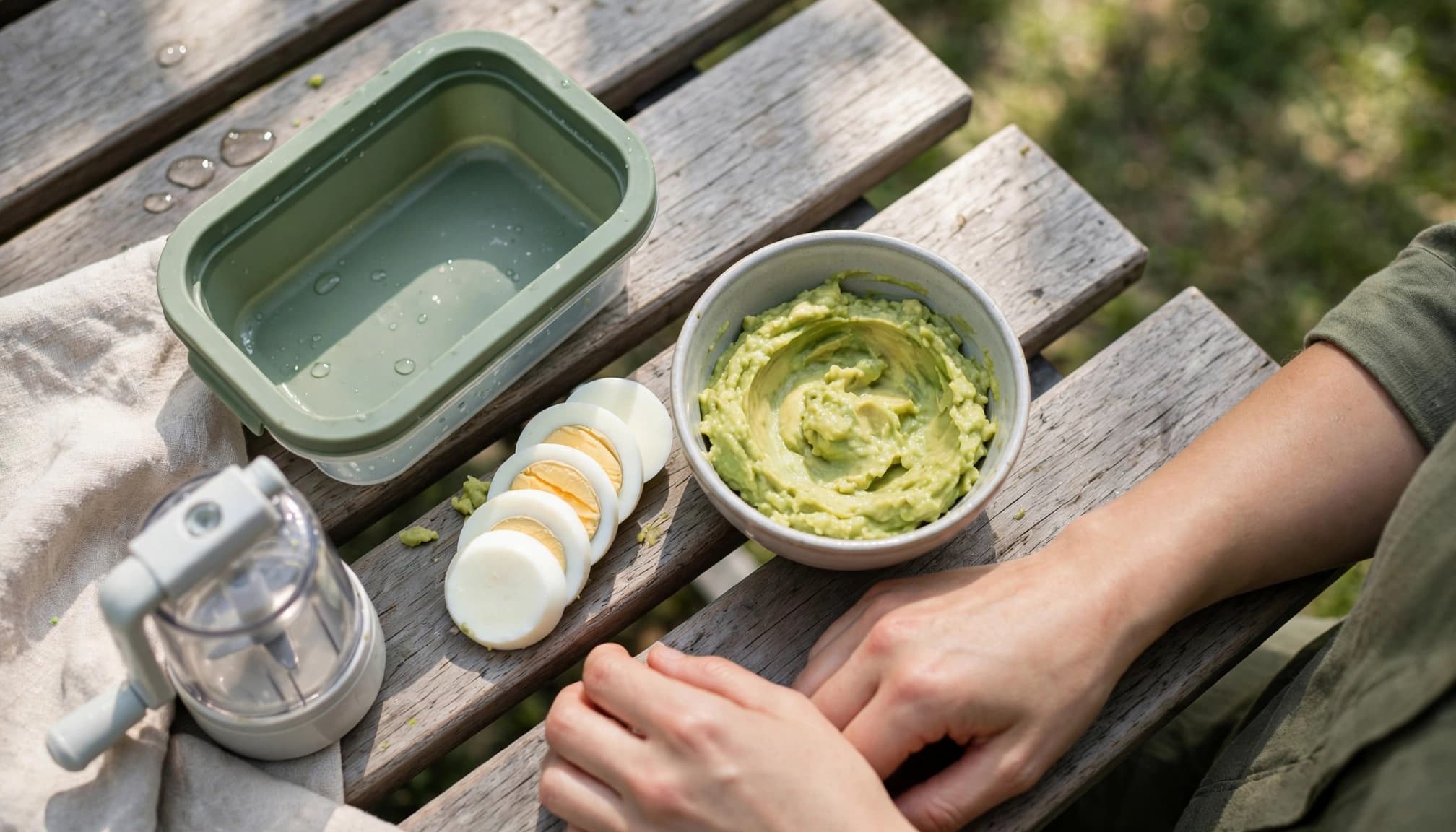
Refrigerate promptly and handle leftovers carefully
Keep cooked eggs refrigerated at 40°F (4°C) or below. Refrigerate them within two hours of cooking, using shallow containers so egg dishes cool promptly.
Under proper refrigeration, hard-cooked eggs keep for one week. Use leftover cooked egg dishes within three to four days.
Reheat leftover egg dishes to 165°F (74°C), then cool the baby's portion before serving. Stir mashed mixtures and check for hot spots.
These storage limits apply to food kept separate from your baby's mouth. Once their spoon or hands have contaminated a served portion, discard what remains.
Use a clean serving spoon to transfer food from the main container into a separate bowl.
Keep portable meals cold until mealtime
For outings, pack cooked egg in an insulated bag with ice packs. A compact blender or food container doesn't replace refrigeration.
Discard egg left unrefrigerated for more than two hours, or more than one hour when temperatures exceed 90°F (32°C). Don't rely on smell to judge safety.
At a restaurant, request fully cooked, plain egg and ask about ingredients when allergies are a concern. Use familiar foods on trips rather than introducing egg for the first time away from home.
Stop traveling before feeding. Your baby needs a stable, upright seat and your attention, not a meal in a moving car.
Frequently Asked Questions About Eggs for Babies
How much egg should I offer first?
Begin with a small taste rather than a full egg. If your baby tolerates it and remains interested, offer more during the meal. There isn't a universal first-serving amount, so follow appetite cues and any personalized advice from your clinician.
Can my baby have only the yolk?
Yes, thoroughly cooked yolk can be mashed and offered. However, yolk alone doesn't introduce all the proteins found in whole egg. Unless your clinician recommends otherwise, you can offer the fully cooked white and yolk together in an appropriate texture.
Does gagging mean my baby is allergic to egg?
Gagging alone usually relates to managing texture, but don't assume all coughing is harmless. A gagging baby can generally breathe and make sounds. Difficulty breathing, wheezing, swelling, or other allergy symptoms need medical attention. A baby unable to breathe, cry, or cough needs immediate choking first aid.
Make Egg Part of Safe, Everyday Feeding
Eggs can be a practical baby food when you combine thorough cooking with a texture your child can handle. Introduce them thoughtfully, keep tolerated egg in rotation, and maintain safe storage wherever you eat.
Wonder Wean's compact, hand-powered pocket blender helps parents turn suitable foods into fresh baby meals on the go without electricity. Use it to mash fully cooked egg with familiar avocado or soft vegetables, then check the texture before serving. For a portable tool that fits your feeding kit, Buy Now.