

Fish for Babies: Safe Types and Simple Serving Ideas
A family fish dinner can become your baby's meal, but a few preparation steps make all the difference. Choosing fish for babies means checking mercury levels, removing every bone, and serving a texture your little one can manage.
You don't need special baby-food recipes to offer this nutritious food, just careful preparation and a calm first introduction. Start with readiness, then choose a lower-mercury fish that fits your family meals.
Key Takeaways
- Offer fully cooked fish around 6 months, once your baby shows readiness for solids, and introduce it as a common allergen.
- Choose lower-mercury options such as salmon, pollock, trout, and tilapia, then check every serving for bones.
- Keep fish moist and soft, supervise meals closely, and refrigerate leftovers promptly.
When Can Babies Start Eating Fish?
Look for readiness around 6 months
FDA/EPA guidance says babies can begin eating fish at about 6 months, when they're developmentally ready for complementary foods. Age alone doesn't tell you whether your baby can manage a meal.
Look for steady head and neck control, sitting upright with support, and swallowing food rather than pushing it out. Your baby may also reach toward food or bring objects to their mouth.
If your baby was born prematurely or has swallowing difficulties, ask their clinician for individual guidance before starting.
Make fish part of a varied diet
Fish provides protein and nutrients such as vitamin B12. Oily fish, including salmon, also provides omega-3 fats, including DHA, which supports brain development.
However, fish doesn't need to replace other nutritious first foods. Continue offering varied meals with vegetables and iron-rich first foods, including beans, lentils, and appropriately prepared meat.
Breast milk or infant formula remains your baby's main drink during the first year. Solids gradually add nutrients, flavors, and eating practice alongside milk feeds.
Choosing Lower-Mercury Fish for Babies
The FDA/EPA fish chart groups seafood by mercury level. Its "Best Choices" category offers a useful starting point for choosing fish for babies.
These options work well when fully cooked and carefully prepared.
| Fish | Why it works | Preparation reminder |
|---|---|---|
| Salmon | Soft flakes and omega-3 fats | Remove skin and check for pin bones. |
| Pollock | Mild flavor and tender flesh | Mash with vegetables to keep it moist. |
| Trout | Tender flesh and omega-3 fats | Inspect carefully for fine bones. |
| Tilapia | Mild taste and soft texture | Cook thoroughly, then flake and mash. |
| Cod or haddock | Easy to combine with family foods | Add moisture if the flesh seems dry. |
| Sardines | A convenient canned option | Choose lower-sodium options and remove all bones. |
Vary your choices rather than relying on one species. Frozen plain fillets can be just as practical as fresh fish.
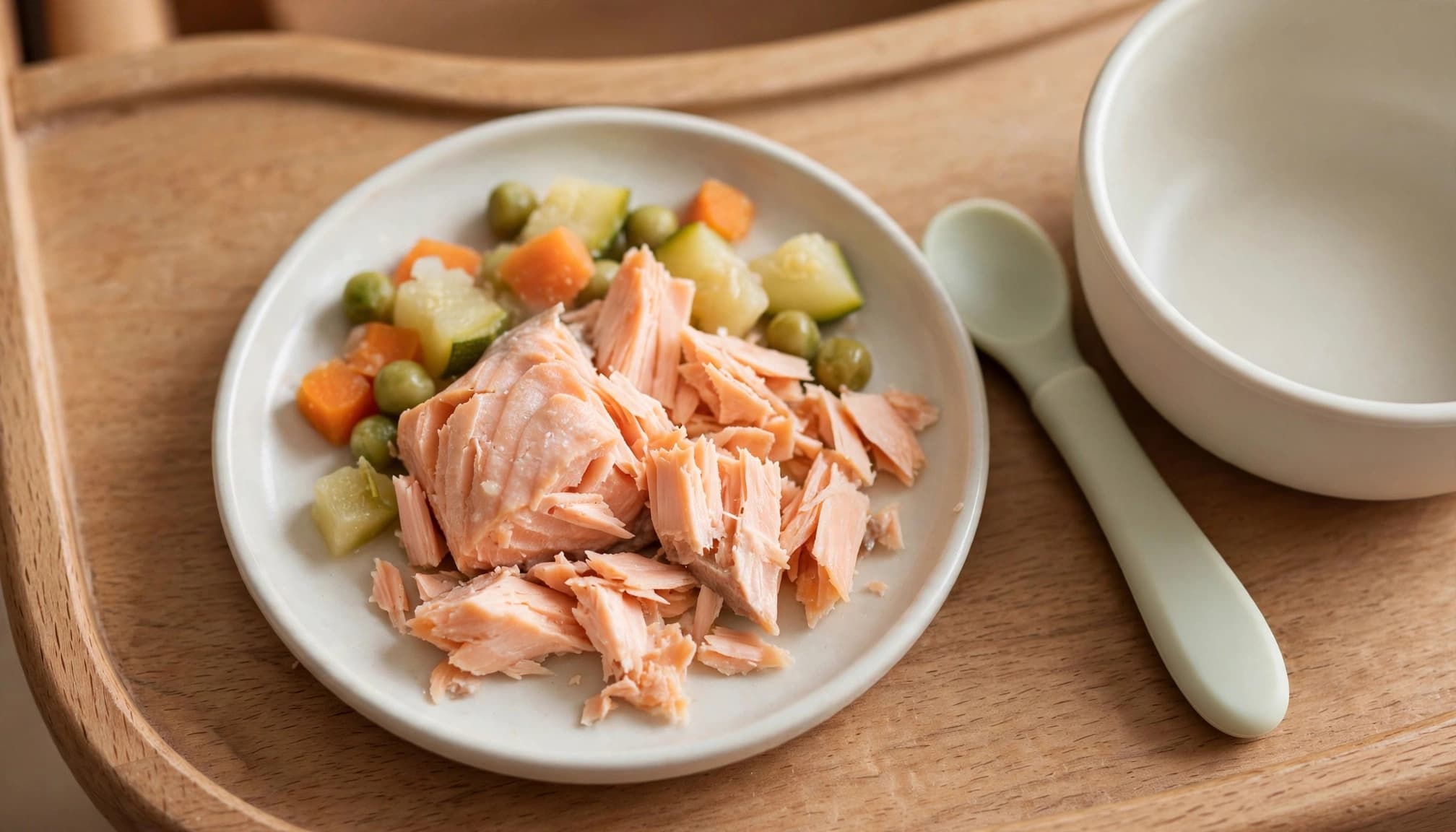
Avoid high-mercury fish, including shark, swordfish, king mackerel, marlin, orange roughy, bigeye tuna, and tilefish from the Gulf of Mexico. Atlantic mackerel is a different species from king mackerel, so check the label.
Canned light tuna belongs to the FDA/EPA "Best Choices" category. Albacore and bigeye tuna are different choices, so "tuna" alone isn't enough information.
For fish caught by family or friends, check local fish advisories before serving it. Mercury content isn't something you can judge by appearance.
Introducing Fish as a Common Allergen
Plan a calm first taste
Fish is a common allergen, but delaying it beyond the introduction of other solids hasn't been shown to prevent food allergy.
Offer a small taste when your baby is healthy and you're able to observe them afterward. A daytime meal at home makes this easier than a first taste during travel.
Serve plain fish or combine it with a food your baby already tolerates. Avoid introducing another new allergen in the same meal, because a reaction would be harder to trace.
Ask your pediatrician first if your baby has severe eczema, a known food allergy, or a previous reaction. Wonder Wean's guide to introducing common allergens safely offers more planning tips.
Know which symptoms need help
Watch for hives, facial swelling, vomiting, coughing, or changes in breathing. Reactions often begin within minutes to two hours, although some symptoms appear later.
Stop feeding the food and contact your baby's clinician if a reaction occurs. Don't offer fish again after a suspected reaction without medical advice.
Call emergency services immediately for trouble breathing, tongue swelling, sudden limpness, or severe symptoms affecting more than one body system. Follow any allergy emergency plan your clinician has provided.
FDA/EPA advises watching for allergy symptoms for several days before offering fish a second time. Once tolerated, include it in your baby's usual meal rotation.
Cook Fish Thoroughly and Remove Every Bone
Use a thermometer when cooking
Bake, steam, or poach fish until it reaches 145°F (63°C) in the thickest part, following USDA guidance. A food thermometer gives you a more reliable check than appearance alone.
After cooking, let the fish cool to a comfortable eating temperature. Keep raw fish separate from cooked food, and wash your hands, utensils, and preparation surfaces.
Don't serve raw or undercooked fish, including sushi or ceviche. Cold-smoked fish also isn't a suitable substitute for thoroughly cooked fish.
Set aside your baby's portion before adding salty sauces. Plain fish needs no added salt, and moist cooking helps prevent a dry texture.
Check cooked flakes with your fingers
A fillet labeled "boneless" still needs inspection. Fine pin bones can remain after processing, and cooked fish may hide them between flakes.
Remove the skin, spread the cooked flesh onto a clean plate, and separate it carefully. Use clean fingers to feel through each small portion, then inspect again before serving.
Check canned fish too. For a baby meal, choose boneless options where possible and remove any bones you find.
A blender or food mill doesn't replace a bone check. Remove every bone before mashing or processing fish.
If you can't confidently check a piece, don't serve it to your baby.
Match Fish Textures to Your Baby's Skills
For babies beginning solids
For a beginner around 6 months, fully cooked fish can be mashed or blended into a familiar vegetable puree. Add a little water, breast milk, or prepared formula if needed.
Aim for a moist, spoonable texture without dry flakes or firm pieces. Offer food responsively and stop when your baby turns away or closes their mouth.
A preloaded spoon can also let a baby explore self-feeding. Smooth puree isn't the only starting texture, but every serving must fit your baby's current abilities.
As eating and grasping skills develop
As your baby manages food more confidently, progress toward thicker mashes and soft, finely flaked fish. Age ranges are approximate, so watch their eating skills rather than the calendar.
Later, when a pincer grasp develops, small, soft flakes can become finger food. Avoid firm, dry chunks that don't squash easily between your fingers.
Always seat your baby upright in a stable high chair and stay within arm's reach. Choking may be quiet, with an inability to breathe or cry, so learn infant choking first aid before starting solids.
Simple Fish Serving Ideas for Family Meals
Keep the ingredient list short for first introductions. Once your baby tolerates the components, familiar vegetables can help you turn fish into a satisfying meal.
Salmon, potato, and broccoli make an easy combination. Cook everything thoroughly, remove all salmon bones, and mash together with a little water. For a beginner, blend until smooth; later, leave soft lumps.
Cod or pollock works well with mashed sweet potato. Because white fish can become dry, add enough moisture to keep the mixture soft. You can set aside these ingredients while preparing your own dinner.
For a quick meal, mash boneless canned salmon into soft potato or avocado. Check the label for added salt, inspect for bones, and use only ingredients your baby already tolerates.
Wonder Wean's vegetable mash recipes offer more simple pairings. Soft zucchini, carrots, and squash can all accompany carefully prepared fish.
For older babies managing textured meals, stir finely flaked fish into very soft pasta with a familiar vegetable sauce. Introduce wheat separately first if pasta is new.
Don't push your baby to finish. A few tastes can be enough while they're learning, and accepting fish may take several relaxed offers.
Store Fish Safely and Plan for Outings
Cooked fish needs the same careful handling as other perishable foods. Refrigerate it within two hours, or within one hour when temperatures exceed 90°F (32°C).
Keep your refrigerator at 40°F (4°C) or below. Store an untouched portion separately from the bowl your baby eats from, because saliva introduces bacteria.
When reheating leftovers, bring them to 165°F (74°C), then cool them before serving. Discard food left in your baby's used bowl.
For outings, carry prepared fish in an insulated bag with ice packs. Keep it cold until mealtime rather than leaving it in a handbag or warm car.
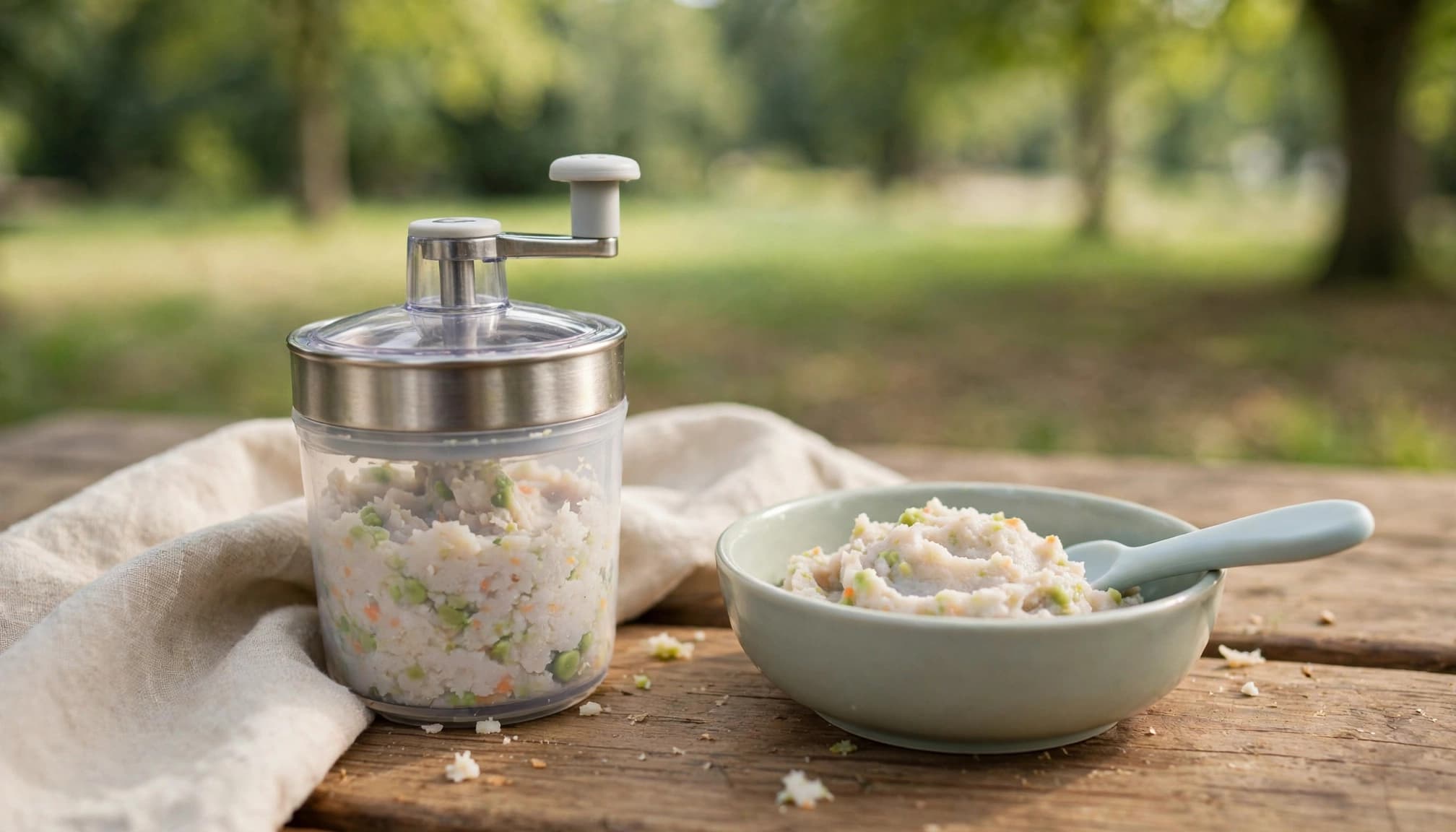
Choose fish your baby has already tolerated when you're away from home. At a restaurant, request plain, fully cooked fish, check it yourself for bones, and find suitable upright seating.
A compact, hand-powered Wonder Wean can help you prepare a softer texture from cooked fish and vegetables without electricity. Remove bones first, use clean equipment, and remember that processing doesn't cook food or make unsafe food safe.
Make Fish an Easy Part of Family Meals
Safe fish for babies starts with a lower-mercury choice, thorough cooking, and careful bone removal. Match the texture to your baby's skills and keep first introductions calm and supervised.
The Wonder Wean helps you turn suitable everyday foods into fresh baby meals, even on the go. Its compact, hand-powered design makes it practical to prepare carefully checked, fully cooked fish with soft vegetables away from your kitchen. Buy Now to add a portable feeding option to your family's routine.