

Can Babies Eat Bananas? Safe Serving by Stage
Yes, babies can eat bananas once they're ready for solid foods. A ripe banana can be mashed, pureed, or offered in a soft shape your baby can grasp.
Preparing bananas for babies starts with readiness and texture, rather than a strict feeding schedule. Your baby's posture, hand skills, and experience with food will help you choose how to serve each portion.
Key Takeaways
Most babies begin solids at around 6 months, when they show signs of readiness. Start with a small portion and choose a texture your baby can manage comfortably.
A soft mash works well on a spoon, while a graspable piece gives a baby the chance to practice self-feeding. During every meal, keep your baby seated upright and stay close enough to watch.
When Can Babies Start Eating Solid Foods?
Babies generally start solids around 6 months. Before offering any solid food, look for several readiness signs together rather than relying on age alone.
Your baby should be able to sit upright with support and hold their head and neck steady. They may reach for food, bring objects to their mouth, and open their mouth when a spoon approaches. They also need to manage food in their mouth and swallow it rather than consistently pushing it back out.
Watching you eat can show interest, but it doesn't tell you everything about readiness. If your baby was born prematurely or has a condition that affects feeding or swallowing, talk with your pediatrician about when and how to begin.
Breast milk or infant formula remains your baby's main source of nutrition during the first year. Early meals add eating practice and a growing variety of foods alongside regular milk feeds.
Once your baby is ready, you don't need a large serving. A little food on a spoon or tray gives them room to explore without pressure to finish.
How to Choose and Prepare a Ripe Banana
Choose a banana with soft flesh that mashes easily with a fork. A yellow peel with some brown spots can be a useful sign of ripeness. If the flesh feels firm and doesn't squash easily between your fingers, choose a softer one.
Wash your hands before preparing food, and use a clean bowl, fork, spoon, or baby-food maker. Remove the peel, then prepare a small amount in the texture your baby handles comfortably.
Plain banana is an easy place to start. There's no need to add sugar or honey. Honey isn't suitable for babies under 12 months, even when mixed into another food.
If you're serving the fruit on its own, you can make a fresh portion with a fork. For a smoother texture, a manual food maker or blender can help break it down further.
How to Prepare Bananas for Babies
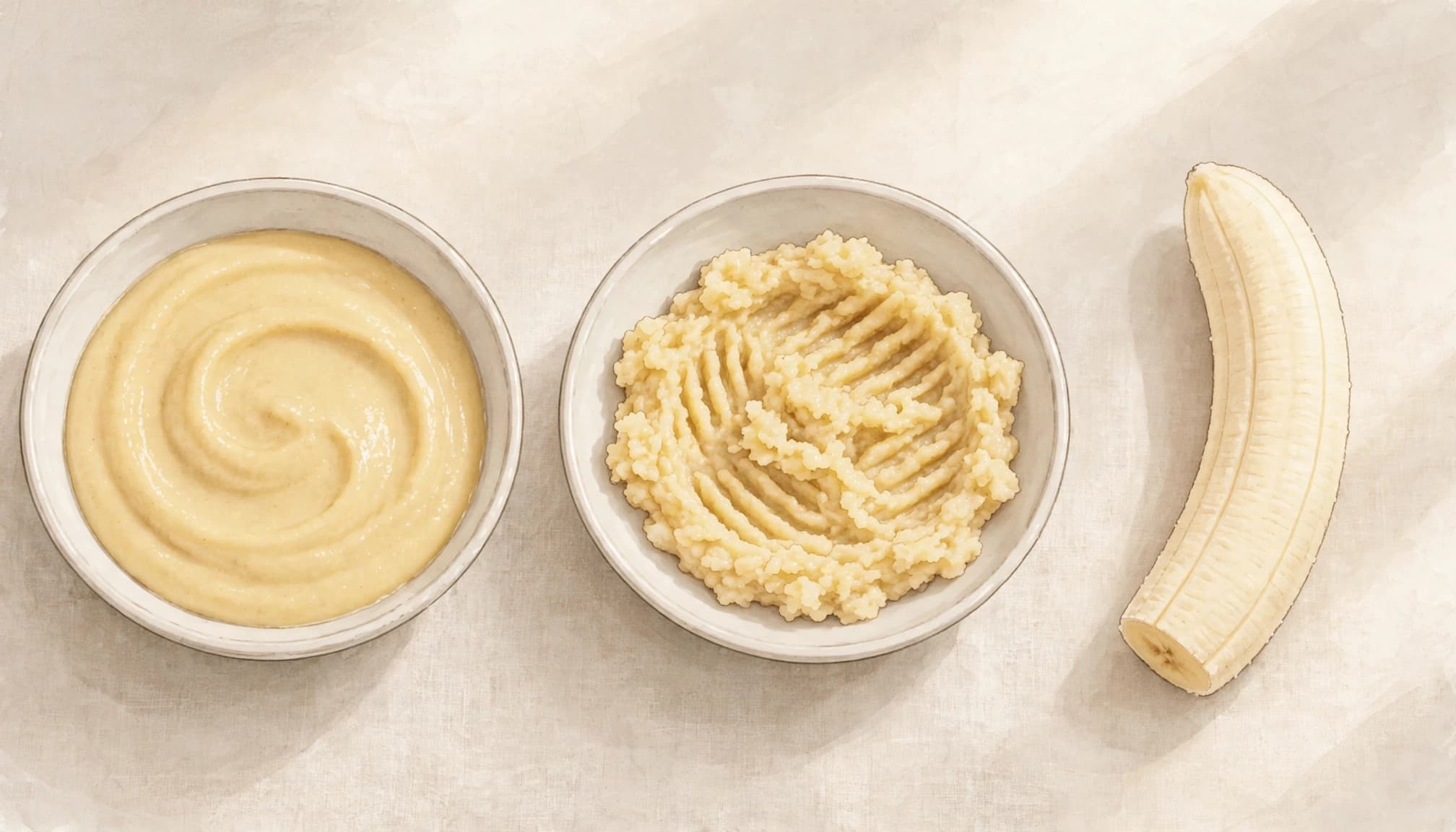
Smooth puree and soft mash are both practical options for spoon-feeding. The right choice depends on what your baby can manage, not on reaching a particular month.
Smooth banana puree
For a smooth serving, peel a ripe banana and blend or mash it until the texture is even. If needed, stir in a little water, breast milk, or prepared infant formula.
Add liquid gradually. A spoonable puree can be easier to offer than one that runs off the spoon. You can hold the spoon for your baby or place a small amount on it and let them bring it toward their mouth.
Offer the spoon and wait for your baby to open their mouth. If they turn away or close their lips, give them a break rather than trying to persuade them to take another bite.
Soft mashed banana
Mash ripe banana with a fork for a thicker texture. Press out any firm pieces, then leave small, soft lumps if your baby is comfortable managing them.
Some babies begin with a soft mash, while others benefit from a smoother texture first. As your baby gains experience, a little texture gives them practice moving food around their mouth.
Our guide to safe baby food textures offers more ideas for matching food to your baby's feeding skills.
Serving Banana for Self-Feeding
Some babies enjoy holding food as soon as they start solids. Others need more time to coordinate reaching, grasping, and bringing food to their mouth. You can offer a spoon, finger food, or both during the same meal.
For an early whole-hand grasp, a soft banana spear can give your baby something to hold. Peel the fruit completely, make sure it squashes easily between your fingers, and offer it while your baby sits upright. Stay close and watch how they handle it.
Banana can be slippery, so it may take several tries for your baby to pick it up. A small amount of mash on a preloaded spoon is another way to let them take part without needing to grip the fruit itself.
As hand control improves, babies may begin picking up small, soft pieces between a finger and thumb. Follow your baby's skills rather than changing the serving simply because they've reached a certain age. Our article on purees and finger foods for starting solids covers ways to use both approaches.
Keep Mealtimes Safe and Supervised
A calm setup gives your baby the chance to focus on eating. Put them in a stable high chair or supported feeding seat with their body upright and their head steady.
Stay close during meals
Sit with your baby and watch them throughout the meal. Avoid offering food while they're lying down, crawling, playing, or riding in a moving car. If you're traveling, stop and find a suitable place to sit before serving food.
Let your baby control the pace. If you're spoon-feeding, offer the spoon rather than placing food into a closed mouth. Give them time to move and swallow each mouthful before offering more.
Know the difference between gagging and choking
Gagging can happen as babies learn to manage food. A gagging baby may cough, make sounds, or push food forward with their tongue. Stay close, remain calm, and give them a chance to work it out.
Choking is an emergency. A baby who can't breathe, cry, or cough effectively needs immediate help. Call emergency services and give appropriate infant choking first aid. An infant first-aid course can help you prepare before you need those skills.
Foods to Serve Alongside Banana
Banana can be part of a varied menu, but your baby also needs opportunities to eat other foods. Offer different flavors and textures over time, including foods that provide iron.
Pair it with familiar foods
Once your baby has tried the individual ingredients, you can mix mashed banana into plain, full-fat yogurt or soft oatmeal. Choose pasteurized yogurt without added sugar, and prepare the oatmeal in a texture your baby manages comfortably.
A little banana can also be offered alongside soft avocado. For another easy fruit to prepare, see our guide to serving avocado to babies.
You don't have to combine foods at every meal. Offering them separately lets your baby experience each flavor and gives you a chance to notice what they enjoy.
Make room for iron-rich choices
As solids become part of your routine, include iron-rich foods such as soft meat, cooked lentils, mashed beans, or iron-fortified infant cereal. Prepare each food to match your baby's feeding skills.
For example, mash well-cooked lentils until soft, or prepare infant cereal according to its directions. Banana can be served alongside those foods, but it doesn't need to be included in every meal.
How Much Should You Offer?
Start with a small amount and let your baby guide the rest. Early meals can be messy, and some food may end up on the tray, the floor, or your baby's hands. Touching and exploring food are part of learning to eat.
Appetite can vary between meals. Your baby may lean toward the spoon or reach for more on one occasion and turn away on another. When they lose interest, close their mouth, or turn their head, it's fine to end the meal.
There's no need to persuade your baby to finish a portion. Offer regular opportunities to eat, continue their usual milk feeds, and allow their appetite to change as they grow.
Preparing Fresh Food Away From Home
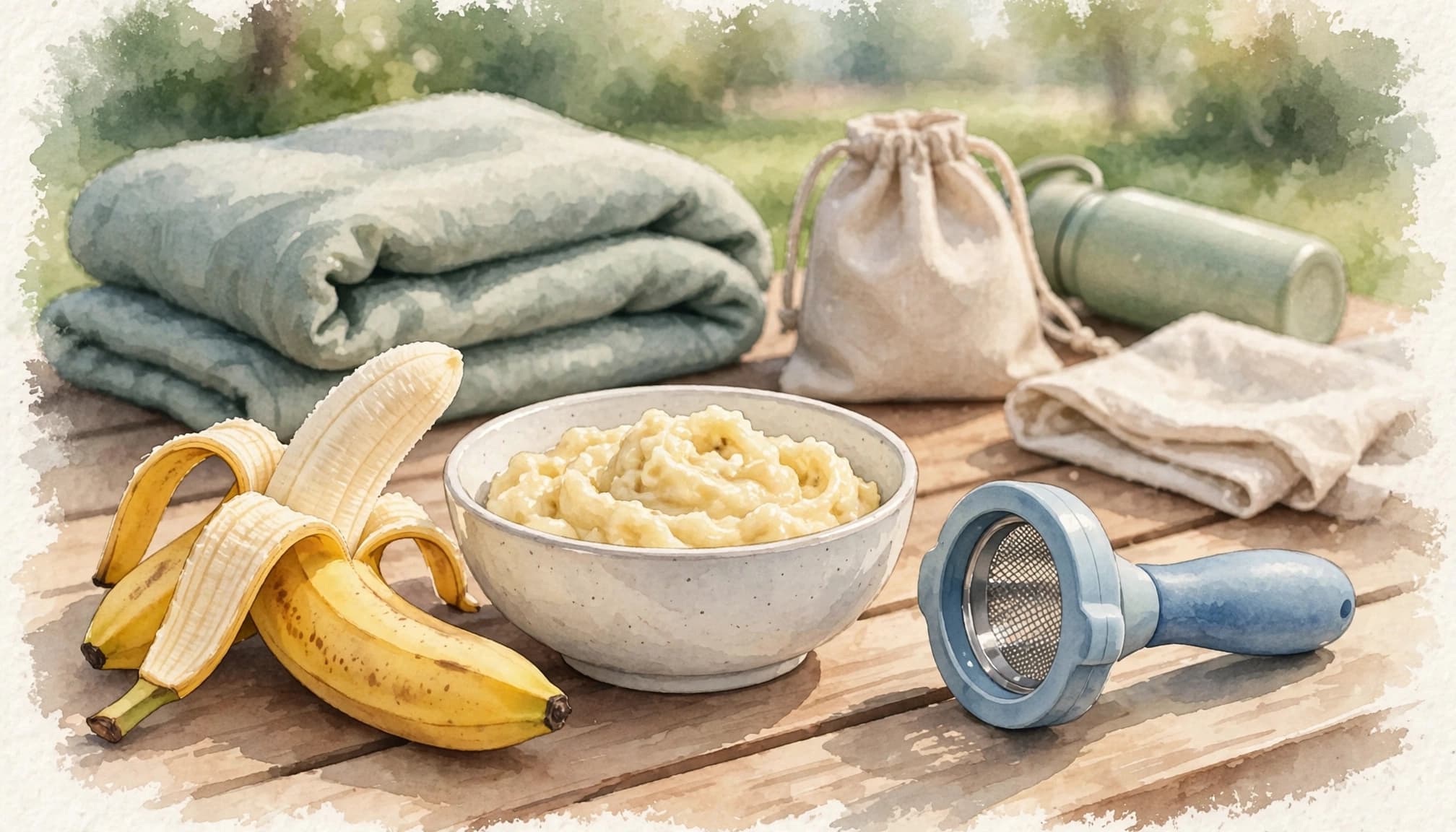
A whole banana and a few clean feeding supplies can make an outing feel more manageable. Bring a small bowl, spoon, bib, and wipes, then prepare a portion when your baby is ready to eat.
Choose a familiar texture for meals away from home. A busy restaurant or travel day may not be the best time to introduce a texture your baby hasn't tried before. Find a stable, upright place for your baby to sit, and stay with them throughout the meal.
For foods that need refrigeration, use an insulated bag with ice packs to keep them cold. Serve a small portion in a separate bowl, and discard food left in the bowl after your baby has eaten from it.
Frequently Asked Questions
Does banana need to be cooked for a baby?
A ripe, soft banana can be prepared without cooking. Peel it and mash, puree, or shape it to suit your baby's feeding skills.
Can a baby have banana on a preloaded spoon?
Yes. Put a small amount of smooth or softly mashed banana on the spoon and offer the handle to your baby. Give them time to bring it to their mouth without rushing.
Can you mix banana with infant cereal?
Yes. Once your baby has tried the ingredients, stir a little mashed banana into prepared infant cereal. Keep the mixture soft and spoonable, and follow the cereal's preparation directions.
What if my baby doesn't want banana?
Let them stop and offer another food. Babies can need repeated chances to become familiar with a flavor, but there's no need to pressure them to eat it.
Fresh Food Can Fit Your Routine
A ripe banana can be an easy food to prepare when your baby is ready for solids. Choose a texture that fits their skills, offer a small portion, and stay close while they eat.
Our Wonder Wean can help you prepare fresh foods at home or on the go. Its compact, hand-powered design mashes soft ingredients without batteries or electricity, so you can make a portion wherever your baby has a safe place to eat. You can Buy Now if you'd like to add it to your feeding routine.