

Zinc-Rich Foods for Babies Starting Solids
Zinc-rich foods for babies become important when breast milk or formula is no longer the only source of nutrition. Around 6 months, many babies are ready to explore complementary foods, including soft meat, beans, eggs, yogurt, and fortified infant cereal.
The best first foods are simple, nourishing, and prepared for your baby's current skills. You don't need complicated recipes, but you do need safe textures, close supervision, and a plan for introducing new foods.
Why Zinc Matters When Babies Start Solids
Zinc supports normal growth, immune function, and cell development. Babies need only small amounts, but their needs increase as they begin eating complementary foods.
Zinc needs change during the first year
The NIH Office of Dietary Supplements lists an adequate intake of 2 milligrams of zinc daily from birth through 6 months. The amount increases to 3 milligrams daily for babies ages 7 through 12 months. The CDC also lists 3 milligrams per day for children ages 7 to 24 months.
These figures apply to the whole day, not to one meal. Breast milk or iron-fortified infant formula remains a baby's main source of nutrition during the early stages of solids. Solid foods add important nutrients while your baby practices new flavors and textures.
Most healthy babies don't need a zinc supplement simply because they begin solids. Offer zinc-containing foods regularly, and ask your pediatrician about supplements if your baby was born prematurely, has a restricted diet, or has a medical concern.
Why zinc foods belong on the early menu
Zinc and iron-rich foods deserve regular attention during the second half of the first year. Meat provides zinc in a form the body can use well, while beans, lentils, eggs, dairy, and fortified cereals give families more choices.
Starting solids doesn't mean every meal needs to be perfectly balanced. A few spoonfuls of mashed beef, lentils, or fortified cereal can provide useful practice. Over time, repeated exposure helps your baby become familiar with these foods.
Zinc-Rich Foods for Babies
Many everyday foods can provide zinc when you prepare them in a soft, age-appropriate form. Begin with foods your baby can manage, then gradually increase thickness and texture as feeding skills develop.
Meat and seafood
Tender meat is one of the most useful zinc sources for babies. The USDA Dietary Guidelines review notes that beef contains about twice as much zinc as turkey, chicken, or pork.
Cook beef, poultry, pork, or lamb until fully done. Remove fat, skin, bones, and tough pieces. For a new eater, blend or finely mince the meat with breast milk, formula, water, unsalted broth, or a soft vegetable such as sweet potato. As your baby gains experience, offer finely shredded meat or very soft minced pieces.
Fully cooked, boneless fish can also fit into a baby's diet. Mash or flake it carefully, checking for bones before serving. Shellfish can be fully cooked and finely minced or blended, but introduce it as a potential allergen when your baby is ready.
Beans, lentils, and fortified cereal
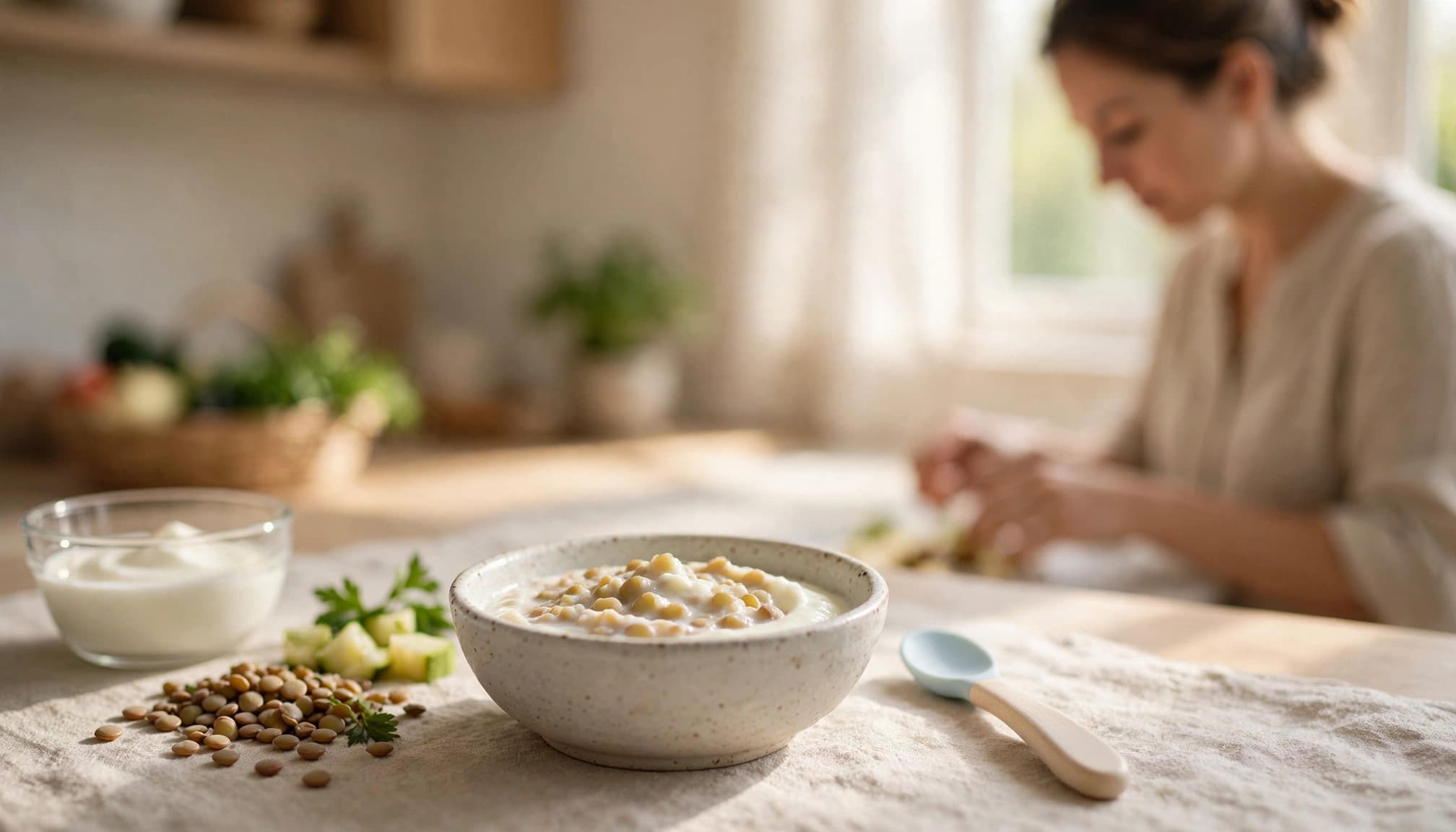
Mashed beans and lentils are practical plant-based choices. Cook them until they are very soft, then press them through a fork or blend them into a smooth puree. Remove loose skins, whole beans, and firm pieces that your baby may struggle to manage.
Iron-fortified infant cereal is another useful first-year food. Mix it with breast milk, formula, or water until it reaches a texture your baby can handle. Choose an unsweetened product and follow the preparation instructions on the package.
You can combine lentils with cooked squash or avocado. A small amount of olive oil can make a thick puree easier to swallow and more filling, although added fats aren't required for every serving.
Eggs and dairy foods
Fully cooked egg can provide zinc and protein. Offer scrambled egg that is soft and moist, or mash cooked egg with avocado, plain yogurt, or a soft vegetable. Avoid runny or undercooked egg.
Plain, pasteurized whole-milk yogurt is generally suitable once your baby starts solids. It can be served by spoon or mixed with mashed fruit, lentils, or thinned nut butter. Cow's milk can be an ingredient in foods before age 1, but it shouldn't replace breast milk or infant formula as your baby's main drink.
Cottage cheese may also work when it is soft and finely mashed. Check labels for added salt, and choose plain dairy foods whenever possible.
How to Serve Zinc-Rich Foods Safely
A nutritious ingredient can still cause choking if it is hard, round, sticky, or served in a large piece. Texture and shape matter as much as the food itself.
Match texture to your baby's skills
Many babies start with smooth purees or thick mashes. A puree doesn't need to be watery. A thicker texture that stays on a preloaded spoon can help your baby practice moving food in the mouth.
As skills improve, leave soft lumps in mashed food. Finely minced meat, mashed beans, shredded fish, and soft scrambled egg can provide more texture without requiring advanced chewing. Cook hard vegetables until they squash easily between your fingers.
For babies ready to self-feed, offer soft foods in shapes they can grasp. A strip of tender omelet or very soft sweet potato may be appropriate for one baby but too difficult for another. Watch your child's posture, control, and feeding skills rather than following age alone.
Change risky foods before serving
Never offer whole nuts, popcorn, thick spoonfuls of nut butter, hard raw apple, raw carrot coins, whole grapes, firm cheese chunks, or large pieces of meat. These foods can block the airway.
Thin smooth nut or seed butter with water, yogurt, breast milk, formula, or cereal. Crush or finely grind seeds. Cook carrots, apples, green beans, and broccoli until soft, then mash or cut them according to your baby's abilities.
Cut round foods lengthwise. Grapes and cherry tomatoes should be quartered lengthwise, with tough skins and seeds removed when needed. Remove fish bones, fruit pits, tough peels, and stringy vegetable parts.
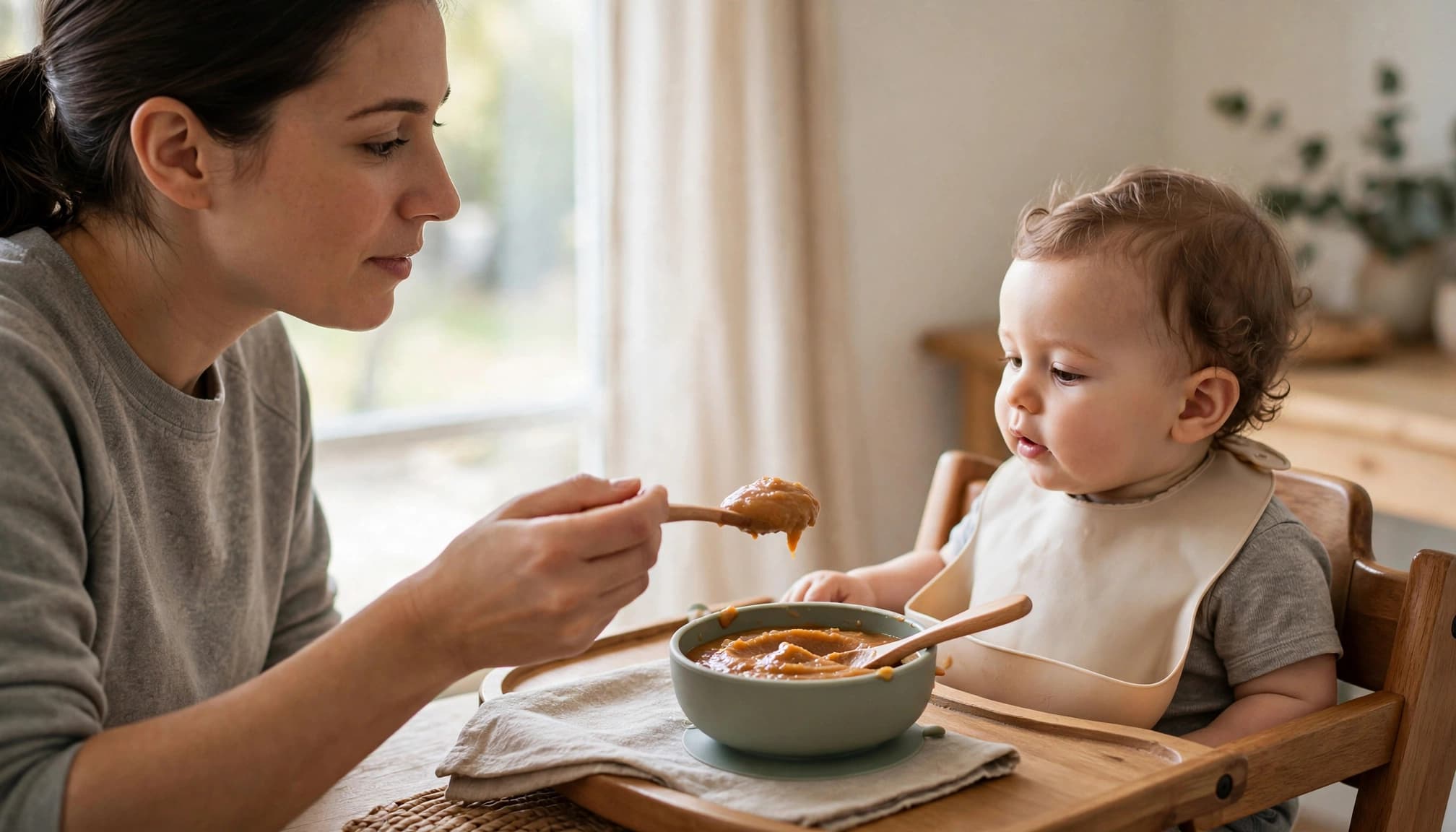
Seat your baby upright in a stable high chair. Stay within arm's reach and avoid feeding in a stroller, car seat, reclined seat, or moving vehicle. Gagging is often noisy and can happen while babies learn. Choking may be silent and requires immediate action. Learn infant choking first aid before your baby begins eating solids.
Introducing Allergens Alongside Zinc Foods
Egg, peanut, tree nuts, dairy, wheat, soy, sesame, fish, and shellfish are common allergens. Current guidance supports introducing these foods during infancy when your baby is developmentally ready, rather than delaying them automatically.
Use one new allergen at a time
Offer a small amount of one new allergenic food earlier in the day, when your baby is healthy and you can observe them. Waiting several days before adding another new food can make it easier to identify a possible reaction.
Peanut butter must be smooth and thinned. Stir a small amount into warm cereal, yogurt, water, or fruit puree until it is loose and easy to swallow. Never give whole peanuts or a sticky spoonful of thick peanut butter.
Fully cooked egg can be mashed or served as soft scrambled egg. Fish should be fully cooked, boneless, and finely flaked. Once your baby tolerates an allergen, continue offering it regularly in a safe form.
Know when to ask for help
Watch for hives, facial swelling, repeated vomiting, coughing, wheezing, or unusual sleepiness after a new food. Stop feeding and contact a medical professional if you notice a possible reaction. Trouble breathing, tongue swelling, or severe symptoms require emergency care.
Ask your pediatrician for an individual plan before introducing allergens if your baby has severe eczema, an existing food allergy, or a previous reaction. A pediatrician can also help if your baby coughs during meals, struggles to swallow, refuses most foods, or has difficulty gaining weight.
Simple Zinc-Rich Meals for Busy Days
Healthy baby meals can come from ingredients your family already eats. Reserve a baby portion before adding salt, spicy sauces, or other adult seasonings.
Easy combinations to try
After your baby has handled individual foods, combine familiar ingredients into simple meals:
- Mash cooked beef with sweet potato or plain yogurt.
- Stir lentils into mashed avocado or soft squash.
- Mix iron-fortified cereal with breast milk, formula, or plain yogurt.
- Combine fully cooked egg with avocado or soft toast prepared for your baby's stage.
- Blend boneless fish with potato, peas, or cooked broccoli.
- Mash rinsed, no-salt-added beans with a soft vegetable.
Keep portions small at first. Your baby may eat only a few tastes, and breast milk or formula continues to provide most of their nutrition during this transition.
Prepare food away from home
A restaurant, picnic, or family dinner doesn't have to mean relying on packaged snacks. Soft avocado, plain yogurt, well-cooked vegetables, mashed beans, or a carefully prepared portion of family food can work when you have a clean bowl and spoon.
Wash your hands, use clean utensils, and keep perishable foods cold until serving. Refrigerate leftovers promptly in shallow containers, and reheat only the portion your baby will eat. Don't add honey before 12 months, and skip added salt and sweeteners.
When fresh preparation away from home would make feeding easier, you can Buy Now and keep a compact option available for mashing suitable foods wherever your family eats.
Key Takeaways for Parents
- Babies need zinc-containing complementary foods as they approach and pass 6 months.
- Good options include tender meat, fish, eggs, plain dairy, beans, lentils, and fortified infant cereal.
- Beef is a particularly useful source because it provides more zinc than several common poultry and pork choices.
- Prepare foods as smooth purees, thick mashes, finely minced pieces, or soft graspable foods based on your baby's skills.
- Never serve whole nuts, popcorn, thick nut butter, hard raw produce, whole grapes, or firm food chunks.
- Introduce common allergens in small amounts and safe textures, one new allergen at a time.
- Keep breast milk or infant formula as your baby's main drink during the first year.
FAQ About Zinc Foods for Babies
When should babies start eating zinc-rich foods?
Many babies begin complementary foods around 6 months when they can sit with support, control their head and neck, show interest in food, and swallow instead of repeatedly pushing food out with their tongue. Your pediatrician can help if your baby was born early or has feeding concerns.
Do breastfed babies need more zinc foods?
Breastfed babies need zinc-containing complementary foods after about 6 months because human milk's zinc concentration declines during this period. Breast milk should continue alongside solids. Offer foods such as meat, beans, lentils, egg, yogurt, or fortified cereal in safe textures.
Can babies eat meat as a first food?
Yes. Fully cooked, tender meat can be offered as a first food when your baby is ready for solids. Blend, finely mince, or shred it so it is moist and easy to manage. Remove bones, skin, tough pieces, and excess fat.
Do babies need a zinc supplement?
Most healthy babies can receive zinc through breast milk or formula plus a varied complementary diet. Don't start a supplement without asking your pediatrician. Too much zinc can also be harmful, so follow professional advice for your baby's specific needs.
Fresh Zinc Foods Can Fit Real Family Life
Zinc-rich foods for babies don't require elaborate recipes or expensive packaged snacks. Safe preparation matters more than presentation, and a few soft bites of meat, lentils, egg, yogurt, or fortified cereal can become part of an ordinary family meal.
On busy days, the Wonder Wean can help you mash fresh food at home, in a restaurant, at a park, or while traveling. Its hand-powered design lets you prepare healthy foods without electricity, giving you more control over texture and ingredients wherever your baby eats.