

Whole Grains for Babies: Easy Oats and Barley Meals
A pot of plain oatmeal can become your baby's breakfast without a separate recipe or special ingredients. When you introduce whole grains for babies, texture matters as much as what goes into the bowl.
Oats and barley offer simple ways to adapt family foods, provided you cook them thoroughly and prepare each spoonful safely. Start with your baby's readiness, then choose a consistency they can comfortably manage.
Key Takeaways
- Offer oats and barley from around 6 months, when your baby shows signs of readiness for solids.
- Cook grains until soft, then blend or mash them appropriately. Don't serve intact barley kernels.
- Barley contains gluten. Choose plain grains, avoid added salt and sugar, and keep prepared food cold until serving or reheating.
When to Introduce Whole Grains for Babies
Start with readiness around 6 months
The CDC recommends introducing solid foods at about 6 months. Your baby should have steady head and neck control, sit upright with support, and swallow food rather than push it out.
Interest in your breakfast alone doesn't confirm readiness. If your baby was born prematurely or has swallowing difficulties, ask their clinician for individual advice.
Breast milk or infant formula remains the main source of nutrition during the first year. Grain meals add variety alongside those regular milk feeds.
Introduce a small amount without pressure
Begin with a few small spoonfuls of plain, appropriately prepared oats or barley. Let your baby decide whether to continue.
The CDC advises introducing single-ingredient foods separately and waiting 3 to 5 days between new foods to help identify reactions. Once ingredients are familiar, combine them.
Watch for fullness cues, including closing the mouth or turning away. You don't need an empty bowl for the meal to count as useful practice.
Which Oats and Barley Should You Buy?
Plain grains give you control over sweetness, salt, and texture. However, the varieties on the shelf need different preparation.
| Grain option | What to know | Preparation for babies |
|---|---|---|
| Plain rolled or quick oats | Whole-grain options without added flavors | Cook until soft, then blend or mash as needed |
| Steel-cut oats | Whole oats cut into pieces | Cook thoroughly and blend if pieces remain coarse |
| Iron-fortified infant oat cereal | Contains added iron; check the ingredient label | Prepare according to the package instructions |
| Hulled barley | Retains its bran and is a whole grain | Cook until very soft, then blend or mash thoroughly |
| Pearled barley | Has bran removed and isn't a whole grain | Cook until very soft and break down the kernels |
For whole grains for babies, hulled barley is the whole-grain choice. Pearled barley can still add variety, but it doesn't belong in the same nutritional category.
Choose unflavored oats rather than sweetened sachets. Also, remember that ordinary oatmeal isn't equivalent to iron-fortified infant cereal. Check the label instead of assuming every oat product supplies added iron.
How to Prepare Oats for Babies
Cook a plain, soft porridge
Follow the package directions for your chosen oats, using water and leaving out salt and sugar. Different oat types need different cooking times, so there isn't one universal baby-oatmeal recipe.
Keep cooking until the oats are soft throughout. Add more water if the mixture dries out before the grains soften.
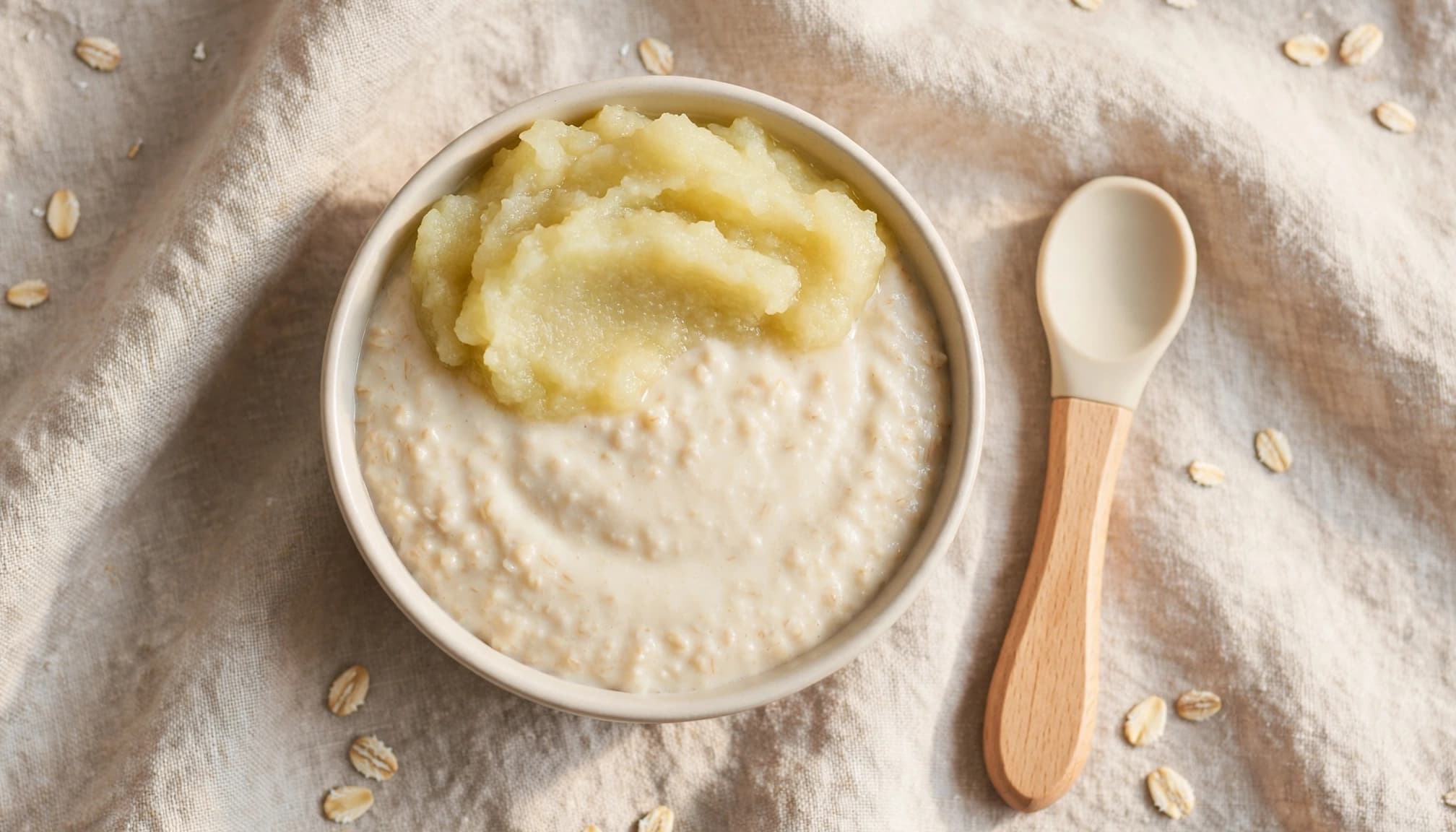
For a beginning eater, blend the cooked porridge if flakes or coarse pieces remain. Then adjust it with a little water, breast milk, or correctly prepared formula.
Adjust the texture as skills grow
Aim for oatmeal that stays on the spoon but isn't stiff or gluey. Add liquid gradually, stirring between additions rather than making the whole bowl watery.
Around 6 months, a smooth or very soft mash may suit your beginner. As feeding skills develop, leave more of the soft oat texture instead of blending every serving completely.
For babies practicing self-feeding, offer a small amount on a preloaded spoon. Continue sitting close and supervising.
Oats thicken as they cool, so check the consistency again immediately before serving. Break up dense clumps and test the temperature, especially after reheating.
How to Make Barley Soft Enough for Babies
Cook thoroughly, then break down the kernels
Prepare barley according to its package instructions, without added salt. Hulled barley generally needs longer cooking than pearled barley, so check the grain rather than relying on another variety's timing.
Continue cooking until the kernels crush easily. If the center still feels firm, add water as needed and keep cooking.
Next, blend with water or an unsalted cooking liquid for a smoother texture. For a mash, press thoroughly with a fork and inspect for unbroken kernels.
The CDC lists whole cooked barley kernels as a choking hazard. Cooking barley soft doesn't remove the need to break down its shape.
Serve a mash rather than loose grains
For an early eater, blend cooked barley with soft squash or sweet potato. Add enough liquid to create a manageable, spoonable consistency.
Later, a thicker mash can include small, soft bits of familiar vegetables. However, feeding experience doesn't make intact barley kernels an appropriate choice.
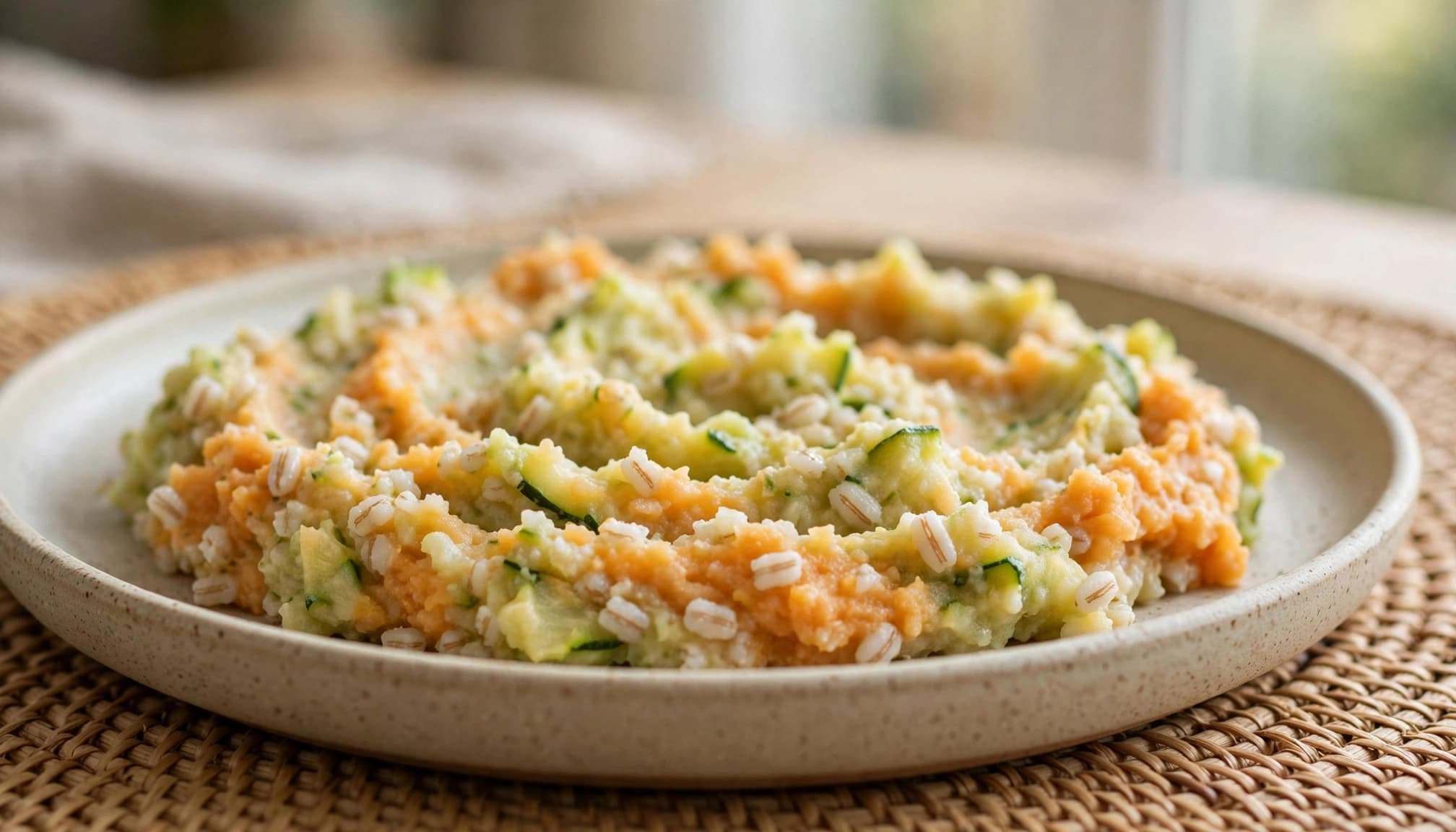
If you're adapting a family meal, take out a plain portion before adding salt or salty sauces. Then break down the barley separately and check the finished mixture for firm pieces.
This makes barley easier to share without assuming the family's usual texture is suitable for your baby.
Easy Oat and Barley Meal Combinations
Once your baby has tried the ingredients individually, simple combinations can make grain meals more varied.
- Stir mashed banana or cooked, peeled pear into soft oatmeal. A little plain, pasteurized full-fat yogurt can add creaminess once dairy is familiar.
- Combine thoroughly mashed barley with cooked zucchini and sweet potato. Blend further if your baby needs a smoother meal.
- Mix soft oats or blended barley with well-cooked, mashed lentils and carrots for a savory option.
Cook firm fruits and vegetables until they mash easily. Raw apple pieces and hard carrot chunks don't become safe simply because you stir them into porridge.
Include iron-rich foods across your baby's meals, such as iron-fortified infant cereal, soft lentils, or suitably prepared meat. Whole grains don't replace those foods.
You can also keep some servings plain. Familiar tastes are useful, and variety can happen across several days rather than within every bowl.
Barley, Oats, and Gluten: What Parents Should Know
Barley contains gluten
Barley is a gluten-containing grain and isn't suitable for someone who needs a gluten-free diet for celiac disease.
The NHS advises that gluten-containing foods can be introduced from around 6 months, in small amounts and individually. If your baby tolerates barley, it can remain part of their varied diet.
Introduce it when you're at home and able to observe your baby. Seek medical advice after a suspected reaction. Trouble breathing or swelling of the tongue or throat requires emergency help.
Oats need a different label check
Oats are naturally gluten-free, but contact with wheat or barley during processing can introduce gluten. If your baby has a medically prescribed gluten-free diet, discuss suitable oat products with their clinician.
A label saying "whole grain" doesn't mean "gluten-free." Likewise, an oat-and-barley blend still contains gluten because of the barley.
Don't remove gluten preemptively because of a family concern without discussing it with your pediatrician. Their advice should reflect your baby's symptoms, medical history, and any need for testing.
Keep Grain Meals Safe at Home and Away
Set up a supervised, upright meal
Seat your baby upright in a stable high chair and stay within reach throughout the meal. Don't feed while they're reclined, playing, or riding in a moving car.
Check food for hard pieces, dense clumps, and excessive heat. Keep utensils and preparation surfaces clean.
Skip honey before 12 months because of infant botulism risk. Babies also don't need added sugar or salt in their grains.
For outings, bring familiar foods with a texture your baby already manages. Stop somewhere suitable and set up a safe seat before feeding.
Chill promptly and discard tasted leftovers
The FDA advises refrigerating homemade baby food and using it within 1 to 2 days. Don't leave perishable food at room temperature for more than 2 hours, or more than 1 hour above 90°F.
Divide a batch into small, covered portions so you only warm what you need. For longer storage, freeze portions and use them within 3 months.
Thaw in the refrigerator. If reheating, heat thoroughly, stir well, and let the food cool before serving.
Keep untouched food separate from your baby's bowl. Discard leftovers that have contacted their mouth or used spoon. During travel, use an insulated bag with ice packs to keep prepared grain meals cold.
Frequently Asked Questions
Can babies eat oatmeal every day?
Oatmeal can be part of your baby's regular meals, but offer other foods too. The CDC recommends variety among infant cereals, including oat, barley, and multigrain options.
Across the week, include vegetables, fruit, and iron-rich foods suited to your baby's skills. You don't need to rotate every ingredient at every meal.
If oatmeal becomes your dependable breakfast, vary familiar additions occasionally. Still, keep milk feeds central during the first year and follow your baby's appetite rather than expecting a fixed portion.
Does my baby need teeth to eat oats or barley?
Teeth aren't required for smooth oatmeal or thoroughly blended barley. Babies can also use their gums to manage some tender foods as their feeding skills develop.
However, softness alone doesn't settle every safety concern. Whole barley kernels still need breaking down, and sticky clumps of oatmeal need loosening.
Follow your baby's abilities instead of advancing texture solely because they've reached a certain age. If they repeatedly cough, struggle to swallow, or seem distressed during meals, ask their clinician for a feeding assessment.
Make Simple Grain Meals Part of Family Life
Whole grains for babies can begin with the same plain oats or barley you prepare for yourself. Cook thoroughly, break down unsafe pieces, and adjust the texture as your baby's skills grow.
The compact, hand-powered Wonder Wean helps you turn suitable, already-cooked foods into fresh baby food without electricity, including while you're away from home. Pack it with safely stored ingredients and clean utensils to make healthy feeding more practical on the go. You can Buy Now for a portable option that fits into your family's feeding routine.