

Vitamin C Foods for Babies That Help Absorb Iron
Your baby may eat only a few spoonfuls at lunch, so it's natural to wonder whether those bites count. Pairing iron-rich foods with vitamin C foods babies can manage helps their bodies absorb iron from plants and fortified cereal.
The good news is that one simple pairing is enough to make a useful meal. You can start with foods already in your kitchen, then adjust the texture to suit your baby's feeding skills.
Why vitamin C matters for your baby's iron
Iron supports growth and brain development. Babies are born with iron stores, but those stores decline during the first year. Once your baby starts solids, iron-rich foods become an important part of meals alongside breast milk or iron-fortified formula.
Heme and non-heme iron work differently
Meat and fish contain heme iron, which the body absorbs relatively easily. Lentils, beans, tofu, and iron-fortified infant cereal supply non-heme iron. Meat contains some non-heme iron as well.
Vitamin C helps the body absorb non-heme iron when you serve the foods together. For example, mashed strawberries are a useful partner for iron-fortified oatmeal. They don't add iron to the cereal; they help your baby use more of the iron it contains.
Keep offering the iron source
Vitamin C can't make up for a meal with little iron. Start with an iron-rich food, then choose a fruit or vegetable to go with it. Mashed lentils with broccoli and fortified oatmeal with mango are two easy options.
The recommended dietary allowance for iron is 11 milligrams a day for babies ages 7 to 12 months. You don't need to calculate the iron in each spoonful. Offer iron-rich foods regularly, and ask your pediatrician about your baby's needs if you're concerned.
Vitamin C foods babies can eat alongside iron
You don't need a special puree or a glass of juice. Many familiar fruits and vegetables provide vitamin C, and most fit into a baby meal with little preparation.
Soft fruits that are easy to serve
Strawberries, kiwi, oranges, and mango are useful choices. Mash ripe strawberries or mango for an early eater. Offer kiwi mashed, or in an appropriate soft form for a baby who handles more texture. Remove orange seeds and tough membrane, then offer the soft flesh in a form your baby can manage.
Whole fruit gives your baby food to explore as their skills grow. The American Academy of Pediatrics advises against fruit juice before 12 months, so there's no need to offer juice for vitamin C.
Vegetables that fit savory meals
Bell peppers, broccoli, and tomatoes can add vitamin C to bean or lentil dishes. Steam broccoli until it squashes easily. Cook bell pepper until tender, remove any tough skin, and mash or finely chop it according to your baby's skills.
Tomato works well stirred into soft beans or chickpeas. If you're serving cherry tomatoes as finger food to a baby who can manage pieces, cut them lengthwise into small, safe pieces. Never offer them whole.
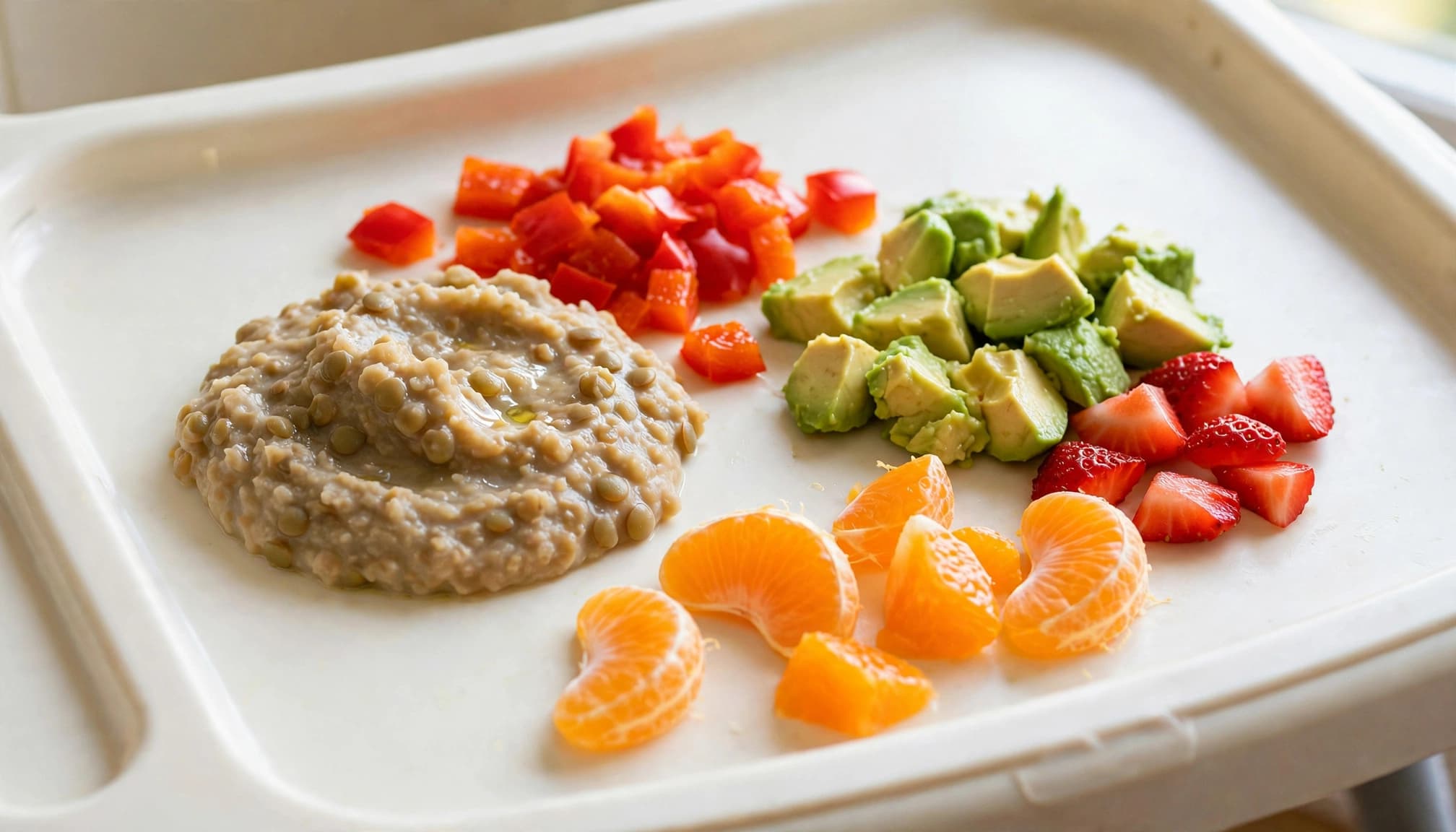
Easy iron and vitamin C pairings for baby meals
A pairing can be as simple as stirring fruit into cereal or putting two soft foods on the tray. Serve the vitamin C food during the same meal as the iron source. Exact ratios aren't necessary.
Breakfasts you can make in minutes
Prepare iron-fortified infant oatmeal according to the package directions, then stir in mashed strawberries, kiwi, or mango. Check that it's cool enough before serving. Fortification makes infant cereal a useful option even if you prefer to prepare most meals from everyday ingredients.
For another combination, offer a little well-cooked tofu with mashed tomato. If tofu is new to your baby, introduce it in a safe form and watch for a reaction, since soy is a common allergen.
Lunches and dinners built around family food
Cooked lentils become a soft mash with a fork and a little water. Add tender broccoli or soft bell pepper. You can also mash low-sodium beans with cooked tomato, checking for whole beans and loose skins before serving.
Roasted red pepper and cooked chickpeas make another smooth combination. If your family is having beef, set aside an unseasoned, tender portion before adding salty sauces. Finely mince or puree it for your baby, and serve it with soft broccoli. Beef already provides heme iron, so the vegetable adds variety without being necessary for heme iron absorption.
For plant foods and fortified cereal, serving vitamin C at the same meal matters more than finding a perfect recipe.
Prepare each food for your baby's stage
Most babies begin solids around 6 months, when they can sit with support, control their head and neck, and show interest in food. Their ability to manage texture changes with practice, so use feeding skills rather than age alone to guide preparation.
Start with a texture your baby handles well
A new eater might manage smooth lentils, mashed fruit, and pureed broccoli. Later, you can offer thicker mashes, soft lumps, and finely minced foods as your baby gains experience. A fork works for many meals; a small food processor can help with tougher textures.
Softness matters as much as size. Cook vegetables until they flatten easily between your fingers. Check mashes for firm bean skins, hard pepper pieces, fruit seeds or pits, and chunks of meat. Remove bones from fish or meat before preparing a portion for your baby.
Watch shape as well as softness
Whole grapes, cherry tomatoes, hard raw vegetables, nuts, and popcorn pose choking risks. Don't serve chunks of raw apple or thick spoonfuls of nut butter. Modify foods to suit your child's current skills, even when another baby the same age eats them differently.
Seat your baby upright in a stable high chair, and stay close throughout the meal. Avoid feeding in a moving car or while your baby reclines in a stroller. An infant choking-response course can help you prepare for an emergency. If swallowing, gagging, or texture progression worries you, speak with your pediatrician.
Make iron-rich meals part of an ordinary day
You don't have to serve the same pairing daily. Keep one or two iron sources handy, then add whichever suitable fruit or vegetable you have. Cooked lentils can go with broccoli one day and tomato the next. Fortified oatmeal can take mashed strawberries at breakfast and mango later in the week.
If you're cooking for the family, reserve a baby portion before adding much salt or a sauce that isn't suitable for your child. Cook it thoroughly, adjust the texture, and check the temperature. Breast milk or iron-fortified formula remains an important part of your baby's diet during the first year as solids gradually become more familiar.
Appetites vary. One small meal doesn't tell you how well your baby eats overall. Keep offering iron-rich foods without pressuring your baby to finish them, and let repeated exposure build familiarity.
Keep fresh food safe when you're out
A picnic or restaurant meal can use the same pairings you make at home. Bring a familiar iron-rich food, such as a chilled lentil mash, and add soft fruit or a suitable vegetable when it's time to eat. At a restaurant, look for plain, thoroughly cooked ingredients and check them for salt, sauces, and choking hazards.
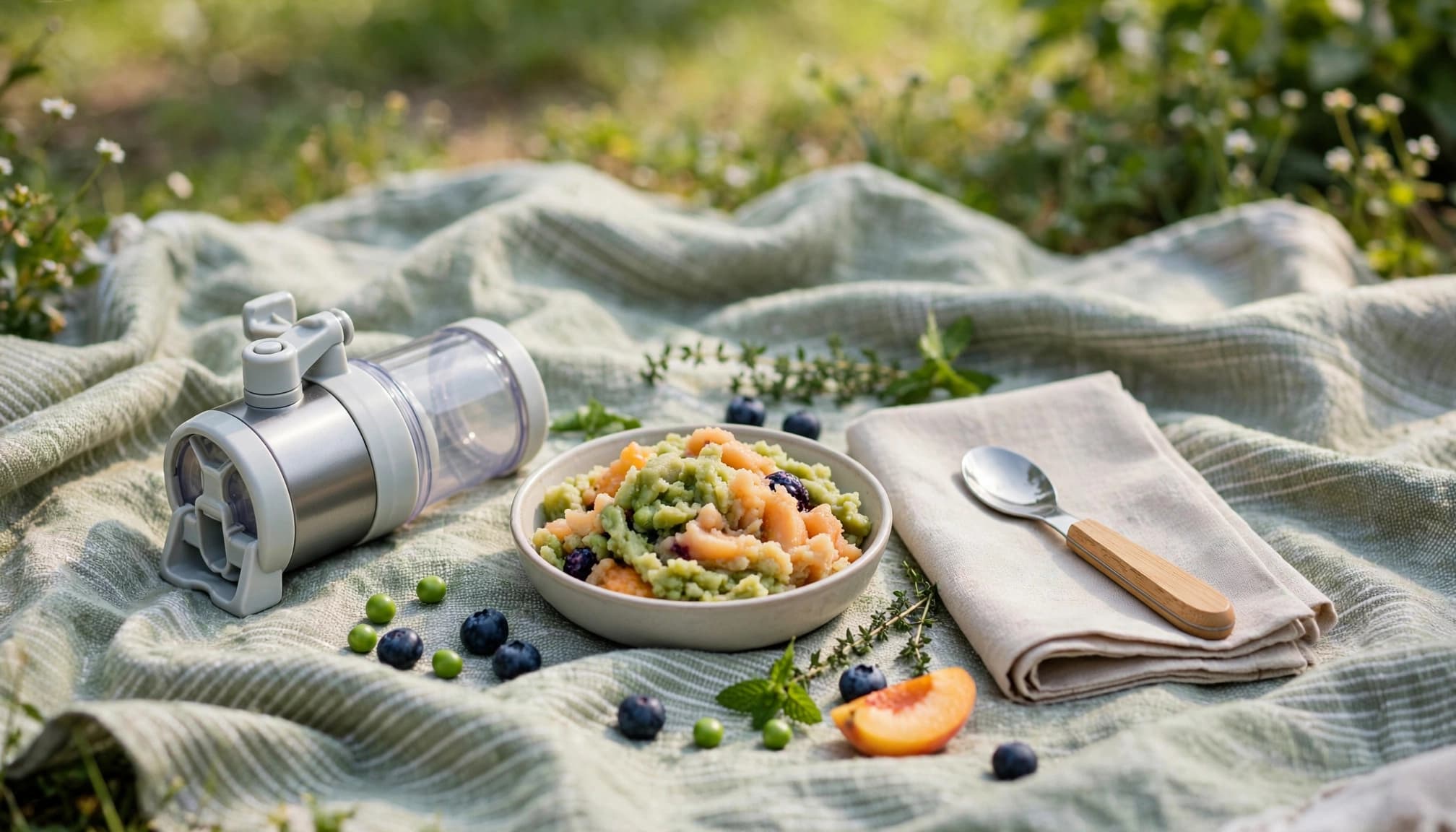
Pack perishable food in a cooler at 40°F (4°C) or below. Wash your hands and feeding tools before preparing a serving. As a general food-safety rule, discard perishable food left at room temperature for more than two hours, or one hour when it's above 90°F (32°C). Throw away leftovers from your baby's bowl after the meal.
Travel is easier with foods your baby has already tried. If you're introducing a new allergen or managing a known allergy, follow your pediatrician's feeding plan rather than trying something unfamiliar away from home.
Key takeaways
- Pair lentils, beans, tofu, or iron-fortified infant cereal with a vitamin C food at the same meal.
- Try mashed strawberries with oatmeal, soft broccoli with lentils, or cooked tomato with beans.
- Meat provides heme iron, which doesn't depend on a vitamin C pairing in the same way.
- Match every food's texture and shape to your baby's skills, and supervise each meal.
Common questions about vitamin C and iron for babies
Does my baby need vitamin C with every iron-rich meal?
No. Pairing vitamin C with non-heme iron is a helpful habit, not a rule you need to meet at every sitting. A baby who eats a range of suitable foods over time can have simple meals that don't contain both. Keep offering iron sources regularly rather than worrying about one missed pairing.
Is fruit alone enough to meet my baby's iron needs?
Fruit can supply vitamin C, but it isn't a substitute for iron-rich food. Serve it alongside an iron source such as fortified infant cereal or mashed lentils. If your baby eats very few iron-rich foods, ask their pediatrician for advice rather than relying on fruit or changing their diet without guidance.
Should a breastfed baby take an iron supplement?
Some babies, including those born prematurely, have different iron needs. The American Academy of Pediatrics advises discussing iron supplementation for breastfed infants with a pediatrician. Your baby's clinician can consider their feeding history and growth before recommending a supplement. Food pairings don't replace that advice.
A small pairing can make a useful meal
When your baby eats only a few bites, focus on what you offer over time. An iron source and a suitable vitamin C food can fit into the same simple meal. Safe preparation matters just as much as the ingredients.
The Wonder Wean can help you prepare those healthy foods when you're away from your kitchen. Its compact, hand-powered design lets you mash soft, age-appropriate ingredients at a park, restaurant, or travel stop without electricity. Check the finished texture and follow your usual food-safety routine before serving. If that would make fresh feeding easier for your family, Buy Now.