

Responsive Feeding With Whole Foods: A Calm Guide for Parents
Feeding a baby can feel complicated when every meal comes with new advice. A responsive feeding whole foods routine keeps the focus on your baby's cues, development, and safe opportunities to explore familiar ingredients.
You decide what food to offer and create a safe mealtime setting. Your baby decides whether to eat and how much. That shared responsibility can make fresh food feel more manageable, whether you're at home, visiting family, or eating outside the kitchen.
Key Takeaways
- Responsive feeding means offering suitable food while allowing your baby to guide the pace and amount.
- Babies develop feeding skills at different rates, so texture and readiness should follow your pediatrician's guidance.
- Whole foods can include soft fruits, cooked vegetables, oats, beans, eggs, plain yogurt, avocado, and tender family foods prepared safely.
- Gagging can happen during learning, while choking requires immediate action. Learn infant choking first aid before solids begin.
- Introduce allergens in safe forms and follow medical guidance, especially if your baby was premature or has eczema, allergies, or feeding concerns.
- A simple bowl, spoon, bib, chilled food, and hand-powered masher can make fresh feeding easier away from home.
What Responsive Feeding With Whole Foods Looks Like
Responsive feeding gives both people a role. You provide safe choices, regular opportunities, and supervision. Your baby responds to hunger, fullness, taste, and texture in ways that may change from one meal to the next.
Let your baby explore
A baby may touch, smell, lick, spit out, or slowly accept a food. Those actions are part of learning. Some days, your baby may eat several bites. On another day, they may turn away after tasting the same food.
Offer a small amount of soft food and allow your baby time to respond. Avoid chasing a turned head with a spoon or pressuring your baby to finish. You don't need a calorie target for every meal. Milk feeds remain important during the transition to solids, and appetite naturally varies.

Observe rather than control
Your job is to notice cues and adjust the meal. Reaching toward food, opening the mouth, or leaning forward may show interest. Turning away, closing the mouth, pushing food away, or becoming tired may mean your baby needs a break.
Keep your baby upright and stay close throughout the meal. A calm pace matters more than getting through a specific amount. If feeding is stressful, pause and ask your pediatrician for guidance instead of forcing a routine that doesn't suit your baby.
Follow Readiness Instead of a Strict Feeding Schedule
Many babies begin solids around six months, but age alone doesn't determine readiness. A baby should show the developmental skills needed to eat safely. Premature babies may need an adjusted plan, so ask your pediatrician when and how to begin.
Watch for feeding skills
Readiness can include sitting with steady support, bringing food toward the mouth, and showing interest in what others eat. Your healthcare provider can help you assess these skills, especially if your baby has low muscle tone, oral-motor concerns, reflux, or difficulty gaining weight.
Texture should also match current ability. Some babies remain comfortable with smooth, thick mashes for a while. Others manage soft lumps sooner. Progress doesn't need to follow a fixed calendar.
Let appetite guide the amount
Start with a small serving and offer more when your baby continues to show interest. A baby may eat different amounts at different meals, and that variation is normal.
Responsive feeding whole foods does not require perfect combinations or a separate recipe for every day. It means you offer nourishing options and allow your baby to communicate when they have had enough. Your pediatrician can recommend additional support if your baby frequently coughs, tires during meals, refuses many textures, or struggles to swallow.
Build Simple Meals From Familiar Whole Foods
Whole-food feeding can begin with ingredients your family already recognizes. Soft avocado, ripe banana, cooked sweet potato, tender pear, beans, oats, plain yogurt, egg, and soft vegetables can all fit into a baby's routine when prepared for their current skills.
Start with foods you already serve
A familiar meal can often become a baby meal with a little preparation. Mash soft avocado with a fork. Press ripe banana into a smooth consistency. Blend or mash fully cooked vegetables, beans, or tender meat until the texture suits your baby.
When adapting family food, set aside the baby's portion before adding salt, sauces, spicy seasoning, or other ingredients that don't fit their feeding plan. Remove bones, pits, tough skins, and hard pieces. Plain foods also make it easier to notice which flavors and textures your baby enjoys.
Add variety without turning meals into projects
You can offer one food alone or combine familiar ingredients. Mashed avocado with soft egg adds a different texture from banana with plain yogurt. Sweet potato with finely shredded chicken or soft lentils with mashed carrot can provide variety as your baby develops.
Introduce new foods gradually, particularly when your baby has a sensitive stomach or a known allergy. Keep the preparation simple enough to repeat. A routine built around ordinary groceries is easier to maintain than one that depends on complicated recipes.
Keep Textures Safe and Know the Difference Between Gagging and Choking
Food shape and texture matter as much as the ingredient itself. Babies should eat while seated upright, supervised, and within your reach. Never feed your baby while they are lying down, walking, or riding in a moving vehicle.
Prepare food for your baby's current skills
Hard vegetables should be cooked until soft enough to mash. Round foods need special care, and whole grapes, whole nuts, popcorn, raw carrot pieces, hard candy, marshmallows, and thick clumps of nut butter can create choking risks. Cut or prepare foods according to your pediatrician's advice and your baby's abilities.
For babies using finger foods, a soft strip or wedge may be easier to hold than a tiny hard cube. Food should be tender enough to squash easily between your fingers. Older babies still need close supervision because improved grasping does not remove choking risk.
Gagging is often noisy and may include coughing, retching, or bringing food forward. Choking can be quiet because the airway is blocked. Learn infant CPR and choking first aid from a certified course, and act immediately if your baby cannot breathe, cry, or cough effectively.
Introduce allergens with a plan
Common allergens include peanut, tree nuts, egg, dairy, wheat, soy, sesame, fish, and shellfish. When your baby is developmentally ready, introduce one new allergenic food at a time in a safe texture and small amount. Your pediatrician may recommend a different plan if your baby has severe eczema, an existing food allergy, or another risk factor.
Watch for hives, facial swelling, repeated vomiting, wheezing, or breathing trouble after a new food. Stop feeding and contact a medical professional if a reaction occurs. Breathing difficulty or severe symptoms require emergency help.
Do not give honey before 12 months. Ask your pediatrician about any food restriction that applies to your baby's health history.
Make Responsive Feeding Whole Foods Practical Away From Home
Fresh food doesn't have to stay in your kitchen. Pack a ripe banana or avocado whole, or carry a small portion of cooked vegetables in an insulated bag with ice packs. Perishable foods should stay cold until mealtime, while whole produce can remain intact until you need it.
Pack a small feeding kit
A simple kit might include:
- A lidded bowl and baby spoon.
- A clean spare spoon in case one falls.
- A washable bib and cloths.
- Hand wipes, plus soap and water whenever available.
- A sealable bag for used utensils and food scraps.
- Ice packs for chilled foods.
At a restaurant or family gathering, ask for plain steamed vegetables, avocado, soft rice, a baked potato, beans, or another fully cooked ingredient that suits your baby's stage. Check for hard skins, bones, seeds, sauces, and seasoning before serving.
Prepare a fresh portion when needed
A separate serving bowl helps keep untouched food away from the spoon that has been in your baby's mouth. Make only the amount your baby is likely to eat, then follow safe storage guidance for any remaining food.
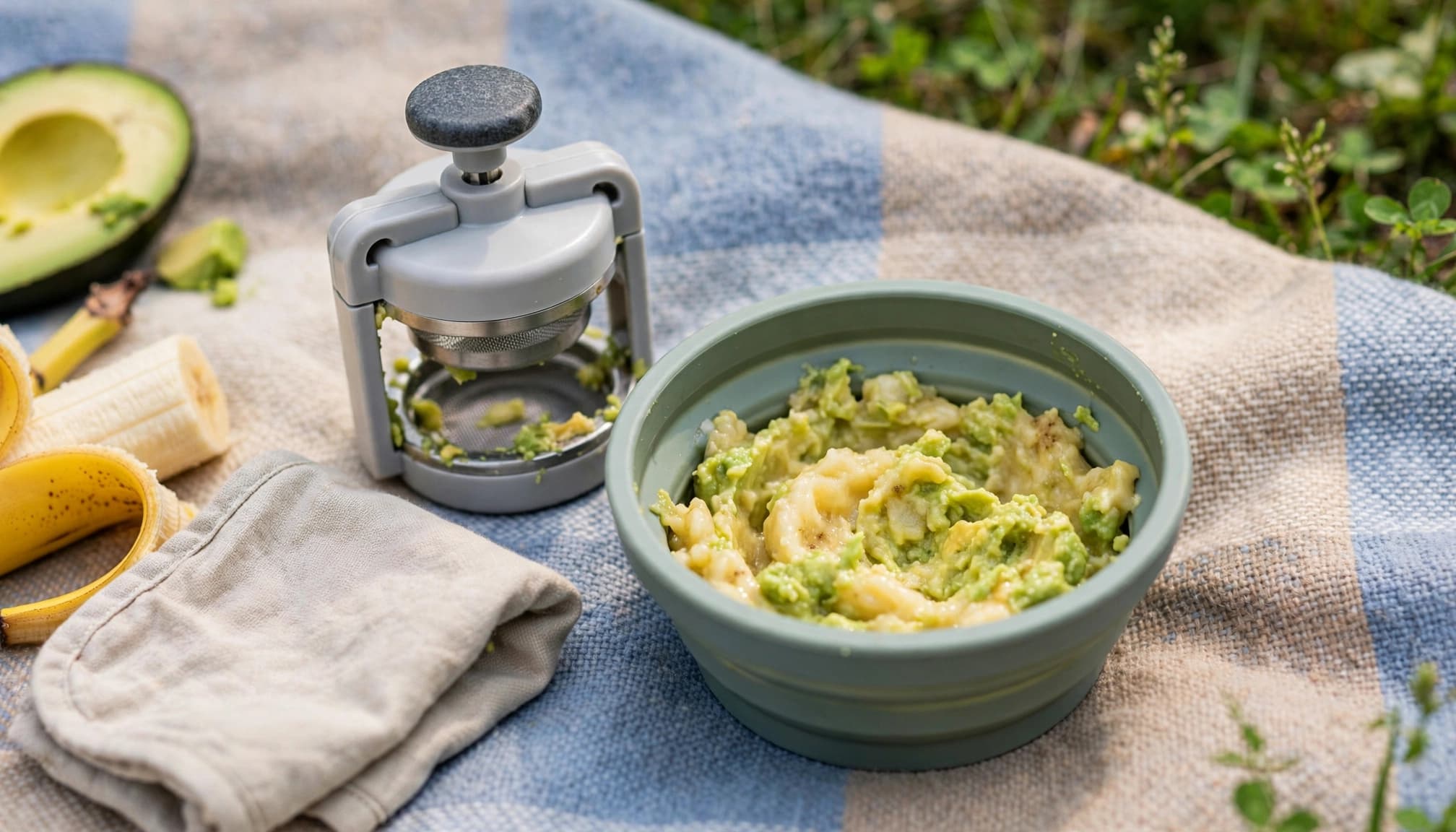
A fork can mash soft fruit, but a compact hand-powered food maker can make preparation easier at a park, restaurant, hotel, or family gathering. The Wonder Wean works without electricity, so you can mash familiar ingredients where you are. If fresh feeding away from home fits your routine, you can Buy Now.
Keep Busy-Day Feeding Flexible
Responsive feeding whole foods can work on ordinary days that don't follow a perfect schedule. Prepare extra lentils, beans, vegetables, oats, or other suitable foods at home, then store portions safely for later meals. Keep a familiar backup available when naps, appointments, or travel disrupt the usual routine.
Use familiar foods during travel
A road trip is usually not the right time to introduce several new foods. Pack ingredients your baby has already eaten at home, and match their texture to current skills. Whole bananas and avocados are useful when you need a simple option. Chilled yogurt, cooked oats, or soft vegetables need appropriate temperature control.
Feed only when the vehicle is parked. Your baby should sit upright and remain supervised throughout the meal.
Keep expectations realistic
Some meals will be small. Some foods will land on the floor. A baby may need repeated, pressure-free opportunities before accepting a new taste or texture. You don't need to recreate a full family meal every time.
The goal is a safe, flexible pattern that gives your baby chances to experience natural foods while keeping feeding pleasant for both of you.
Frequently Asked Questions
Is responsive feeding the same as baby-led weaning?
They overlap, but they aren't identical. Responsive feeding describes how you respond to your baby's cues during meals. Baby-led weaning usually emphasizes self-feeding with soft pieces rather than spoon-fed purees. You can use responsive feeding with spoonfuls, finger foods, or a combination, provided the texture and method suit your baby's development.
Do whole foods need to be completely homemade?
No. Whole foods can include ingredients prepared at home, suitable options from a restaurant, or plain foods served during a family meal. Packaged baby food can also be useful when it fits your family's needs. Read labels, watch for ingredients your baby must avoid, and choose textures appropriate for your baby.
What if my baby gags?
Stay calm and watch closely. Gagging can be a normal response while babies learn to manage new textures, and it is often noisy. Choking is different and can prevent breathing or sound. Never leave your baby alone with food, and learn infant choking first aid before beginning solids.
How should I handle feeding concerns?
Contact your pediatrician if your baby coughs often during meals, struggles with textures, refuses most foods, vomits repeatedly, or isn't growing as expected. Ask for individualized advice if your baby was premature, has a medical condition, or has a history of allergies. Babies develop at different rates, so professional guidance should shape your feeding plan.
A Calm Start With Real Food
Responsive feeding gives you a practical way to offer whole foods without turning every meal into a test. Follow your baby's cues, choose textures that match their skills, and keep safety at the center.
With a small bowl, familiar ingredients, and the Wonder Wean in your feeding bag, you can assist your baby with healthy foods even on the go. Fresh meals can fit real family life, whether you're at home, in a restaurant, or spending an afternoon at the park.