

Best Portable Baby Food for Easy Road Trips
A long drive can turn a hungry baby into an uncomfortable passenger within minutes. The right portable baby food keeps meals simple, nourishing, and manageable when your kitchen is miles away.
The best choices are soft, easy to portion, and safe to store. Some can stay at room temperature, while others need a well-packed cooler. Your baby's age and feeding skills also determine whether a food should be mashed, softened, or cut into small pieces.
With a little planning, you can offer familiar foods without filling the car with leaks, crumbs, and unnecessary packaging.
Best Portable Baby Food for Road Trips: What Works
Road-trip food needs to handle movement, changing temperatures, and limited cleanup. Choose ingredients that travel well and can be served with one spoon or clean fingers.
Choose soft foods with simple ingredients
Ripe bananas, avocados, steamed sweet potatoes, and soft pears are useful because they need little preparation. You can mash them quickly, serve them in small portions, or combine them with another familiar food.
Foods with short ingredient lists are a good fit for families who prefer natural meals. Plain yogurt, cooked oats, unsweetened applesauce, and mashed beans can also provide variety without relying on heavily sweetened snacks.
Try to pack foods your baby has already eaten at home. A road trip isn't the right time to introduce several new ingredients at once, especially if your baby has a food allergy or sensitive stomach.
Keep serving and cleanup simple
Leakproof containers with wide openings are easier to fill and clean than narrow jars. Small silicone cups or reusable pouches can hold individual servings, but pack a few extra containers for leftovers and used spoons.
A silicone bib, wet bag, paper towels, hand wipes, and two spoons can save you from a messy stop. Keep feeding supplies in one small bag rather than scattered among luggage.
Feed only when the car is parked. Your baby should sit upright and stay supervised throughout the meal.
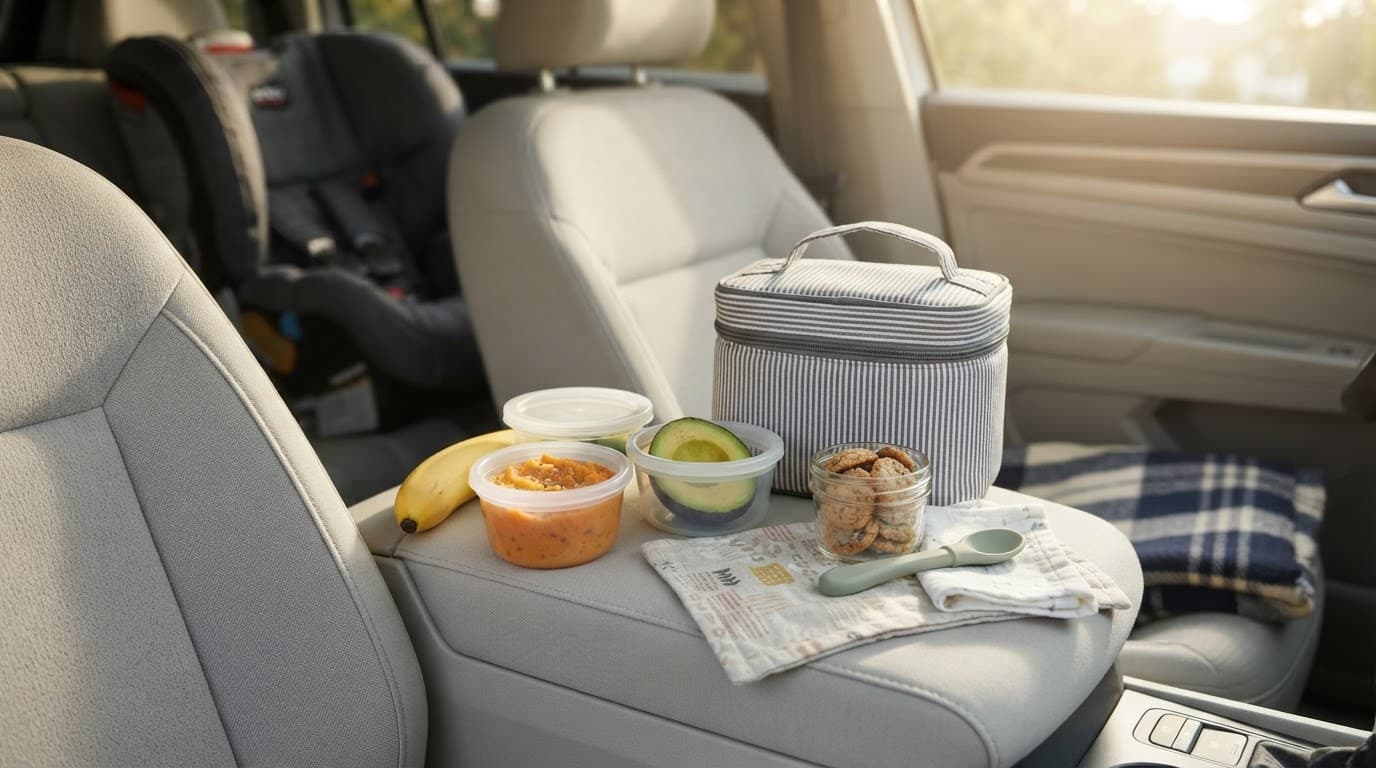
Shelf-Stable Foods That Travel Without a Cooler
Shelf-stable foods are useful for short stops, delays, and stretches of road where you can't keep a cooler within reach. They can stay in a diaper bag or pantry box until you open or cut them.
Whole fruits make easy travel foods
A ripe banana is one of the simplest road-trip foods for babies. It comes in its own natural wrapper and mashes easily with a spoon. Choose bananas without bruised or split skin, then peel one when your baby is ready to eat.
Whole avocados and soft pears can also travel at room temperature. Once cut, however, they need refrigeration. A peeled orange can work for older babies who are ready for soft, thin pieces, but remove seeds and tough membranes.
Unsweetened applesauce or pear cups are another convenient option. Check the label for added sugar, and transfer leftovers into a clean container if your baby doesn't finish the serving. Opened fruit should not sit in a warm car.
Dry foods can fill small gaps between meals
Plain oat cereal, low-salt crackers designed for your baby's stage, and dry cereal pieces can help during a longer drive. Serve these only when your baby can manage the texture safely, and avoid hard, brittle foods that can break into sharp pieces.
You can also bring dry rolled oats and prepare a small serving at a planned stop with hot water. Let the oats cool fully before serving. A clean spoon and a leakproof cup make this easier than trying to feed in the car.
Shelf-stable foods are convenient, but they don't need to replace fresh ingredients. Use them as backup foods when your cooler is packed away or a planned stop takes longer than expected.
Chilled Baby Foods and Cooler Safety
Yogurt, cooked vegetables, eggs, meat, and prepared mashed foods are temperature-sensitive. Pack them in an insulated cooler with frozen ice packs, not in a warm diaper bag.
A small cooler is often easier to manage than a large family model. Place the foods you expect to serve first near the top, and keep the lid closed between stops.
Pack perishable foods at 40 degrees Fahrenheit or below
Use a frozen gel pack on each side of the food containers. If the trip is long, add a small cooler thermometer so you can check the internal temperature instead of guessing.
Pack food in single servings. That way, you won't repeatedly open and warm the full batch. Keep the cooler in the passenger area if possible, where you can monitor it, rather than leaving it in a hot trunk.
Breast milk and prepared formula need their own storage routine. Follow the preparation directions on your formula packaging and the storage guidance from your pediatrician.
Follow the two-hour rule
Perishable baby food should not stay at room temperature for more than two hours. When the outside temperature is above 90 degrees Fahrenheit, use a one-hour limit.
This applies to yogurt, cut fruit, cooked vegetables, eggs, meat, and homemade purees. Start timing when the food leaves the cooler. If food has been warm too long or you aren't sure how long it has been out, throw it away.
A cooler protects food only while it stays cold. It doesn't make a warm car safe for storing yogurt or mashed vegetables.
Wash reusable containers and utensils with hot, soapy water as soon as you can. At the next stop, wipe the feeding surface before opening food.
Fresh Foods to Pack or Mash at a Stop
Fresh ingredients can give your baby a satisfying meal without requiring a jar or pouch. Pack them whole when possible, then prepare a small portion at a clean, parked stop.
Ripe fruits are naturally soft
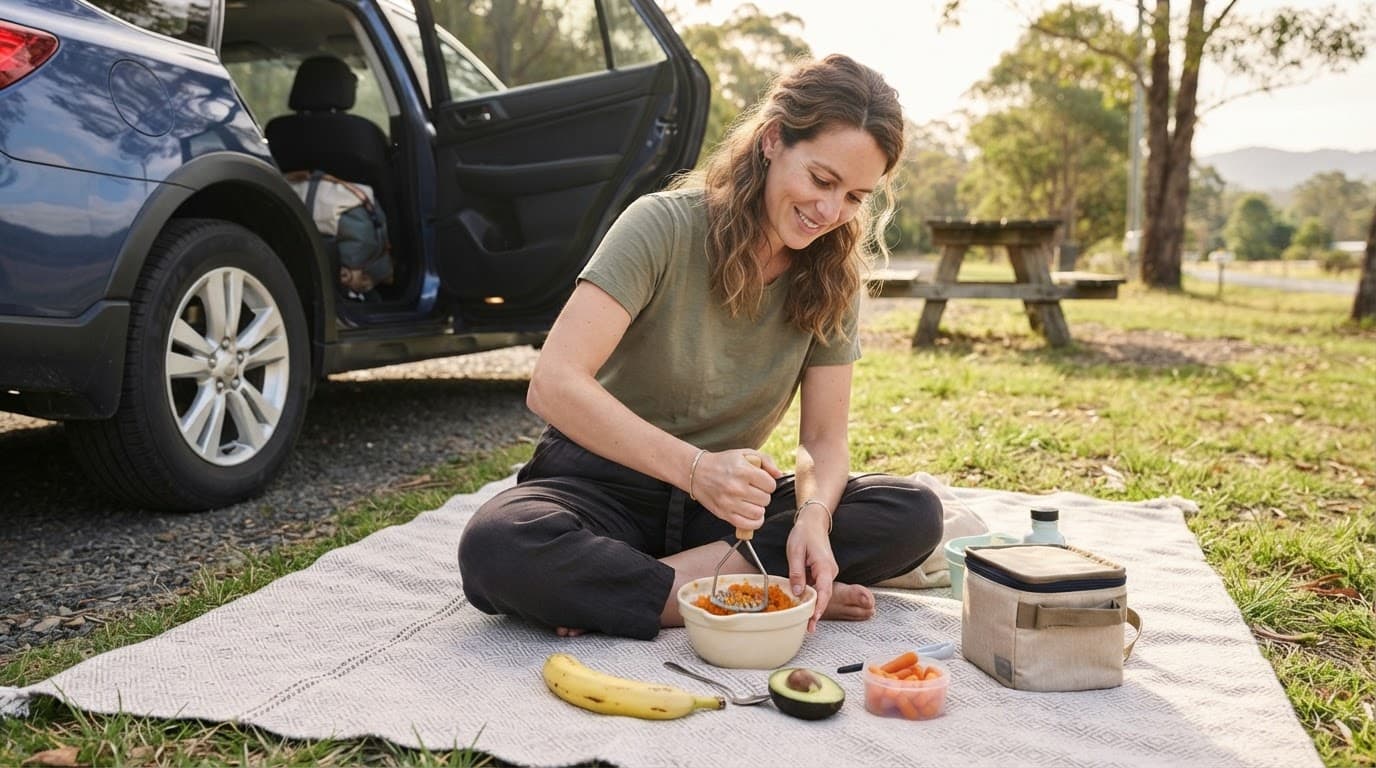
Banana and avocado are especially practical because they need no cooking. Mash either food with a spoon, or combine avocado with a little plain yogurt if your baby already tolerates dairy.
A very ripe peach, nectarine, or pear can work for babies who are ready for soft textures. Remove the pit, skin tough enough to be difficult to chew, and any firm pieces.
For younger babies, create a smooth or slightly textured mash. Older babies who self-feed may handle soft strips that they can grasp, but the fruit must give easily when pressed between your fingers.
Cooked vegetables and proteins create fuller meals
Steam sweet potato, squash, broccoli florets, or carrots until soft. Cool them before packing, then keep them cold until serving. You can mash the vegetables alone or mix them with beans, lentils, egg, or tender shredded chicken that your baby has already eaten safely.
A small portion of fully cooked egg mashed with avocado can provide a filling combination. Plain yogurt stirred into soft oats also works for babies who tolerate dairy.
Keep portions modest. Babies often eat less during travel because of unusual surroundings, so small servings reduce waste and make cleanup easier.
Match Road-Trip Food to Your Baby's Feeding Stage
Age alone doesn't determine what your baby can eat. Readiness, sitting ability, hand control, chewing skills, and previous exposure to foods all matter.
Babies usually begin solids around six months when they show developmental readiness, but your pediatrician can help you decide when to start. Pack textures your baby already handles confidently.
Younger babies may need smooth or soft mashed food
A baby who is new to solids may do best with smooth mashes of banana, avocado, sweet potato, squash, or beans. Add breast milk, formula, or water only as appropriate for the recipe and your baby's usual feeding plan.
As skills develop, gradually offer thicker textures and soft lumps. Avoid making every meal perfectly smooth if your baby is ready for more texture, since practicing different consistencies supports feeding development.
Introduce new foods at home before traveling with them. This gives you time to watch for signs of an allergic reaction and keeps the road trip focused on familiar meals.
Older babies need safe shapes, not smaller hard pieces
Babies who self-feed can often manage soft strips, wedges, and tender pieces. A cooked broccoli floret with a soft stem, a ripe avocado wedge, or a strip of soft sweet potato may be easier to grasp than tiny cubes.
Avoid whole grapes, raw carrot, raw apple, popcorn, whole nuts, chunks of hot dog, hard candy, and thick globs of nut butter. Cut round foods lengthwise, cook firm produce until soft, and spread nut butter thinly or stir it into another food.
Honey isn't appropriate before 12 months. Added sugar and excess salt also have little place in a baby's everyday meals.
Always supervise your baby while eating. Stop the car, seat your baby upright, and stay close enough to respond if they cough or gag.
Build a Practical Baby Feeding Kit
A reliable kit reduces decisions during a busy travel day. Pack it separately so you can reach it at a rest stop without unloading the car.
Include the tools you use at home
Your kit may include:
- Small leakproof containers with one serving in each.
- An insulated cooler with frozen ice packs.
- Two spoons, a silicone bib, and a washable placemat.
- A clean water bottle for rinsing utensils when a sink isn't available.
- Hand wipes, paper towels, and a sealable bag for dirty items.
- Familiar shelf-stable backup foods for unexpected delays.
- A compact food masher for preparing soft ingredients at a stop.
Pack an extra outfit for your baby and a shirt for yourself. Even a simple banana mash can travel farther than expected when a baby grabs the spoon.
Plan stops around feeding, not feeding around traffic
Offer a meal before departure if your baby is hungry and the car is still parked. During the drive, wait for a safe stopping place rather than passing food backward between seats.
At each stop, check the cooler, serve a small amount, and discard food that has become too warm. Wipe the spoon and feeding surface before the next serving.
A predictable routine helps: park, wash hands, prepare food, feed, clean up, and return the food to the cooler or discard it. This takes a few extra minutes but prevents rushed feeding.
How the Wonder Wean Helps With Fresh Food on the Go
The Wonder Wean is a compact, hand-powered pocket blender for mashing soft foods without electricity. That makes it useful when you're traveling with ingredients from home or buying a suitable fresh food during a stop.
You can mash a ripe banana, avocado, cooked sweet potato, soft vegetables, or another familiar ingredient in a small serving. Prepare only what your baby is likely to eat, then clean the tool and store it according to the same food-safety rules as your containers.
Because you control the ingredients, you can skip added sugar, unnecessary fillers, and oversized packages. It also gives you a way to offer the same basic foods your family is eating, provided the ingredients are age-appropriate and prepared safely for your baby.
When fresh food matters on a road trip, a small hand-powered tool can make preparation practical. You can Buy Now and keep a Wonder Wean with the rest of your feeding supplies.
Conclusion: Keep Road-Trip Meals Simple and Safe
The best portable baby food is familiar, soft, easy to portion, and suited to the way your baby eats. Whole bananas, avocados, cooked vegetables, plain yogurt, oats, and mashed beans can cover many travel situations when you pack them correctly.
Separate shelf-stable foods from chilled foods, use ice packs for perishables, and follow the two-hour safety limit. Most importantly, feed your baby only while parked and supervised, with textures that match their current skills.
With a cooler, a few reusable containers, and the Wonder Wean, you can offer your baby healthy fresh foods even on the go. A calm stop and a simple meal are often all a road trip needs.