

7 Plant-Based Protein Foods for Babies
Plant-based protein can fit naturally into your baby's first meals, but the food's texture matters as much as the ingredient. Lentils, beans, tofu, peas, and other whole foods can provide variety while your baby learns new flavors.
The best choices for plant-based protein babies can eat are soft, plain, and easy to adjust as feeding skills develop. Start with smooth textures when needed, then gradually offer thicker mashes and soft pieces. Here are seven practical options, plus preparation, allergy, choking, and travel guidance.
What to know about plant-based protein for babies
Babies need iron-rich foods once they begin eating solids. Lentils, beans, tofu, peas, chickpeas, nuts, seeds, and quinoa can all contribute plant-based protein to meals. They don't need complicated recipes or heavily processed baby foods.
Introduce new foods in a form that matches your baby's development. A beginning eater may need a smooth puree or spoonable mash. A baby with more experience may manage thicker textures or soft pieces that flatten easily between your fingers.
Keep breast milk or infant formula as your baby's main source of nutrition during the early stages of solid feeding. Offer small amounts, follow your baby's hunger and fullness cues, and ask your pediatrician for advice if your baby was born prematurely, has swallowing difficulties, or has a medical condition affecting feeding.
7 plant-based protein foods for babies
These foods work well when cooked, softened, mashed, or blended appropriately.
- Lentils: Cook them until they collapse easily, then mash them smooth or blend them with a soft vegetable.
- Beans: Black beans, white beans, kidney beans, and other beans should be cooked until tender, rinsed if canned, and thoroughly mashed.
- Tofu: Soft or silken tofu can be mashed into a smooth texture. Soy is a common allergen, so introduce it thoughtfully.
- Peas: Cook peas until soft and press them through a fork or blend them to remove firm whole pieces.
- Chickpeas: Smooth chickpea puree or plain hummus can work, but check the ingredients and introduce sesame separately if the hummus contains tahini.
- Nut and seed butters: Smooth peanut, almond, or seed butter must be thinned into a loose puree. Never serve a thick spoonful.
- Quinoa: Cook quinoa until very soft, then blend or mix it into a familiar puree. Check for any hard grains before serving.
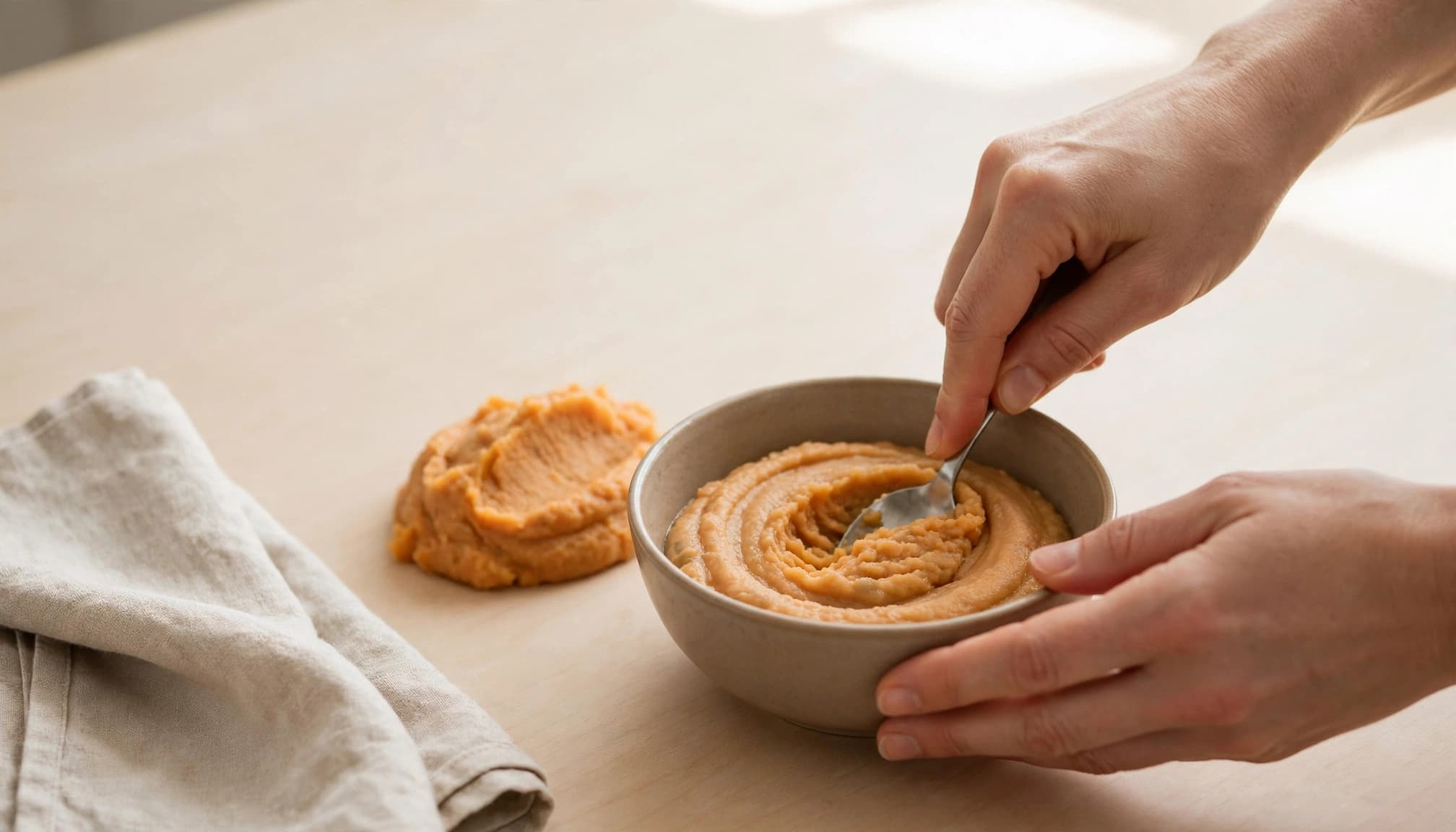
A little water, breast milk, prepared formula, or an unsalted cooking liquid can loosen a mash. You can also combine these foods with sweet potato, squash, avocado, banana, or cooked carrots after your baby has handled each ingredient separately.
Match texture to your baby's feeding stage
Preparation should change as your baby gains control. There isn't one texture that suits every baby, even when two children are the same age.
Smooth foods for new eaters
Smooth or softly mashed foods may suit babies who are beginning solids. Blend cooked lentils, beans, peas, or quinoa until there are no hard lumps. Tofu can usually be mashed with a fork, while nut or seed butter needs extra thinning because it is sticky.
Keep the consistency thick enough to stay on a spoon, but loose enough for your baby to swallow comfortably. A very runny puree can slide quickly and may be harder for a beginner to manage.
Thicker mashes and soft pieces
As your baby's skills improve, mash foods with a fork instead of blending them completely. Soft lumps in lentils, beans, tofu, and peas give your baby practice with changing textures.
When your baby is ready for finger foods, offer soft pieces that squash easily between your thumb and finger. Stay close during every meal, and let your baby control the pace. Some babies progress quickly, while others need more time with smooth foods.
Pair plant protein with iron-rich foods
Protein is only one part of a satisfying baby meal. Iron-rich foods also matter after babies begin solids, so include lentils, beans, tofu, peas, or iron-fortified infant cereal regularly according to your healthcare professional's guidance.
Pairing foods can improve texture and make meals more filling. Try mashed lentils with sweet potato, black beans with avocado, or soft tofu with cooked squash. You can mix chickpea puree with mashed carrot or stir soft quinoa into a familiar fruit or vegetable puree.
A small amount of avocado or oil can add energy to a meal without making the portion larger. Babies have small stomachs, and appetite can vary from one meal to the next. Let your baby decide how much to eat rather than encouraging them to finish a bowl.
Avoid added salt, sugar, and honey. Honey should not be given to babies under 12 months because of the risk of infant botulism.
Introduce allergens and prevent choking
Several plant-based protein foods are also common allergens. Soy appears in tofu, peanuts and tree nuts appear in nut butters, and sesame may be present in tahini or hummus.
Offer one new allergen at a time
When your baby is developmentally ready for solids, introduce one new allergenic food in a safe texture and a small amount. Offering it earlier in the day makes it easier to watch for a reaction.
For example, thin smooth peanut butter with warm water, prepared formula, breast milk, yogurt, or fruit puree until it drips easily. Serve tofu mashed smooth. Mix tahini thoroughly into another soft food rather than offering a sticky spoonful.
Watch for hives, facial swelling, repeated vomiting, coughing, wheezing, unusual sleepiness, or breathing trouble. Stop feeding the food and contact a medical professional if a reaction occurs. Call emergency services for breathing difficulty, swelling of the tongue, or severe symptoms. If your baby has severe eczema, an existing food allergy, or a previous reaction, speak with your pediatrician before introducing allergens.
Remove common choking risks
Always seat your baby upright in a stable high chair and stay within arm's reach. Don't feed your baby while they are lying down, walking, playing, riding in a moving car, or sitting in a reclined car seat.
Whole nuts, popcorn, hard raw vegetables, firm apple chunks, whole grapes, and thick spoonfuls of nut butter can cause choking. Cook firm vegetables until they are easy to mash. Remove pits, tough skins, seeds, and hard pieces.
Gagging can be noisy and may happen as babies learn to manage food. Choking can be quiet because the airway is blocked. Learn infant choking first aid and CPR before your baby begins eating more textured foods.
Make plant-based protein meals away from home
Fresh baby food doesn't have to come from a jar or pouch. A ripe banana, avocado, soft tofu, or a plain cooked vegetable can become a simple meal when you have a safe way to mash it.
Pack familiar foods first
Introduce new foods at home before taking them on a trip. That gives you time to watch for an allergic reaction and learn how your baby handles the texture.
For an outing, pack foods your baby has already eaten safely. A container of cooked lentils, soft beans, or quinoa can be combined with a ripe avocado or banana at mealtime. Keep perishable foods cold until serving, use clean utensils, and discard food that your baby has eaten directly from.
Mash food where you are
A portable hand-powered baby food maker can help you prepare soft ingredients without electricity. You can mash a plain restaurant vegetable, a ripe fruit, or food packed from home and adjust the texture to your baby's current skills.
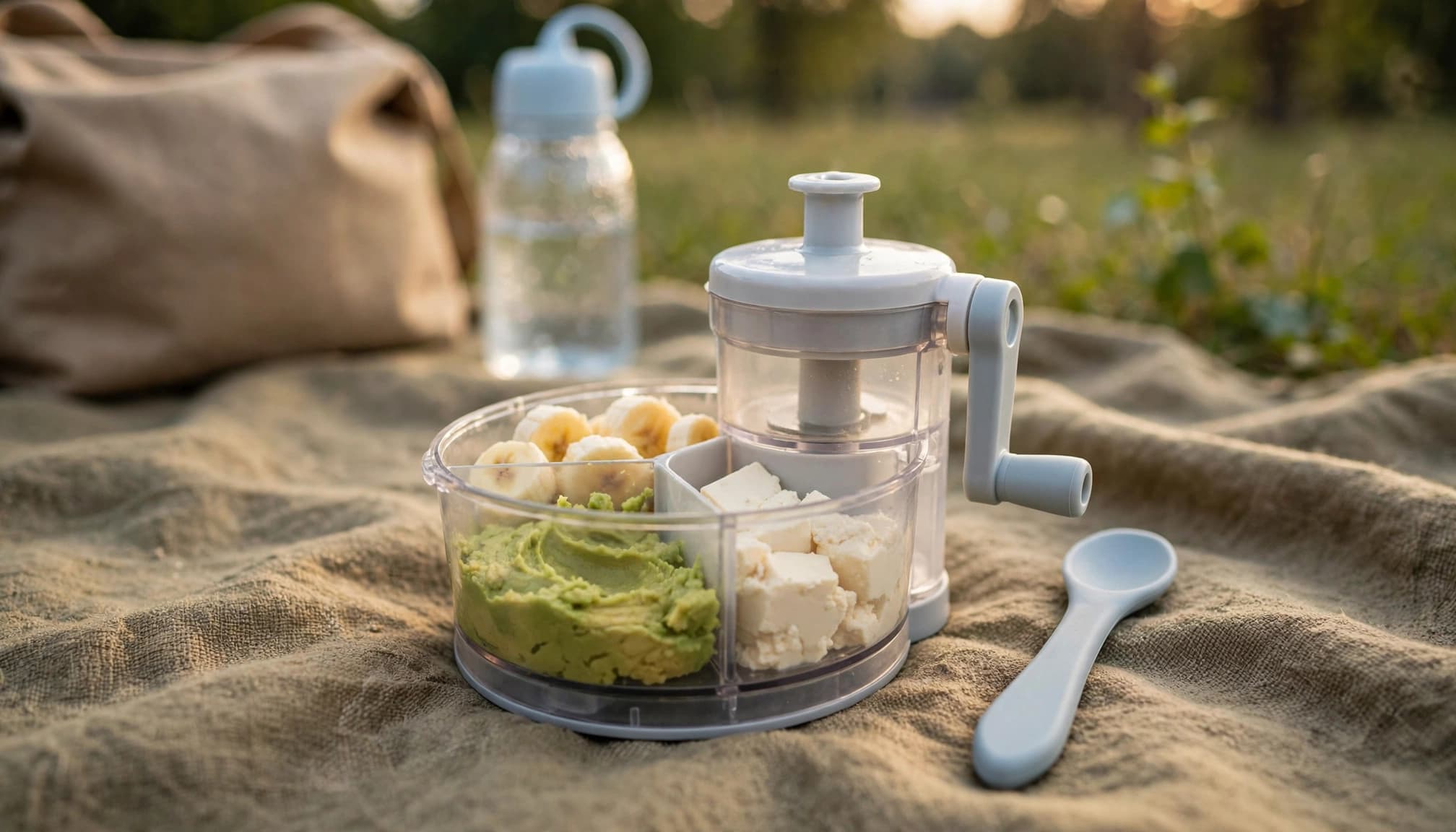
The Buy Now option can be useful for parents who want to prepare fresh food during park visits, restaurant meals, road trips, or travel days.
Key takeaways for feeding plant protein
- Cook lentils, beans, peas, quinoa, and other firm foods until they become very soft.
- Begin with smooth purees or mashes, then increase texture as your baby's skills develop.
- Thin nut and seed butters before serving, and never offer whole nuts.
- Introduce soy, peanut, tree nuts, and sesame in safe forms, one new allergen at a time.
- Pair plant-based protein with vegetables, fruit, healthy fats, or iron-fortified cereal.
- Keep your baby upright and stay close during every meal.
- Ask your pediatrician for personalized advice when allergies, eczema, premature birth, or feeding concerns are involved.
FAQ about plant-based protein for babies
Can babies eat lentils and beans?
Babies can eat lentils and beans when they are developmentally ready for solids and the food is prepared for their current skills. Cook them until they collapse easily, then mash or blend them. Check carefully for whole beans, tough skins, or firm pieces.
Is tofu safe for babies?
Soft or silken tofu can be mashed into a baby-friendly texture. Because tofu contains soy, introduce it as a new allergenic food when you can watch your baby. If your baby has an existing allergy or severe eczema, ask your pediatrician for guidance first.
How should I serve peanut butter?
Never give a baby whole peanuts or a thick spoonful of peanut butter. Thin smooth peanut butter with warm water, prepared formula, breast milk, yogurt, or fruit puree until it has a loose consistency. Introduce a small amount when your baby is ready for solids, then watch for symptoms.
Do plant-based foods provide enough protein by themselves?
Plant-based foods can contribute protein and iron to a baby's meals, but no single food needs to provide everything. Offer variety across the week and continue breast milk or infant formula as your baby's main source of nutrition during early solid feeding. A pediatrician or pediatric dietitian can help if your baby follows a fully plant-based diet or has restricted eating.
Conclusion
Plant-based protein foods for babies can be simple, affordable, and flexible. Lentils, beans, tofu, peas, chickpeas, nut and seed butters, and quinoa all work when you prepare them in a soft texture and introduce allergens carefully.
The most useful approach is to follow your baby's development rather than forcing a particular texture or portion. The Wonder Wean can assist with feeding your baby healthy foods even on the go by helping you mash fresh ingredients on the spot without electricity, whether you're at home, in a restaurant, at the park, or traveling.