

Organic vs Conventional Produce for Homemade Baby Food
Feeding your baby fresh food can feel simple until you reach the produce aisle. Organic vs conventional produce is a choice many parents weigh, especially when you are making every mash and puree yourself.
The reassuring answer is that both can belong in a healthy homemade baby-food routine. Your priorities, budget, access to groceries, and safe preparation matter more than buying perfection.
Key Takeaways for Choosing Baby Produce
- Both organic and conventional fruits and vegetables can provide valuable nutrients for babies who are ready for solids.
- The American Academy of Pediatrics (AAP) says organic foods have not been proven more nutritious than conventional foods, though organic produce may have lower pesticide-residue levels.
- Wash every fruit and vegetable, regardless of its label, by scrubbing it under cold running water.
- If organic fits your budget, choose it for foods you buy often or serve with the peel. If it doesn't, conventional produce is still a good choice.
- For homemade baby food, soft texture, safe handling, and a varied diet deserve more attention than a single shopping rule.
A well-washed conventional sweet potato is a better baby-food ingredient than an organic vegetable that stays unused because it costs too much or spoils.
Organic vs Conventional Produce: The Practical Difference
Organic and conventional produce begin with the same goal: growing food for people to eat. The main distinction is how farmers manage soil, pests, weeds, and fertilizers under different production standards.
What the USDA organic label means
The USDA National Organic Program sets the standards for foods labeled organic in the United States. For produce to earn USDA organic certification, it must come from land where prohibited substances have not been applied for three years before harvest.
Organic farming does not mean a crop is pesticide-free. Farmers may use approved pest-control methods and certain approved substances. However, organic rules restrict many synthetic pesticides and fertilizers used in conventional farming.
Conventional produce is still suitable for babies
Conventional farms may use approved pesticides and fertilizers to protect crops and manage pests. Food sold in the United States must meet federal safety requirements, and conventional fruits and vegetables remain a practical source of fiber, vitamins, and plant variety.
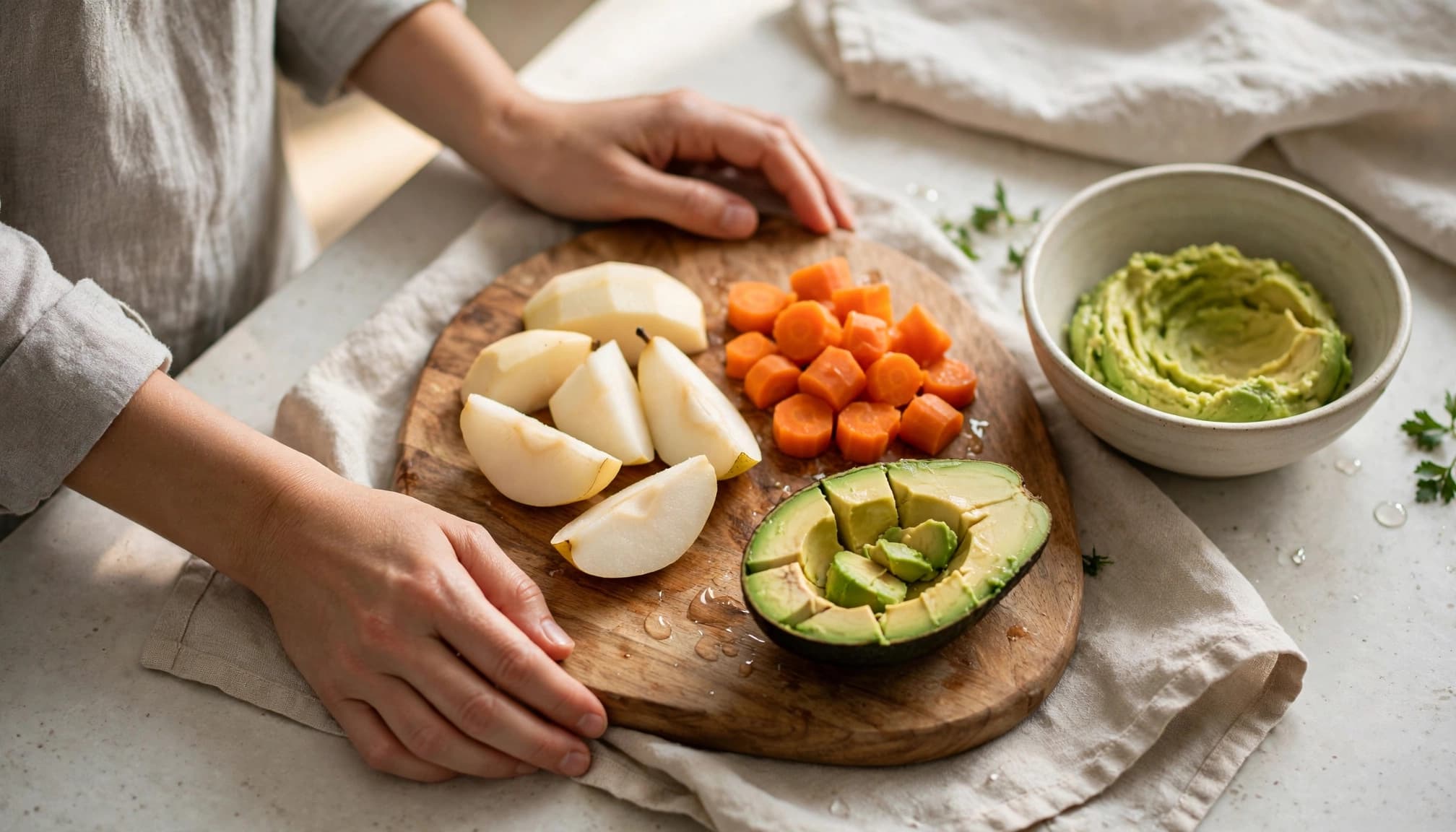
A banana, avocado, pear, squash, or frozen peas can become nourishing baby food whether it carries an organic label or not. Buying produce your family can afford and use consistently supports a more sustainable routine at home.
What Research Says About Nutrients and Residues
Parents often hear that organic food is automatically healthier. The evidence is more balanced, and it can take pressure out of grocery shopping.
Organic produce is not proven more nutritious
The AAP states that organic foods have not been shown to be more nutritious than conventionally grown foods. Both types of produce can offer nutrients that support a baby's growing diet, including vitamin C, folate, potassium, and fiber.
Instead of treating one label as the only healthy option, focus on variety over the week. Offer different colors, tastes, and textures that suit your baby's feeding skills. Soft cooked carrots, mashed beans, ripe fruit, oatmeal, eggs, and tender vegetables all have a place.
Lower residues may shape your preference
Organic produce may have lower pesticide-residue levels, which is why some families prefer it when they can. That preference is reasonable, especially if it gives you peace of mind.
Still, the AAP does not advise families to avoid all conventional produce. A selective approach often works well. You might buy organic berries or apples when the price is fair, then choose conventional bananas, potatoes, or frozen vegetables for the rest of the week.
Build a Produce Plan That Fits Your Budget
The best approach to organic vs conventional produce is one you can repeat without stretching your grocery budget. A baby does not need a separate aisle of expensive foods.
Buy foods your household will finish
Choose flexible ingredients that work in baby meals and family meals. Sweet potatoes can become a soft mash for baby and a dinner side dish. A bag of frozen peas can be cooked until tender, mashed for baby, and added to adult meals later.
Frozen produce is a useful option when fresh items are expensive or out of season. It also helps prevent waste when a baby decides today's favorite food is suddenly unacceptable. Buy small amounts of highly perishable produce and restock as needed.
Use organic selectively, not anxiously
Start with the foods your baby eats most often. If you serve apples, berries, spinach, or peaches several times each week, buying organic versions when they are available and affordable may feel worthwhile.
Then give yourself permission to choose conventional options without guilt. Store sales, seasonal produce, and frozen vegetables can make fresh feeding easier. A varied plate of well-prepared foods is more useful than a narrow menu built around a costly label.
| Shopping situation | A practical choice |
|---|---|
| Organic produce fits your regular grocery budget | Buy the items your baby eats often |
| Organic costs much more | Choose conventional produce and wash it well |
| Fresh produce may spoil before use | Keep frozen vegetables and fruit on hand |
| You are eating away from home | Choose soft, plain foods you can prepare safely |
The goal is to keep real foods available often, not to follow a rigid shopping rule.
Wash and Prepare Every Produce Choice Safely
Food safety applies to every ingredient, whether it is organic, conventional, fresh, or frozen. Washing and texture preparation are especially important for babies.
Scrub produce under cold running water
The AAP recommends scrubbing all produce under running cold water. Wash your hands before preparing food, and clean the counter, cutting board, bowl, and utensils first.
Rinse produce before peeling, slicing, or cooking it. That helps keep dirt and residue from the outside of the food from reaching the part your baby will eat. Skip soap, bleach, and commercial produce washes, since they are not meant to be eaten.
Make texture the first safety check
Hard raw foods need more than a quick rinse. Cook firm vegetables until they mash easily with a fork. Peel tough skins when needed, remove pits and seeds, and check every spoonful for hard pieces.
Raw apple, carrot coins, celery, firm pear chunks, whole grapes, nuts, and popcorn can create choking hazards. Serve your baby while seated upright in a secure high chair or other safe seat, and stay close throughout the meal.
If your baby has trouble managing textures, has a history of prematurity, or has feeding concerns, ask your pediatrician for guidance suited to your child.
Read Organic Labels Carefully on Packaged Foods
Fresh produce has a straightforward label, but packaged baby food can be more confusing. The word "organic" has specific USDA meaning, and the details matter.
Know the three USDA label categories
A package labeled "100% organic" contains only certified organic ingredients, except for water and salt. A product labeled "organic" must contain at least 95% certified organic ingredients.
"Made with organic" means at least 70% of the ingredients are certified organic. That phrase does not mean the entire pouch, cereal, or snack is organic, and products in this category cannot display the USDA organic seal.
Ingredients still matter more than the front label
Even an organic packaged food can contain ingredients you may not want to offer often, such as added sweeteners or excess sodium. Read the ingredient list and the Added Sugars line when you shop.
For homemade baby food, organic vs conventional produce gives you control over the starting ingredients. However, simple preparation matters too. Keep meals plain, use unsalted cooked foods, and let your baby get familiar with the taste of fruit, vegetables, grains, and protein-rich foods.
Make Fresh Baby Food Work Outside the House
A busy day does not have to send you straight to a pouch. A small amount of planning makes it easier to offer recognizable foods while visiting family, eating out, or spending time at the park.
Pack foods that need little preparation
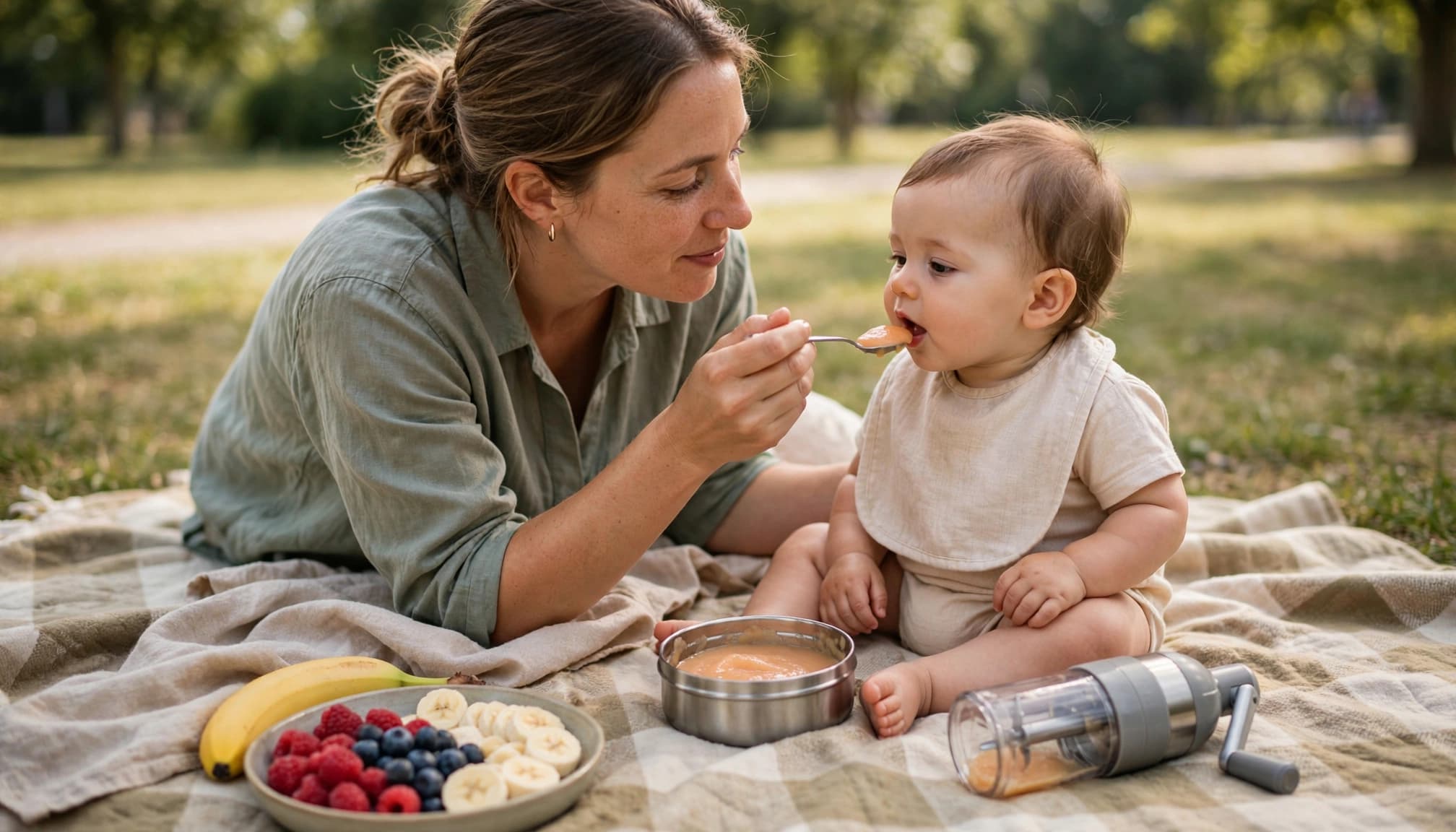
A ripe banana or avocado can stay whole until your baby is ready to eat. You can also bring a chilled container of properly cooked vegetables, mashed beans, or leftover oatmeal in an insulated bag with an ice pack.
At a restaurant, look for plain cooked options that suit your baby's stage. Unsalted steamed vegetables, a baked potato, plain rice, or soft beans can work after you check the temperature, texture, and any hard pieces.
Mash a fresh portion when your baby is hungry
Preparing a small serving right before eating limits waste and helps keep untouched food separate from the spoon your baby has used. Use clean hands, a clean bowl, and a clean spoon.
The compact, hand-powered Wonder Wean can mash ripe fruit and properly cooked soft foods without electricity. If fresh baby meals away from home would make your routine easier, you can Buy Now and keep a simple food-prep option in your diaper bag.
Frequently Asked Questions
Should I buy only organic produce for my baby?
No. Organic produce is an optional choice, not a requirement for a healthy baby diet. The AAP has not found that organic foods are more nutritious than conventional foods.
Offer the fruits and vegetables you can buy, prepare, and serve regularly. Washing produce well and using safe textures are important no matter which option you choose.
Does peeling conventional produce make it safe?
Peeling can remove the outer layer of some foods, but it should not replace washing. Rinse and scrub produce under cold running water before peeling or cutting it.
Some peels are nutritious and can be included when cooked soft and appropriate for your baby's stage. Other skins may be too tough, so remove them when they create an unpleasant or unsafe texture.
Are frozen vegetables okay for homemade baby food?
Yes. Frozen vegetables can be a convenient, budget-friendly choice. Cook them until soft, then mash or puree them to match your baby's current feeding skills.
Choose plain frozen produce without sauces or seasoning. Check the food's temperature before serving, and use clean utensils when portioning it into your baby's bowl.
A Calm, Flexible Way to Feed Your Baby Well
Organic produce can reduce pesticide-residue exposure, while conventional produce can make a varied produce routine more affordable. Healthy homemade baby food can include either choice when you wash it carefully, prepare it safely, and match the texture to your baby's abilities.
The Wonder Wean can help you feed your baby healthy foods even when you are away from your kitchen. Pack ripe fruit or properly chilled cooked foods, use clean utensils, and mash a small age-appropriate portion when your baby is ready to eat. Check for hard pieces and choking hazards, keep prepared foods cold when needed, and ask your pediatrician about allergies, medical needs, or feeding concerns.