

Low-Sodium Baby Foods: Whole Foods Made Simple
Your baby's meal can start with the same sweet potato, avocado, or lentils you're preparing for yourself. Making low-sodium baby foods is easier when you begin with plain ingredients and set some aside before seasoning the family meal.
You don't need an elaborate recipe collection or a refrigerator full of separate baby meals. A few familiar foods give you control over ingredients while keeping preparation manageable.
Start with foods that fit your baby's feeding plan, then use simple cooking and mashing methods to make them practical for everyday meals.
Key Takeaways
- Set aside your baby's food before adding salt, broth, sauces, or salty toppings to the family meal.
- Use familiar ingredients such as avocado, banana, cooked vegetables, plain lentils, and oats in combinations your baby already eats.
- Check packaged ingredients, keep prepared foods properly chilled, and carry simple feeding tools when you're away from home.
What Makes Low-Sodium Baby Foods Easier to Prepare?
Begin with plain ingredients
Whole foods give you a straightforward starting point because you can decide what goes into the dish. A sweet potato doesn't need a seasoning packet, and a ripe banana doesn't need extra ingredients before mashing.
However, preparing food at home doesn't automatically keep added salt out. Stock cubes, bottled sauces, seasoned beans, and salted butter can all enter an otherwise simple recipe.
Choose plain ingredients first. Then build flavor with the foods themselves: roasted squash tastes different from steamed zucchini, while avocado creates a different texture than cooked pear.
Separate the baby's food before seasoning
Make the baby's portion part of your normal cooking routine. When you cook lentils or steam vegetables, set some aside before adding salt or sauce.
This works better than trying to remove seasoning afterward. Once salt dissolves into soup or coats cooked rice, you can't separate it from the food by mashing.
Reserve plain ingredients before seasoning the family dish. Mashing changes texture, but it doesn't remove salt already mixed into food.
The rest of the family can season their plates separately, so dinner doesn't require two completely different recipes.
Fruits and Vegetables That Need Little Preparation
Ripe fruit for quick mashes
Banana and avocado are useful when you want to prepare food immediately. Peel or open them at mealtime, then mash with a fork or hand-powered food maker.
Ripe pear, peach, and mango offer more variety. Their texture changes with ripeness, so check the fruit rather than assuming every piece will mash equally well. Cook firmer fruit when needed.
You can serve familiar fruit on its own or combine it with plain oats or yogurt already included in your baby's feeding routine. There's no need to add syrup, sugar, or a sweetened fruit spread.
Keep preparation flexible. If a pear remains firm, save it for cooking instead of struggling to mash it raw.
Cooked vegetables for everyday meals
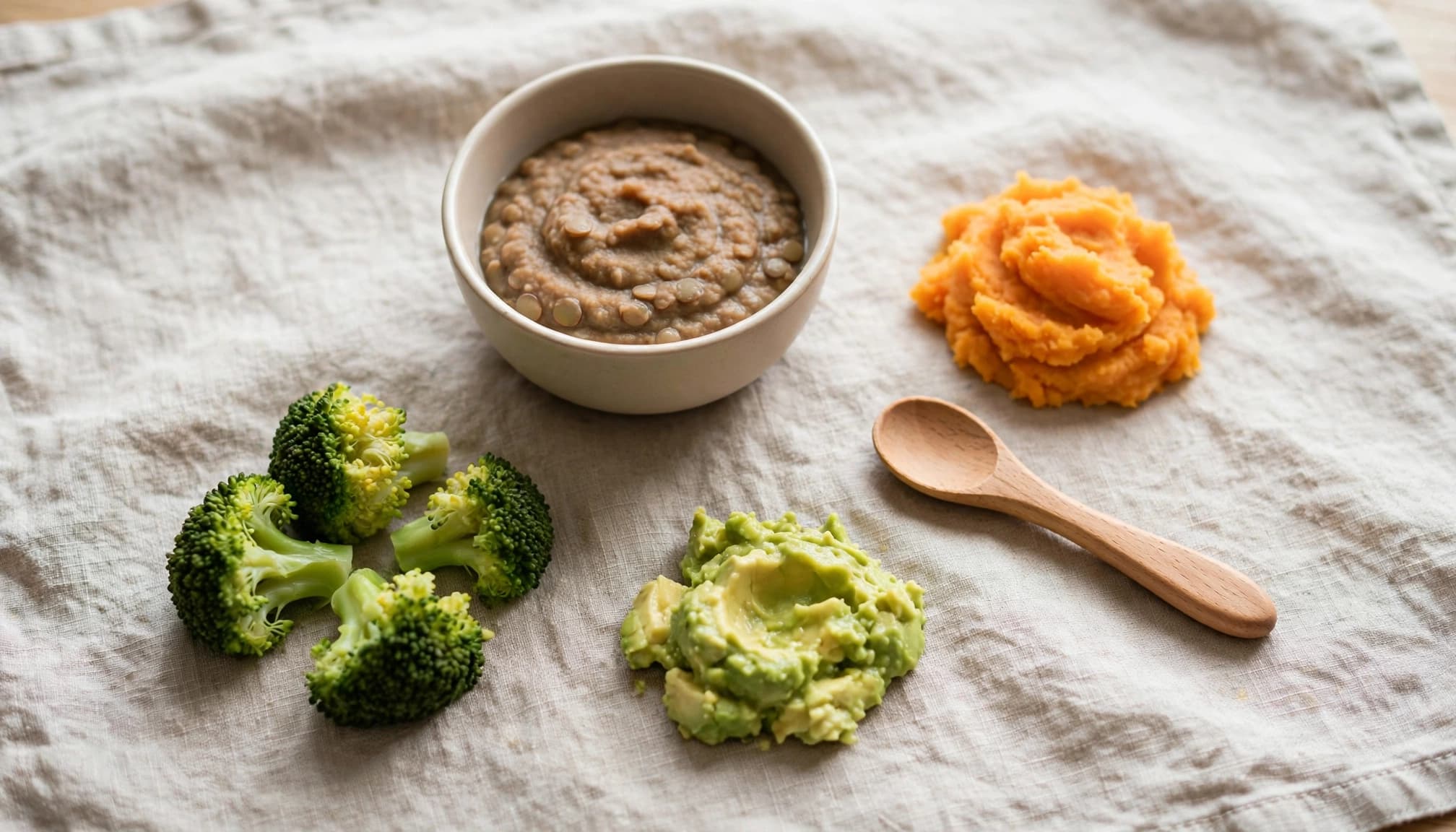
Sweet potato, squash, broccoli, carrots, peas, and zucchini work well in homemade mashes. Steam, boil, or roast them without adding salt.
Cook until the vegetables mash easily, then adjust the consistency to your baby's established feeding routine. A little water or unsalted cooking liquid can help when a mash feels too dense.
Some vegetables need extra attention during preparation. Peas can leave skins behind, while broccoli can retain small fibers. A fine-mesh sieve offers another way to change the texture when fork-mashing isn't enough.
Use vegetables you already cook regularly. Familiar groceries are easier to keep available than ingredients bought for a single complicated recipe.
Beans, Lentils, Grains, and Other Meal Ingredients
Plain beans and lentils
Lentils and beans make useful bases for savory baby meals. Cook dried varieties in plain water, or look for canned options labeled without added salt.
For canned beans, read both the ingredients and nutrition panel. Drain and rinse them before mashing, but don't assume rinsing makes every seasoned product equivalent to a plain one.
Cook lentils and beans thoroughly, then mash them alone or with a familiar vegetable. Lentils and carrot create a different meal from beans and squash without requiring a separate cooking method.
If your family eats beans often, reserve some before adding salsa, seasoning blends, or salty cooking liquid. That small change makes the same grocery purchase useful for everyone's dinner.
Plain grains, eggs, and yogurt
Cook oats with water rather than relying on flavored instant packets. Plain rice or quinoa can also become part of a mash with vegetables your baby already eats.
For eggs, keep preparation simple and cook them fully. Set aside plain egg before adding cheese, salt, or a seasoned topping.
Plain, unsweetened yogurt is another convenient ingredient when it fits your baby's feeding plan. Check the label because fruit-flavored varieties may contain additional sweeteners.
These foods expand your options beyond fruit and vegetable purees. However, ingredient variety should follow your baby's established feeding routine and any individualized advice from their healthcare professional.
Easy Whole-Food Combinations to Serve
Once your baby is familiar with the individual ingredients, combinations can make meal preparation more flexible. Mash ingredients separately first when you want to check how each one behaves.
These pairings use ordinary groceries and straightforward preparation.
| Familiar ingredients | Easy way to serve them |
|---|---|
| Banana and avocado | Mash together just before serving. |
| Sweet potato and lentils | Combine cooked ingredients and adjust with unsalted cooking liquid. |
| Pear and oats | Stir mashed ripe or cooked pear into plain cooked oats. |
| Squash and white beans | Mash thoroughly cooked ingredients together. |
| Plain yogurt and banana | Stir freshly mashed banana into unsweetened yogurt. |
The useful pattern is a plain base plus another familiar ingredient, rather than a recipe with many additions.
You can also keep ingredients separate until mealtime. For example, cooked sweet potato can accompany lentils today and combine with squash tomorrow.
Start with what you have available. Repeating familiar ingredients in different combinations is more practical than buying a new set of groceries for every meal.
Read Labels Without Making Shopping Complicated
Check the ingredients and sodium line
Fresh produce is simple to identify, but pantry ingredients deserve a closer look. Compare canned beans, broths, sauces, and grain products before adding them to your baby's meal.
Look for salt in the ingredient list, then check the sodium information. When comparing products, use equivalent labeled serving sizes so the comparison makes sense.
Also distinguish between "reduced sodium" and "no salt added." The first describes a reduction compared with a reference product; the second describes how the food was prepared. Neither replaces reading the full label.
Plain frozen vegetables can be convenient, too. Choose vegetables without sauce or seasoning rather than assuming everything in the freezer aisle contains the same ingredients.
Watch what accompanies the whole food
A plain baked potato and a potato covered in cheese sauce are different starting points. Similarly, unseasoned beans differ from beans prepared with bacon or a seasoning mix.
Bread, cheese, prepared soups, and condiments can bring salt into meals even when you don't add any at the table.
You don't need to reject every packaged ingredient. Instead, choose products that suit the meal and your baby's feeding plan.
If your child needs a medically prescribed sodium restriction, ask their healthcare professional for individualized guidance. A general collection of low-sodium baby foods doesn't replace that plan.
Prepare Ingredients Ahead Without Saving Every Leftover
Batch preparation works best when you cook plain ingredients you can use in several ways. Steam extra vegetables during dinner preparation or cook lentils before finishing the family's dish.
Store untouched food in clean, covered containers and refrigerate it promptly. Label containers so you can identify what they hold and when you prepared them.
At mealtime, transfer food into a separate serving bowl. Keep the storage container away from the spoon your baby eats from, and discard food that has contacted your baby's mouth.
Freezing untouched food offers another option when you won't use it soon. Freeze ingredients separately if you want more flexibility later, then thaw and handle them according to appropriate food-storage guidance.
When reheating leftovers, heat them thoroughly, stir well, and let them cool before serving. Check for unevenly heated areas.
A manageable routine matters more than a freezer packed with elaborate recipes. Prepare what your household can store, handle, and use reliably.
Serve Fresh Food Away From Home
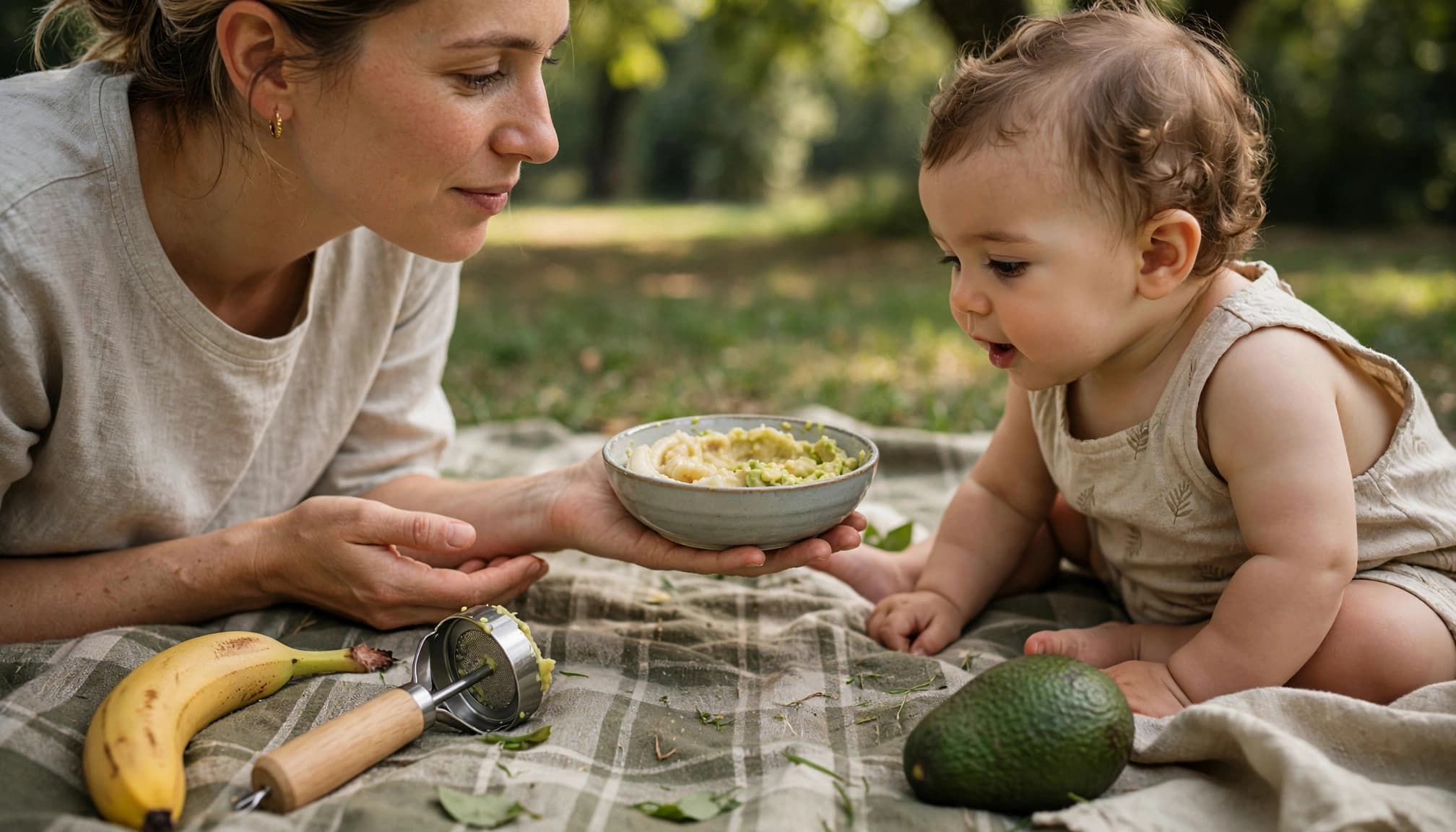
An outing doesn't require a complete menu packed into your diaper bag. Choose familiar ingredients, a clean bowl and spoon, and any chilled storage your food requires.
Whole bananas and avocados can stay intact until you're ready to prepare them. Meanwhile, cooked vegetables, yogurt, and other prepared foods need appropriate temperature control during the trip.
At restaurants, ask whether vegetables, rice, or a baked potato can come without added salt, sauce, or toppings. Check how the kitchen prepares them, since apparently plain food may already contain seasoned broth or butter.
A compact hand-powered food maker can help you mash suitable ingredients at a picnic table or restaurant. However, preparing food on the spot doesn't replace handwashing, clean utensils, or proper storage.
Keep used feeding equipment separate from clean supplies. Wash tools according to their manufacturer's instructions after use, rather than putting food-covered parts back into the feeding bag.
For road trips, plan a proper meal stop instead of feeding while the car is moving. Having familiar ingredients ready makes that stop easier to manage.
Frequently Asked Questions
Can I use frozen vegetables for baby food?
Plain frozen vegetables are a practical alternative when fresh produce isn't available. Check that the package contains vegetables without added sauce or seasoning.
Cook them according to the package directions, then prepare the texture your baby already handles. Buying frozen ingredients can also help you use only what you need, instead of rushing to finish fresh produce.
Do homemade baby foods always need a blender?
Many soft foods mash with a fork, while cooked ingredients may work with a sieve or hand-powered food maker. The right tool depends on the ingredient and the texture you're preparing.
Start with ripe fruit or thoroughly cooked vegetables rather than expecting a tool to soften firm food. Follow your baby's feeding plan when choosing the finished consistency.
Keep Fresh Feeding Simple
Low-sodium baby foods fit more easily into daily life when you start with plain groceries and separate ingredients before seasoning. A repeatable routine makes fresh feeding manageable without turning every meal into a project.
The Wonder Wean can help parents offer healthy whole foods even on the go. Its compact, hand-powered pocket blender lets you mash suitable ripe fruit or cooked ingredients without electricity, whether you're visiting family, eating out, or traveling. Keep it alongside clean feeding supplies and appropriate chilled storage. If it fits your routine, Buy Now to add a portable preparation option to your baby's feeding kit.