

Baby Food With Flavor: Herbs and Mild Spices Safely
Baby food doesn't need to taste bland. Once your baby is ready for solids, small amounts of fresh herbs and mild spices can add variety without salt, sugar, or packaged sauces. The practical goal is to introduce herbs baby can enjoy in safe textures and familiar foods.
Most babies begin complementary foods around 6 months, when they can sit with support, control their head, bring food to their mouth, and swallow rather than push food out. Start slowly, follow your baby's cues, and keep breast milk or formula as the main source of nutrition.
Start With Readiness, Not a Calendar
Age matters, but developmental skills matter too. Ask your pediatrician for guidance if your baby was born prematurely, has feeding difficulties, or isn't showing signs of readiness.
Signs your baby may be ready
Your baby may be ready for solids when they can sit upright with support and hold their head steady. Reaching for food, opening the mouth when food approaches, and showing interest in family meals are also useful signs.
Early meals are practice. A teaspoon or two may be enough at first. Your baby might accept a new flavor one day and refuse it the next. Offer food when your baby is calm and alert, then stop when they turn away, close their mouth, or become upset.
Match the texture to your baby's skills
Smooth or well-mashed foods often work well for new eaters. As your baby gains confidence, gradually offer thicker mashes and soft lumps. Later, soft graspable pieces can support self-feeding.
Food should be soft enough to squash easily between your fingers. Cook carrots, green beans, apples, and other firm foods until tender. Always seat your baby upright in a stable high chair and stay within arm's reach during the entire meal.
How to Introduce Herbs Baby Can Enjoy Safely
There is no general rule requiring babies to eat completely unseasoned food. Guidance from the CDC and NHS focuses on avoiding added salt, sugar, honey, unsafe textures, and other foods that can cause harm.
Fresh herbs and mild spices can be used as flavoring in small amounts. They aren't a substitute for a balanced meal, and they don't need to provide a claimed health benefit. Their main value is helping your baby become familiar with the natural flavors your family eats.
Begin with familiar foods
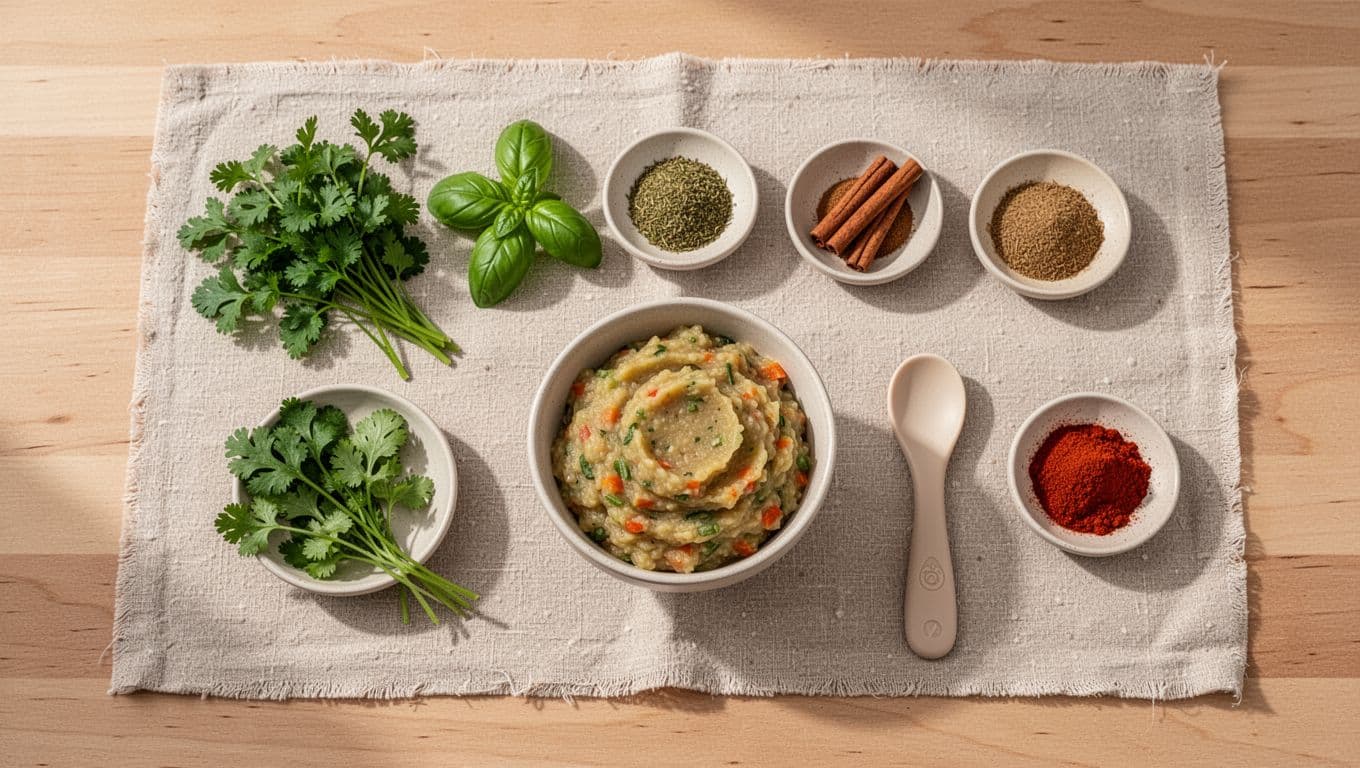
Mix a small amount of finely chopped parsley, basil, cilantro, or cooked garlic into a food your baby already handles well. Mild additions such as cinnamon in oatmeal, cumin in mashed beans, or oregano with soft vegetables can also add variety.
Use a tiny pinch of ground spice at first. For fresh herbs, wash them carefully, remove tough stems, and mince or puree the leaves. Avoid large leaves, woody pieces, whole seeds, or stringy parts that could be difficult to manage.
Keep flavors mild
Babies don't need hot peppers, spicy sauces, salty seasoning blends, or strongly seasoned restaurant foods. A little mild ginger, garlic, cinnamon, cumin, or basil can be enough.
Set aside your baby's portion before adding salt, stock cubes, soy sauce, hot sauce, or a bottled sauce to the family meal. This lets your baby share the basic ingredients without taking in unnecessary sodium or intense flavors.
A Simple Way to Add a New Flavor
Introducing one change at a time helps you understand what your baby enjoys and makes potential problems easier to spot. It also keeps the meal calm instead of turning the tray into a crowded taste test.
Add a small amount to one soft food
Start with a familiar food, such as mashed sweet potato, oatmeal, avocado, lentils, or plain yogurt. Add a very small amount of one herb or mild spice, then offer a few bites.
Keep the rest of the meal familiar. If your baby accepts the flavor, you can offer it again another day and slowly use a little more as appropriate. Repeated exposure matters because babies often need several opportunities to become comfortable with a new taste.
Progress from single foods to simple combinations
Once your baby manages individual ingredients, combine foods with similar textures. Try sweet potato with peas, oatmeal with banana and cinnamon, or mashed beans with avocado and a little cumin.
Iron-rich foods deserve regular attention once solids begin. Soft lentils, beans, fully cooked egg, tender meat, fish, tofu, and iron-fortified infant oatmeal can fit into meals. Pairing them with soft produce creates variety without relying on sweetened snacks.
Introduce Allergens Carefully
Herbs and spices are separate from common food allergens, but they often appear in meals that contain ingredients such as dairy, wheat, sesame, egg, peanut, tree nuts, fish, or shellfish. Introduce those foods thoughtfully.
The NHS and CDC support introducing common allergens around the time a baby is ready for solids rather than delaying them by default. Offer one new allergenic food at a time in a safe form, preferably when your baby is well and you can observe them.
Use safe forms
Never give whole nuts or a thick spoonful of nut butter. Smooth peanut or tree-nut butter should be thinned with water, breast milk, formula, or yogurt, or stirred into oatmeal until loose and smooth.
Offer fully cooked egg, pasteurized yogurt, or well-cooked fish with bones removed. For wheat, a soft cereal or tender pasta may be easier to manage than a dry, hard piece of bread. Keep the ingredient list short during a first exposure.
Know the reaction signs
Possible allergic reactions include hives, facial or lip swelling, repeated vomiting, coughing, wheezing, or unusual sleepiness. Stop feeding the suspected food and contact your child's medical professional for advice.
Trouble breathing, swelling of the tongue or face, pale or bluish skin, sudden limpness, or severe symptoms require emergency care. If your baby has severe eczema, an existing food allergy, or a previous reaction, speak with your pediatrician before introducing allergens.
Once an allergenic food is tolerated, continue offering it regularly in an age-appropriate form, unless your child's clinician advises otherwise.
Avoid These Ingredients and Choking Risks
Flavorful food still needs careful preparation. Cooking softens many ingredients, but it doesn't remove every hazard.
Foods to leave out for now
Do not give honey before 12 months, including honey baked into foods. The CDC warns that honey can contain spores linked to infant botulism.
Cow's milk can be used in cooking or mixed into food from around 6 months, but it shouldn't replace breast milk, formula, or become your baby's main drink before 1 year. Avoid unpasteurized milk and dairy products.
Skip added sugar, excess salt, stock cubes, salty sauces, sweetened yogurt, and highly processed seasoning mixes. Babies don't need these ingredients to enjoy food. Ripe pear, banana, or sweet potato can provide natural sweetness when a dish needs it.
Change risky foods before serving
Whole grapes, cherry tomatoes, and other round foods should be cut lengthwise into quarters. Cook hard apples, carrots, and broccoli until soft. Remove pits, tough skins, bones, hard crusts, and fish bones.
Never serve whole nuts, popcorn, hard raw vegetables, hard candy, firm chunks of apple, sausage coins, or sticky spoonfuls of nut butter. Thick nut butter should be thinned or spread in a very thin layer.
Gagging can be noisy and may happen while babies learn to manage food. Choking can be quiet because the airway is blocked. Learn infant choking first aid before finger foods become part of your routine.
Make Family Meals Baby-Friendly
Fresh baby food doesn't require a separate menu. Cook plain ingredients for everyone, remove your baby's portion, and season the rest for older family members.
A pot of lentils, carrots, and sweet potato can become a soft mash. Roast chicken, squash, and rice can be finely chopped or blended with a little liquid. Soft beans, avocado, oatmeal, cooked vegetables, and plain yogurt are practical ingredients for quick meals.
Wash produce, cook food thoroughly, and let hot food cool before serving. Refrigerate perishable leftovers promptly, and discard food left in your baby's bowl because saliva can introduce bacteria.
Feed Healthy Foods Away From Home
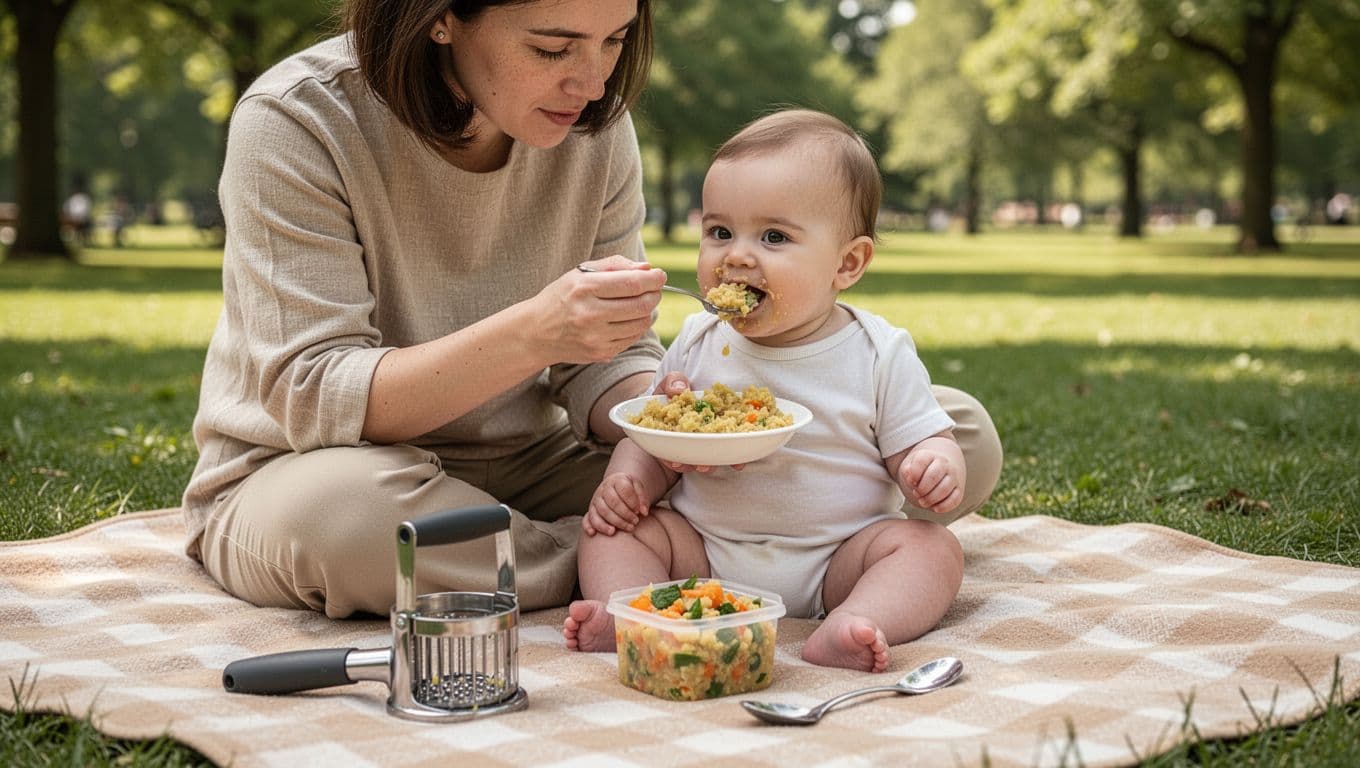
Travel, errands, and restaurant meals don't have to end your baby's fresh-food routine. Bring a spoon, bib, small container, and insulated bag when you'll be away during a meal.
Choose familiar foods first
Before a trip, introduce new foods at home. That gives you time to notice a reaction and avoids testing an unfamiliar ingredient during a busy outing.
At a restaurant, suitable options may include plain oatmeal, ripe avocado, a baked sweet potato, soft vegetables, unsalted beans, plain yogurt, or fully cooked egg. Ask how food was prepared because restaurant meals may contain broth, salt, butter, marinades, or sauces.
Mash food wherever you are
A hand-powered food masher can turn suitable soft foods into a texture your baby can manage without electricity. The Wonder Wean helps parents mash fresh food at home, in a restaurant, at a park, or while traveling, using ingredients already available.
For a compact way to prepare real food on the go, you can Buy Now and keep a simple feeding tool in your diaper bag.
Key Takeaways
- Begin solids around 6 months when your baby shows developmental readiness.
- Add tiny amounts of mild herbs or ground spices to familiar, soft foods.
- Leave out added salt, sugar, honey before 12 months, and hot sauces.
- Introduce common allergens one at a time in safe forms.
- Keep your baby upright and supervised during every meal.
- Learn the difference between noisy gagging and quiet choking.
- Ask your pediatrician for personal guidance when allergies, eczema, or feeding concerns are present.
FAQ About Herbs and Spices for Babies
Can babies eat fresh herbs?
Babies can usually try small amounts of finely chopped or pureed fresh herbs once they are ready for solids. Wash herbs well, remove tough stems, and mix them into a soft food. Start with a familiar meal and avoid large leaves or stringy pieces.
What mild spices can I try first?
Small amounts of cinnamon, cumin, basil, oregano, mild ginger, or cooked garlic may add flavor to baby-friendly foods. Use ground spices or finely prepared herbs, and avoid hot peppers, spicy sauces, salty blends, and whole seeds.
Should I introduce one herb at a time?
Introducing one new flavor at a time can make it easier to see what your baby likes and identify a possible reaction. This is especially helpful when the meal also contains a common allergen. Offer a small portion, then continue with familiar foods.
Can spices cause an allergic reaction?
Any food ingredient can cause a reaction, although herbs and culinary spices are not among the most common infant allergens. Watch for hives, swelling, vomiting, coughing, wheezing, or breathing trouble after a new food. Contact a medical professional when symptoms appear, and seek emergency care for breathing problems.
Help Your Baby Enjoy Real Food Anywhere
Introducing herbs and mild spices is less about creating elaborate recipes and more about helping your baby experience safe, varied flavors. Start with tiny amounts, use soft textures, avoid the ingredients and shapes that create risk, and let your baby decide how much to eat. With the Wonder Wean in your bag, healthy fresh food can stay part of your baby's routine even when home, electricity, and a full kitchen aren't available.