

High Calorie Baby Foods for Healthy Growth
Some babies eat three bites and seem full, while others need more energy in a few spoonfuls. The right high calorie baby foods add useful nutrition without relying on sugar or oversized portions.
Once your baby shows readiness for solids, focus on foods that provide healthy fats, iron, protein, and enough texture practice for their stage. The CDC recommends starting solids at about 6 months, never before 4 months, when your baby can sit with support, control their head, open their mouth for food, and swallow instead of pushing food out.
Start With Age, Readiness, and Milk
Age gives you a general starting point, but your baby's skills matter more than a calendar. Some babies move through textures quickly, while others need extra time with smooth foods.
Begin solids when your baby is ready
A ready baby can sit upright with support and keep their head steady. They may reach for food, open their mouth when you offer a spoon, and show interest during family meals.
Start with small servings, often 1 to 2 tablespoons. The CDC suggests offering food every 2 to 3 hours as your baby grows, although appetite can change from one meal to the next. Let your baby decide how much to eat. Turning away, closing the mouth, or losing interest usually means the meal is finished.
Keep breast milk or formula central
Breast milk or infant formula remains your baby's main source of milk and nutrition until about 12 months. Solids add flavor, texture, iron, and energy, but they don't replace regular milk feeds during the first year.
Plain whole cow's milk can begin at 12 months. Before then, avoid using it as your baby's main drink. You can mix iron-fortified infant cereal with breast milk or prepared formula for a smooth, energy-rich meal.
The Best High Calorie Baby Foods to Start With
When choosing high calorie baby foods, look for natural ingredients that pack nutrition into a small serving. A spoonful of avocado, full-fat yogurt, or smooth bean puree can offer more value than a larger portion of watery fruit puree.
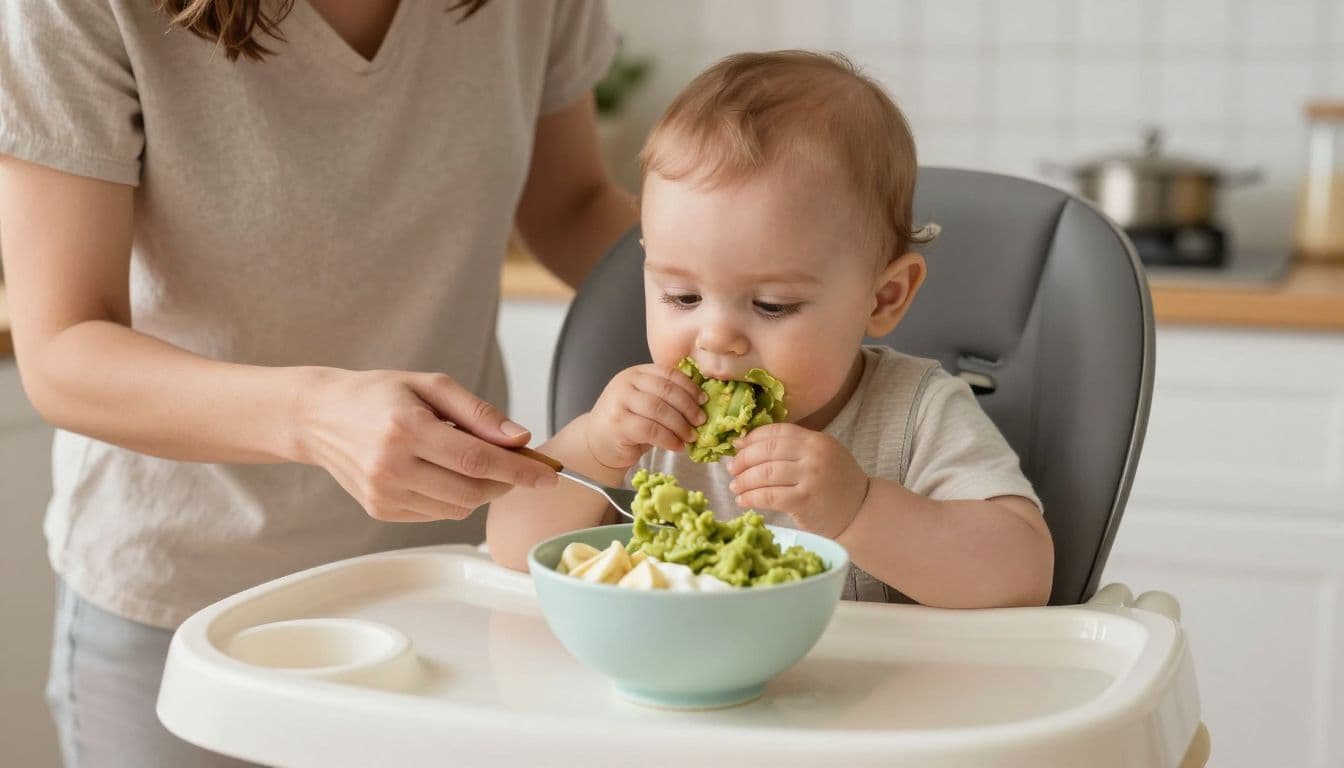
Add healthy fats in baby-safe forms
Avocado is soft, easy to mash, and rich in unsaturated fat. Serve it plain, or combine it with banana, beans, or iron-fortified cereal.
Full-fat plain yogurt provides energy and protein without added sugar. Choose pasteurized yogurt with no honey or sweeteners. Soft cheese can also work when finely grated, melted, or mixed into a mash.
A small amount of olive or canola oil can loosen vegetables and add calories. Stir it into mashed sweet potato, squash, lentils, or beans after cooking.
Smooth nut butter is another option once your baby is ready for solids. Thin a small amount with warm water, yogurt, or cereal. Never offer a thick spoonful, since sticky nut butter can block the airway.
Prioritize iron and protein
Iron supports healthy development, and babies need iron-rich foods after about 6 months. Offer tender meat or poultry that is finely minced, blended, or shredded into very soft pieces. Eggs, lentils, beans, and iron-fortified infant cereals are useful plant and animal options.
Pairing foods can make meals more satisfying. Try mashed lentils with olive oil, egg with avocado, or soft chicken mixed with sweet potato. These combinations give your baby energy while adding protein and iron.
A small portion with avocado, yogurt, or oil can carry more energy than a larger bowl of thin puree.
Match Foods to Your Baby's Developmental Stage
Textures should change as your baby gains control. The CDC recommends starting with smooth or mashed foods, then moving toward finely chopped, ground, and soft finger foods.
| Developmental stage | Foods to try | Safe texture |
|---|---|---|
| Around 6 to 8 months | Avocado, plain yogurt, mashed beans, infant cereal, smooth egg | Smooth, thick, or softly mashed |
| Around 8 to 10 months | Finely minced meat, lentils, soft pasta, mashed vegetables, shredded omelet | Thicker mash, small soft lumps |
| Around 10 to 12 months | Soft chicken, ripe fruit, tender vegetables, toast strips with thin spread | Soft pieces that mash easily |
At 6 to 8 months, keep textures smooth
Begin with spoonable foods that don't require chewing. Mashed avocado, pureed beans, yogurt, and thick infant cereal are good starting points. You can gradually leave small, soft lumps as your baby manages food more confidently.
Cook vegetables until you can mash them easily with a fork. Add breast milk, prepared formula, or a little water to adjust thickness. Avoid making every food thin, because thicker textures help babies learn to move food around their mouths.
At 9 to 12 months, build texture and independence
Many babies can handle soft finger foods during this stage, but skills vary. Offer tender strips of omelet, very soft vegetables, ripe banana, finely shredded chicken, or soft pasta in pieces your baby can pick up.
Stay close while your baby eats. Some gagging can happen while babies learn textures, but coughing, choking, or difficulty breathing requires immediate attention.
Build Simple, Energy-Dense Baby Meals
A balanced baby meal doesn't need a long recipe or a separate shopping trip. Combine one energy-rich ingredient with a source of iron or protein, then add a soft fruit or vegetable when it fits.
Try these combinations:
- Mashed avocado with soft scrambled egg gives healthy fat and protein.
- Full-fat plain yogurt with mashed banana provides energy and a smooth texture.
- Sweet potato with finely shredded chicken creates a soft, savory meal.
- Lentils with olive oil and mashed carrot add iron, protein, and extra energy.
- Iron-fortified oat cereal mixed with prepared formula creates a familiar first food.
Pair ingredients instead of adding sugar
Ripe banana, pear, and sweet potato can add natural sweetness. Cinnamon may be suitable in a small amount, but sugar, syrups, and sweetened yogurt don't improve your baby's nutrition.
Choose foods with little or no added salt. Babies can enjoy the natural taste of vegetables, beans, meat, and fruit. As your family cooks, remove your baby's portion before adding salt or strong seasonings.
Follow hunger and fullness cues
High-calorie foods work best in small, responsive meals. Your baby doesn't need to finish a bowl for the meal to count.
Offer food while your baby is calm and alert. Pause when they slow down or turn away. Pressuring a baby to eat can make meals harder, especially when appetite naturally changes during growth, teething, or illness.
Prepare High-Calorie Foods Safely
Fresh food is convenient when you prepare it in a form your baby can manage. Wash produce, cook meat and eggs thoroughly, and use clean utensils and surfaces.
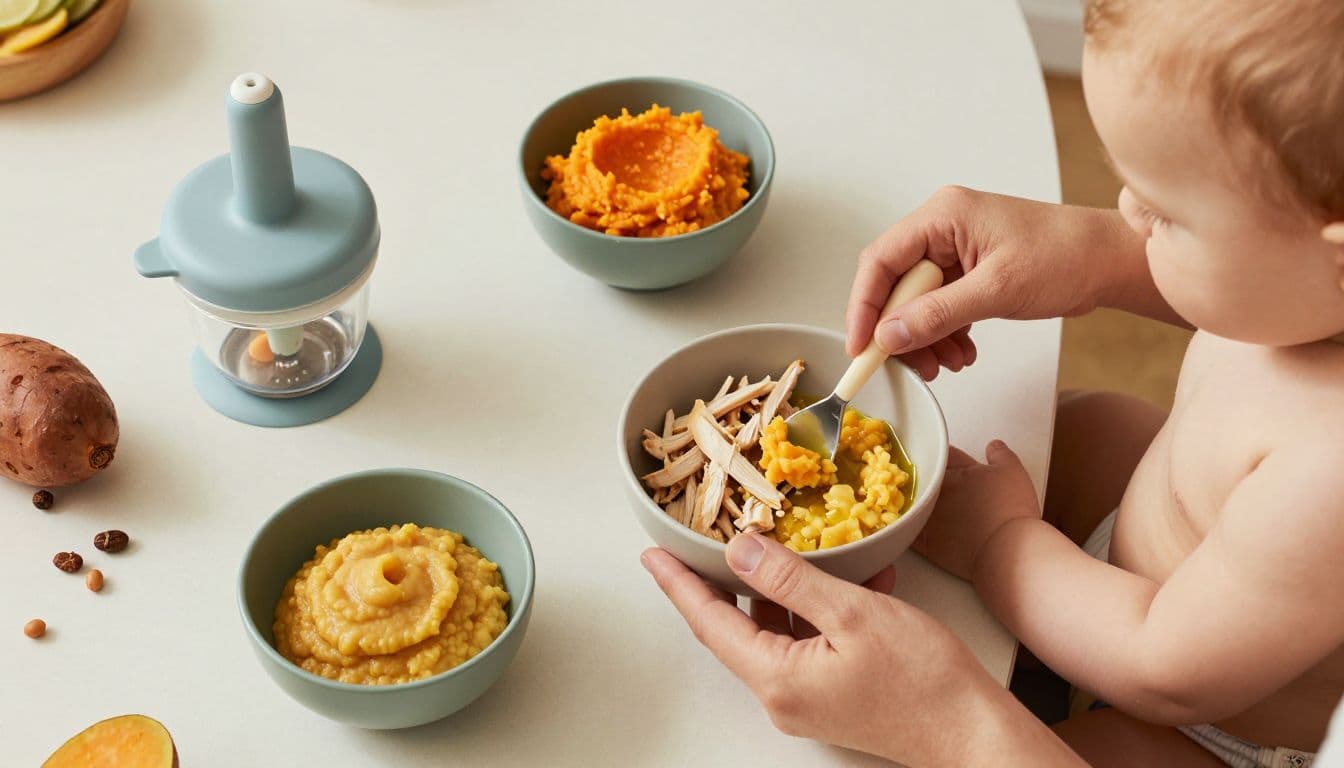
Move gradually from smooth to soft and lumpy
Start with mashed foods, then make the texture thicker as your baby develops. A fork can create a useful texture without turning every meal into a completely smooth puree.
Meat should be tender and finely shredded or minced. Beans need to be soft enough to mash. Remove bones, tough skins, pits, and hard pieces before serving.
Offer food in a stable high chair with your baby sitting upright. Keep your attention on the meal, and avoid feeding while your baby is lying down, walking, playing, or riding in a moving car.
Keep preparation practical
You can prepare a batch of mashed sweet potato or beans at home, then add fresh avocado, yogurt, or oil at mealtime. Store food safely and discard leftovers that your baby has eaten from directly.
When you eat away from home, choose a soft, plain ingredient that you can mash into a baby-safe texture. A ripe banana, avocado, soft vegetables, or an unsalted portion of a family meal can work well when prepared carefully.
Introduce Allergens and Avoid Choking Hazards
Allergenic foods deserve a calm, planned introduction. Common examples include peanut, tree nuts, egg, dairy, wheat, soy, fish, and sesame.
Introduce one new allergen at a time
The CDC recommends starting with one single-ingredient food at a time and waiting 3 to 5 days before adding another new food. This gives you a clearer way to notice a reaction.
Once your baby is ready for solids, AAP guidance summarized by the CDC supports introducing common allergens during infancy rather than delaying them. Offer a small amount in a safe texture, such as smooth peanut butter thinned into yogurt or cereal.
Watch for hives, facial swelling, repeated vomiting, wheezing, or breathing trouble. Stop feeding and contact a medical professional if a reaction occurs. Call emergency services for breathing difficulty or severe symptoms.
Avoid common choking risks
Never offer whole nuts, popcorn, whole grapes, raw carrot pieces, hot dogs, whole peas, large chunks of meat, or a thick spoonful of peanut butter. These foods can block the airway.
Cut food into small, soft pieces, or mash it when your baby is still learning to manage textures. Always supervise meals closely. A baby should stay seated and upright while eating, with an adult close enough to respond quickly.
Honey should wait until after the first birthday because of the risk of infant botulism. Also avoid hard, sticky, or round foods that your baby can't easily mash with their gums.
Know When to Ask Your Pediatrician for Help
Healthy growth looks different for every baby. Your pediatrician can review your baby's growth pattern, milk intake, appetite, and feeding skills instead of judging progress from one meal.
Ask for guidance if your baby regularly refuses food, struggles to swallow, coughs during feeds, vomits often, eats very little, or seems to have trouble gaining weight. You should also ask before starting solids if you're unsure whether your baby is ready.
A pediatrician can help you choose higher-energy foods when needed and may refer you to a feeding specialist or registered dietitian. Babies with diagnosed allergies, swallowing concerns, or medical conditions need individual advice.
Conclusion
Growing babies need more than extra calories. Their meals should also provide iron, protein, healthy fats, and textures that match their skills. Start around 6 months when your baby shows readiness, keep breast milk or formula central during the first year, and introduce new foods with close attention to safety.
When you're away from home, the Wonder Wean makes fresh feeding easier. This compact, hand-powered pocket blender lets you mash a baby-safe portion of avocado, banana, beans, or a soft family meal without electricity or a pouch. If that fits your routine, Buy Now and keep convenient, natural baby food within reach wherever the day takes you.