

Healthy Fats for Babies: Simple Foods for Starting Solids
Starting solids can feel complicated when every food needs the right texture, portion, and preparation. Healthy fats for babies make meals more satisfying while giving you simple whole-food options to serve at home or away.
Avocado, plain yogurt, egg, soft fish, olive oil, and thinned nut or seed butter can fit into a baby's meals when prepared for their current skills. Your pediatrician should guide you if your baby has allergies, severe eczema, feeding concerns, or delayed oral-motor skills.
Why healthy fats for babies matter during complementary feeding
Babies have small stomachs, so each bite needs to offer useful nourishment. Fat provides concentrated energy and can make a small serving of mashed vegetables, beans, or fruit more filling.
During complementary feeding, breast milk or infant formula remains important while your baby gradually learns to eat family foods. Healthy fats can add creaminess and moisture to foods that might otherwise feel dry, such as egg, beans, lentils, or finely minced meat.
Fat also gives you an easy way to build a balanced meal without relying on sweetened snacks. A spoonful of avocado mixed with egg, or olive oil stirred into lentils, can add energy while your baby practices new flavors and textures.
The goal isn't to make every meal perfect. Offer a variety of foods, follow your baby's hunger and fullness cues, and let texture progress at a comfortable pace.
Healthy fats for babies: six easy whole-food choices
Whole foods can be surprisingly practical once you focus on ingredients that mash, soften, or blend easily. Always adapt each option to your baby's development.
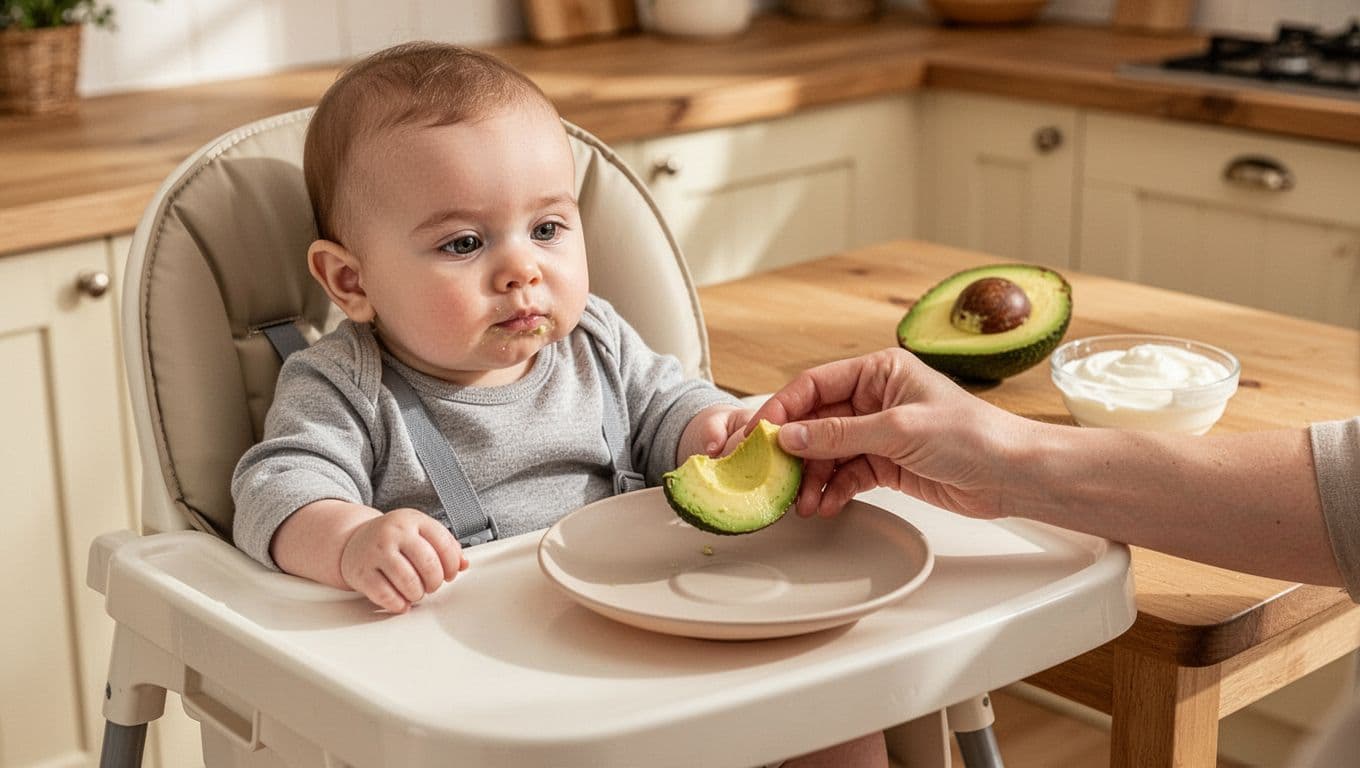
Avocado
Ripe avocado needs no cooking. Mash it with a fork until smooth, or leave soft lumps if your baby is ready for more texture. For early spoon-feeding, loosen it with a little water, breast milk, prepared formula, or plain yogurt.
Older babies may manage a soft avocado wedge that squashes easily between your fingers. Remove the peel and pit, and stay close while your baby explores it.
Avocado also pairs well with fully cooked egg, beans, lentils, or soft vegetables. Its mild flavor makes it useful when you want to combine a new food with something familiar.
Full-fat plain yogurt
Choose plain, pasteurized, full-fat yogurt without added sugar, syrups, or fruit flavoring. Stir it into mashed banana, peach, pear, oatmeal, or avocado.
Yogurt can soften foods that feel crumbly or dry. It also works as a base for thinned seed butter after your baby has safely tried that allergen.
Cow's milk can be used as an ingredient in foods, but it shouldn't replace breast milk or infant formula as your baby's main drink before the first birthday. Ask your pediatrician if your family avoids dairy or your baby has symptoms after eating it.
Egg and soft fish
Fully cooked egg is a useful source of protein and can be mashed with avocado, sweet potato, or plain yogurt. Scramble the egg until fully cooked, then finely mash it or offer a soft omelet strip when your baby is ready for graspable foods.
Soft fish, such as fully cooked salmon, can be flaked into mashed potato, yogurt, or vegetables. Check carefully for bones and remove the skin if it stays tough. The fish should be moist, soft, and easy to break apart.
Olive oil
A small drizzle of olive oil can loosen mashed beans, lentils, potatoes, or vegetables. Choose plain oil rather than a flavored blend containing salt or spicy ingredients.
Mix it into food after cooking instead of using it to create a separate sauce. This keeps the meal simple and helps your baby learn the taste of ordinary family ingredients.
Nut and seed butters
Smooth peanut, almond, sunflower seed, or tahini can add fat and flavor. However, thick nut or seed butter is sticky and difficult for a young baby to manage.
Thin a small amount with warm water, breast milk, prepared formula, yogurt, oatmeal, or fruit puree until it becomes smooth and easy to swallow. Never offer a spoonful of thick nut butter or whole nuts.
Build balanced meals with fat, iron, and protein
Healthy fats work best as part of a meal rather than as the only food on the tray. Once your baby starts solids, include iron-rich foods regularly. Eggs, beans, lentils, tender meat, fish, tofu, and iron-fortified infant cereal can all fit when prepared safely.
Try simple combinations
Keep the ingredients familiar and the texture soft. These combinations can be adjusted for early spoon-feeding or later self-feeding:
- Mash avocado with fully cooked egg.
- Stir olive oil into soft lentils and vegetables.
- Mix full-fat plain yogurt with mashed banana or peach.
- Combine flaked salmon with soft potato and plain yogurt.
- Thin smooth peanut butter into oatmeal after peanut has been introduced safely.
- Mash beans with sweet potato and a small amount of olive oil.
Offer a small amount first, then respond to your baby's appetite. Some days bring only a few bites, while others bring more interest.
Let texture develop gradually
A smooth puree isn't the only appropriate starting texture. Many babies begin with smooth or thick mashed foods, then move toward soft lumps, finely minced foods, and tender pieces as their control improves.
If your baby is ready for finger foods, a soft strip of omelet, ripe avocado, or cooked sweet potato may be easier to grasp than tiny hard cubes. Food should squash easily between your thumb and finger.
Make texture and choking safety part of every meal
A nutritious food can still be unsafe when it is hard, round, sticky, or served in the wrong shape. Preparation matters as much as the ingredient.
Cook and modify firm foods
Steam apples, carrots, broccoli, green beans, and other firm produce until they squash easily. Raw apple, raw carrot coins, hard vegetables, and firm fruit chunks are too difficult for many new eaters.
Remove pits, seeds, tough skins, bones, and hard pieces. Cut round foods such as grapes and cherry tomatoes lengthwise into small, manageable pieces when your baby is developmentally ready for them.
Avoid whole nuts, popcorn, hard candy, marshmallows, coin-shaped sausage, large pieces of meat or cheese, and thick clumps of nut butter. Thin sticky foods into another soft food instead.
Food size and texture matter more than whether the ingredient is labeled healthy. A soft-looking food can still be risky in a round, dense, or sticky shape.
Supervise every bite
Seat your baby upright in a stable high chair or secure feeding seat. Stay close and attentive for the entire meal. Don't feed your baby while lying down, crawling, walking, riding in a vehicle, or sitting in a reclined stroller or car seat.
Gagging can be noisy as babies learn to manage food. Choking may be silent and can prevent breathing. An infant CPR and choking-response class can help caregivers prepare for an emergency. Ask your pediatrician for advice about safe textures and feeding skills.
Introduce allergens carefully and follow medical guidance
Egg, dairy, peanut, tree nuts, sesame, wheat, soy, fish, and shellfish are common allergens. When your baby is ready for solids, introduce one new allergenic food at a time in a safe texture and a small amount.
Offer new foods when your baby is well and you can observe them. Introducing foods separately makes it easier to identify a possible reaction. Once your baby tolerates a food, regular inclusion can help make it part of normal meals.
Use safe forms
Serve fully cooked egg, boneless flaked fish, smooth thinned peanut butter, and tahini mixed into yogurt or puree. Whole nuts, whole seeds, thick nut butter, and undercooked egg aren't appropriate choices for infants.
If your baby has severe eczema, an existing food allergy, or a previous reaction, speak with your pediatrician before introducing peanut or other common allergens. Seek urgent medical help for breathing trouble, facial swelling, repeated vomiting, or other signs of a serious reaction.
Skip unnecessary extras
Don't give honey before 12 months, including honey baked into foods. Avoid added sugar and excess salt in everyday baby meals. Ripe fruit, cinnamon, or mild herbs can add flavor without making food sweet or salty.
Packaged puffs, fruit snacks, and teething crackers may be convenient, but they shouldn't replace meals containing iron, protein, fruits, vegetables, beans, and other whole foods.
Serve healthy fats when you're away from home
Travel doesn't require a separate menu of processed baby foods. At a restaurant, soft avocado, plain yogurt, cooked egg, flaky fish, beans, and steamed vegetables may be easy to adapt, provided you can confirm the ingredients and prepare the texture safely.
Bring a small insulated bag, clean spoon, bib, and a container of foods your baby has already tolerated. Introducing unfamiliar allergens during a rushed outing makes it harder to observe your baby or identify the cause of a reaction.
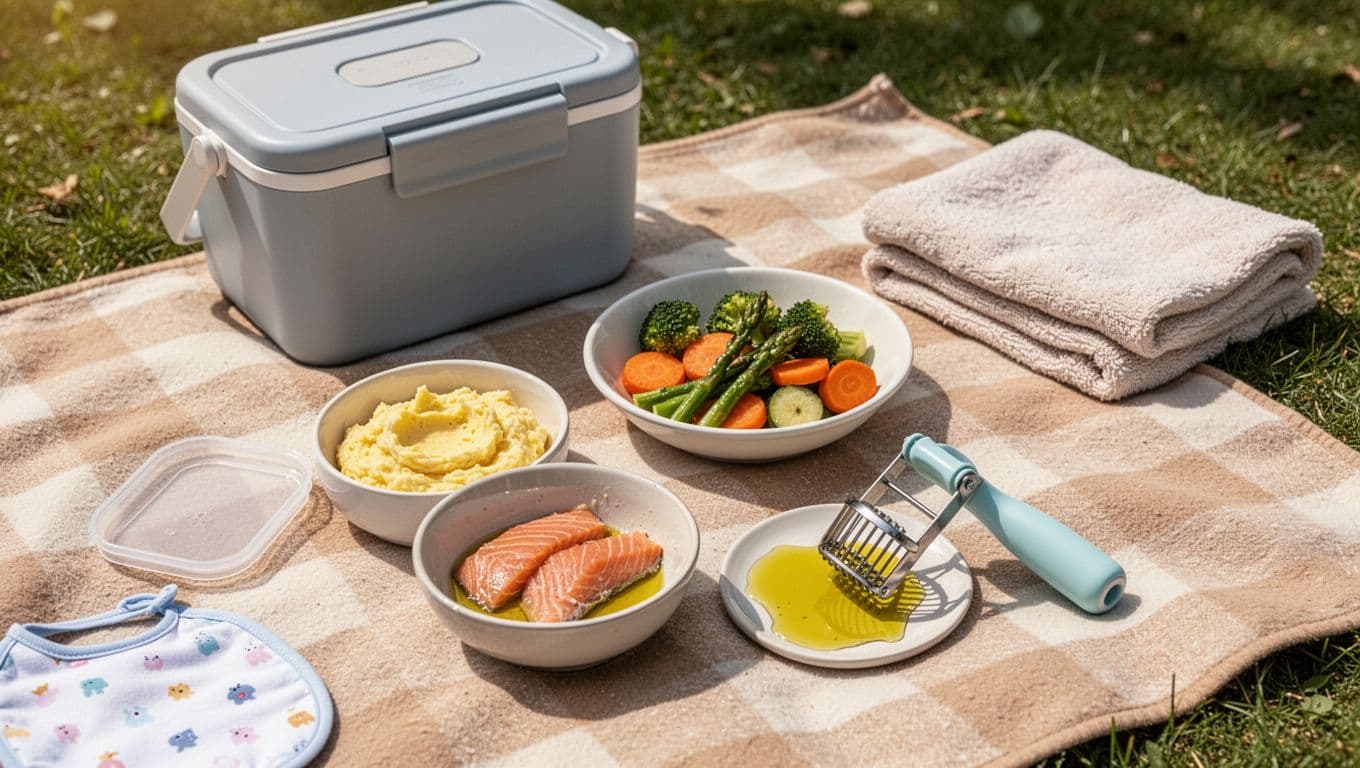
Mash food where you are
A hand-powered food masher can turn suitable family foods into a soft meal without electricity. You can mash avocado at a picnic, soften cooked vegetables at a restaurant, or combine previously tolerated ingredients during a trip.
Wash your hands, use clean utensils, and keep perishable food chilled. Prepare only what your baby is likely to eat, then follow safe food-handling guidance for any leftovers.
For families who want fresh baby food outside the kitchen, the Buy Now option for the Wonder Wean can make on-the-spot mashing easier.
Key takeaways
- Healthy fats can add energy and moisture to small baby meals.
- Avocado, full-fat plain yogurt, egg, soft fish, olive oil, and thinned nut or seed butter are practical choices.
- Pair fats with iron-rich foods such as egg, lentils, beans, fish, meat, tofu, or fortified cereal.
- Cook firm foods until soft and change the shape of round foods.
- Never offer whole nuts, popcorn, hard raw produce, thick nut butter, or other dense choking hazards.
- Keep your baby upright and supervised throughout every meal.
- Introduce allergens one at a time in safe forms, and ask your pediatrician for personalized guidance.
FAQ about healthy fats for babies
When can babies start eating healthy fats?
Many babies begin complementary foods around 6 months when they can sit with support, control their head and neck, bring food toward their mouth, and swallow. Readiness varies, so follow your pediatrician's advice rather than using age alone.
Can babies eat full-fat yogurt?
Plain, pasteurized, full-fat yogurt can be offered as a food when your baby is ready for solids. Choose an unsweetened option and mix it with mashed fruit, avocado, oatmeal, or another soft food. It shouldn't replace breast milk or infant formula as the main drink before 12 months.
How should I serve peanut butter?
Never offer a thick spoonful or whole peanuts. Mix a small amount of smooth peanut butter with warm water, prepared formula, breast milk, oatmeal, yogurt, or fruit puree until it is thin and smooth. If your baby has severe eczema or a known allergy, ask your pediatrician about introduction first.
Is olive oil safe for babies?
Olive oil can be stirred into soft vegetables, beans, lentils, or potatoes in a small amount. Use plain oil and avoid recipes with added salt. The finished food should match your baby's current texture skills.
Conclusion
Healthy fats can make starting solids simpler, especially when you use foods already in your kitchen. Focus on soft textures, safe shapes, varied ingredients, and calm supervision rather than perfect meals.
With the Wonder Wean, you can mash familiar healthy foods at home, in a restaurant, or on the go. That makes it easier to offer your baby fresh, whole-food meals wherever the day takes you.