

Healthy Baby Snacks Made With Real, Simple Foods
Between meals can feel surprisingly long when a baby is hungry, tired, and not ready for the next full plate. Healthy baby snacks can bridge that gap with familiar foods that offer nourishment without turning every snack into a recipe project.
The best choices are usually already in your kitchen: ripe fruit, vegetables, plain yogurt, eggs, beans, and soft grains. Match the texture to your baby's current eating skills, keep portions small, and let appetite lead the way.
Start With Your Baby's Hunger and Milk Schedule
For babies under 12 months, breast milk or infant formula remains the main source of nutrition. Snacks are a chance to practice eating, explore taste and texture, and take the edge off hunger between milk feeds and meals.
A snack may make sense when your baby has started solids, can sit with support or independently, and seems hungry between regular meals. However, a fussy baby isn't always hungry. Tiredness, teething, or a busy room can look similar.
Keep portions small and pressure low
Begin with a few spoonfuls or two to three pieces of soft food. You can always offer more if your baby is still interested. A large snack close to a meal may leave them too full to eat later.
Try to eat together when you can. Babies learn by watching, and a calm snack at the table often goes better than food offered while they crawl or play.
Let your baby set the pace
Some babies eat eagerly at breakfast and barely touch an afternoon snack. That is normal. Growth, sleep, illness, and new skills all affect appetite.
Offer the food, then allow your baby to decide whether and how much to eat. Avoid coaxing "one more bite," because responsive feeding helps babies notice their own hunger and fullness signals.
A snack does not need to be a separate baby product. A safe portion of the food you already eat is often the simplest choice.
Healthy Baby Snacks for Different Eating Stages
Texture matters as much as ingredients. Babies develop at different rates, so follow your child's skills rather than the calendar alone. If you have concerns about chewing, swallowing, growth, or food refusal, speak with your pediatrician.
For babies new to solids
Babies who are still learning to move food around their mouths usually do best with smooth mashes, thick purees, and very soft foods. Use a pre-loaded spoon when your baby is ready to bring it to their mouth.
Good first snack options include mashed avocado, mashed ripe banana, plain full-fat yogurt, soft cooked apple puree, and mashed sweet potato. A little breast milk, formula, or water can loosen a mash if needed.
Keep the flavor plain at first. Babies don't need sweeteners, salty sauces, or seasonings to enjoy real food.
For babies managing soft finger foods
Once your baby can sit upright, bring food to their mouth, and handle soft lumps, offer graspable pieces. Food should squish easily between your thumb and finger.
Steamed broccoli florets, ripe pear wedges, strips of omelet, tender zucchini spears, and soft toast strips are useful choices. Larger pieces can be easier for early self-feeders to hold than tiny diced bits.
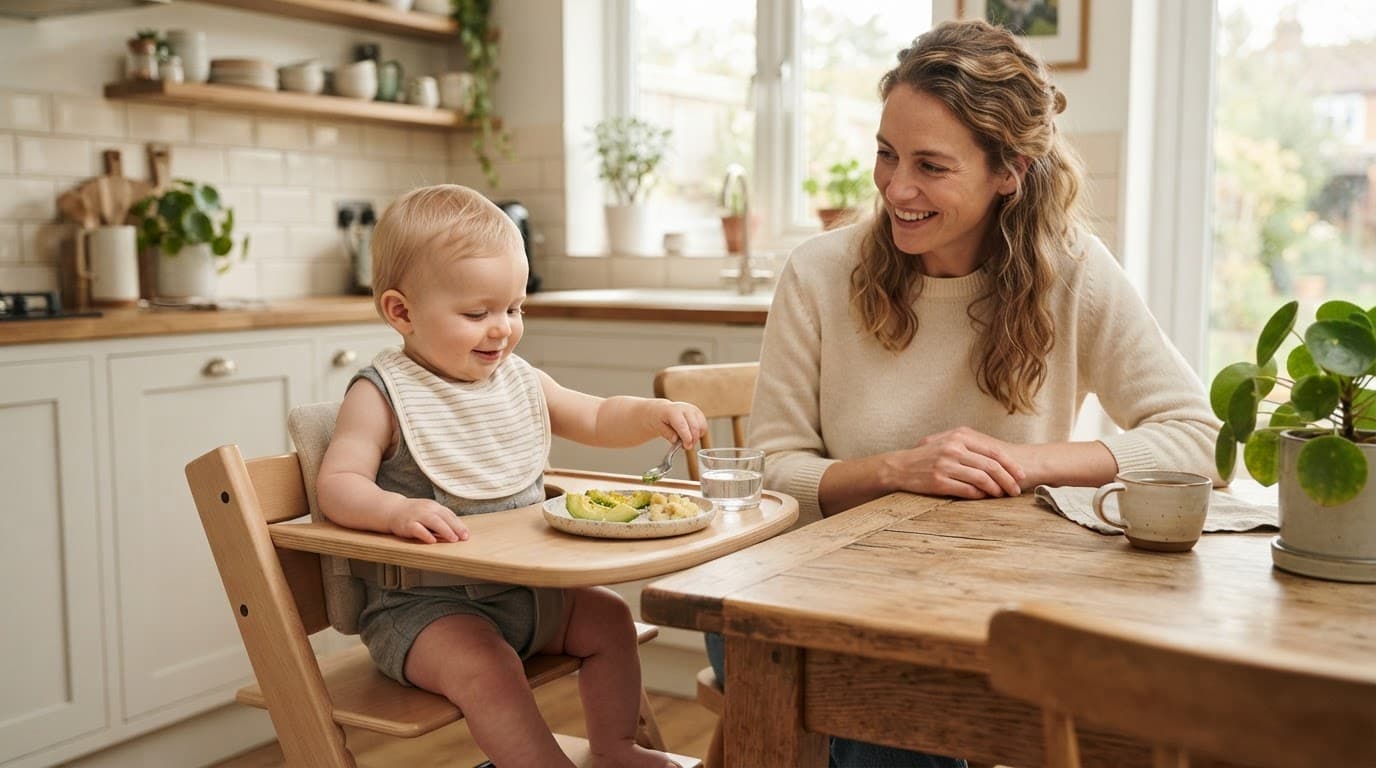
As your baby gets better with a pincer grasp, you can move toward small, soft pieces of shredded chicken, smashed beans, ripe berries cut safely, or tender pasta shapes. Stay nearby and seated with your baby for every snack.
Build Whole-Food Snacks That Satisfy
Fruit alone is easy, but it may not keep some babies satisfied for long. Pairing a carbohydrate-rich food with protein or fat can make a snack more filling and introduce a wider range of nutrients.
You do not need complicated combinations. Think in terms of one soft produce item plus one nourishing add-on.
Simple combinations to rotate
These healthy baby snacks use common foods and take little preparation:
- Mashed banana with plain full-fat yogurt offers a creamy snack for spoon-feeding practice.
- Warm mashed sweet potato with lentils gives a baby both soft texture and plant protein.
- Soft pear slices with a thin layer of smooth peanut butter add fruit and fat once peanut has been introduced safely.
- Scrambled egg with mashed avocado works well for babies who enjoy savory foods.
- Oatmeal topped with mashed berries is a gentle option for a morning or afternoon snack.
- Flaked salmon mixed into mashed potato makes a soft, satisfying choice for babies already eating fish.
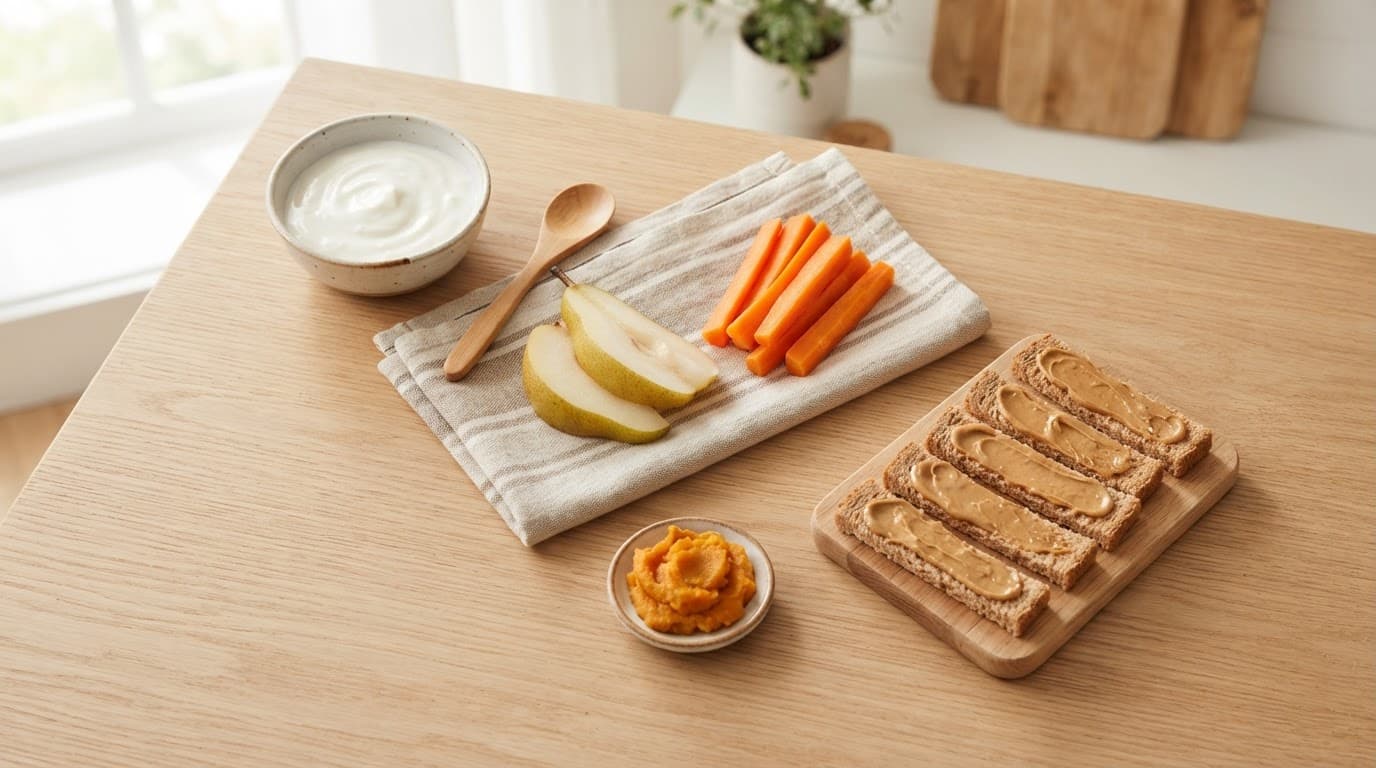
Use ripe produce whenever possible. A hard apple becomes soft after steaming, and frozen berries become easier to mash after thawing. These small adjustments make ordinary family food suitable for a younger eater.
Include iron-rich foods often
Around six months, babies need dietary iron alongside breast milk or formula. Snacks can help you fit iron-rich choices into the day without relying on sweet packaged bars or puffs.
Offer finely shredded meat, mashed beans, lentils, egg, iron-fortified infant cereal, tofu, or fish in safe textures. Pair plant sources such as beans or lentils with vitamin C-rich foods like strawberries, kiwi, broccoli, or tomato to support iron absorption.
Avoid Choking Hazards and Unwanted Extras
A food can be nutritious and still be unsafe in the wrong shape. Always seat your baby upright in a high chair or secure feeding seat. Stay within arm's reach and avoid snacks in car seats, strollers, or while lying down.
Gagging can happen as babies learn to handle food. It is noisy and protective. Choking is often silent and needs immediate action, so caregivers should know infant choking first aid.
Change the shape, not the food
Modify common foods before serving:
- Cook firm vegetables until soft, then offer sticks or mash them.
- Quarter grapes, cherry tomatoes, and berries lengthwise rather than serving them whole.
- Spread smooth nut butter thinly on toast or stir it into yogurt or oatmeal.
- Remove pits, seeds, tough peels, bones, and fish skin.
- Grate or cook apple instead of giving hard raw slices.
Avoid whole nuts, popcorn, hard candy, chunks of raw carrot, spoonfuls of nut butter, sausages cut into coin shapes, and large cubes of cheese or meat. Round, hard, sticky, and slippery foods need extra care.
Skip added sugar, excess salt, and honey
Babies don't need sweetened yogurt, cookies, juice, flavored cereal, or snack crackers to enjoy eating. Added sugars can crowd out more nourishing foods and make naturally sweet fruit seem less interesting.
Choose plain yogurt and unsalted beans or vegetables when possible. Rinse canned beans to lower sodium, and hold back salty sauces. Honey is not safe before 12 months because it can contain spores that cause infant botulism.
Introduce Allergens With Care and Consistency
Common allergens include peanut, egg, dairy, wheat, soy, sesame, fish, shellfish, and tree nuts. Current guidance often supports introducing these foods in safe forms during infancy rather than delaying them without a medical reason.
Offer a new allergen when your baby is well and you can watch them for a while. Start with a small amount, such as smooth peanut butter thinned into yogurt or a tiny portion of well-cooked egg.
Know when to get medical advice
Talk with your pediatrician before allergen introduction if your baby has severe eczema, a known food allergy, or a previous reaction. Your clinician may recommend a more tailored plan.
Seek urgent care for symptoms such as trouble breathing, swelling of the face or tongue, repeated vomiting, widespread hives, or sudden lethargy after eating. For babies who tolerate an allergen, include it regularly in normal meals and snacks.
A rotation of healthy baby snacks can include allergen foods without becoming stressful. Plain yogurt with fruit one day and thinly spread peanut butter on toast another day is enough variety.
Make Snack Prep Easier on Busy Days
A small amount of preparation can prevent the late-afternoon scramble. When you cook vegetables for dinner, set aside an unseasoned portion before adding salt. Keep ripe bananas, avocados, plain yogurt, eggs, and frozen fruit available for quick options.
Batch-cooking is helpful, but it doesn't need to fill your freezer with identical cubes. Cook a pot of lentils, steam vegetables, or bake sweet potatoes, then use them across several family meals.
Pack familiar foods for outings
For a short outing, bring a cooler bag with chilled yogurt, fruit puree, or cooked vegetables. A ripe banana or avocado travels well in its peel. A clean spoon, bib, and damp cloth make the moment easier.
Offer food only when your baby is seated safely and you can pay attention. If a snack gets skipped because the outing runs long, milk feeds can cover the gap until you are settled again.
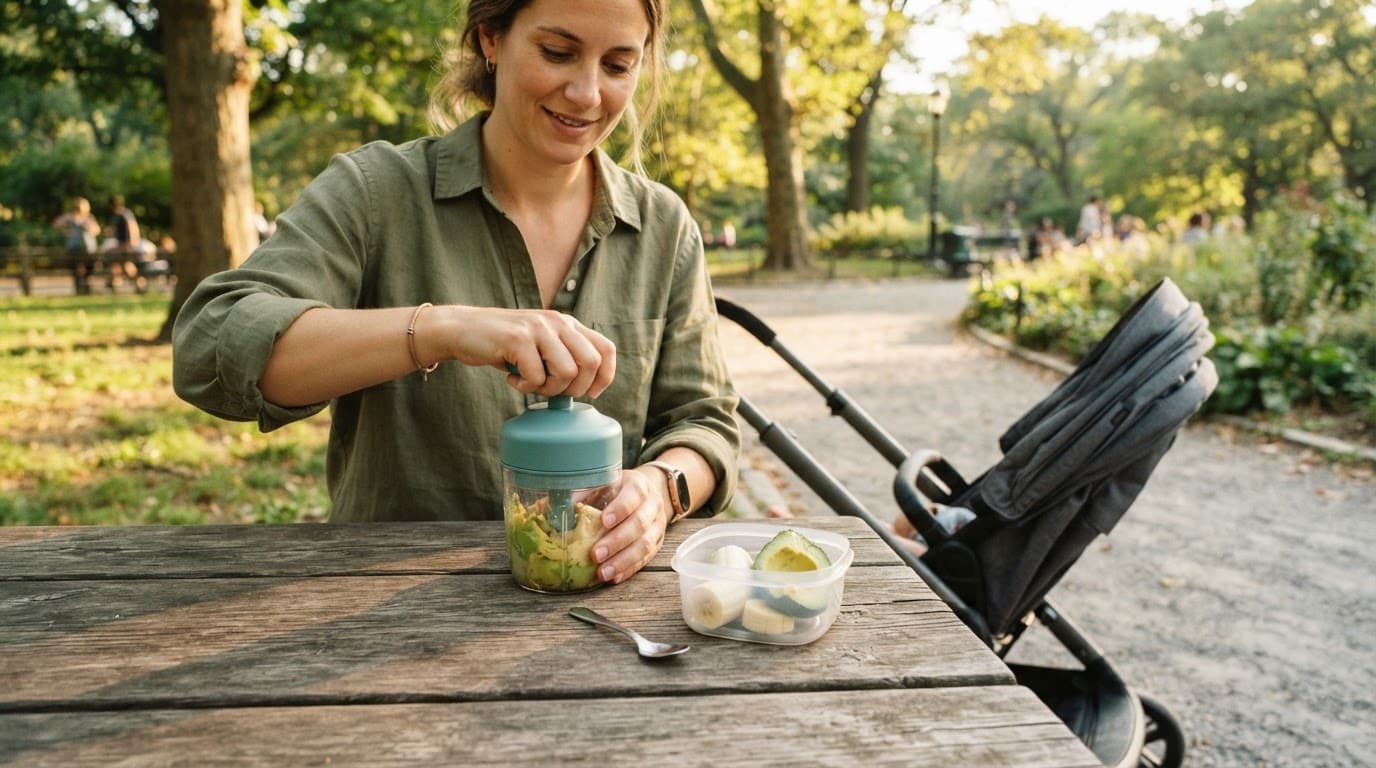
Fresh food can travel with you
Restaurants and family visits often have baby-friendly ingredients hiding in plain sight. A banana, avocado, steamed vegetable, soft potato, or plain bean can become a simple snack with a little mashing.
The Wonder Wean baby food maker lets you mash fresh food by hand when you are away from your kitchen. It helps you offer the same familiar whole foods at the park, on a trip, or during a meal out.
Create a Flexible Snack Rhythm
Most babies do well with routines, yet life with a baby rarely follows the clock perfectly. Offer meals and snacks at roughly predictable times, then adjust when naps, appointments, or growth spurts change the day.
Watch for early hunger cues, such as reaching for food, opening the mouth, leaning forward, or becoming focused on what you are eating. Crying is usually a later cue, and it can make settling into a snack harder.
Make room for family food
Your baby does not need a separate menu at every eating occasion. Set aside a portion of soft, low-salt family food before seasoning it, then mash, shred, or cut it safely.
This approach keeps healthy baby snacks practical. It also lets your child become familiar with the flavors your family enjoys, whether that is lentil soup, roasted squash, scrambled eggs, or tender rice and beans.
A Simple Way to Feed Between Meals
The most useful snack is one your baby can manage safely and you can offer without stress. Start with soft, minimally processed foods, then adjust the shape and texture as your baby's skills grow.
Milk remains central during the first year, while snacks offer practice with flavor, chewing, and shared meals. Fresh, familiar food gives babies a steady foundation without added sugar or unnecessary packaging.
When you are away from home, the Wonder Wean can turn available whole foods into a baby-ready mash in minutes. Keep your baby's favorite ingredients in mind, then Buy Now to make fresh feeding easier wherever the day takes you.