

Healthy Baby Meals at Restaurants: Fresh, Safe Choices
A baby doesn't need a separate kids' menu to eat well at a restaurant. With the right texture and a few simple requests, healthy baby meals can come from the same fresh ingredients adults are enjoying.
The goal is to choose food your baby already handles well, then ask the kitchen to serve it plain, soft, and easy to manage. You can often turn a side dish, breakfast item, or simple entree into a nourishing meal without relying on a jar or pouch.
Start with your baby's readiness and feeding skills, then build the meal around safe textures.
Start with Your Baby's Readiness
Restaurant food can work for babies who are ready for solids, but every child develops at a different pace. Age offers a general guide, while posture, chewing skills, and comfort with textures matter more at the table.
Match Food to Development
Many babies begin solids around 6 months, when they can sit upright with support, control their head and neck, bring food toward their mouth, and swallow instead of pushing food out with their tongue. Breast milk or formula remains the main source of nutrition during the early stages of solid feeding.
A baby who is new to solids may do best with a smooth puree or thin mash. Babies with more experience may manage thick mashed food, soft pieces they can pick up, or tender foods that break apart easily between your fingers.
If your baby was born prematurely, has trouble swallowing, or has a medical condition that affects feeding, ask your pediatrician or feeding specialist for individual guidance.
Choose Soft, Moist Textures
A soft texture reduces the effort your baby needs to break down food. Ask for vegetables to be steamed until tender, meat to be shredded, and beans or grains to be mashed with a little moisture.
"Steamed" describes the cooking method, not the final texture. Test a broccoli floret or carrot yourself, then soften it further if the center or stalk feels firm.
Keep your baby seated upright in a stable high chair while eating. Stay close, watch continuously, and avoid feeding while your baby is walking, reclining, or riding in a stroller.
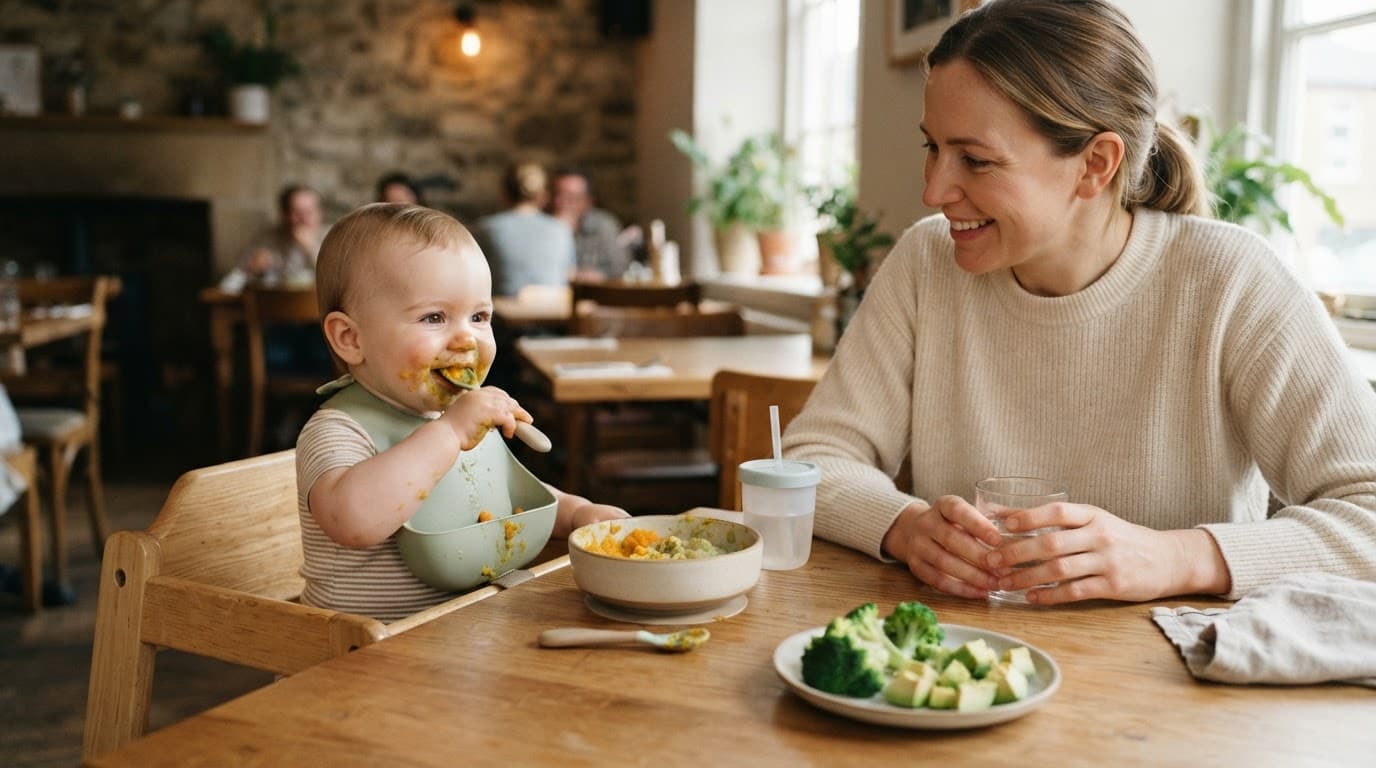
Healthy baby meals you can order at restaurants
Many restaurants have simple ingredients hidden among more elaborate menu items. Look for foods that can be served without sauces, heavy seasoning, frying, or added sugar.
A side dish can be enough for a small baby meal. You can also share an appropriate portion of your own order after removing ingredients that aren't suitable.
Breakfast Foods for Babies
Breakfast restaurants often make healthy choices easier. Ask for plain oatmeal with no brown sugar, syrup, or flavored topping. Let it cool, then thin it with water, breast milk, formula, or a little plain yogurt if that fits your baby's usual diet.
Soft scrambled egg is another useful option. Request it plain and fully cooked, without bacon, sausage, hot sauce, or a large amount of cheese. Cut it into soft strips for a baby who self-feeds, or chop and mash it for a baby who eats from a spoon.
Other options include ripe banana, plain unsweetened yogurt, soft avocado, or tender toast softened with mashed avocado. Don't give honey to a child under 12 months, including honey added to oatmeal, yogurt, or toast.
Simple Lunch and Dinner Choices
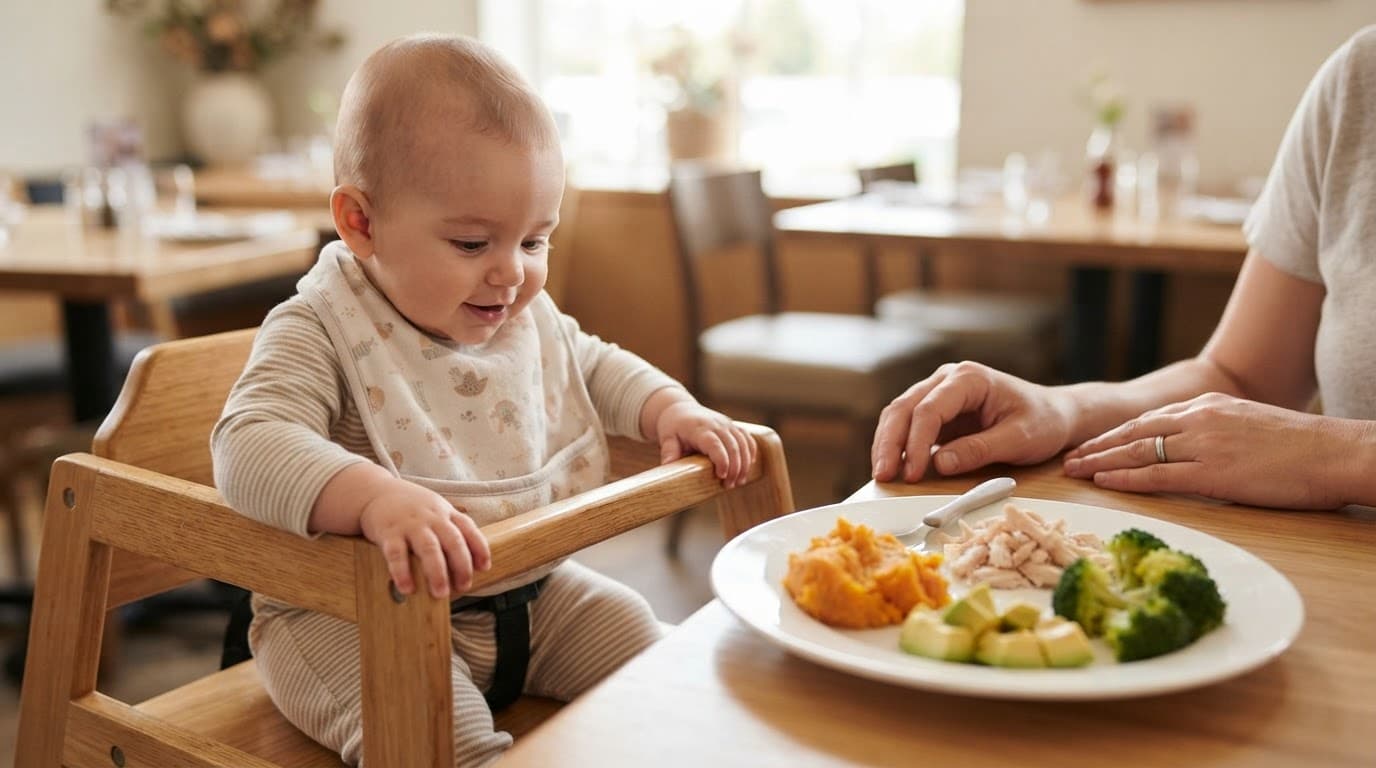
Ask for steamed vegetables such as sweet potato, broccoli, zucchini, peas, or carrots. Sweet potato can be mashed, while peas and beans may need to be gently squashed to reduce their round shape.
Plain grilled chicken can work when the kitchen leaves off seasoning and sauce. Request it tender and shredded into very small pieces. Fully cooked salmon or another soft, boneless fish can also provide a useful protein option, but check carefully for bones before serving.
Rice, lentils, soft beans, and plain pasta are practical choices when they arrive tender. Add mashed avocado or soft vegetables for moisture. A small amount of plain rice mixed with mashed beans can be easier to manage than loose grains by themselves.
How to Ask the Restaurant to Modify Food
Servers are used to accommodating simple requests, especially when you explain that the food is for a baby. Ask early, before the order reaches the kitchen, so the cook can leave out salt, sauces, butter, and spicy seasonings.
Use Clear Preparation Requests
Short, direct requests make the meal easier to prepare. You can ask for:
- Vegetables steamed until soft, with no salt or butter.
- Chicken or fish cooked plainly, then shredded or finely flaked.
- Sweet potato, beans, or avocado mashed with no seasoning.
- Oatmeal or yogurt served plain, with syrup and sweet toppings left off.
- Sauce, gravy, dressing, and cheese served on the side or omitted.
- A clean bowl and spoon for the baby's portion.
Restaurants may add salt during cooking even when a dish doesn't taste salty to an adult. Ask whether the food is brined, marinated, seasoned, or cooked in broth. Those details matter when you're trying to limit sodium.
Cut and Cool Food Before Serving
Food that looks soft can still contain choking hazards. Cut round foods, such as grapes and cherry tomatoes, lengthwise into quarters for young children. Remove pits, seeds, tough skins, bones, and hard crusts.
Avoid whole grapes, nuts, popcorn, raw carrot, hard apple pieces, firm chunks of meat, sausage coins, and large cubes of cheese. Sticky spoonfuls of nut butter can also be difficult to swallow, so thin nut butter with yogurt or spread it in a very thin layer if your baby already eats it safely.
Let hot food cool before serving. Then press a piece between your fingers to check whether it squishes easily. For finger food, pieces should be soft enough to break apart without force. For spoon-fed meals, mash foods to the texture your baby handles comfortably.
Watch Sodium, Sugar, and Allergens
A restaurant meal can include hidden ingredients even when you order something that sounds simple. Asking questions helps you make a better choice without needing to avoid dining out.
Limit Hidden Salt and Added Sugar
Restaurant sauces, soups, broths, marinades, deli meats, bacon, sausage, fries, and cheese-heavy dishes often contain more sodium than a baby needs. Choose fresh sides and plain cooked foods instead.
Added sugar can appear in oatmeal, yogurt, pancakes, smoothies, salad dressings, and tomato-based sauces. Ask for unsweetened yogurt, plain oatmeal, and pancakes without syrup. If you order a smoothie, ask about sweeteners and avoid one made with juice or dessert ingredients.
A plain-looking chicken dish may still be seasoned or brined before it reaches the grill. Ask how it was prepared instead of judging it by appearance.
You don't need to make the meal perfect. One plain side of avocado and a few bites of steamed vegetables can be a better fit than a heavily seasoned children's meal.
Plan Around Food Allergies
Tell the server about a known allergy before ordering, and ask about ingredients and possible cross-contact. A restaurant may not be able to guarantee an allergen-free meal, especially in a busy kitchen.
If your baby has severe eczema, a known food allergy, or a previous reaction, speak with your pediatrician about introducing common allergens such as peanut, egg, dairy, wheat, soy, fish, or sesame. A restaurant may not be the best place for a first exposure when you don't know how your baby will respond.
When a familiar food contains an allergen, order a safe alternative rather than scraping off the ingredient. For example, choose avocado or plain sweet potato instead of trying to remove cheese from a seasoned dish.
Make Restaurant Feeding Easier on the Go
A little planning keeps the meal calm for both you and your baby. Feed your baby when they aren't exhausted or intensely hungry, since a rushed meal can make new textures harder to manage.
Bring Familiar Feeding Tools
Pack a bib, baby spoon, wipes, and a small container for leftovers. A familiar spoon can help a baby settle into an unfamiliar setting. Ask the restaurant for a clean bowl rather than feeding from a shared plate.
You can also order one simple food your baby already knows. Then add a small taste of a new ingredient only if your baby is alert, comfortable, and ready. Keep portions small, since babies often need only a few spoonfuls or soft pieces.
If the restaurant can't provide a suitable option, a familiar snack can fill the gap. Pairing a home-packed food with a plain restaurant side also gives you more control over ingredients and texture.
Mash Fresh Food Without an Outlet
The Wonder Wean baby food maker helps you mash soft restaurant foods where you are. Its compact, hand-powered design doesn't need electricity, so you can use it at a restaurant, park, hotel, or while traveling.
Use it with foods such as ripe avocado, banana, steamed vegetables, tender beans, or soft cooked fish. You can combine ingredients already on your plate, provided each one is safe and familiar for your baby. Mash small portions in a clean container, check the temperature, and adjust the texture before serving.
For parents who prefer fresh, natural foods, this approach can reduce reliance on processed pouches and make restaurant meals feel less restrictive. If you want a portable option for feeding outside the house, you can Buy Now.
Make Restaurant Meals Fit Your Baby
Healthy baby meals at restaurants start with simple food and careful preparation. Choose familiar ingredients, ask for them plain and soft, and match each texture to your baby's current skills.
Sodium, added sugar, allergens, and choking hazards deserve attention, but they don't have to keep your family home. With a clean bowl, a few clear requests, and the Wonder Wean nearby, you can offer fresh mashed foods even when the day's meal happens away from your kitchen.