

How to Feed Your Baby Safely on an Airplane
Air travel can make a familiar feeding routine feel unpredictable. Safe feeding baby on airplane trips starts with foods your child already handles, a simple cooler plan, and enough time to feed without rushing.
Breast milk, formula, and solids each need different preparation. Once you know what can pass through security, how long food stays safe, and how to position your baby, the flight becomes much easier to manage.
Key takeaways for feeding baby on airplane trips
- Pack foods and textures your baby already eats at home. Travel is not the ideal time to introduce several new ingredients.
- Breast milk, formula, toddler drinks, and baby food can exceed 3.4 ounces (100 mL) on U.S. flights when carried for an infant or young child.
- Tell the Transportation Security Administration (TSA) officer about these items before screening begins.
- Keep perishable food cold with frozen ice packs, and follow storage limits for milk, formula, and prepared food.
- Feed your baby upright, fully supervised, and in a stable seat. Never feed while your baby is lying down, walking, or moving around.
- Pack soft foods that match your baby's current skills, and avoid choking hazards such as whole grapes, nuts, popcorn, raw carrots, and thick nut butter.
Before you leave: plan the feeding schedule
Start with the next meal rather than packing every possible food. Count the feeds you expect during the journey, then add one small backup serving for a delay, missed nap, or longer security line.
For a short flight, one familiar meal may be enough. A full travel day needs more planning, especially if you will have a connection or limited access to refrigeration.
Choose familiar ingredients
Ripe banana, avocado, cooked sweet potato, plain oatmeal, soft pear, mashed beans, and tender vegetables can work well for babies who already eat them. Whole produce often travels better than prepared puree, so keep a banana or avocado intact until mealtime when possible.
If your baby eats finger foods, bring the same soft shapes you serve at home. A soft avocado wedge or tender sweet potato strip may be easier to hold than a small, slippery cube.
Introduce new foods at home first. That gives you time to watch for an allergic reaction and keeps the flight focused on foods your baby knows.
Build one reachable feeding bag
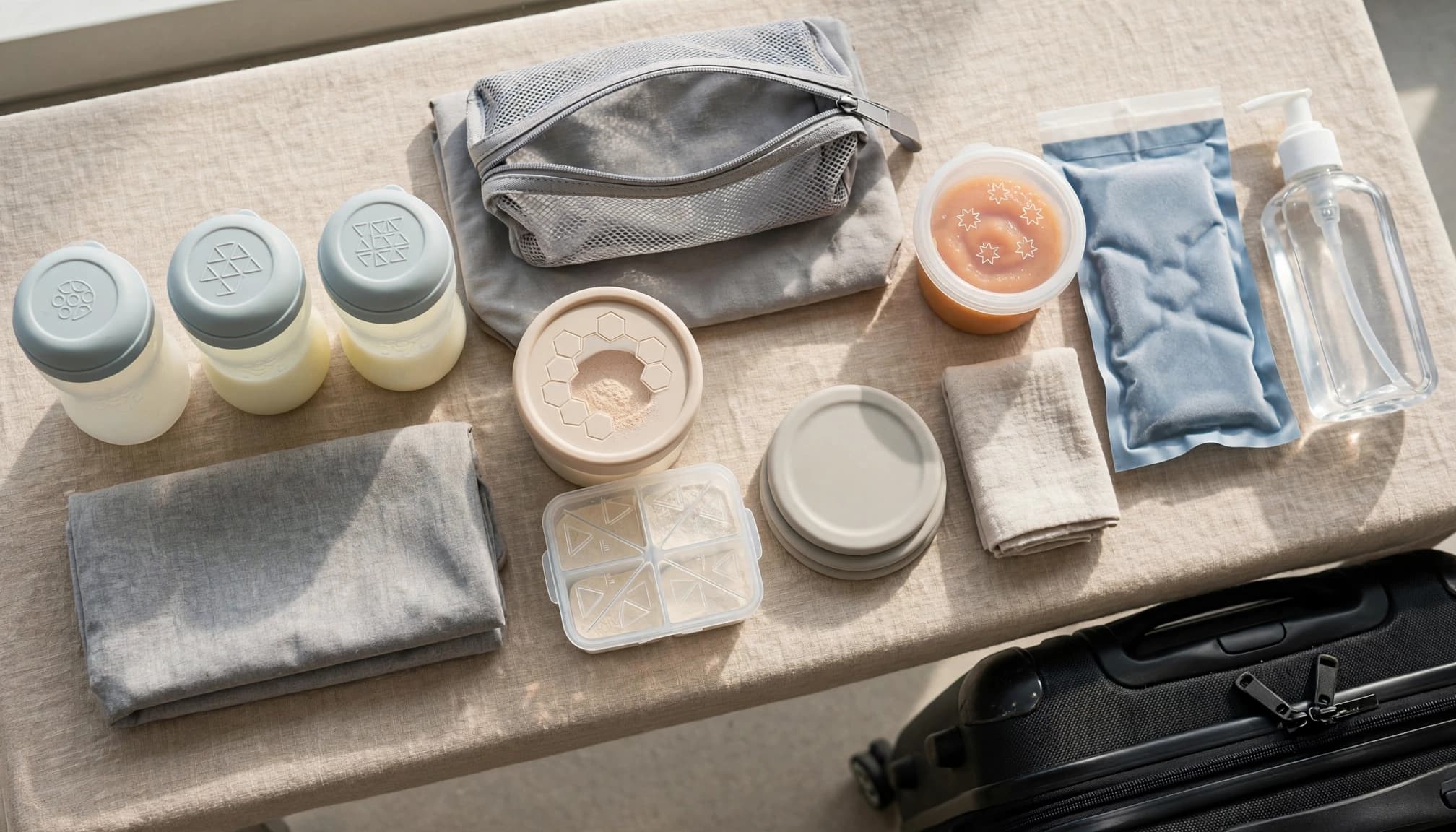
Keep feeding supplies together in a small personal bag instead of scattering them through your carry-on. Include a clean bowl, two spoons, a washable bib, hand wipes, paper towels, and a sealable bag for dirty items.
An insulated cooler with frozen ice packs helps protect breast milk, formula, yogurt, cooked vegetables, and prepared baby food. Pack individual servings in leak-resistant containers so you open only what your baby is likely to eat.
Wipe the tray table or another preparation surface before using it. Wash your hands with soap and water when possible. If a sink is unavailable, use sanitizer first, then wash properly when you can.
Prepare for security screening
TSA permits breast milk, infant formula, toddler drinks, and baby or toddler food, including puree pouches, in quantities greater than 3.4 ounces. These items don't need to fit inside the quart-sized liquids bag.
Tell the TSA officer about the items at the start of screening, and separate them from other carry-on contents. They may receive additional inspection. Ice packs, frozen gel packs, freezer packs, and liquid-filled teethers are also allowed when used to keep infant food or drinks cold.
The rules for plain water intended for a baby aren't the same as the clearly stated breast milk and formula exception. Check current TSA guidance before carrying a large amount of water through security.
Pack breast milk, formula, and solids safely
Milk feeds remain important for young infants, even when solids are part of the routine. Pack each type of food according to its storage needs rather than treating every item the same way.
Breast milk needs careful timing
The Centers for Disease Control and Prevention (CDC) says freshly expressed breast milk can stay at 77°F or cooler for up to four hours. In an insulated cooler with frozen ice packs, it can remain cold for up to 24 hours.
Refrigerated breast milk can be stored for up to four days. Once milk reaches room temperature or has been warmed, use it within two hours. The same two-hour limit applies to leftover milk after a feeding.
Never microwave breast milk. Microwaves can create hot spots that burn a baby's mouth and may damage some of the milk's useful components. If your baby prefers warm milk, ask a flight attendant about available options, then test a few drops before offering it.
Handle formula according to its type
Prepared powdered formula should be used within two hours of preparation. Once feeding begins, use it within one hour. If you won't use it within two hours, refrigerate it immediately and use it within 24 hours.
Opened concentrated or ready-to-feed formula should be covered, refrigerated, and used within 48 hours, according to the U.S. Food and Drug Administration (FDA). Follow the product label when it gives a shorter limit.
For powdered formula, carry the measured powder separately and add safe water when you are ready to prepare a feed. Don't assume that water carried through airport security receives the same exemption as formula or breast milk. Confirm current TSA instructions before your trip.
Keep solid foods cold
The FDA advises discarding perishable milk, formula, or food that has been without refrigeration or a cold source for more than two hours. In hot conditions, food can become unsafe sooner, so keep the cooler closed and place ice packs around the containers.
Prepare only a small serving at a time. Don't return food that has touched your baby's mouth to the main container. Saliva can introduce bacteria, and the remaining food may not stay safe.
Feed your baby safely in the cabin
Cabin space is tight, but the basic safety rules remain the same as they are at home. Choose a stable feeding position, reduce distractions, and stay close throughout the meal.
Keep your baby upright and supervised
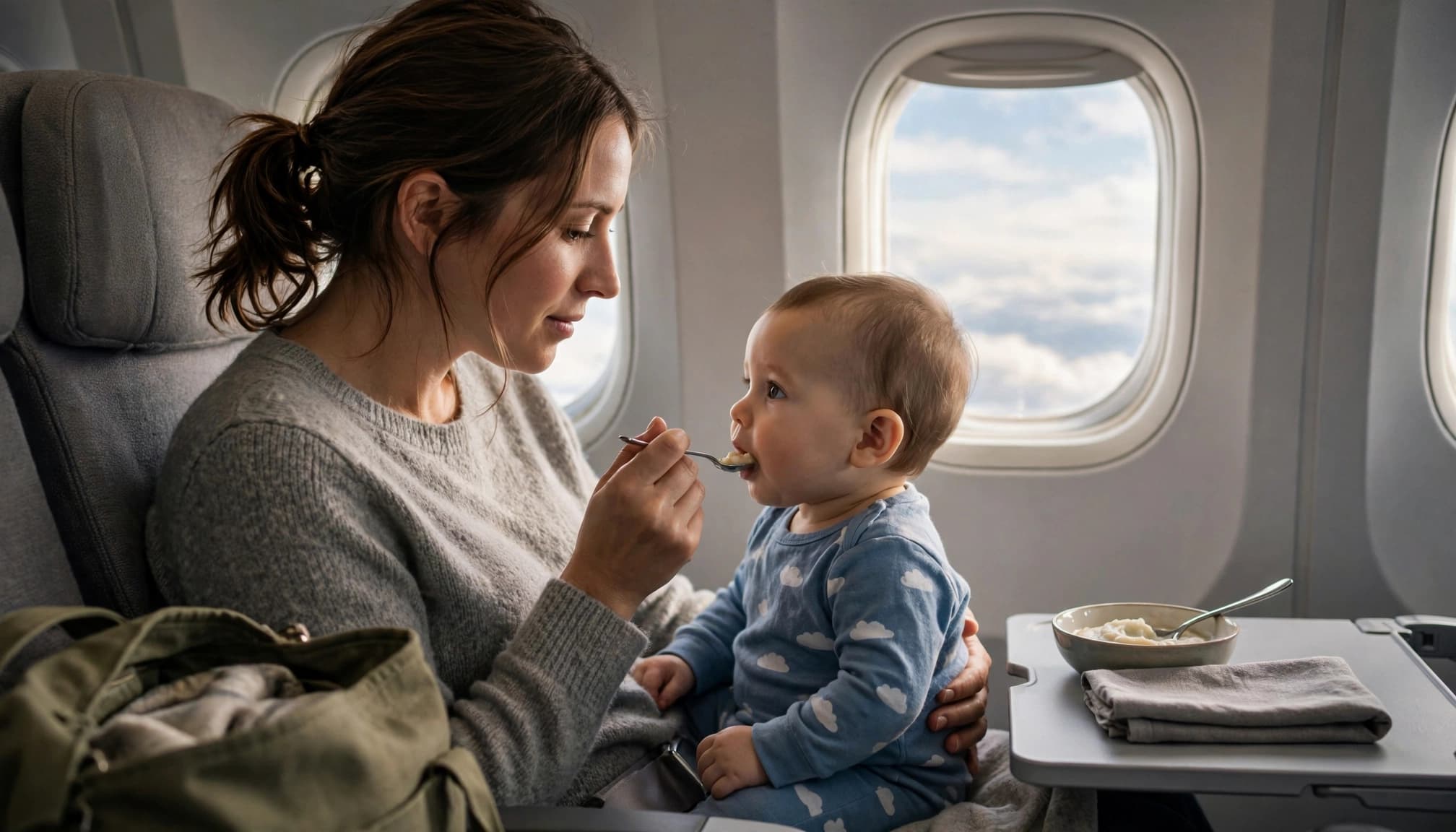
The CDC recommends that babies and young children sit upright while eating, preferably in a high chair or another safe seated position. On a flight, hold your baby securely upright or use an approved seat according to the airline and aircraft instructions.
Don't feed your baby while lying down, crawling, walking, or moving through the cabin. A stable position helps your baby manage food and makes it easier for you to respond if they cough or gag.
Stay within arm's reach during every bite. Plane noise and unfamiliar surroundings can distract both of you, so pause when your baby turns away, closes their mouth, or seems overwhelmed.
Prevent choking and bottle propping
Match food texture and shape to what your baby already manages. Avoid hard raw vegetables, whole grapes, popcorn, whole nuts, hard candy, chunks of hot dog, and thick globs of nut butter.
Cut round foods lengthwise, cook firm produce until soft, and spread nut butter thinly or mix it into a familiar food. Never offer honey to a child under 12 months.
Don't prop a bottle or leave it in your baby's mouth while you look away. Bottle propping can increase choking risk. Hold the bottle and watch your baby throughout the feed.
Keep the pace calm
Travel can affect appetite. Your baby may eat less because of the noise, movement, or a changed sleep schedule. Offer a modest portion and allow plenty of time.
Avoid forcing another bite when your baby shows they are finished. Milk feeds can cover a delayed solid-food meal, especially for younger babies. A calm feeding experience matters more than finishing every container.
Choose baby-friendly foods for the flight
Natural foods can work well during air travel when they are soft, familiar, and easy to prepare. The best choice depends on your baby's feeding stage and whether you can keep the food cold.
Smooth foods for newer eaters
Babies who are beginning solids may do well with smooth or lightly textured mashes of banana, avocado, sweet potato, squash, beans, or cooked vegetables they have already tried. Thin the food only with breast milk, formula, water, or another ingredient your baby normally has.
Plain oatmeal can be prepared before departure or after arrival, but it needs safe temperature control. Let hot food cool fully before serving, and check for hot spots if it has been warmed.
A small portion of plain yogurt may work for babies who already tolerate dairy. Keep it chilled until serving, and don't rely on an unfamiliar airport or airplane food source if ingredients are uncertain.
Soft finger foods for older babies
Babies who self-feed may manage soft strips, wedges, and tender pieces. Ripe avocado, soft sweet potato, cooked broccoli with a soft stem, peeled ripe pear, or tender egg can be practical choices when they fit your baby's usual skills.
Food labeled "healthy" can still be unsafe if it is hard, sticky, or difficult to chew. Remove pits, tough skins, bones, and seeds. Avoid heavily salted or sweetened foods, sauces with unknown ingredients, and anything your baby hasn't eaten before.
Ask for simple ingredients when buying food after security or during a connection. Plain oatmeal, banana, avocado, steamed vegetables, or a baked potato may be easier to adapt than a prepared meal with hidden seasoning.
Manage delays, leftovers, and cleanup
A delayed flight can extend the time food spends outside a refrigerator. Keep chilled containers inside the cooler until you are ready to serve them, and return untouched food to the cooler promptly.
If a perishable item has been warm without a cold source for more than two hours, discard it. When in doubt, use a shelf-stable backup that your baby already tolerates rather than risking food that has warmed too long.
Feed from a clean bowl instead of the main storage container. Once a spoon has touched your baby's mouth, don't place it back into the remaining food. Discard leftovers from the baby's bowl, even if they look untouched.
After the meal, place used spoons, bibs, and food scraps in a sealable bag. Carrying a spare spoon and an extra baby outfit can make the next part of the trip much easier.
FAQ: feeding baby on airplane trips
Can I bring breast milk or formula through airport security?
Yes. TSA allows breast milk, infant formula, toddler drinks, and baby food in quantities over 3.4 ounces (100 mL) for travel in the United States. These items don't need to go in the quart-sized liquids bag. Tell the TSA officer before screening begins and separate the items for inspection.
Should I feed my baby during takeoff or landing?
Many parents offer a breastfeed or bottle during takeoff or landing because sucking can help a baby swallow during changes in cabin pressure. Feed only when your baby is positioned safely and supervised. Never prop a bottle or force a feed when your baby isn't interested.
Can I warm a bottle on the plane?
Ask the airline crew what assistance is available, but don't depend on a warming service. Breast milk and formula can be offered at a temperature your baby accepts. If you warm milk, test it before feeding and never use a microwave.
How much solid food should I pack?
Pack the amount your baby usually eats for the expected travel period, plus one small backup serving. Small portions reduce waste and help food stay cold longer. Milk feeds can bridge a delay when your baby eats less solid food than usual.
Is the Wonder Wean useful during air travel?
The Wonder Wean is a compact, hand-powered pocket blender for mashing soft foods without electricity. After landing, it can help you prepare a small portion of familiar banana, avocado, cooked vegetables, beans, egg, or other age-appropriate food at a hotel, restaurant, park, or family visit.
Follow your baby's needs first
Safe airplane feeding depends on familiar foods, clean hands, cold storage, upright positioning, and close supervision. Pack for the next meal, keep a backup nearby, and discard food when its storage time or temperature is uncertain.
Ask your pediatrician for individual guidance, especially if your baby was born prematurely or has allergies, swallowing difficulties, reflux, a medical condition, or other feeding concerns. For parents who want to offer healthy foods away from home, the Wonder Wean can make fresh, familiar meals practical on the go. You can Buy Now and keep a compact food-making tool in your travel kit.