

How to Clean a Baby Food Processor While Traveling
Fresh mashed avocado at a park or soft pear at a restaurant can make baby meals feel easy, until cleanup is staring back at you. When you clean baby food processor parts soon after use, you prevent dried food, lingering odors, and a stressful mess in your diaper bag.
A small routine keeps your manual processor ready for the next meal, even when you're far from a kitchen sink. Start by packing a few simple supplies.
Pack a Small Cleaning Kit for Fresh Baby Meals
A travel cleaning kit takes little room and saves you from scraping crusted food later. Keep it in a washable zip pouch, separate from diapers and used utensils.
Bring these basics:
- A small bottle of clean water for rinsing when no sink is nearby.
- A travel-size bottle of unscented dish soap.
- A soft bottle brush or narrow cleaning brush reserved for baby feeding gear.
- A clean microfiber cloth or paper towels for drying.
- A sealable bag for wet parts or food scraps when you can't wash immediately.
Also pack a small insulated bag with ice packs for foods that need chilling. Mashed banana can sit briefly at room temperature, but yogurt, meat, eggs, and cooked vegetables need more care.
Food stuck in place for even a short car ride is easier to remove when you rinse the processor before packing it away.
How to Clean Baby Food Processor Parts Step by Step
Take the processor apart only as its instructions allow. Place each piece on a clean napkin, towel, or the lid of a storage container so nothing rolls under a restaurant table or car seat.
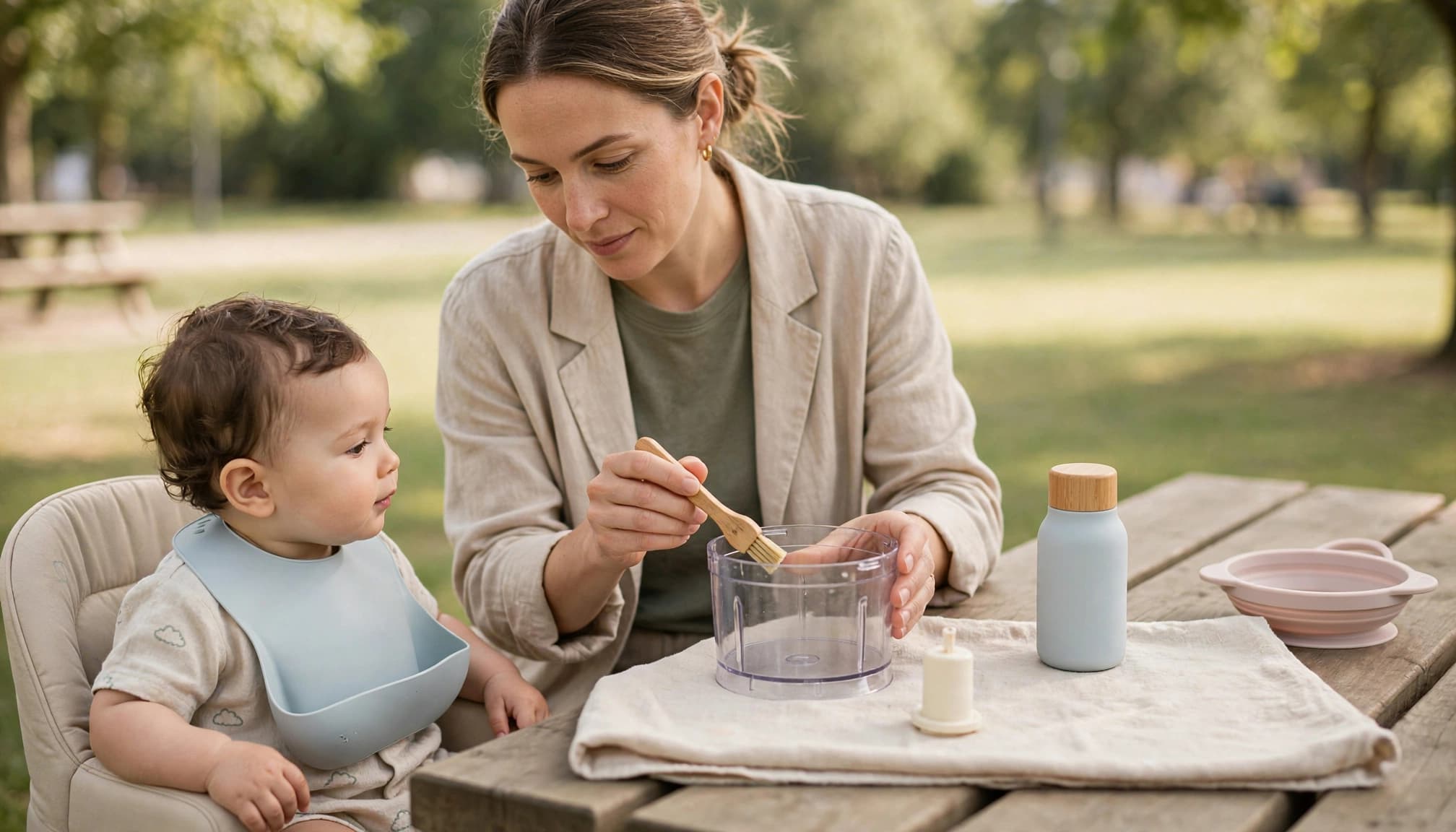
Rinse away loose food first
Rinsing means flushing away visible food with clean running water or water from your bottle. It helps after every use, but it doesn't remove oils or kill germs.
First, empty every bit of leftover puree into the trash or a sealable waste bag. Then add a little clean water to the cup, swish it, and pour it out. Rinse the lid, base, and blade assembly separately.
If you're outdoors, avoid rinsing directly onto a picnic table or playground surface. Use a collapsible bowl to catch the water, then discard it in an appropriate sink or drain.
Wash with soap when you have water
Washing uses soap and water to lift food residue, including the thin film left by avocado, oats, or nut butter. Add a drop of dish soap to a bowl of clean water, then scrub each part with your dedicated brush.
To clean baby food processor blades safely, keep your fingers away from the cutting edges. Aim the brush away from your hand and work from the center outward. If the blade assembly has a designated plastic hub or handle, hold that area only.
Pay close attention to the underside of the lid, the threads, the gasket area, and the joins around the blade mount. Rinse away all soap with clean water afterward. If water looks cloudy or has food particles, replace it rather than washing in it.
Deal with stubborn bits without forcing them
Dried sweet potato or sticky oatmeal needs time, not sharp tools. Soak the removable part in warm soapy water when you reach a sink, then use a soft brush.
Never dig at crevices with a knife, safety pin, or fingernail. Those tools can damage the processor or leave bacteria-prone scratches. If food remains trapped in a sealed or inaccessible area, follow the product's care instructions before using it again.
Rinsing, Washing, and Sanitizing Are Different
These three steps have different jobs, and mixing them up can leave food-contact surfaces less clean than they look.
Choose the right level of cleaning
Rinsing removes loose puree and buys you time until you can wash properly. Washing with soap and safe water is the everyday standard after preparing baby food.
Sanitizing reduces germs after a surface has already been washed and rinsed. It can be useful during travel, after illness, or when your baby is especially vulnerable. Use only a sanitizer intended for food-contact items, follow its label directions for dilution and contact time, and rinse afterward if the label requires it.
Don't use hand sanitizer, disinfecting wipes, scented household cleaners, or bleach mixtures unless the product label states they are safe for food-contact surfaces and gives clear directions. Sanitizer cannot work well over food residue.
Dry Every Part Before Closing the Bag
Moisture trapped in a closed container creates odors and can support mold growth. After washing, shake off excess water and dry each part with a clean cloth or paper towel.
Give crevices extra attention
Leave the processor disassembled until the blade mount, lid grooves, and seals feel dry. When you have time, air-dry pieces on a clean towel before reassembling them.
If you must pack parts while damp, use a separate breathable bag or carry them loosely in a clean container. Wash and dry them fully as soon as you reach your destination. A clean baby food processor should smell neutral, not fruity, sour, or musty.
Handle Allergens and Perishable Foods Carefully
When your baby has an allergy, wash the processor with soap and water before making a different food. Rinsing alone won't reliably remove proteins from peanut butter, egg, dairy, sesame, or other allergens.
Use a clean brush and cloth each time. Don't wipe allergen residue onto a shared towel, then use it on fruit puree. If another child's food has touched the processor, wash it before preparing your baby's meal.
Perishable foods need temperature control. Keep chilled items at 40 F (4 C) or below with ice packs. Refrigerate prepared food within two hours, or within one hour if the temperature is above 90 F (32 C). Discard leftovers from your baby's bowl because saliva can introduce bacteria into the food.
A Fresh Start for Every On-the-Go Meal
A quick rinse prevents buildup, while a careful soap wash removes the residue that hides near blades and seals. Drying each part before storage keeps your manual processor pleasant to use on the next outing.
The Wonder Wean helps parents mash wholesome foods wherever baby is hungry, using ingredients already on hand. Keep your processor clean, pack a few supplies, and Buy Now when you're ready to make fresh baby meals easier beyond your kitchen.