

Choline Foods for Babies: Easy Serving Ideas
You don't need a special baby-food recipe to put choline on the menu. Many choline foods for babies are familiar ingredients you already cook, including eggs, chicken, fish, beans, and soy foods.
The practical challenge is turning those ingredients into meals your baby can manage and enjoy. Simple combinations can fit into family cooking without creating a separate menu.
Begin with familiar foods, then consider which preparations match your baby's current feeding skills.
Choosing choline foods for babies without overthinking
Choline is an essential nutrient found in animal and plant foods. Eggs, beef, chicken, fish, and soybeans are useful foods to consider. Beans and lentils also contain choline, although these foods aren't nutritionally interchangeable.
You don't need to rank every ingredient before planning breakfast or dinner. Instead, look at what your household already enjoys and which ingredients adapt easily to your baby's meals.
Eggs work well with mashed vegetables. Tender chicken fits into a potato mash, while lentils can become the base of a spoonable meal. These options offer different flavors without requiring specialty baby-food products.
Variety also leaves room for your family's preferences. A household that eats plant-based meals can use beans, lentils, and tofu rather than trying to copy a meat-based menu.
Choline-rich foods for babies belong within a varied eating pattern. Breast milk or infant formula remains central during early solid feeding, so these meals complement your baby's milk feeds rather than replace them.
Eggs: an easy ingredient for breakfast or lunch
Eggs fit into several simple preparations, including mashed hard-boiled egg, scrambled egg, and omelets. Both the white and yolk can be part of the meal.
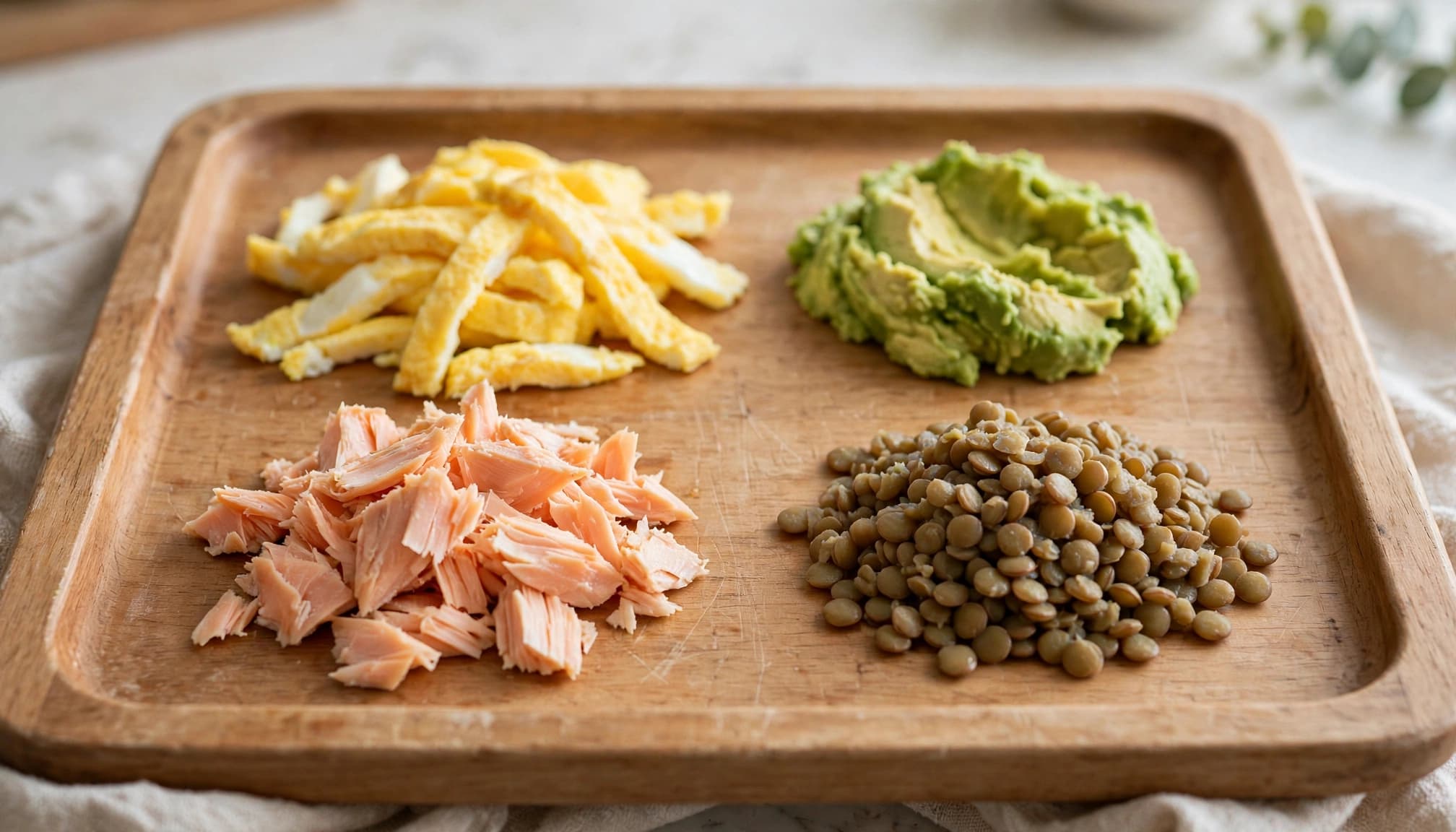
Mashed egg with avocado or sweet potato
Hard-boiled egg can feel dry and crumbly by itself. Mashed avocado gives it a softer consistency, while cooked sweet potato adds moisture and a different flavor.
Press the egg and your chosen ingredient together with a fork. A little water can loosen the mixture if it becomes dense, without turning it into a watery meal.
This combination works well when you already have cooked egg available. It also makes it easy to adjust the texture, keeping the mash smoother or leaving soft lumps according to your baby's feeding plan.
Scrambled egg or a soft omelet
Fully cooked scrambled egg offers another option. Mixed into mashed potato or cooked zucchini, it becomes a soft, savory meal without a complicated recipe.
An omelet creates a different texture and can be cut into strips for a baby whose feeding skills suit that preparation. Finely chopped cooked vegetables can become part of the omelet.
Egg is a common allergen, so individual allergy guidance may affect whether it belongs on your baby's menu. An existing feeding or allergy plan takes priority over any recipe idea.
Fish and meat: make the texture moist and tender
Fish and meat bring different flavors to baby meals, but their textures need attention. Dry flakes, chewy fibers, and dense pieces behave differently from a vegetable mash.
Salmon mixed into a vegetable mash
Fully cooked salmon separates into flakes that mix easily with mashed potato, squash, or cooked broccoli. The vegetable base helps distribute the fish through the meal.
For a smoother preparation, work the flakes into the mash until the mixture has an even consistency. A more textured version can retain soft flakes when that suits your baby's skills.
Fish may contain bones and skin even when it looks ready to eat. Preparing a baby's portion involves checking the actual food, rather than assuming a fillet is free of unwanted pieces.
Plain salmon also makes family cooking practical. Your baby's portion can come from the same cooked fish before sauces or other additions reach the plate.
Chicken or beef with a soft base
Tender chicken can be finely shredded, minced, or blended into cooked sweet potato. The combination is easier to adapt than dry chicken served on its own.
Beef works best in preparations where the meat is tender and the finished texture is moist. Minced beef mixed through mashed vegetables is different from a firm cube of roast meat.
Unsalted cooking liquid or water can help loosen a dense mixture. However, extra liquid won't remove gristle or make a tough piece of meat tender.
A processor changes food's texture. It doesn't replace cooking or the preparation needed before meat enters the bowl.
Beans, lentils, and tofu for plant-based meals
Plant foods make it easier to rotate ingredients throughout the week. They also fit naturally into family soups, vegetable dishes, and simple lunches.
Bean and lentil mashes
Well-cooked lentils break down into a thick mash. Carrot, squash, or sweet potato can change the flavor and consistency without requiring a long ingredient list.
Beans usually need more attention because their skins can remain noticeable after mashing. A fork gives you a clear view of the texture, while blending produces a more uniform mixture.
Canned beans can make preparation quicker. No-salt-added versions offer a straightforward starting ingredient, and rinsed beans work in a mash with cooked vegetables.
These foods don't have to become separate baby recipes. A plain bean or lentil component from family dinner can become your baby's meal before other ingredients join the pot.
Soft tofu with cooked vegetables
Tofu provides another way to include soy foods. Its texture varies by type: silken tofu blends readily, while firmer tofu needs more mashing or crumbling.
Silken tofu can mix with cooked squash for a creamy preparation. Soft tofu also combines with mashed sweet potato or finely mashed cooked broccoli.
The useful question is how the finished dish feels, rather than whether the package says "soft." Different brands and styles can produce different consistencies.
Soy is a common allergen. As with egg and fish, any individual allergy or feeding guidance affects which recipes are appropriate for your baby.
Match the meal to your baby's feeding skills
A birthday alone doesn't describe how a baby handles food. Head control, sitting ability, hand skills, and experience with different textures all affect feeding.
Some babies are working with smooth mashes. Others manage thicker mixtures, soft lumps, or suitable finger foods. Spoon-feeding and self-feeding can also coexist in the same meal.
A smooth puree and an omelet strip involve different feeding skills, even when both contain egg. Likewise, finely minced chicken in a moist mash differs from a piece of chicken.
Texture and shape both matter. A food can appear soft while still containing a firm skin, stringy fiber, bone, or hard fragment.
Gagging and choking are different events. Gagging can be noisy; choking can be silent, and choking that prevents breathing is a medical emergency.
A certified infant first-aid course covers choking response. For concerns about swallowing, persistent feeding difficulties, or which textures fit your child, your pediatrician or feeding specialist can provide individual guidance.
Turn ordinary family cooking into baby meals
The easiest choline foods for babies often begin as part of dinner. Preparing a plain component gives you options without cooking an entirely separate dish.
For example, chicken and roasted vegetables can provide tender meat and a soft vegetable base. A pot of lentils can become a mash, while a cooked egg can join avocado at breakfast.
Seasoning the family meal after separating ingredients gives you more control over your baby's portion. It also makes it easier to identify what went into the bowl.
A little planning helps with variety. If egg appears at breakfast, beans or fish can offer a different flavor later in the week. There's no need to rotate foods according to a rigid schedule.
Pay attention to your baby's interest, too. Turning away or closing their mouth can communicate that they've finished. The amount eaten will vary, and a familiar food may receive a different response on another day.
Keep familiar foods practical away from home
An outing doesn't require a completely different menu. Familiar ingredients can still work, provided the food, preparation, and feeding setting suit your baby.
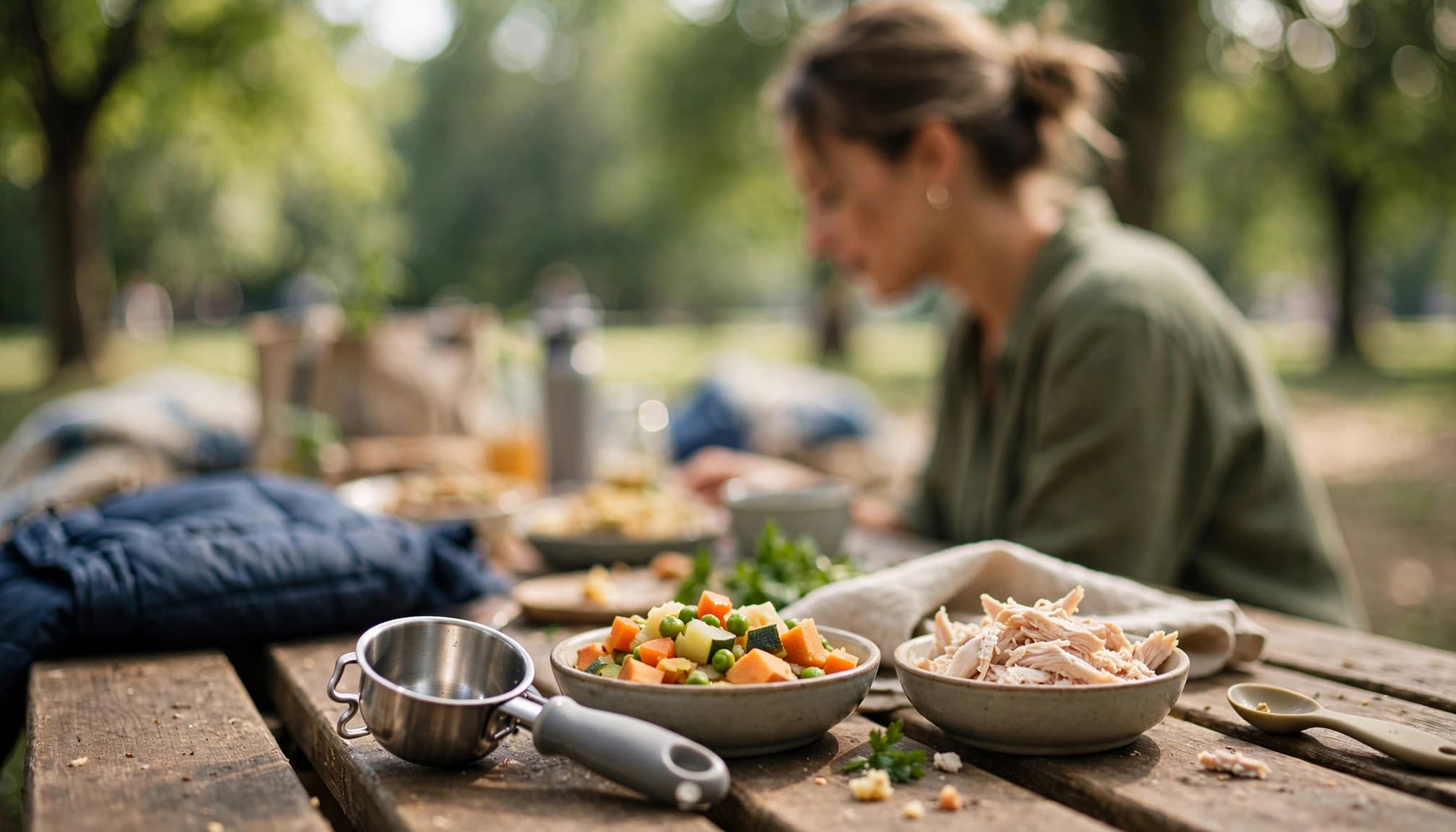
At a restaurant, cooked egg, tender chicken, plain beans, or soft vegetables may be available. However, menu descriptions don't reveal every ingredient, seasoning, or preparation detail.
A request for plain food can start the conversation, but a dish may already contain salty broth, a marinade, or sauce. Asking how it was prepared gives you clearer information.
Portable preparation tools help change texture, but they have limits. They don't cook raw ingredients, keep perishable food cold, or automatically remove bones and tough pieces.
Travel convenience also doesn't change the feeding itself. Food eaten away from home still involves your baby's usual texture needs and an attentive caregiver.
The simplest outing meal is often a familiar ingredient prepared in a familiar way.
Key Takeaways
- Eggs, fish, meat, beans, lentils, and soy foods offer several ways to include choline-containing ingredients.
- Mashed vegetables can add moisture and help adapt the consistency of egg, fish, or tender meat.
- Your baby's feeding skills and individual guidance determine which preparations fit.
- A portable food tool changes texture, but cooking, ingredient checks, and food handling remain separate tasks.
Frequently Asked Questions
Does every baby meal need a choline-focused ingredient?
There's no need to build every meal around one nutrient. Choline-containing foods can appear alongside other familiar ingredients across a varied menu.
Thinking about breakfast, lunch, and family dinners together is more practical than trying to make every bowl nutritionally identical. An egg-based breakfast and a lentil-based dinner can offer different eating experiences without requiring elaborate recipes.
Can I combine spoon-feeding with finger foods?
Yes, both approaches can fit within a baby's feeding routine when the preparations suit their skills. For example, mashed egg and avocado is a different option from an omelet strip.
Neither presentation suits every baby at every stage. Your child's feeding experience and any individual clinical guidance matter more than choosing a single feeding label.
Simple Ingredients, Flexible Feeding
Choline-rich foods for babies can fit into ordinary family cooking. Familiar ingredients and thoughtful preparation make meals manageable without a separate shopping list or complicated recipe.
The Wonder Wean can help you offer healthy foods beyond your kitchen. Its compact, hand-powered pocket blender turns suitable everyday ingredients into fresh baby food without electricity, whether you're at a restaurant, traveling, or enjoying an outdoor meal. It gives you another way to adapt prepared food to your baby's usual texture needs. To add this portable option to your feeding bag, Buy Now.