

Can Babies Eat Canned Vegetables and Beans Safely?
Canned food can save dinner on a busy day, but many parents pause before putting it on a baby's plate. Knowing which canned vegetables babies can eat and how to prepare them makes the choice much simpler.
Once your baby is ready for solid foods, canned vegetables and beans can fit into a real-food routine. The can matters less than the ingredients, sodium level, texture, and how closely you supervise each bite.
Canned Vegetables Babies Can Eat Safely
The CDC recommends introducing foods other than breast milk or formula at around 6 months, when babies show developmental readiness. Your baby should have steady head control, sit upright with support, and bring food toward their mouth.
Canned carrots, peas, green beans, pumpkin, sweet potato, lentils, black beans, and chickpeas can all work. However, they need preparation before serving.
Readiness matters more than a birthday
Some babies are ready close to 6 months, while others need more time. Start only when your child can sit upright and control their head and neck during meals.
Keep baby securely seated in a high chair and stay within reach. Eating in a reclined stroller, car seat, or while crawling around raises choking risk.
Beans are nutritious but need a soft texture
Beans offer plant protein, fiber, iron, and other nutrients. Yet whole beans, firm skins, and lumpy spoonfuls can be hard for a new eater to manage.
For early meals, mash canned beans thoroughly with a fork or blend them into a smooth texture. You can loosen the mixture with breast milk, formula, water, or a soft vegetable puree.
Choose Cans With Less Salt
Many canned foods contain added salt, which babies don't need. The NHS advises against salty foods for babies because their kidneys are still developing, while the CDC recommends low-sodium or no-salt-added canned vegetables.
Look for labels that say "no salt added" first. Low-sodium options are also useful when no-salt-added cans aren't available.
Rinsing makes a practical difference
The FDA advises rinsing sodium-containing canned foods, including beans and vegetables, before eating. Put the food in a colander, drain the canning liquid, and rinse under cool running water.
That step won't remove all sodium, but it reduces what remains on the food. It also freshens the flavor of beans that taste strongly of their canning liquid.
Avoid canned vegetables packed in cream sauces, cheese sauces, butter sauces, or seasoning blends. These products often add salt and ingredients that don't help a baby's simple first meals.
A plain can of beans or vegetables gives you control over what reaches your baby's bowl.
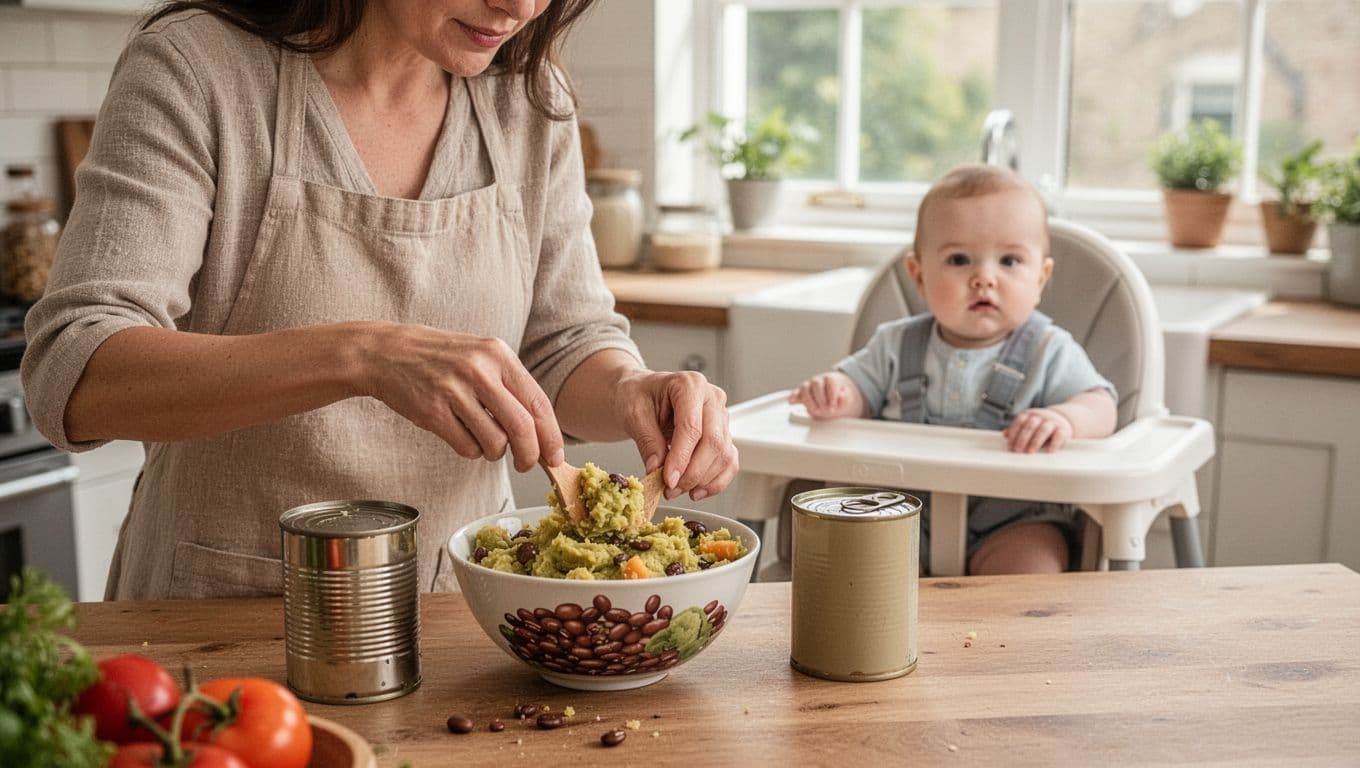
Prepare Canned Vegetables and Beans for Baby
Even soft canned food needs a quick check before serving. Canned vegetables may be tender enough to mash, but some pieces remain firm or have skins that are difficult for babies to swallow.
The CDC advises parents to match food shape, size, and texture to a child's development. For babies beginning solids, smooth or softly mashed foods are usually the easiest place to start.
Mash, blend, or flatten every bite
Use a fork to press soft peas, carrots, beans, and lentils until there are no firm whole pieces. A hand blender can create a smoother puree when your baby is still learning to move food around their mouth.
For a thicker meal, mix mashed black beans with sweet potato or squash. Green beans can be blended with potatoes or carrots. Offer a small amount first, then let your baby set the pace.
As your baby gains skill, you can leave more texture. Still, check each meal for whole beans, tough green-bean strings, skins, or hard vegetable chunks.
Skip risky shapes and distractions
Don't offer whole beans, large peas, or firm vegetable pieces to a young baby. Cut or mash food based on your child's current eating skills, not just their age.
Stay close throughout the meal. Gagging can happen as babies learn, but choking needs immediate attention. Taking an infant CPR course can give parents more confidence before finger foods become part of the routine.
Introduce Foods Slowly and Watch Your Baby
Offer one new canned vegetable or bean at a time, especially during the first weeks of solids. The CDC suggests small portions and waiting a few days before offering a new food again.
This approach helps you spot a possible reaction and learn what your baby enjoys. It also keeps meals calm instead of turning the high-chair tray into a crowded taste test.
Build simple combinations after individual foods
After your baby has handled each food well, mix familiar flavors. Mashed chickpeas and carrots, lentils with sweet potato, or peas with potatoes are easy combinations.
If your baby has eczema, a known food allergy, swallowing difficulties, poor weight gain, or dietary restrictions, talk with their pediatrician before introducing unfamiliar foods. Call for medical help right away if a meal causes trouble breathing, swelling, repeated vomiting, or widespread hives.
Real-Food Meals Can Travel With You
Canned vegetables and beans can be a useful backup in a pantry, but fresh foods often work well when you're out too. A ripe avocado, cooked sweet potato, soft banana, or leftover plain vegetables can become a baby-friendly meal with a little mashing.
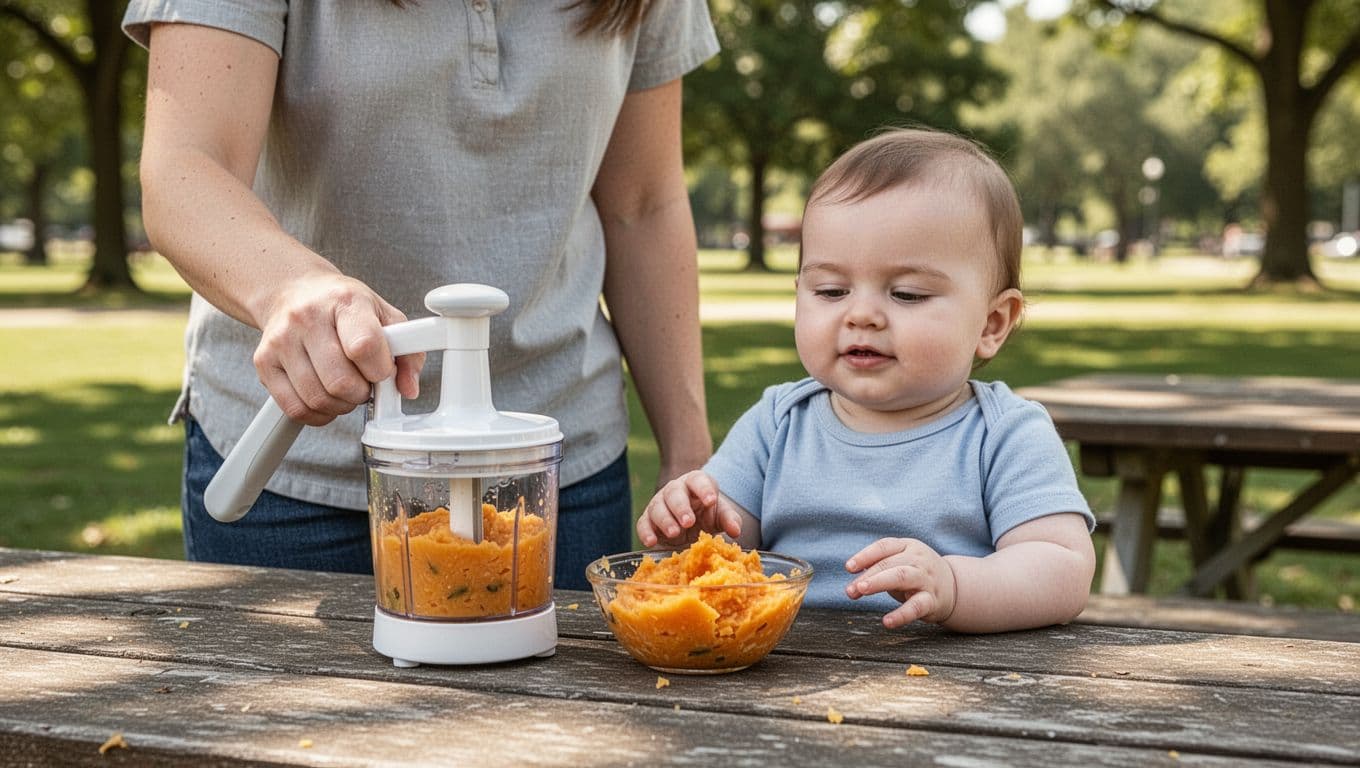
A Wonder Wean can help parents mash soft, familiar ingredients on the go, so feeding healthy foods doesn't have to depend on packaged pouches. If that flexibility fits your family's routine, you can Buy Now.
A Sensible Place for Canned Foods
Canned vegetables and beans can be safe, nourishing additions once your baby is ready for solids. Choose no-salt-added cans when possible, rinse them well, and always change the texture to match your baby's skills.
The most important step is simple: serve soft food slowly, while your baby sits upright and you stay close. With that care, canned vegetables babies can eat can make everyday meals easier without pushing aside fresh, natural foods.